Friday, February 15, 2013

Dragon Rage "Designer Diary"

(Eric Hanuise and I have tried since September to get this published amongst the Boardgamegeek designer diaries, with Eric even posting it in a BGG publishing queue in correct format, without success.  We are both puzzled about why we've been completely ignored.  We've finally decided to post it elsewhere.  LEP)


Dragon Rage Designer Diary
Lewis Pulsipher

While Dragon Rage was originally published in 1982, it was reissued in a much higher-quality format with an additional map and many additional scenarios in Belgium in 2011.  The game was very expensive to obtain from the US, as I’ll explain below, so I haven’t written this until the advent of good distribution in the USA through GameSalute.

This will be a quite different designer diary because it has been over 30 years since the original design.  Perhaps it will be instructive to game designers more for the publishing history of the game than for the development history.

Dragon Rage has had a pretty checkered history.  It was published in 1982 and sold very well I was told, but I was never paid for it.  The publisher went bankrupt for reasons having nothing to do with its boardgames, and their games went into a kind of limbo.  At the same time I took what amounted to a hiatus of 20 years from the game industry, and when I “came back” it took me many years to find a new publisher for the game.  Here’s the story.

The original publication
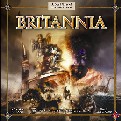
Dragon Rage was originally published in 1982.  I had already had some games published – Swords and Wizardry by H P Gibsons, the Diplomacy Games and Variants booklet, and Valley of the Four Winds (Games Workshop’s first game) – by the time I offered Dragon Rage to the Dwarfstar Games subsidiary of Heritage Models (Duke Siefried’s company).  Old-timers may recall that those publications were all in Britain, perhaps not surprising because I was living in London from 1976 to 1979 to research my doctoral dissertation on the Royal Navy.  By 1982 Britannia was also substantially complete and had been offered to Avalon Hill, who said games of that era don’t sell.  In 1984 I offered Britannia to Gibsons, and it was published in 1986, but by that time I was on hiatus and didn’t even see a published version of Britannia played until 2004.

I don’t recall what caused me to start working on DR.  I’d say the theme is quite obvious.  On the other hand Steve Jackson’s Ogre, which is closer to Dragon Rage in theme than any game I know of, was published in 1977, and though I never played it I was aware of it.  Much of the playtesting would have been done at the Drago game club at Duke University while I was finishing my Ph.D.  Further changes were made by Arnold Hendrick, Howard Barasch, and the developers at Dwarfstar, in cooperation with myself.  I’m including an image of the board as I submitted it, and those familiar with the game will notice that a second gate on the west side of the city was added during development.  The only other thing I recall - actually my brother recalls – is that the dragons might have one too few hits per wing, in our opinion.  But if you want a game to be more challenging for one side than the other, it’s probably best that the attackers have the challenge because attacking tends to be more fun than defending.

DR was designed as a hex and counter wargame, which was the typical hobby game of the time.  The game has the virtue as compared with many other hex and counter wargames that there are no stacks of pieces, only one unit per hex with very few exceptions.  The combat table is also a differential table so it’s not necessary to calculate odds by division, just to subtract.

The game was published along with seven others, six of them developed internally by Dwarfstar, in a Microgame format.  The boxes were 7.5" by 4.25", the 14" by 12" board was printed on thick cardboard rather than mounted, the half-inch pieces were also printed on cardboard though die cut.  On the other hand it cost only $10 (which amounts to about $30 in today’s money, but seemed quite cheap compared to game prices in 1982).

I was told that 10,000 copies were printed and that Dragon Rage was the best selling of the eight games.  I think I received maybe three copies of Dragon Rage and one or two copies each of the other seven games.  And as it turned out that’s all I ever received for designing the game.

The business failure
Now what I report I cannot swear to, I only know what I was told by the guys who developed the game, and I’m relying on memory about 30 years old. 

Dwarfstar was a subsidiary of Heritage Models.  Heritage was one of the big miniatures producers of the time, and even today Duke Seifried is very well-known in the miniatures community.  Like many small companies Heritage depended on a bank line of credit (loan), and according to my informants Duke and his bank manager got into a “spitting contest” (not literally of course - but I remember that phrase from 30 years ago) and the bank called in his loan.  That was it. Although Dwarfstar was doing well it went down with Heritage. 

There were reports in 1984 that the line would be revived, but I heard nothing about it directly, and nothing happened.  I suspect the unavailability of the printing plates was a deciding factor. The plates that were used to print the games were kept by the printer because he had not been paid.  This made it sufficiently expensive for someone else to pick up the games that they languished, and as far as I know the other seven languish to this day although you can find electronic copies of all seven at Joe Scoleri’s Dwarfstar games site at http://dwarfstar.brainiac.com/. 

(The importance of printing plates at that time:  Remember Avalon Hill saying games of Britannia’s era don’t sell?  When Gibsons showed that it did sell, and Gibsons had the printing plates already done, which is a considerable part of the expense of publishing, Avalon Hill decided to publish Britannia in the USA.  This is why there’s so much physical resemblance between the Gibsons and Avalon Hill versions, evidently they used the same printing plates.  And of course it turned out that games of that era could sell.  But maybe they hadn’t up to that time.)

Most likely the failure to be paid anything for this game was one of the things that convinced me that hobby boardgames were going to, if not disappear, diminish greatly.  I saw RPGs on one side – D&D was for 20+ years my favorite game – and computer games on the other side, squeezing boardgames in the middle.  And I was right about wargames, they now have an immensely smaller market than in the early 80s.  So I decided to ignore the game hobby and get a real job, and for the next 20 years taught myself computer programming, became a teacher of computer literacy and programming, worked as chief of networking in an Army Medical Center, and then went back to being a college teacher of computer networking and later of video game design.  One of my last actions in the hobby was to submit Britannia to Gibsons and two years later they published it, but when the copies arrived I looked at it and then set it aside because that was no longer where my mind was.

The Theme
As you may know, many times a publisher will choose a different name than the author’s for a game.  I think Dragon Rage is one of the best titles any game could ever have, and  I don’t think there was ever a possibility of changing from the title I’d selected.  As an example of a change, my name for what became Britannia was “Invasions of Britain,” or “Invasions” for short.   I discovered a few years ago that there’s a PlayStation 2 game by 3DO named Dragon Rage that has nothing to do with this boardgame.  Good title, eh?  I used it first.  But if you look up Dragon Rage on Wikipedia, that’s the game you’ll get.

The only game I can remember designing where I tried to conform to a particular story was Valley of the Four Winds.  I don’t do “simulations” but I do like a non-abstract game to be a model of something, and the model here is an attack on a fantasy city by various monsters.  As one recent reviewer said, everything in the game serves to illuminate and reinforce the theme.  DR has a ready-made “story”, not a story imposed on the game, but a story growing out of a situation. 
I like to set up a situation and let the players determine what happens.  If it’s an historical game then I recognize that what did happen in history is only one of many possibilities, and probably not the most likely one, which leaves a lot of room for different occurrences.  So in Dragon Rage I didn’t try to impose a story, I just set up a situation where the bad guys – a couple dragons, or possibly a bunch of evil humanoids and giants – are attacking a human city.

While I’m no longer much interested in tactical games (other than Dungeons & Dragons), and now prefer games with more than two players, more than 30 years ago I designed several two player games including many tactical games.  The tactical games are certainly a stronger way to present a personal story, that is, something that you can identify with directly.  In Dragon Rage you can identify with a dragon or a giant, or you can identify with a hero or a wizard.  In sweep of history games like Britannia there’s really no one to identify with; although there are leaders, even the longest lived leader is only there for a small part of a thousand years of history.

I’ve always thought of boardgames as competitions where people are trying to figure out the best move, but there is no absolutely clear best move because of all the uncertainties of warfare and reality.  (Chess and checkers have certainty, there is a best move even though no human is good enough to always know the best move.  In a sense they are puzzles.  I don’t like puzzles.)  So you have to do some thinking to succeed at Dragon Rage.  Some players might say “oh I’m a dragon, I’m going to just kick butt and blow those humans away.”  You can try to do that, and for a while it will work, but if it were that easy then who would ever want to play the human defenders?  You can charge right in but this will probably lose the game.  You have to be smart; you have to, in sports terms, take what the defense gives you, nip in and out rather than simply charge in and start smashing.  There’s lots of smashing to be done but if you let yourself get into a slogging melee early on, you’re going to die.  Yet the city defenders receive reinforcements periodically so you can’t “take your sweet time” to avoid all risks.

I think this fits the theme better than sheer mayhem, although it may not encourage the kind of power trips that are common in video games where you don’t have an actual opponent.  Dragon Rage could certainly be adapted as a video game, either for the defenders to defend against computer attackers or as a two player networked game.

The game is colorful and provides a great stimulus to the imagination without actually having a specific story attached.

Jump ahead to 2004
In the early 80s I was teaching myself computer programming and networking and playing D&D as I had since 1975.  Between 1984 in 2004 I had nothing to do with hobby gaming other than to play Dungeons & Dragons and some video games.  When I gradually “came back” to the hobby my first concern was getting Britannia back into print, but another task was to find someone to reprint Dragon Rage.  Microgames per se had pretty much disappeared, replaced by collectible card games and casual video games.  And Dragon Rage is, despite its simplicity, fundamentally a hex and counter wargame, which is a category that diminished immensely during my 20 years away.  In any case I wanted Dragon Rage to be published in a much nicer, larger format than a microgame.

Many readers have probably heard about the confusion about rights of the game Merchant of Venus that is now being published by Fantasy Flight Games with additions by Stronghold Games.  I had encountered problems with Britannia, in fact my first reintroduction to the game hobby was hearing that MultiMan publishing thought that they had the rights to reprint Britannia, as assigned by Hasbro after the end of Avalon Hill.  The rights had been licensed to Avalon Hill by Gibsons, not from me directly, and my contract with Gibsons specified that the game rights reverted to me once it went out of print, so I was quite sure that neither Hasbro nor MultiMan had any rights at all.   (Notice also that the Avalon Hill Britannia was copyrighted in my name, not by Avalon Hill.) Fortunately MultiMan wasn’t really interested in publishing Britannia, otherwise there would have been “a mess”.

In the process of looking for a Dragon Rage publisher I heard that Reaper Miniatures thought they had the rights to the Dwarfstar games.  I had no trouble tracking down the main man at Reaper and being sure that there was no confusion about rights.  Then I could try to find a new publisher.

So as I attended game conventions I looked for possible publishers.  After Fantasy Flight Games published Britannia they had DR for a couple years before passing on it.  In any case it is not an FFG-style game if you look at their product line.  Neither is Britannia but in that case the owner liked the game, and the owner of a game publisher has some latitude in what he does!   GMT games looked at Dragon Rage and said they thought they could sell it for something like $45 but they couldn’t produce it to sell at that price.

I have no recollection of how I first came into contact with Eric Hanuise, who to this day I have never spoken with either by phone or in person (I can say the same about the owner of FFG).  Eric says he heard about DR through Joe Scoleri’s site and wrote to me out of the blue.  But over the course of three years we got to the point that his new company, Flatlined Games, published Dragon Rage as their first game.   (I’ll interject here that I tried to convince Eric to pick a different name for his company since “flatlined” means dead, but it’s some kind of inside joke.)

My original idea for reissuing Dragon Rage was to retain exactly the wording of the rules, because I know all the problems that can occur whenever you change rules, and I had seen that manifest in the reissue of Britannia (2006).  The only thing I wanted to do was add rules for the Princess, who was mentioned in an original scenario but without any rules for how to deal with her.  Eric felt he should rewrite the rules in a more modern style, more “sequence of play” than the old rules which were written in a reference style as most were in the early 1980s.

Believing in reusability, I’m going to quote from my book Game Design: How to Create Video and Tabletop Games, Start to Finish"

In older games, rules were written to be read thoroughly before play.  They were organized to be easily referenced when a player forgot a detail.  Now most rules are written in "Sequence of Play" style, on the assumption that the players will try to play the game while reading the rules for the first time.  If that’s true, then the rules must follow the order in which the players will try to do something in the game.  This makes for a poor reference, unfortunately.  But the fact is, most tabletop game players want to be taught how to play rather than read the rules, and if no one can teach them, they often try to learn the game as they play.

I still prefer the reference style because I’m convinced that anybody who tries to play a game at the same time that they’re reading the rules is inevitably going to screw it up.   In Eurostyle games that doesn’t always matter, but it tends to be more important in wargames.  Yet sequence of play is how it’s done nowadays.  And I don’t think I tried to talk Eric out of it.  In the end we have both kinds of rules included in the game, a sequence of play set and a reference rulebook.

Eric devised the map for Nurkott and added the scenarios for it.  He made the maps with Profantasy Campaign Cartographer.   See http://www.profantasy.com/rpgmaps/?p=571 for a brief description with the final maps.  The step-by-step process is described at http://www.profantasy.com/rpgmaps/?s=Dragon+Rage (scroll down to September 12, 2011).

At one point Eric sent me a rough cut of cover art which unfortunately looked to me like a Neogi from Spelljammer, not a dragon.  Fortunately the cover art that was used in the end, by Miguel Coimbre, is outstanding and nothing like that first cut.

So my function was more as a proofreader than anything else as the project took shape.  We did run into one problem that’s very instructive, an example of how a simple misunderstanding in the rules can break a game.

At one point Eric told me that the dragons seemed to be losing an awful lot of games in his playtesting with the newly written rules and asked me if I could figure it out.  So I took his preliminary art and mounted the board and pieces on foam board and painstakingly cut the pieces out.  Then I took it up to my brother's house (more than 300 miles - but he had experience of having played the original version).  I sat in his living room with my originally submitted rules, the originally published rules, and Eric's version of the rules and tried to make comparisons.

Fortunately it didn't take long before I got an idea of what had happened.  Corresponding with Eric confirmed it.  In Dragon Rage the defenders get reinforcements by ship after the game has been going for a while and at regular intervals thereafter.  The design purpose was to force the dragons to have a serious go rather than hang back and ticky-tack the defenders to death.  The dragons have to pick and choose their time and place to act but the reinforcements help induce them to actually attack rather than fool about.

The timing is determined by turns.  And Eric had counted turns differently than we did in the old days (and, I think still do in many wargames).  In the old days, play by one player and then the other constituted a single turn.  Eric counted this as two turns.  So the reinforcements started coming after five turns rather than 10 turns, and thereafter came twice as fast.  Keep in mind that Eric's native language is the Belgian version of French, not English, so this misunderstanding is not surprising.  But it made a huge difference in how the game played.

The rules had to be translated into Spanish and German, Eric having taken care of the French, and that actually may have delayed the entire project a while.

You may know that the number of copies printed of the game makes a huge difference to the cost per copy.  The setup cost is a fixed cost divided across the number of copies printed.  So Eric had to choose the largest print run that he thought he could afford to pay for, could sell, and could store somewhere, in order to have the best price for the product - 1,500.  The MSRP (which is several times the printing cost, of course - see http://boardgamegeek.com/blogpost/13334/observations-about-changes-in-game-distribution-a) came out to €50 or approaching $75 each.  This sounds like a heck of a lot compared to the price of the original game, but keep in mind the equivalent in today’s dollars, $30 rather than $10.  The new version has a much larger, mounted board with maps on both sides, and much larger pieces beautifully printed by LudoFact in Germany.  It is several times as good in physical quality as the original.

But the initial problem that raised the cost so much for buyers in the United States was that Flatlined Games is in Belgium, and the Belgian Post Office had a monopoly on shipping until quite recently.  As a result, shipping to most other countries cost €30, approaching $40!  So this made the game cost over $100 in the United States.

More than six months after publication, through contacts at Essen Spiel, the big game convention in Germany, Eric managed to sell some copies to online retailers in the US, but he wanted a more satisfactory situation.  The reasons are complicated, but at one point he was shipping games to Germany from which they were shipped to the US and Australia, because that was more practical than shipping them directly from Belgium!  In the end he has shipped his remaining English-language copies to GameSalute for distribution in the United States, and I saw GameSalute selling the game at GenCon for $75.  You can also get it at http://shop.gamesalute.com/products/dragon-rage.  That availability was the impetus for me to write this piece.

Future additions
Practically speaking, Dragon Rage provides a game system that can be used for many fantasy warfare situations involving fantasy creatures and battle magic.  And right now it seems to be one of the few, if not the only, fantasy hex-and-counter game in print and still supported by publisher and designer.

At some point Eric expressed a desire for ways to play the game with more than two players.  I devised a version, based on the idea that there is a competition to rule Nurkott, that works well but you need to have extra control markers to indicate who controls which pieces because there’s only two sets of pieces, the human pieces and the monster pieces.

Many boardgames have expansions these days but expansions have always struck me as very much limiting your market: if the expansion is an add-on to the original game only people with the original game have any interest in buying the expansion.  So we’ve settled on a standalone “expansion”, something that is a game in itself but can be combined with Dragon Rage for more scenarios and for play by more than two players.  But it will be a long time before that becomes available.

Dragon Rage is a niche game, not one that appeals to a broad market.  I think fans of the dry-as-dust, essentially abstract Eurostyle have started to want to play games where the theme really means something, where it makes a difference to how the game is designed and how it is played, and Dragon Rage is such a game.  It was designed as a game that can be played over and over again, not as a game that will be played a few times before people move on to something else.  Nor is it puzzle-like, there is no single solution as there are in many of today's “games.”  That's a large part of why it succeeded in the early 80s, and is succeeding today.

***

My book “Game Design: How to Create Video and Tabletop Games, Start to Finish" is available from mcfarlandpub.com or Amazon in paper and electronic formats.   I am @lewpuls on Twitter.  (I average much less than one post a day, almost always about games, not about other topics.)   Web: http://pulsiphergames.com/

Thursday, February 07, 2013

February 2013 Miscellany


Thoughts about some game-related topics that are not long enough for separate blog posts.

**

I expect to be at PrezCon in Charlottesville, VA on the last weekend of Feburary, and at WBC in Lancaster PA.  Remains to be seen whether I'll be at Origins or GenCon.

I'll have various versions of Britannia (one less than two hours long) to try out, as well as a pirates game that needs to be tested by the more hard-core kinds of players we get at PrezCon.

I'm also interested in talking with people about the nature of game design.  (Which can be really interesting, believe me.)  You don't need to be an expert, you don't even need to be a game designer, because the players are more important than the designers. . .

**

Alan Paull, English game designer and publisher, has started a blog that I'm sure will be good reading.  I've known him since 1977, and enjoyed many of his insights even as I sometimes disagree with him.  http://www.boardgamegeek.com/blog/2165
**

What is typically called "gamification" is usually "scorification".  Scoring mechanisms are adapted to some work that is goal-oriented.  That, plus the idea that you're "playing" rather than working, can help make work less onerous.  But it isn't turning work into games.  Not good games, anyway.
**

Even the higher class game magazines can get stupid, as when they're disappointed that Sony's presentation at E3 was not "stunning".  Getting punched in the face is stunning if you're not expecting it; finding out you have cancer is stunning, whether you expect it or not.  Being "stunned" by what someone says or shows in a presentation at E3 is NOT stunning, that's a sign of a weak mind.
**

My book "Game Design" etc. is now available in a Kindle edition for $14.74! http://amzn.to/Wq3Vmx.
A "Nook Book" (ebook) edition from Barnes & Noble is $13.74.  The "Nook book" version may only be readable on Barnes & Noble ereaders!   http://www.barnesandnoble.com/w/game-design-lewis-pulsipher/1110783952 .

You may know that you can get a free PC program  that lets you read (and buy) Kindle books.  Something of the same kind is available to read "Nook Books" on iPhones, but I don't know about other platforms.
**

My wife tells me about a friend whose 3 year old is spending money playing a "free to play" smartphone game.  Peter Molyneuax (Fable, etc.) thinks many "whales" (big spenders on F2P gmaes) are kids.  What happens when people, and smartphone controls, stop a lot of this?  Hard on F2P games?
**

A big topic in the video game industry is whether consoles will continue to be viable in the future.  Some had predicted we wouldn't see new ones from Sony and Microsoft, but it looks like there will be.  I've always thought of consoles as 1) ways to stay away from a scary keyboard (long ago when people were much more apprehensive about computers) and 2) wannabe computers that quickly become outdated.  Yet they have persisted because they provide completely standard platforms for games (which PCs do not), because they're designed to be played on a big TV (which PCs are not), and because the manufacturers could make lots of money by controlling the games that could be played, and by thwarting piracy (especially in the cartridge era).

So given the directions of PC gaming and mobile gaming, why do people even want consoles, even if they're ultimately moneymakers for the manufacturers?  I don't know.
**

Many video game makers have the saying "fail fast" (or "fail quickly").  That is, if something isn't working in a game, get it out of there, don't stick with it when you know, in your heart, that it isn't good enough.  Good advice for tabletop designers, too.

The only caution is that some people become so used to losing (failing) that they don't care any more.  Which is probably worse than the people who win all the time (assuming they win because they're good).

I understand that some first and second grade classes in some places are no longer given grades, so that we don't differentiate those who do better (for a variety of reasons) from those who do worse . . .  Hereabouts, the kindergarten teachers aren't allowed to give gold stars for exceptional work any more, for fear it might make the  kids who don't do anything exceptional feel bad . . .
**

 In computer games, you can have complex rules that go on behind the scenes, if the players don't have to see what's going on.  You cannot do that in tabletop because people have to understand what's going on.  But if people have to see it, they need to understand why it is the way it is whether it's tabletop or video game.
**

Here's an unusual website: http://www.virtualworldlaw.com/.  You can read about such things as a lawsuit over the ownership of twitter followers.
**

Accumulation of victory points:

The older method tended to be, see who had the most points at the end of the game, don't accumulate points during the game.  The focus was on the long term, not the short term.

In this century, short-term thinking is commonplace, and players evidently feel a need to be rewarded as they play - winning at the end is not sufficient reward (and of course, in multi-player games, most people don't win any particular game).  Hence the tendency is to have a player score frequently, using the accumulated scores from the many scoring opportunities to decide who wins at the end.

**

Every game has a narrative - a player's account of what happened to him and to others. Few have a story with plot, characterization, etc.
**

All these egotistical dudes who think that the way they like games to work is the ONLY way, or is the way everyone likes them to work. . . I've been called an egotistical dude too, but I recognize that there are many, many ways to enjoy games, and my way is not even close to the majority nowadays.

**

Tracking how "the word" gets around the Internet.  This is a piece at the site of the (German) Game Designer Association, SAZ, pointing to an about.com piece that in turn points to Joe Huber's review of my book "Game Design" etc.  http://www.spieleautorenzunft.de/newsreader-reports/items/tog-book-review-game-design-how-to-create-video-and-tabletop-games-start-to-finish.html

**
Perhaps tabletop game designers focus more on "the journey" and less on "the destination" than video game designers, who tend to design for one player.  You can't lose a video game.  But most of the players in a multiplayer (more than two) tabletop game lose the game.  So the designer needs to make the journey enjoyable, rather than the destination of "winning", in order to accommodate most of the players.

**
I have often speculated about how well chess or Go might sell if they had not existed heretofore and were issued as games today.  I think, not well at all.  Quite apart from both being very "difficult" to play well, chess would be heavily criticized for being so unbalanced in favor of white, and having so many draws.

I don't see their long history and intertwining with culture as a substitute for story or theme, as some have suggested.  It's simply the good luck of circumstances.  Monopoly, a poor design at best, enjoys the same advantage.  If it didn't exist and was issued today it would be a tremendous flop.

**
Comic books might be the midpoint between RPGs that resemble novels and those that resemble tentpole (fantasy) adventure movies like Indiana Jones.  Not that most comics make any attempt to be believable.

And I have to say that most video games that attempt to be photo-realistic, are actually more like comics in play because of the many accepted conventions in such games: unlimited respawning, unlimited ammo sometimes, unbelievably accurate shooting, etc.

Monday, February 04, 2013

What’s in a name?

What’s in a name?
(Especially, Trademarks)

Names of games are important to help a potential buyer understand what the game is about, and to invoke certain emotions or points of view that may help persuade the customer to buy the game.  For example, “Dragon Rage” tells you a lot about that game.  Yet the trend in Eurostyle boardgames for a while was that names told you absolutely nothing about the game: Carcassonne, San Juan, St. Petersburg, Puerto Rico, those titles tell you absolutely nothing.

Perhaps such uninformative titles are selected because most of the good game titles have already been used. It may also be because many Eurostyle games are not models of any reality and so there is no reality to refer to, that is, they are essentially abstract games and so the title may as well be abstractly meaningless. 

The book industry faces the same title-already-used problem, and one of the ways they get around it is also used in the game industry.  You give your game or book a subtitle.  For example when I finished my first book about game design my final title choice was “Learning Game Design”, which was quite descriptive.  But the publisher wanted something that sounded more scholarly.  I’ve described elsewhere (http://pulsiphergamedesign.blogspot.com/2012/07/choosing-title-for-game-design-book.html ) all the steps we went through before we settled on the title “Game Design: How to Create Video and Tabletop Games, Start to Finish”.  The subtitle was necessary to differentiate it from other books with “game design” in the title.

This subtitle technique is also used for video games that are sequels or related to existing games but where the publisher does not want to use a number.  For example we have Assassins Creed III to show that it’s clearly related in a sequence from the original Assassins Creed, but we also have Assassins Creed: Liberation for the Sony Vita handheld.  Expansions to existing video games are often given subtitles so we have Civilization IV: Warlords and Civilization IV: Beyond the Sword.

 On the other hand, book titles are not trademarked, and game titles are, so the legal situation is somewhat different as we’ll see.  So far I’ve been talking about marketing, really, but the rest of this piece is about legal considerations.

What brought this to mind recently was the appearance of a video game for Android devices titled “Dragon Rage”.  From the marketing video, it appears to be an Angry Birds/Crush the Castle kind of game.  As many readers know I had a game of that title published as a “micro game” by Heritage/Dwarfstar Games in 1982, which was reissued with additions and a much, much higher physical quality by Flatlined Games (Belgium) in 2011, though it didn’t become available through American retailers until 2012.  In the 20 year period while I was away from the hobby a PlayStation 2 video game titled “Dragon Rage” was published by 3DO in 2001 and 2002.  With the 2011 version of the board game I once again had the “common law” trademark on the game title “Dragon Rage.”

What was I going to do about this?  At a minimum I didn’t want people to buy this video game thinking it is a video version of my boardgame.  Nor did I want people to buy my boardgame thinking it is a boardgame version of this video game.  You might say “who cares, they’ve bought your game” but then you end up with very unhappy customers and no one wants unhappy customers.

Trademarks have to be enforced.  If they’re not they can come into public use, and that’s why the makers of Scrabble have always been high strung about enforcing their trademark.  From my point of view I did not think I could ignore the existence of this video game, though the publisher of Dragon Rage was not concerned at all.


Now I don’t pretend to be a lawyer and cannot give legal advice.  Nonetheless, it’s not hard to read information about copyright and trademark, and I’ll give you a little bit of a run down.

Game titles are generally protected by trademark rather than copyright.  Copyright is intended to protect larger strings of text than one or two or a few words that make up most titles.  While copyright law tends to be the same from country to country because of the Berne Copyright Convention, trademark law can vary much more so I’m talking only about the United States.

There are two levels of trademark protection in the United States.  The simple “common law” protection is to claim trademark by putting the trademark symbol, a simple superscript “TM,” after the title to be trademarked, as in Britannia™.  In the case of games, the game has to actually be on the market, you can’t trademark something that isn’t (yet) a commercial product.  The more secure protection is to register the trademark, for which the symbol is an R in a circle ®.  The simple trademark costs no money, the registered trademark is officially $350 or more, though I have seen Trademarkia offer to register trademarks for $159.

Trademark does not lapse the way copyright does - although it takes a very long time for copyright to lapse nowadays compared with the rules 40 years ago.  We can see a few cases where trademarks continue to be claimed on characters in novels that are well out of copyright, such as Edgar Rice Burroughs’ pre-1923 novels.  His John Carter novels on which the movie “John Carter” is based are out of copyright but “John Carter” and other related terms are still maintained as trademarks, and so the makers of the movie had to work with Edgar Rice Burroughs Incorporated even though the author died more than 60 years ago!  (See http://www.uspto.gov/trademarks/index.jsp to find a search engine for trademarks.  The ERB Inc. “Barsoom” trademark is listed in detail at http://tsdr.uspto.gov/#caseNumber=85569566&caseType=SERIAL_NO&searchType=statusSearch .)

Trademark law allows for the same word or phrase to be trademarked in many different areas of life as long as there is no likelihood of confusion.  For example there is Britannia the boardgame and there is a building society (more or less a savings and loan) in England called Britannia, both can be trademarked.  There are other uses of Britannia (such as the name of a world-setting in the video game Ultima) that probably don’t infringe on either trademark.  Apple Records and Apple Computer were content with the same name until recently when Apple Computer began to sell music through iTunes, and then there was legal action (since settled).

A game called “Story Realms” throughout its funding via Kickstarter suffered a name change when a company that owns storyrealm.com sent a cease and desist letter.  http://boardgamegeek.com/thread/916218/picking-a-name-for-your-game-heres-something-you-m :
    the real kicker is this... our lawyer thinks that if this were to go to court, the case would be dismissed on summary judgement because we have not violated their trademark (their trademark is for specific goods and services that are not what we are offering), BUT if a suit was filed there's a chance that the initial judge would look at the similarity in names "Story Realm", "Story Realms", and say they were close enough to warrant an injunction while we get this sorted out. That means we can't use the name, sell the game, etc for however long it takes to get our case heard and resolved... which could be YEARS. And not just time, but LOTS and LOTS of expenses.

A great peculiarity and danger of trademark law seems to be that someone can register a trademark on some word or phrase and then stop other people from using it who have been using it for a long time.  Sometimes this reaches especially stupid proportions as large companies with sufficient funds to take people to court trademark everyday words such as “purple”.  (There are dozens of trademarks including the word purple, but one on the word alone.)  Unfortunately in the current climate in the USA where, as long as you’re doing something that makes money and is not obviously illegal, the government lets you get on with it, this kind of foolishness happens a great deal, especially in the Patent Office.  (I’m not going to get into patent trolling here, but it really is ridiculous.)

As always, if you have enough money you can go to a court or arbitration body without a leg to stand on and still force someone to do what you want simply because they cannot afford to litigate.  There was a famous case some years ago of a new French company called Eurotrash, if I recall correctly.  A company in Scotland had been using that name online for many years but the French company took them to the World Intellectual Property Organization (WIPO) and it cost the British company tens of thousands of pounds to successfully defend their use of the word.  Today Eurotrash is a name of an opera, the name of a TV series, and who knows what else - activities not in the same realm as waste collection.  (I relate all this from memory of many years ago and cannot find any trace of it on the Internet today, such as at WIPO.int (where the legal action took place - as I recall.))


To go back to the case of Dragon Rage, only courts and lawyers can tell us whether boardgames and video games are sufficiently different that they can be regarded as separate areas of life.  In my view they were separate 15 or 20 years ago but not today when so many boardgames have video game versions and so many video games have boardgame versions.

Fortunately, when I pointed out the name clash to the company (making no demands and certainly not telling them to “cease and desist”) there was no problem.  They showed me that they had searched for registered trademarks, and that the 3DO trademark registered in 2001 had lapsed in 2003 because no statement of use was filed (3DO went out of business).  (When 3DO registered this trademark, if I had known about it, and if I had had the funds, and if Dragon Rage had not been out of print for nearly 20 years at that point, I might have tried to do something about it.  But none of those things were true.) 

Trademarkia also told them:
    This Dragon Rage mark has a greater likelihood of registration if it satisfies the following conditions: (1) it is not confusingly similar to other marks, (2) it does not dilute a famous mark, (3) it is not generic or descriptive, (4) if there are no unregistered, common law trademark holders that are using this trademark in commerce today, and (5) if the description and classification of your use of Dragon Rage is different than other non-abandoned registered marks having the same name.

My Dragon Rage trademark is of the “unregistered, common law” used in commerce today type.  Perhaps if they had searched the Internet for “Dragon Rage” they would have discovered the entries at Boargamegeek and at Flatlined Games (the publisher).  (Just as the Story Realms people should have searched the Internet for variations of their proposed game name.)  If Dragon Rage had been out of print since 1982 and not reissued, there would have been no existing common law trademark to interfere.  Unfortunately they were not aware that Dragon Rage had been reprinted in 2011. 

Fortunately, they were still in testing for their game, so they were able to fairly easily change the name to “Dragon Frenzy” - maybe an even better game name for when the dragon is going wild because you’re destroying its eggs.


The “moral of the story”?  If you publish a game be sure to claim the common law trademark on the name.  But first be very thorough in searching for other games and related activities of the same name, and if necessary use a subtitle to try to avoid future problems, or choose a different name.

Keep in mind that long out of print games no longer fulfill the “used in commerce today” requirement.  But the safer thing is probably to use a subtitle for a game if you think the main title has been used even in the distant past.  For example, “Dragon Rage: Defend the City” (I’m sure you can think of better subtitles!).

If you read any open discussion about trademarks, copyright, and patent, for example  http://boardgamegeek.com/thread/493249/mythbusting-game-design-and-copyright-trademarks-a ) you’ll see that it really is a big can of worms at times.  It’s one of the reasons why we have courts and lawyers.

Search engine for registered trademarks
 http://socialmedia.trademarkia.com/socialmedia/username-dragon-rage-76317299.htm

http://www.trademarkia.com/comparison.aspx

You can also use the US Patent Office to search for registered trademarks.
Go to http://www.uspto.gov/trademarks/index.jsp and choose the trademark search.

and don't forget international search:
http://www.wipo.int/romarin

Tuesday, January 29, 2013

Much of Game Design is Managing (and Causing) Frustration


(As it happens, this is the 400th post on this blog.)

(Warning, this is very long, 6,000 words.  I wrote it last year, then this April gave a talk about the subject at the East Coast Game Conference, one of the larger video game conferences on the east coast (Raleigh NC).  (For those who may not know, the principle activities at a boardgame convention are playing games and buying games; at a video game conference the principle activities are learning (primarily via formal presentations) how to make better video games, and talking with exhibitors.)  I’ve revised it since, posted it on F:AT and then on BGG months ago, and am now posting the revised version here for more feedback.  Though this isn’t really the time of year for feedback, is it?) 

(By the way, the game designer survey has 340 responses.  It will be open a few days longer.)


You can make a case that “game design is all about frustration.”  I don't agree with that extreme, but examining how frustration works and doesn't work in game design can be quite beneficial for designers.  Certainly a large part of a designer’s task, in the 21st century, is managing player frustration.

A review summary in Gameinformer magazine illuminates the essential problem.  The reviewer (of Shank 2) complained that “Despite some improvements and a fun new co-op mode this sequel packs in too much unnecessary frustration.” The question for a designer is, what frustration is a necessary part of the game, and what is not, and how do we get rid of the unnecessary frustration?  Much of the answer to what is necessary depends on the target audience.  For example, to one player of an FPS (first person shooter), automatic aiming is necessary to enjoyment of the game, to another it’s frustratingly “too easy”.  If the FPS is aimed at the “hard core” then it will leave out automatic aiming (or better, make it an option), if it’s aimed at a much broader market, automatic aiming will be necessary (or better, with an option to do the aiming yourself). 

But there’s also the frustration that results from poor design.  As Russ Williams put it,

    “I think a good game introduces lots of literal frustration in the ‘good’ logistical sense of ‘I need to figure out how to win, but it's challenging in an interesting way!’ and shouldn't have very much frustration in the ‘bad’ emotional ‘angry/annoyed’ sense of ‘I am sick of this!’”

Frustration can arise when you cannot get what you want.  Yet the very act of playing a game implies that there could be frustration because the game itself, or the players in the game, are trying to prevent you from achieving your goal.  Potential frustration must be part of the game, but what roles do different kinds of frustration play in game design?  Some kinds are much less desirable than others, and as with most game design questions a large part of the answer is "it depends".  It depends on what players expect, it depends on the kinds of players they are, it depends on what kind of game you're designing.

A major purpose in game design throughout history has been to "put the player on the horns of a dilemma", so that the player has to decide what is the better choice.  But what we would have taken, in the 50s and 60s and 70s, as part of the dilemma at the heart of games, the failures, the inability to always do what we want, is now seen by many gamers as undesirable frustration.

Inevitably there will be some frustration in a game, but some kinds of frustration come from elements extraneous to the actual play of the game that the game designer cannot always control, while other kinds of frustration come from choices of the designer--limitations in the manipulation of the game (the interface) and choices the designer has made that are not gameplay choices per se but still frustrate players.  These non-competitive frustrations are ones the game designer should eliminate as much as possible.

Definition
Let's consider some definitions:
frustration (WordNet 3.0)
   "1. the feeling that accompanies an experience of being thwarted in attaining your goals
   2. an act of hindering someone's plans or efforts
   3. a feeling of annoyance at being hindered or criticized"

Wikipedia: "Frustration is a common emotional response to opposition. Related to anger and disappointment, it arises from the perceived resistance to the fulfillment of individual will."

Wikipedia's definition is particularly interesting because it includes will and opposition.  When people are playing a competitive game they probably expect opposition, though there are many ostensibly competitive games where other players cannot really oppose one another, e.g. in some kinds of races.  If they're playing against other people then the source of opposition is obvious.  The game system doesn't oppose a will, people do.  If they’re playing against a computer (including, of course, consoles, handhelds, smartphones, all computers) then questions arise about whether there is actually opposition or just a situation or puzzle that needs to be solved.  But harkening back to WorldNet's first definition, a puzzle can also thwart and frustrate a player.

Frustration as a reaction to opposition used to be regarded as normal in games, where you played against opponents.  Now many tabletop games and most single-player video games are more or less puzzles, either without an opponent, or without any who can do much to hinder/oppose you.  (A computer is not a good opponent.  As time passes computers become more able to provide opposition resembling a human's, but those who have played a single player video game and then go online to play usually say that humans are much more formidable opponents than computers.)

People don't want their entertainment to be frustrating.  "A lot of people say, 'Well, I like a challenge.' I don't like challenges.  Life is tough enough without any challenges."
This was said by Jackie Gleason, a very successful actor and comic, among other things, born as long ago as 1916.  This attitude has always been with us, but seems to be more ascendant today.  People today are much less likely to accept any kind of frustration as part of their entertainment than they were 40 years ago.  "Instant gratification" and "Convenience" and the "Easy Button" have changed expectations.  Many younger people expect to be rewarded just for participating.  And many younger people are likely to quickly quit an activity they find frustrating.  Some actually blame the game when they don’t succeed!  (For a very striking view of the attitudes of North American online gamers that designers must account for, read the following report of a talk given by veteran designer Don Daglow:   http://www.gamesindustry.biz/articles/2012-08-13-what-european-developers-need-to-know-about-american-online-gamers?)

When someone plays a game they may be thwarted by four sets of circumstances:
•    other players (tough decisions, opposition)
•    the game system (tough decisions, maybe opposition,)
•    the game interface (clunkiness, lack of control)
•    other factors

Another way to list this would be:
•    Frustration with other players
•    Frustration with the game mechanics
•    Frustration with the interface
•    Frustration with other factors

Frustration and Opposition from other players

The fundamental problem is how to differentiate negative frustration from positive frustration, which might be characterized as the tension that arises when a player makes a decision without access to all relevant information or sufficient time.  That is, how do people differentiate between the "delicious" tension of having to make a choice “on the horns of a dilemma”, the "agonizing decision" that is at the heart of games according to Jonathan Degann (http://www.thegamesjournal.com/articles/GameTheory3.shtml ), and the tension associated with frustration? 

We can see a similar problem in stories.  Conflict, which is at the heart of most formal stories (novels, plays, film), is usually frustrating, until resolved.  The climax and denouement in a story is usually a release of tension.  But most people want conflict and tension in stories.  Where is the line between (desirable) tension and frustration?  I don't know, but I'll bet it varies greatly from one person to another.

Conflict is also common in games.  The other players in a game are on obvious source of opposition and consequently of potential frustration.  But a game can be designed in a great variety of ways to maximize or minimize that potential.  A cooperative game for example pits all the players against non-player opposition, in effect a single player game with several players cooperating to substitute for one player.  The other players can be frustrating by making plays that you think are substandard but they're not usually trying to oppose you.

A race involves opposition but often there is very little that your opponents can do to hinder you.  Blocking can be employed to limited effect, and of course in games like Mario Kart there's a lot you can do to interfere with other players actions.  It depends.  In traditional Olympic speed skating a participant skates with only one opponent, so barring bad luck there is no way for players to affect their opponents.  The newer short track speed skating style (Apolo Anton Ohno’s style) affords many more chances for one player to hinder or otherwise affect another.  It makes for quite different racing.

In a boardgame like Britannia each player has his own point scoring objectives, and in order to prevent other players from scoring he may have to sacrifice some points he could score.  In other point games you may have very little opportunity to prevent an opponent from scoring points so you concentrate on scoring your own points.  In other games there may be a limited pool of points available and in order for you to gain you have to take from someone else.  In a cutthroat game like Diplomacy the norm is that players will lie, cheat, and steal in order to thwart you and promote their own well-being.  The only way to gain strength in the game is to take it from someone else (it's a classic zero-sum game).

So there's a spectrum here from games in which players are not supposed to hinder other players (cooperative) through games where there is limited hindrance to games where hindering other players is the major path to success.  A major design question in a multi-sided game is how easy is it to hinder other players, moreover how easy is it to hinder other players without sacrificing your own efforts to succeed.  Some games are designed to let everyone build up but one person builds up a little faster.  Other games are designed to tear down until one player survives.  Many traditional boardgames are the latter type, think of chess and how as the game goes on players have less and less to work with.  Many of the recently developed Eurostyle board and card games emphasize building up and strictly limit how much you can do to hinder another player.  Much of that hindrance comes from anticipating what another player might want to do and doing it first so that the other cannot, which is quite different from more direct kinds opposition that you might see in wargames.  It is subtle and of more limited impact than direct opposition.

Frustration and Opposition from the Game System

The game system is the mechanics of the game.  In video game terms the section above is about “PvP”, player versus player, and this section is about “PvE”, player versus environment.  The game system is the mechanics of the game and how they fit together.

Players used to accept that the game would sometimes prevent them from doing what they wanted to do.  Nowadays people are much less tolerant of frustration.  They don’t want the game mechanics to put obstacles in their way. 

According to the report at gamesindustry.biz referenced earlier, online game designer Don Daglow goes further:

    So American [online] users see failure in a game or app as a problem with that game, not a user error. This is an issue for designers because traditionally failure is used as an inducement to succeed. So the solution for games designers is to break down the experience simply, minimise text and show the audience things rather then tell them. And reward success constantly, even in tutorials where there is only one button to press.

This is quite obvious in the evolution of video games.  Arcade games were designed to cause failure within a fairly short time, but encourage the player with better scores so that he or she would try again in order to get better at the game.  With the advent of home video games this was gradually abandoned.  With free-to-play video games the major impetus is not to challenge the player, but to entertain them so that they'll continue to play and, ultimately, spend money.  

We now have many games that aim the player’s gun automatically once the player points in the general direction.  And of course in a video game it’s immensely easier to hit something with a shot than it is in real life.  A game that actually limits how much ammo you have has become the exception rather than the norm.  Unlimited ammo removes frustration.  Some games automatically heal player-characters at intervals.  Loot-fests like Borderlands and Diablo III have removed most frustration from the game.  This doesn't even consider social network games, where there is often no chance of failure, only the possibility of being slowed down or temporarily stopped, that can be removed by expenditure of real-world funds.

An example of a specific boardgame mechanic that used to be quite common but is generally frowned upon now is losing a turn, such as an "opponent loses turn" card.    Gamers today often "hate" to lose a turn, and are less likely to play a game with that possibility.  Why?  40 years ago "lose turn" was regarded as part of the competition of a game, just another way to achieve a goal.  Today many people have grown up with video games where they're constantly active, and strongly dislike not being able to do anything.  In some cases, one of their primary motivations for playing the game is to DO something, and when they lose a turn they cannot do anything. 

Whether you think this way or not--as an older generation person I don't--as a designer you have to take this into account.  If you choose to design a game that includes down time, lost turns, and a need to spend time thinking about what you're going to do, you necessarily limit your market.

Frustration from the game interface

User Interface.  Every tabletop and video game offers some means of telling the game what you want to do and of enabling the game to tell you what's happening.  This is the broadest definition of "user interface".  The interface is usually designed by the game designer(s), and a poor interface can ruin the experience for many people.  People tend to take interface for granted in tabletop games but it can make quite a difference.  Players tend to be more aware of interface and interface problems in a video game, perhaps because it’s fundamentally harder to tell a video game what you want to do, compared with a tabletop game (where in part you're depending on the understanding of other players, of humans, who are much more intelligent than computers).

Fortunately, extensively testing a game with people who have not been involved in the process of creation ought to identify interface problems.  The biggest interface mistake in the video game industry is to only have the people who are involved with the game test it, because they become accustomed to using a less than optimal interface and may not realize how frustrating it will be for other people. 

This is why it's often a better choice to use a common interface rather than a new one, because the new one becomes a frustration at least temporarily, while a common one does not.   Even if you think your new interface is "intuitive", "intuitive" is a BS buzz-word that amounts to "what's familiar to the person".  Take some people who truly do not play games (if you can persuade them to play) and you'll find that what's "intuitive" to them is quite different, because they have a different experience to work from.  So stick to what is likely to be familiar to the players in your target audience, not to what you think is "intuitive".

Entire books have been written about game interfaces and about industrial design in general (every game designer should read Don Norman’s “The Design of Everyday Things”) so to save space I’ll say no more about the interface here.

Frustration with other factors within control of the designer(s)

There are other aspects of a game that can be frustrating to people that the designer can control.

"Too much like work."  Many of the following amount to frustration that the game is "too much like work", not like a game (which should be entertainment, whatever else it may be).   I am often struck by accounts of MMO players who clearly feel their games are much like work, but play anyway because the work is evidently worth the goal of maxing their level.  Wouldn't it be a better game if the journey were enjoyable, as well as the destination?

Arithmetic/calculation.  The first of these is the use of calculation in a game where the computer does not automatically take care of the arithmetic, so it’s primarily a tabletop game problem.  My observation is that people, especially young adults, are much less able to do math in their heads than they were 40 years ago.  Even the simple act of adding the results of the roll of several dice can be frustrating to many people.  In the millennial generation the proportion who like math is small.  Whether this is a generational change or a failure of education, it is one reason why STEM education (Science, Technology, Engineering, Math) is at a crisis for lack of interested students. 

(We can add another possible frustration, when players need to understand probability to succeed in a game.  Few people are able and willing to calculate probabilities in their heads.)

When I first discussed this frustration in a blog there were many comments that game designers should be helping people get better at arithmetic.  If you want to promote arithmetic capability, games are excellent.  I've maintained for decades that playing Dungeons & Dragons is beneficial insofar as players must do arithmetic (though less in 4th edition than in the 1st, you'll notice).  But most designers are interested in entertainment, not in helping kids learn to do arithmetic.

Another objection was that "ALL games are math".  My response is that games are all about people, reading people, persuading people, misleading people, and so forth. Puzzles are often about math. (Single-player video games are often interactive puzzles, not games.)

The object of the designer of hobby games is to have people enjoy the games.  If players are easily frustrated by something, it may be necessary to take it out of the game. Arithmetic clearly frustrates most young people.  Ergo, take it out of the game unless it's more important than the frustration it causes.  The general guideline might be: only allow arithmetic in a game when the inclusion is worth more than the frustration it may cause.

Hasbro has recognized this frustration with arithmetic in Monopoly.  There is now a version of Monopoly that uses debit cards with a machine so that players do not have to add and subtract dollars.  And there is a “tower” version of Monopoly with changed rules and a monitored pace (the tower is a computer) that completely avoids the drudgery of arithmetic and dice rolling, while it reduces downtime.

One of the great advantages of computer games is that the computer can do the arithmetic so that players avoid that frustration.

What is especially frustrating to people is a game that allows players to calculate the best move. 

    To me these games feel like a multiple choice arithmetic test. Once when playing a game, another player was taking a long time making a choice. I blurted out, "It's just division," and explained how to calculate the optimum choice. The other player's response was, "You have ruined this game for me forever."   (commenter "ubarose")

This shows how sub-optimal most players are, when a player doesn't even recognize "it's just division."  Most players, especially casual players, prefer the fuzziness of intuition, where logic and calculation do not provide a certain answer.

Sameness.   "Variety's the very spice of life,  That gives it all its flavor."  --William Cowper.   Stages in a game are important.  That is, the nature of the game should change over time, so that we can speak of stages similar to the chess opening, middle, and end games.  Stages provide at least a perception, if not an actuality, of change/growth and learning.

More important, if there are no stages players may wonder why they're playing the game as long as they are.  Why not play half as long?

Designers want to avoid the kind of thing some basketball "fans" talk about, they only watch the end of a game because they feel what goes before isn't important.  They don't recognize that there are stages and variations in basketball that are as interesting as the results.  They're only interested in the destination, not in the journey.  If you're only interested in the destination, why watch at all, just get the score after the game is over.

"Too much like work", when applied to MMOs, usually refers to sameness, to lack of variety.  It can also refer to "the grind", when players do the same thing over and over because that's the way to succeed.  This is a design flaw, though ultimately the problem may be that it costs too much to generate fresh "content" in the game system.

Color Blindness.  Color-blind people (5% of the population) cannot differentiate red and green, or less commonly blue and yellow, and sometimes other color combinations can be difficult.  Sometimes a designer cannot influence the color of manufactured pieces, sometimes he can.  (I recall asking Fantasy Flight Games not to have green pieces on a green map in the second edition of Britannia (2006), to avoid a minor problem of the older editions.  They didn’t use a green map, but changed the purple pieces to yellow, and made the predominant color of the map yellow.  Oh, well.)  Designers can usually decide the colors used in video games, but they must have this problem in mind.  (The iOS app “Colorblind Vision” is supposed to show a user how a colorblind person sees a set of colors.)

Writing things down.  When Fantasy Flight was republishing Britannia, they clearly felt that requiring players to write down scores was unacceptable, even though that was how the game had been played for 20 years.  So they told me they were going to put a scoring track on the board.  I said, in a 4 or 5 hour competitive game that track is going to get messed up, probably more than once.  So instead they included little scoring markers of 1, 5, and 25 denominations.  This avoided player frustration (from their point of view) and avoided some arithmetic errors, and even added some options/conveniences to the game.

(Arithmetic errors do occur in scoring.  I recall checking some sheets from the World Boardgaming Championships tournament and found one case where correcting the errors resulted in a different winner.)

Once again, video games have the advantage.

Number of choices.  Another frustration the designer can control, but which he may choose to include in the game, is the number of plausible choices and the number of decisions a player must confront.

To some game players the whole point of the game is to make the right choice.  Yet there are very popular games that offer very few choices for the appropriate target audience, andCandyland and Chutes and Ladders where there are no choices at all.  Too few choices can frustrate the strategy gamers while too many choices can frustrate casual gamers.  In other words the number of choices and decisions that make a difference to the outcome must be appropriate for the target audience.  I’ve discussed this at considerable length in “How Many Choices is too Many”, http://gamasutra.com/blogs/LewisPulsipher/20111025/8731/How_Many_Choices_is_Too_Many.php .

Simple game mechanic choices.  Here’s an example of potentially frustrating game mechanics.  In a prototype fantasy skirmish boardgame, two creatures can fight one another.  Each rolls independently to hit.  The result can be that both are hit, one or the other is hit, neither is hit.  The question is, should the rules mandate that if both hit, they block the hits and roll again?  That clearly favors the better hitter (the larger, tougher monsters).  Players said that would be frustrating, for the "little guy" to get a lucky hit and then have it taken away.  So I have retained the possibility of mutual destruction.

Here’s another example.  In the game Stratego and its ancestors going back to 1909, stand up pieces are arranged so that a player can see the identity of his pieces but the opponent cannot.  When there is a conflict the identity of the pieces is revealed.  Then the pieces are once again hidden and it’s up to the opponent to keep track by memory of where that piece is located.  If his memory fails then he may make an unnecessary mistake.  I had a Stratego-like fantasy game published in Britain around 1980 (Swords and Wizardry) that retains this characteristic.  Recently I have devised two prototypes using some of the same principles but in much more fluid situations.  In those games once a piece’s identity is revealed it stays visible to both sides so there is no memorization.  In my view a memorization requirement in a game of this type is frustrating to most contemporary players, and is not central to the hidden-identity/bluff nature of the game.

In general, the short-term memories of people are so poor that no game should ask them to remember something that could be tracked mechanically (or by computer).  Jakob Nielsen explains this in connection with Web pages, but his discussion applies to games as well:  http://www.useit.com/alertbox/short-term-memory.html .  See also http://www.useit.com/alertbox/annoyances.html "Does User Annoyance Matter?"

Planning ahead.  One of my hybrid Euro-wargame prototypes, Seas of Gold (Italian maritime republics in the age of the Crusades), has been very well received by playtesters (some of whom tend to play Euro-games, but who are generally in their 40s rather than younger).  I played it with some people very knowledgeable about the game market a while ago.  In the game you needed to choose six actions, indicated by action cards, in a round, and place the cards face down on a display.  Then each player chooses an event card, and those are executed first.  Sometimes this event can mess up your plans, for example you may be excommunicated and cannot trade to Catholic lands, or a marriage alliance occurs which means you cannot attack a particular player.  Or you may find as the action cards are played that you didn’t anticipate something, and that messes up your plans.  This is frustration, but to me it's "part of the game" when you're playing competitively.  These gents suggested that it won't work that way with Eurostyle players, people don't want to be frustrated: they don't tolerate "dead cards".

This game was designed several years ago.  Now, I have two versions.  In one, players choose their action cards one at a time. The player can adjust his strategy and need not plan well ahead.  The other, more “advanced” game, requires the planning entailed in choosing six action cards before the round begins.

Planning is what some players want to do, it's the main point of games.  But for others, it's just the opposite, what they do NOT want to do.  As time passes I think the proportion of game players who want to plan has decreased and continues to decrease.  This may be inevitable as the game-playing audience grows as a proportion of the population.  Moreover, in real life people plan less than they used to, for example relying on their smartphones to help them arrange things “on the spot”.

Reading extensive text.  In video games, most players will not read extensive text, such as a “book” they find as part of a treasure, even though the text provides clues (such as world background information) that can help them succeed.  Presumably they find the reading more frustrating in some way than the advantage it can confer.  A partial solution would enable the game to read the text aloud to the player, though impatient players simply “aren’t going to bother.”  Scott Hartsman, game director, Rift (an MMO), says:

    "You can write down all the greatest lore in the world, and if there's  one thing that this generation of MMO players has really made crystal clear, walls of text just don't get read. . .[The lesson is] . . . you can have the most compelling world in the universe, but if you're going to make me go out of my way to read text to get it, I'm not going to pay any attention to that."

But Free to Play Games Are Sometimes Intended to Frustrate

Now we come to the strange case of free-to-play (F2P) video games, especially those played over social networks.  The general idea in designing many of these games is to make it very easy for players to "get ahead", but at some juncture to frustrate them to the point that they will spend real money to overcome the frustration.  One person at GDC (Game Developers Conference) characterized this as designing "pain points" into the game.  People spend their money to alleviate the “pain.”  The frustration (prevalent in games of the largest maker, Zynga) may be at slow progress because the player has run out of "energy" or game money or something else that fuels activity.  A player can wait until enough time passes that his energy is renewed, or he can spend real money to renew, and continue to play the game right now.  It’s like an extra-large “lose turn” card, because for quite a while you cannot do anything at all.

The makers of free-to-play games that depend on small buys by the players (microtransactions) to make money, must specialize in frustration rather than try to eliminate it!  When players become frustrated with their rate of progress, or frustrated that they don't have THAT cool weapon or THAT cool armor or even THAT cool decoration or fish, then a small proportion of them will spend real money to end that frustration.

In other words we have something that's exactly the opposite of what we as game designers normally try to do, to avoid frustrating players except within the gameplay of the game, and then only carefully in the 21st century.  This is why some people say that designing free to play games is not designing games, it's designing revenue streams.

There’s a lot of potential in “social networking” games to reproduce something approaching the face-to-face gameplaying experience, a true social experience.  But as long as the “pain points” method of game design works we’re unlikely to see much progress toward truly social video games.

Frustration from Extraneous Factors the Designer(s) Cannot Control

I've not included the word "opposition" in the title of this section because I'm using “opposition” in a way that implies a decision to prevent something from happening.  Extraneous factors do prevent things from happening but there is no decision to do so, it is accidental.  Sometimes it's an accident of where you're playing or when and sometimes it's an accident of poor design of the game.

Extraneous factors can be things like the noisiness and temperature of the room you're playing in, lag in your Internet connection, hacking by people using the online game system, and other things that neither you nor the game designer(s) have any control over.  (I'm assuming that if it's too cold you'll arrange to have the temperature get warmer; but sometimes that's not within your control.)

Unfortunately, there is little or nothing a designer can do to avoid this kind of frustration.

The Publisher's Influence
I don't know how often publishers require changes that, in the end, frustrate the players.   We always have tension in the author-publisher relationship, sometimes publisher input (such as editing of a book) improves a work, sometimes the opposite.  Sometimes the publishers have a better idea, sometimes they don't.  Sometimes the designer can deflect a publisher from one idea to another, better one that less frustrates the players. I've heard an experienced video game producer say that most of her time, late in production, was spent fending off unreasonable suggestions for changes from publishers.  To a greater or lesser extent, those changes are yet another circumstance beyond the control of the designer.

Low Tolerance of Frustration

The evolution of video games can be described as a movement away from competition (which implies the possibility of frustration) toward cinema, or at least toward passive entertainment.  For many people, entertainment is not supposed to be frustrating.  Early video games were arcade games, where failure was built in so that players would spend money to play again (and get the high(er) score).  As home video games gradually overwhelmed the arcades, it took designers many years to recognize that quick and frequent failure was no longer necessary.  With the evolution of mobile and casual gaming, and games played over social networks, video games have become time-killers - as Jakob Nielsen says, “killing time is the killer app” for mobile platforms - and they’ve become entertainment rather than competition.  Players are rewarded frequently and frustrating elements have been removed from many games.  The “death of death”, that is, the removal of failure, has become the norm.  "Games should be fun" has a different meaning for non-competitive gamers than for competitive gamers.  Game designers have recognized this.  In most general terms, playing games used to be about earning something, and possibly failing; now they're about being rewarded for participation, without the significant possibility of failure.  Games as self-discipline and planning, probably always in the minority (think party games), have gradually been replaced with games as self-indulgence and escapism.

This is also related to the general dislike of being thwarted, to the "age of instant gratification" and “age of convenience”, to "Generation Me".  “Patience used to be a virtue” (billboard alcoholic drink advertisement).  People want things now and don't see why they should have to wait.  What was once regarded as a convenience is often now regarded as a necessity.  Further, many people want to "do just enough to get by". 

(And when you make people do things in a game that have nothing to do with their entertainment, then you sometimes have what is derisorily called an "educational game".)

Hard-core gamers often believe this is “dumbing down”, that it’s ruining games.  I don’t see why competition and entertainment cannot coexist through different difficulty levels and "autopilot" for the less competitive types, but as it stands now competition is frequently removed from games because competition requires frustration, opposition to the player’s will.

When people are focused on being active and not on winning and losing (you can't “lose” a one-player video game), it's a different experience entirely.  Players are not so concerned with succeeding, they're concerned with DOING something (and thus passing the time).  Similarly we have a dislike of "down time" in board and card games, even though, for the more cerebrally inclined, that "down time" gives players the opportunity to *think*.    Because so many modern games don't require deep thought, players don't use the time to think the way people would have 40 years ago.   My guess is that intuition (which doesn't take much time) is more often used in all walks of life today; certainly, when a person isn't doing their living-providing job, they're more inclined to rely on intuition than logic.   (Intuition can be very effective: I’ve read that the famous chess champion Jose Capablanca said he didn’t look ahead, he simply chose the best move.  But I’d bet most chess champions rely on logic most of the time.)

Chance elements in games reduce the frustration of having to analyze.  In 2004, when I first looked into Eurostyle boardgames, dice were a despised element for tabletop non-wargames, but now are much more commonly used.  Perhaps many players have tired of carefully calculating their moves.

Games versus Puzzles, and Conclusion

Here we need to differentiate between puzzles and games.  Puzzles have solutions, ways to play that will always lead to success.  Many "games" nowadays are actually puzzles turned into contests to see who can first reach a milestone (such as a certain number of points), but by the nature of the "game" they are much easier on the egos of the players who "lose".  In a sense, you don't lose a puzzle, you just learn more so that ultimately you can solve it.  You play a few times, figure out the puzzle, and move on to the next "game".

The willingness to directly compete separates the hard core video and board gamers (often wargamers) from the casual video gamers and Euro-style boardgamers.

 We see it in 4th Edition D&D (tabletop), where there is never a case that a character cannot do something in a turn because there are several "at-will" powers to choose from.  This is quite a contrast to 1st and 2nd Edition D&D, where spell casters had to decide whether to use a precious spell from his limited supply for the day or do next to nothing for a turn.  (These one-shots are the “Daily Powers” in 4th Edition.)  Between encounters you renew most of your capabilities, including hit points using “healing surges”.  It’s almost impossible to get killed in 4th Edition D&D, and after you are incapacitated (not killed) it’s very easy for you to come back into the game with a little help from your friends.

Another way to say this would be that the early editions of D&D were much more true to life in the possibility of death and the possibility of having to be patient at times, and the new edition is much more like a cartoon, or like World of Warcraft.  It is now much more an entertainment (like a movie) than like a game or puzzle. 

Try playing some of Zynga's very popular social networking games, such as Farmville, Vampire Wars, YoVille, Cityville, Fishville.  These "games" are super-simple puzzles that most anyone can manipulate successfully.  If you are able to get online and get in the game, you are able to succeed.  Frustration is removed from the gameplay (if you can dignify what players do with that word), then reintroduced at "pain points" to persuade players to spend real money.

Game and puzzle designers have always had to choose whether to aim at a hard core group or more casual players (for example, family gamers).  I believe that as a percentage of all gamers, the hard core group, the ones who like competition and regard frustration as acceptable, is becoming smaller, and the casual group for whom games and puzzles are more like pure entertainment, who are much less likely to accept frustration, is becoming larger.  If you want to appeal to something beyond the apex of the hard core market, you must carefully manage frustration, choosing where and when to allow it, where and when to eliminate it.

The question is always, how much of the wanting-a-challenge market remains, and how much the wanting-entertainment side is coming to dominate what we call hobby games.  It's certainly dominating video games, but the size of the video game market is so large that hardcore games can still succeed.  The problem may be that not enough of the very expensive hardcore games succeed to fund all the failures.

There are alternative views to this emphasis on avoiding unnecessary frustration, for example Bennett Foddy's view that  “you're playing with the player, rather than providing an environment for players to play with themselves.”  He advocates the benefits of making your player suffer. “Don't make the easy listening of video games.” http://www.gamasutra.com/view/news/178952/The_benefits_of_making_your_players_suffer_and_maybe_throw_up.php?#.UHsjpYbp_X0

Monday, January 21, 2013

Trying to define “the board”


On LinkedIn someone asked if there were industry definitions and names for the various aspects of a game board.  There aren’t any that I know of, but it’s worth trying to analyze what we actually have in a “game board”.

We’re accustomed to thinking that a video game has an interface, but so do tabletop games.  The interface enables the player to see what’s happening in the game, and to manipulate the game, to tell the game what the player wants to do.  This is non-technical in tabletop games but still exists, and can still be better or worse depending on how it’s arranged.  The board is the principle part of the interface that reveals what’s happening, whether it’s a physical board or on the screen in a video game.

Typically, in a tabletop game we have something that lies flat on the table that stores information that we call a board.  In video games the board is frequently an array in memory, and each pixel on the screen may be a slightly different location, or a more conventional square or hex grid might be hidden from sight but still in use. From the player’s point of view the screen is the “board.”  Recently some tabletop games have gone from a shared board to individual boards, often called player layouts, that store information.  Team sports have “boards” that we normally call fields, as in a football or baseball field, the ice in hockey, the court in basketball, the pitch in soccer.  They are still places where information is stored, but because the athletes act on the field we tend not to think of those fields as boards.

A traditional game board - and an athletic field - records the results of maneuver, placement, and location of “pieces.”  In most board and video games the board is digital, that is, it has discrete parts/locations, whereas sports fields tend to be analog, with continuous flows rather than discrete separations, though we also have discrete locations in, for example, the penalty area and six yard box in soccer or the bases in baseball.  Maneuver always involves location because what makes maneuver important is the spatial relationship between “pieces” in their locations on the board.  Placement (as opposed to maneuver) provides the spatial relationship but without the possibility of moving pieces that are already there.  Instead pieces are placed, as in Tic-Tac-Toe.

Insofar as many games represent warfare, and warfare is largely about maneuver, it’s not surprising that most classic games are games of maneuver and location, though some (such as Go and Tic-Tac Toe) are games of placement rather than maneuver.

Area control in modern Eurostyle boardgames is a matter of placement and spatial location, and sometimes of maneuver as well.  Worker placement, on the other hand, is usually a matter of storing status information, not of spatial activity.  For example, in cases where placing a worker at one point means someone else cannot place one there, you could just as well use tokens or cards to keep track of which functions have been allotted to which players.

More recently in some tabletop games, boards have only stored status information having nothing to do with maneuver, placement, and location.  The board is used to record the state of various kinds of information that have no spatial relationship to one another, as in Kingsburg.  On a roulette “board” for example, players store the bets before the ball rolls.  In the inventory of a video RPG, the player stores his items in various “locations”, but there is no spatial relationship between one and another, even though items must (in some games) fit the shape of the storage area.

Typically a player layout in a tabletop game is of this type if only because none of the other players has any assets on this “board,” so that a player layout is rarely used for maneuver.  (Maneuver typically implies maneuvering against pieces of other players, although technically the word does not necessarily include that aspect.)


What do we call the parts of the board?  Generally where maneuver, placement, and location is important you have some kind of “grid.”  The most familiar grid is an area layout, like a map of the 50 United States or the countries of Europe.  The grid may be regular, as in squares, it may be hexes or a brick pattern that amounts to the same thing as hexes, it may be a series of concentric circles divided into areas.  It may be irregular, as in a connectivity diagram such as Merchant of Venus or Masters of Orion II or many board wargames.  In every case the grid amounts to an array showing connectivity between and consequently spatial relationships between locations.  (I made a connectivity diagram for the Britannia board once; but it’s easier to play on something that looks like a familiar map of Britain, than on a connectivity diagram.  Yet the so-far-unplayed card version of Britannia uses region cards placed in a pattern that amounts to a connectivity diagram.)


[I’ll try to insert that diagram here, if not you can use this link (case sensitive): http://pulsiphergames.com/britannia/images/ConnectivityDiagramBrit.gif ]


A special instance of this grid is the track, as in Monopoly, Parcheesi, as in Olympic swimming (each player has a separate track), and in many other race games.  A big difference is that even though the track amounts to a connectivity diagram, it is linear, there is no choice of where you can go, so practically speaking there’s no maneuver.  In fact you can see a track as more status track - where are you located right now - than anything like a playing field.  Yet some race games allow maneuver on the track, perhaps a going from inside to outside in a car or chariot race game.  This might be called a route rather than a track.  The classic game Careers uses a track that offers periodic choices to follow a different route into various “careers” that lead back to the main track.

Aside from grids and tracks/routes we can have places on the board where something tangible is stored, as in the locations on the Monopoly board where we store the cards.  In a data flow diagram these would be called “data stores”.  Perhaps we could call them “depositories”.  They provide a location for storage of something physical, such as cards, or something virtually physical, as when a boardgame is computerized but you can still draw “cards”.  A “magic shop” in a computer RPG also amounts to a not-wholly-random depository.

Then we have all the locations that store status information, for example which worker has been allocated to which task.  A time record track or turn track stores status.  In every case, it should be possible to reflect the same storage by using cards or other tokens, but it’s often easier for all the players to see when laid out on a “board” of some kind.  I’ll call these the “status” or “status tracking” parts of the board.  (“Conditions” might be another choice.)

Many boards also contain pure “information displays”.  These may be orders of battle or appearance of new assets (as on the FFG version of Britannia, along the eastern side of the board), they may be combat or other tables, they may show turn order, and so forth. They may remind players of specific rules.  (Ideally, all of the rules of a game would be on the board; but that’s rarely practical given limitations of space and eyesight.)   Status changes; information displays never change.

Of course, we can also say that many game boards display information about terrain, economic values, and so forth even as they provide a grid for maneuver, placement, and location.

These areas can be mixed, as in Monopoly with its track, depositories, and some information (the price of properties, the amount you get for passing Go); or Britannia with an area grid, a status section (where players keep track of saved Increase Points), and an information display (the turn-by-turn appearance); or computer Civilization where we have a square or hex grid, plus many, many status areas (if you click on cities), plus information displays.


Must the board to be a single large layout?  I’ve mentioned games where there are player layouts, which means we have several “boards”.  What about card games where the spatial relationship of the cards is important, for example card Solitaire or Canasta?  (Most card games do not have the spatial relationship, for example Texas Hold‘em.)  These are boards of several parts.

Then there are tile laying games, with tiles effectively substituting for cards, and all of it ultimately derived from dominoes.  The result of laying the tiles is spatial relationships: these are placement and location games.  For all practical purposes this is a board that is constructed as the game proceeds.  So cards can certainly be used for a board, whether they are laid out ahead of time or laid out as the game proceeds. 

Settlers of Catan has a randomly tile-laid board: there is a spatial relationship, but not one influenced by the players.  Once the board is laid out, it becomes a grid for placement and location.

When cards/tiles/dominoes are used as a board, almost always it will be a spatial board, one for placement (or even movement) and location.  It’s unlikely to be a board that will help keep status, or a depository.


What is essential to a board?  Depositories don’t need to be on a board, we can place draw decks, piece supplies, the Monopoly bank, more or less wherever we want rather than on a board, without too much inconveniencing the players.  (Remember, this is all part of the interface, which is supposed to make it easy for the players to see what’s happening in the game, and to manipulate the game.)  Information displays can be on separate play aids, in a rulebook, in the software’s Help files.  But to improve the interface we may want some of this information on the board where everyone can easily see it.  Status tracking areas can be on individual player layouts rather than on the board, or may use tokens or cards, but once again the question is what’s most convenient for the players, what makes the game easier to play, status recorded on a central board, or on a player layout, or somewhere else?

The one thing that almost has to be on the board is a playing field/grid, when the game involves maneuver/placement and spatial relationships (location), because the interactivity amongst the different players’ pieces just about requires a common visual display.  It’s not surprising that the boards of classic games like Go, Chess in its many versions, Parcheesi, Backgammon, Nine Men’s Morris, Tic-Tac-Toe, Hnefetafl, are all playing fields and nothing else.


Some people will argue that everything we might do with a game board, can be done with arrays in a computer.  That’s likely true, but the purpose of a board, which is a major part of a game interface, is to make the players’ tasks easier, to help them see what’s happening in the game.  Putting all of that in a computer array hides it.  The assumption in a boardgame is that all information is visible.  The state of a computer game is that nothing is visible until a programmer causes the computer to make it visible.


To go back to our original question, we have:
•    regular or irregular grids or tracks/routes
•    depositories where physical (or virtually physical) things are placed
•    information displays, and
•    status tracking areas.

I should think someone has tried to define areas/functions of boards before, perhaps someone can point me to those attempts.


My book “Game Design: How to Create Video and Tabletop Games, Start to Finish" is available from mcfarlandpub.com or Amazon. (Books-a-Million has an eBook version at http://bit.ly/PQQqh3.)
I am @lewpuls on Twitter.  (I average much less than one post a day, almost always about games, not about other topics.)  Web: http://pulsiphergames.com/

Saturday, January 05, 2013

Triptych 1 (well, kinda): Familiarity, Killing Time, Fail Fast


Here are three items that are fairly long, but not long enough for blog posts in themselves:

Familiarity

The famous piano composer Frederic Chopin wrote a piano waltz that takes two minutes to play on average.  In English is called the "Minute Waltz", a name likely added by a publisher, as often happened in the time and especially to Chopin's works ("Revolutionary", "Military", etc.).  In 40 years of listening to classical music I have only once heard an announcer or seen a writer understand the name correctly.  Most take it to be minute as in 60 seconds, and then remark that there's no way anyone can play the waltz in just 60 seconds.  Only once have I heard somebody call it minute (my-nute, rhymes with cute) as in very very small.  But that's the proper intention, and then the name makes sense.  It *is* a very small waltz, though not 60 seconds small.

(Having looked it up for the first time, I can say it's Waltz in D flat major, Op. 64, No. 1.  In Wikipedia, "Minute Waltz" gets you there.)

What's the point for game design?

People tend to misunderstand in favor of what they're familiar with, even if it doesn't make sense.  "Minute" as in "very small" is an uncommon word, "minute" as in "60 seconds" very common.  So as you make a game, especially if you're writing rules for it as in tabletop games, you need to look at how someone could misunderstand what you've written, or understand it in another way.  In other words, they won't necessarily understand it the way you do.  This may be why few rulebooks are written in a jocular fashion, because jokes are easily misunderstood in writing.  (If I were writing a set of rules, I might not use "jocular" for fear that some readers would not understand it, though in this case I deliberately use "jokes" in the same sentence to help make the meaning clear.)  This is no different than the problems any writer has, but they can be more significant in a ruleset.

Keep in mind also that people can misunderstand game mechanics in favor of what they're familiar with, even if they can read the rules correctly.   Something as simple as an auction can be conducted in many ways - taking turns bidding, secret bidding, and so forth - but most Americans are familiar only with auctions where everyone is free to raise the bid at any time.  If (as is likely) the auction in your game is different, you have to make sure you describe it exactly, and may even explicitly say how it differs from the standard American auction.


Killing Time, Video Games and Sports

Video games are a way to kill/waste time, for a lot of people.  Sports are the same except they're not virtual, they're based on real-world performance.  But both are, from a productive/real-world terms view, a waste of time and money.  You can spend vast amounts of time on both.

I speak as one who at one time played a lot of video games - because I was unhappy with what was happening in my job, in part - and who has wasted many hours watching football (Panthers), college basketball (Duke), ice hockey (Hurricanes), and lately international soccer (Arsenal, USA).

My experience of video game students is that few are sports fans.  I wonder if few rabid sports fans are people who play lots and lots of video games (in terms of hours) - and vice versa.

"Too much" information

While I was at Duke University, with its very fine library, I found lots of interesting, though very dry, scholarly books about myths and legends.

One of them attempted to identify all the plots/story lines in all the myths and legends of the entire world.  So there was a section for dragons and in all the things that could happen that involved dragons.  There was a section for kidnapping and all that could come from that.  It was several volumes long.  As I recall, this being about 40 years ago, the details were very spare, in outline form.

Yet I did not find the books to be of much use for creating RPG adventures.  Maybe there was *too much*?  This came to mind recently when I discovered a website that  offers a template for the monomyth, the Hero's Journey that is behind so many stories, of 2,000 stages, for $200.  http://www.clickok.co.uk/index4.html   Once again I question whether something that has 2,000 stages can really be helpful.  It is a case of too much.

It reminds me of Arnold Toynbee's theories of history.  There were so many exceptions that at some point it seemed more a list of exceptions to justify the main theory, than an actual theory.  In this case, the website author, Kal Bashir, says "Without exception, every successful story takes archetypes through a New World or New State, which involves particular process and has certain functions."  "One of the least understood aspects of successful storytelling is the very high degree of rigid structure involved, especially in Hollywood screenwriting and bestselling fiction novels (the Harry Potter books are a perfect example)."  I doubt this immensely, especially when I see the word "rigid". I wonder if a journey with up to 2000 stages is just a way to try to impose the Hero's Journey on something that isn't really the Hero's Journey.

 But anyone interested can check out the lengthy presentation including videos.