





 Posts


I was at my sixth consecutive Origins Game Fair last week, and I have to say that it has "diminished". Where it really hit was in the lack of exhibitors and apparent lack of attendees. The auction appeared to be in a smaller area with fewer items and fewer bidders, but that's hard to judge. Smaller booths for companies, or no booths at all for hobby game mainstays (Days of Wonder, GMT), were the order of the day. I was told GAMA raised the booth prices, but other folks didn't seem to think that was a sufficient explanation. Matrix Games, the makers of electronic wargames, were not there. Those "Really Big Show" booths that used to dominate the floor from WotC, WizKids, AEG, and so on were all gone. The aisles were all wide, the area at the end of the hall where the larping practice took place was even larger than in past years. We still had the slightly pathetic little booths of self-publishers who have one or two games and were trying to drum up interest. They usually find it isn't worth the cost, and aren't back the next year, replaced with another set. I admire their moxie, but maybe not their business sense.
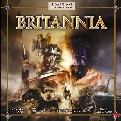
FantasyFlightGames was there but no Britannia copies were in sight (they could have sold out, they had two days before I got there).
The economy is clearly part of the effect. Avalanche had a booth but sent only one person instead of three. The attendance seemed to be down, and certainly judging from attendance at seminars, there were fewer people at Origins this year. (Official attendance may look better because this is the second year for the $10 ticket that is only for the exhibits and such.) I talked with someone who'd just been to an engineers conference where attendance was 40-60%, and he said others there had told a similar story about other conferences. Who knows what it will be like next year? I expect the recovery from this debt-based recession to be very slow and limited, as we're not willing to stop going further into debt as a country.
The usual Chinese companies trying to drum up business manufacturing game parts seemed to be missing. Someone told me that the minimum order from China had risen from $5,000 to 10,000 PIECES of an item. Though I talked with someone else who had found a Chinese producer of nice plastic parts willing to make just 2,000 of each.
Some companies are doing well. Decision Games is growing in their magazine production. "Strategy & Tactics" has a 15-20K circulation altogether, more without the game. They emphasize analytical articles and maps maps maps. But their "Fire & Movement" magazine was not mentioned in the Decision Games update, so it may be that magazines about games rather than about history aren't doing well.
Attendance at Monte Cook's seminars--admittedly, they weren't in the convention book, but were listed on easels in main thoroughfares--was quite low, considering how well-known he is in RPGdom (wrote the 3rd Edition Dungeonmasters Guide, among many others). Attendance at my seminars was way down from the past two years.
I have always disliked the money aspects of Orgins: you pay extra to play games, even open gaming! You pay extra for a lot of the seminars ("Origins War College"). Mine are free, btw. WBC is a MUCH, MUCH more friendly environment for game playing, but as it's limited to boardgames (which are a stepchild at Origins, I think), the minis guys and CCGs types and RPGers aren't at WBC and probably wouldn't be welcomed in large numbers.
There wasn't much opportunity for business from my point of view, and I'm not sure I'll attend next year.
I did my usual survey, counting people walking past a particular main thoroughfare. The result (out of 200, counted in two separate sets of 100) was 45 women out of 200, and only three black people (all males). This fits with previous years, relatively many women, very few blacks. I saw no one who appeared to be Hispanic, but I think that's too hard to notice in any case. There is definitely a cultural difference when it comes to attending non-electronic game conventions. (I'll have to count at the next video game convention I attend, but I think the proportion of blacks is higher.)
Friday, July 03, 2009


Thursday, July 02, 2009
Ways to reflect the "fog of war"
This originally appeared a couple years ago in "Against the Odds" magazine.
Ways to reflect the "fog of war"--
designing in uncertainty in conflict boardgames
Lewis Pulsipher
(All game titles in the following are trademarks of their respective designers or publishers.)
I want to discuss how uncertainty can be introduced into wargames, uncertainty about an opponent's location, his strength, or his goals, uncertainty about timing and the actions of non-player forces, and uncertainty about the outcome of combat. This uncertainty is often called the "fog of war", and is one of the major influences on warfare, and sometimes in classic games. (In card games such as Bridge and Poker, for example, you don't know the opposition's strength--though you learn their strength when you win the bidding round in Bridge.)
The original Avalon Hill commercial wargames such as Tactics II, Afrika Corps, and Stalingrad provided complete information about the opponent's strength, goals, and location--the major uncertainty arose from combat. Risk and Diplomacy, dating from the same period, similarly provide complete information, except that in Diplomacy the movement is simultaneous, introducing a considerable element of uncertainty.
Nowadays in most video games we have a variety of "fog of war" levels, as in general the nature of a computer game makes uncertainty the norm. Even if the manual tells you how combat is conducted, it may not be entirely clear what makes for success and failure. You rarely see the opponent's moves, unless the units are near your own. And you may not even know what the opponent's objective is. Unfortunately, this level of uncertainty is not easy to reproduce in boardgames, and some would argue that it isn't necessarily desirable.
The major source of uncertainty in ANY multi-player game, of course, is the intentions of the players themselves. What I'm discussing here is uncertainty that's built into the game by the designer.
Uncertainty about strength (and location)
"Block games", in which a player can see the strengths of his units on the back sides of the small blocks, but an opponent can only see the blank side indicating that a unit is present, but cannot know the type or strength of the unit until a battle occurs, are very popular in the hobby nowadays. They are, practically speaking, a development of Stratego (my original Stratego set actually used wooden blocks). While in this country we knew only Stratego until recently, in Britain there were several games using this principle. These games are quite old in origin, before World War One for the first (I strongly suspect this is the game from which Stratego is derived). The titles included L'Attaque, Dover Patrol, and Tri-tactics, and the publisher was H. P. Gibsons, as I recall. My own game Swords & Wizardry, also published by Gibsons, used the same method, but was more complex than Stratego and introduced a die roll into combat to increase uncertainty.
R. Knizia, the famous "Euro" game designer, produced a Lord of the Rings game that resembles Stratego in some respects. The German title is "Der Herr
der Ringe - Die Entscheidung" (Lord of the Rings--the Confrontation, I think).
In block games we usually have uncertain strength, but not uncertain location. However, it is always possible to have a piece represent no units at all, should the designer prefer it. You can be faced with a long line of pieces, not knowing which might represent powerful forces, while others are decoys representing nothing.
Unfortunately, the nature of any block game is that you can have only two opposing sides. It's very difficult to employ three sets of blocks such that the backsides of two sets are hidden from each opponent, and the problem is progressively worse when there are more players.
About 40 years ago I owned a naval game, ordered through a comic book, from Helen of Toy Company that featured hidden strength in modified form. The hundred or so plastic ships had different forms, so that you could tell a cruiser from a destroyer from a submarine from a cargo ship; a cruiser could always defeat a destroyer, a battleship would always defeat a cruiser, and so on, but a strength number on the bottom of the ship determined which destroyer was strongest within the destroyers group and which cruiser was strongest amongst the cruisers. We could do the same in a Stratego-like block game if the blocks indicated which type of unit they represented.
I designed a multi-player space wargame many years ago that used upside down pieces to conceal strength (and sometimes existence) of units from the other players. Block games use the four sides of the block (other than the front and back) to enable an individual unit to have varying strength. This is not possible in games that use upside down units; on the other hand, a piece in an upside down game can represent no force at all, or can represent a VERY powerful force. It is particularly good for representing ships (naval or space). While an individual ship is either at full strength or destroyed, a group can vary in strength, from one "scout" to four (or more) "dreadnoughts" in one piece.
A drawback of upside down units is that the owning player cannot easily see what he's got. Some players strongly dislike the need to manipulate a pile of pieces to see what's there. Another drawback is the cost of coloring the backside of each piece.
Hidden units, of course, had been used in other wargames long before I tried it. Sometimes it is implemented simply as "you can't look inside a stack of opposing pieces", sometimes as actually placing the pieces upside down. Another method is to use numbered counters or distinct figures, by some means hiding the units represented by each counter. Nowadays, you may have pieces that represent the location of units, and those units are represented by cards laid out in some manner. You don't actually have military unit pieces, just the cards themselves. And if those cards can represent several units, different types of units, or no units at all, you have a strong "fog of war" element.
The hidden strength aspect can be taken further. Nathan Kilgore pointed me toward his game Iron Tide: Panzers in the Ardennes. It "has a built in semi-fog of war system using random chits for the combat strength. The fog of war aspect is strengthened by the inability of your opponent to inspect stacks and the hidden chits. Also, because of the complete random chits, the owning players don't even know the exact strengths of their own units until the first time they engage in combat."
Entirely hidden location dates back to Kriegspiel chess (neither players sees the other player's pieces, referee required) and traditional Battleship (originally a graph-paper and pencil game, no referee required because there is no movement). Many computer conflict games (most real-time-strategy games, for example) use hidden location of all but nearby opponents.
Uncertainty about capability
What can the enemy do? In some games this involves more than just unit locations and strengths. I suspect one of the attractions of the "card-driven" wargames is uncertainty about the opponent's capabilities, because you don't know what cards he has drawn. Hammer of the Scots, a popular block game, uses cards as well as blocks. Many of the "card-driven" games provide much of their detail and "chrome" (historical feel) via the various cards and what they allow the player to do, and what the player cannot do without the appropriate card.
Jonathan Hager says "In Memoir '44, each player has a set of cards. Each player may even have a different number of cards indicating how prepared the forces were when engaged. During play, there is some uncertainty to where the player will attack next. A player must have the correct card in order to move units in a given area."
The recently-published War of the Ring game uses special dice instead of cards to generate uncertainty about capability. Each dice face enables a different action by a player; players can see the dice rolls of the opponent, then play their actions one by one, but before the dice roll they cannot be sure what their opponent will be able to do, let alone when.
Event cards are a popular way to represent uncertainty of capability. Does my opponent have a card that will increase his movement rate? Can he cause a plague in my homeland? Will he be able to counter my Famine card with his Good Weather card? Can he force a dynastic marriage alliance on me at an awkward juncture? And so on.
In some sense simultaneous movement can be seen as representing uncertainty about enemy capability. Unfortunately, simultaneous movement either requires computer assistance, or a small number of pieces (as in Diplomacy, where a player starts with three or four pieces and wins at around eighteen). In a game I'm playtesting now I use a mechanically more practical approach to this. Each player has a standard set of Action Cards representing various sets of activities. He places five of the cards face down on a layout; then each player in turn plays the first card, and acts accordingly, until all #1 cards are played, then the second card is played, and so on. Each card offers the player a restricted set of choices--for example, you can't move fleets or armies when you play the "Trade" card. Brian Leet calls this "committed intent", and says Wallenstein and Roborally use similar methods. I have not played these games, but understand that choosing the cards in Roborally is a little like procedural computer programming.
A problem with the block game Pacific Victory is that too much uncertainty is introduced, as all units look the same whether land, sea, or air. It's pretty unlikely in the real world that these unit types could be confused.
Uncertainty in combat
Dice are the traditional method of introducing uncertainty into combat. Avalon Hill used the old D6 combat table. Other games such as Risk, Axis & Allies, and Britannia use a dice roll for some or all units involved in combat.
In some games the cards govern what a player can do, but in others they affect combat. Germania uses "Battle Cards" instead of dice to introduce uncertainty in combat. Players have more control over what card they play than they would over dice rolls, sometimes knowing that a particular attack would be unwise because their hand of cards is poor, or knowing that they can try an even-strength attack because their cards are so good.
Some games such as Stratego or Diplomacy have no overt chance mechanism in combat, but guessing still comes into play at times owing to hidden strengths or simultaneous movement.
Combat methods involving no uncertainty at all are common. Vinci and History of the World use them, for example. It is also possible to devise a "combat table" that extracts losses exactly in proportion to forces (so, for example, in a 2-1 fight, the smaller side always loses twice as much as the stronger side).
Simpler and more "classical" games often completely avoid uncertainty in combat. Chess, checkers, Go, all do this (and in fact avoid all elements of uncertainty other than intentions of the opponent). This absolute certainty in combat is not usually what historical gamers are looking for, though it is popular in Euro-style games. In fact, you could make a case that one impetus toward Euro-style games has been dislike of dice-rolling in conflicts.
Uncertainty of Timing
One of the biggest problems of historical wargames is that most players know when some major event occurred that made a big difference in the outcome of a battle or campaign. For example, when playing a game about the ancient Near East, you know when the Hittites or Persians appeared. In Britannia, everyone knows that, in Turn 6, the Saxons are going to swarm into Britain in a major invasion; and players prepare for it.
This is a tough nut to crack, and forces a designer away from simulation toward representation if he wants to reintroduce uncertainty. For example, in a Near Eastern game I'm working on players roll a die to determine whether an historical group appears or not. In the turn before it actually appeared in history, a roll of a 1 or a 2 causes the group to appear early. In the turn of actual appearance, a 1 through 4 will do it (if it didn't appear in the previous turn). In the turn after historical appearance, the group will certainly show up. Then we have something that can make for a better game, but is less true to the details of history (though arguably it is truer to the spirit of history . . .).
Event cards can introduce uncertainty of timing. Cards may require certain conditions to be met before they're played, but until someone plays the card, the "Big Event" does not occur. In War of the Ring, it's likely that some events of great advantage to one side or the other will occur during the game, but not until the appropriate card is played.
Brian Leet points out that "in many war games there are tracks that represent certain inevitabilities that are impacted by the player's actions. Elements such as discontent, moral or political will all may have a certain outcome, but uncertain timing (or be potentially avoidable altogether with careful play, perhaps allowing the Roman Consulship to survive is
a good historical possibility)."
In some "sweep of history" games uncertainty can be introduced at the end of the game without detriment to historical fact. Multiplayer games that don't include uncertainty about the timing of the end of the game can suffer from "ganging up on the leader" and bizarre moves, simply because players know the game is about to end (History of the World and Vinci can have this problem). I counter this by introducing a chance element (die roll) in the game ending. The roll needed varies with other conditions in the game, but in any case players can never be sure the game will end in a particular turn, and the roll comes after the turn is over. This tends to eliminate the end-of-game shenanigans that are often so unlike historical reality.
Uncertainty about Non-player Forces
Often in wargames, if there are any forces not directly controlled by players ("neutrals"), they are usually completely passive. In other words, players face no uncertainty about the actions of neutrals. In Germania, some invasions come at set junctures, while others occur when appropriate Event cards are played. Players temporarily control the invaders, who are anything but passive; in some games there may be more invaders on the board than player pieces.
Frequently there's a political dimension to non-player forces. Will they join the war or will they stay out? Often there are ways to introduce uncertainty to these questions. A draw from a deck of cards can be used to "control" non-players (this can even be seen as a form of programming), and if nothing else, a dice table can remove any certainty about what the non-player forces will do.
Uncertainty of Objective
Finally we come to uncertainty of objective. In war, you generally know the overall objective of your enemies, so the uncertainty is in how they're going to achieve it. But at times, especially in tactical as opposed to strategic situations, you may not even be sure of the objective.
I don't recall seeing uncertainty of objective much in wargames. The obvious method to produce it is an "objective card" selected by each player (perhaps at random) at the start of the game. Another method is to offer several ways to win. Players can disguise which method they're actually pursuing, possibly introducing an element of surprise into the game.
I once wrote a D&Dish tavern scenario in which each character, played by a player, chose a random objective. This was published in White Dwarf over 25 years ago and folks at conventions are still playing it, evidently enjoying the additional uncertainty. I suspect uncertainly of objective appears more often in Euro-style games than in wargames, frequently reflected through several ways to win the game. Opponents know what those ways are, but cannot know which way an individual player may be pursuing.
Peter Riedlberger points out that versions of standard Risk for the past 20-some years have included "order" (objective) cards, something I've not seen as my Risk-playing days go back to the late 60s. These cards are included in the latest American edition. Unfortunately, he says, the objectives are not equally difficult to achieve. Torben Mogensen says that this imbalance relates to the number of players, as some objectives may be easier or harder to achieve depending on the number of participants Too bad the developers didn't have multiple objectives on the cards, one for each possible number of players, so that they could be properly balanced.
Torben also points out that the family game Careers let players secretly choose to allocate his goals amongst three objectives (fame, happiness, and riches). I had forgotten all about this game (which originally appeared in the 1950s), one of the better family games I can recall, perhaps in part because of the hidden objectives. I am experimenting with a variation of this in Seas of Gold, in which players secretly allocate victory point weights to each of three objectives (territory, culture, and gold), or in which each player draws a card that secretly allocates weights for him.
There certainly have been wargames that used uncertainty of objective. Peter Coles says this "was used brilliantly by WRG in a 1970s Naval wargame called 'Sea Strike'. Each side drew an envelope containing a card detailing force size (in points) and objective." I'm sure there are others.
I'm told that GMT's Ardennes '44 has four different ways for the German player to win, all in effect. The German player practically can attempt only one, and must try to mislead the Allied player about which he is pursuing.
Jonathan Hager says that in Memoir '44, "the overall objective is clear - obtain X medals. But how those medals are obtained could be by killing units, exiting the board (for some scenarios) or taking a critical location."
Brian Leet suggests that Illuminati should be in the list, with one participant having a secret objective. And "'Shooting the Moon' in hearts is a classic example from traditional card play."
Who is Uncertain?
It's worth pointing out that in most of the cases I've described, only the opponent is uncertain about something. But in a few cases (as in Iron Tide: Panzers in the Ardennes), neither player is certain.
Is Uncertainty Good?
Is uncertainty a good thing? "Classical" game players prefer as little uncertainty as possible in their games (chess is an example), while "Romantic" players like a considerable level of uncertainty as it helps them pursue the "Great Play". Peter Riedlberger comments that "you can have an undesirably dense 'fog', to keep the metaphor. All Stratego-likes I know are mostly about bluffing. This can be fun, but is quite different to other, more tactical games." I wonder how much of good generalship in the real world is about bluffing; look what the Allies did in 1944, convincing the German high command that the Atlantic invasion would be at a location other than Normandy, even after the landings began . . .
Students of history know that real warfare can be a very uncertain activity. Amongst wargames, uncertainty is seen more in "simulations", less in "representations", and yet less in "semblance/theme" wargames. Looked at from another point of view, if you want a good game, the level of uncertainty must be kept in check, or in the end you have nothing more than a game of chance (as in traditional Battleship).
Monday, June 22, 2009
Characteristics of successful designers
This is another article that appeared on GameCareerGuide some months ago.
Characteristics of successful designers
“I have never let my schooling interfere with my education.” Mark Twain
"Nothing in the world can take the place of Persistence. Talent will not; nothing is more common than unsuccessful men with talent. Genius will not; unrewarded genius is almost a proverb. Education will not; the world is full of educated derelicts. Persistence and determination alone are omnipotent." Calvin Coolidge
Game designers must have a productive orientation in life. Game design is not something you turn on and turn off daily, it’s something that must be with you all the time, that you must make an effort to pursue. Persistence is more important than "creativity".
Many novelists write all their adult lives, even from childhood; most game designers design games from an early age, most artists draw from an early age. But some come to it late and are still good at it. Most of the people who write novels or design published board and card games have full time jobs. For example, once-profilic SF/F novelist Glen Cook never gave up his General Motors assembly line job, writing during his commute.
Freelancing is much less common in the video game industry, which is where most full-time designers work for a particular game development studio.
Many people involved in publishing non-electronic games work part-time, relying on a “day job” for their living. Most game publishers, even in video games, originated as self-publishers, distributing the "dream game" of the people who founded the company.
If you read good advice about breaking into the game industry, that advice will include "read as much as you can" and "educate yourself as much as possible", even as the advisors suggest that a bachelor's degree is a good idea. For example, everyone interested in "breaking in" should read the wealth of advice on Tom Sloper's Web site (sloperama.com) and his monthly IGDA column. I’ve used a book by Ernest Adams, Break into the Game Industry (http://ernestadams.com/), now a bit long in the tooth (2002) but still available. His advice is well worth reading (especially about getting a job and how to keep a job), and amounts to the same as Tom's.
“An education isn't how much you have committed to memory, or even how much you know. It's being able to differentiate between what you do know and what you don't.” Anatole
In general, game designers must have an “educated” attitude, even if they have no more formal education than a high school diploma. Let me hasten to say that "educated" refers to an attitude, not to earned degrees. Fortunately for us, the game industry does not yet have the "degree-itis" that is invading all walks of American life, as though the only way you can learn something is to get a degree in it. The industry is a "meritocracy", where you are valued and hired for what you can do and what you can create. "Educated people" doesn't necessarily imply academic degrees, it implies a certain attitude toward life. It's that attitude that the game companies want and need to succeed. So I am not talking about the classic idea of the "well-educated" person, which relates to particular things like knowledge of the Classics.
No, an "educated person" is a person with a certain attitude toward life, not necessarily one who has a degree. There are people with legitimate Ph.D.s who could be called uneducated (though this is unlikely). There are certainly many people with bachelors degrees who are essentially uneducated. And there are 17 and 18 and 19 year-olds who clearly are educated people, though they haven't had the time to accumulate a wealth of experience and knowledge that is associated with being educated.
So what makes someone "educated"? An educated person wants to KNOW, and will make an effort to find out things. An uneducated person will tend not to bother. Here's a simple example. An educated person, confronted with a word he doesn't know, is likely to look it up. He wants to improve his understanding (of language, of the world). An uneducated person isn't going to bother.
Further, an educated person teaches himself or herself when necessary, from books or otherwise, rather than wait for a class. The uneducated ones will frequently whine "I haven't been to training for that". Not surprisingly, educated people tend to read a lot, and uneducated ones don't.
In my classes I assign students the "task" of maintaining a notebook or other "data store" in which they record game-related ideas as they get them. It's a habit they should get into on their own, and I try to teach attitudes more than "facts". The "uneducated" attitude surfaces soon: "how much do I have to include in this?" The student wants to know the minimum, rather than take the educated attitude that this is something he should do anyway, that is worth doing, and he should put some time into it.
Educated people like to use their brains in top gear; uneducated people prefer to run in "idle" or first gear. The old-fashioned "thirst for knowledge" is what I'm talking about. This is part of a productive orientation.
What's important is what you know and what you can do, not what classes you took or what degrees you have. Good classes help you learn much quicker, as you take advantage of the experience of teachers and authors, but good classes are not always available.
Characterize what a game designer does in one word
There are lots of choices. I’ll describe each, starting with the most important first:
· Think
· Communicate
· Innovate
· Control
Think
The game designer needs to have his brain in gear all the time. When playing games, he should be thinking about what works, what doesn’t, and why. He must keep his mind open to ideas at all times. He must think about how to improve his game even when (if) he enjoys playing it. The game can always be improved, we just come to a time when the improvement we can get isn’t worth the time it will take (the law of diminishing returns).
Most important, the designer must think critically. “Fanboys” (or girls) will never make good game designers, as they typically praise a game or genre uncritically. Self-criticism is especially important. If you can’t recognize that your favorite mechanic just doesn’t fit, or just isn’t needed, then you won’t design good games. Self-indulgence is “verboten”.
Communicate
This is much more important for video game designers than for non-electronic game designers. Most video games require a team to produce. The game designer must communicate in writing and orally everything about his game in a manner that enables the artists and programmers to reproduce it. This is really hard to do!
Non-electronic game designers can make the prototypes and write the rules themselves, but still must communicate well with playtesters to improve the game. Moreover, since the rules are not enforced by computer, it’s especially important to write rules that are clear, concise, understandable.
Finally: if you haven't written it down, "it doesn't count."
Innovate
While game design is “10% inspiration and 90% perspiration”, that 10% is important. It’s not hard to “design” the next shooter clone. Finding that spark to make it more than a clone, more than just a shooter, separates the most successful designers from the rest. Too many designers design the game they want to play, which is almost exactly like some existing game that they love to play. “Think outside the box” applies here.
Control
Game designers do not need to be "control freaks", but they need to carefully control everything in the design of the game. People who buy games want the designer to make every effort to produce an enjoyable game. They don't want to depend on random this or that unless the designer has decided that randomness will create the best game experience.
Example: students making a form of "capture multiple flags" boardgame dropped the flag markers on the board to create a random distribution. My jaw dropped.
If you're the professional designer, you should work out a set of excellent and interesting positions for the flags, rather than depend on chance placement. Why trust enjoyment of your game to unnecessary chance? Yes, it's more work for the designer, making up and recording the patterns of placement, playtesting each one multiple times. But the result will be a fairer and better game.
Do I have to be an outstanding player?
Being a “dynamite” game player, whether it’s in Halo 3 or Mario or Command & Conquer or Axis & Allies, does not translate to being a good game designer. The skills and points of view are very different.
On the other hand, if you have played Tic-Tac-Toe (Noughts and Crosses) some, and have not realized that it is always a draw when played optimally, you have a mountain to overcome, because you’ll likely not see the optimal strategies in more complex games.
In other words, you’ll help yourself a lot if you’re a good enough game player to quickly see the best strategies and tactics in a game. You can avoid dominant strategies and other pitfalls that otherwise your playtesters will have to reveal, at a cost of time and frustration.
You needn’t be an outstanding player, but it helps to be a good player.
Friday, May 29, 2009
Game Origins
This originally appeared on GameCareerGuide, 9 Dec 08. For the diagram refer to the original (click on the title of this post).
Even in literature and art, no man who bothers about originality will ever be original: whereas if you simply try to tell the truth (without caring twopence how often it has been told before) you will, nine times out of ten, become original without ever having noticed it. —C. S. Lewis
Game-related ideas come from many sources and can be in many shapes and forms. At some point, ideas coalesce into something that can become a game. Usually there is some immediate stimulus, some spark, involved.
I want to discuss the kinds of sparks that are common to new games, that is, where and how do games originate?
Ideas for new games usually come from one or a combination of several aspects of games. These are:
• theme (story, title, image)
• mechanics
• a particular game, a game system, or a genre
• components (mostly, non-electronic games)
• constraints.
The occult-looking lines in the diagram are meant to indicate that a game may have more than one kind of origin.
Let’s describe each in turn. In most cases, only the designer will know the origin of a game, so our examples will be limited.
Theme: Story, Title, Image
The theme is some set of circumstances, usually a story, that can affect the game’s mechanics, appearance, and gameplay. It may be as simple as a title or an image, in the imagination or in a tangible form, of some event or activity.
Most Star Wars games have a theme deriving from the original Star Wars films (1977-1983), Civilization has a theme of the rise and development of civilization. Age of Empires is a more consistently military approach to the same idea. Britannia is a board game where the theme is a thousand years of British history (after all, “story” is integral to “history”).
In general, any history, real or imagined, as the Star Wars history is imagined, is a theme. There are many board games based on (that is, borrowing the theme of) video games, and vice versa. For example, Civilization the computer game, though not directly derived from Civilization the board game, is certainly related to it, while Starcraft: the Boardgame is clearly derived from the computer game.
Sometimes the story is very simple, as in the board game Dragon Rage: attacks by monsters, sometimes dragons, on a city. The title alone helps characterize the game. At least one game’s theme comes from a story that was written to support a set of commercial miniature figures (Valley of the Four Winds).
Many European-style board games have tacked-on themes that don’t affect gameplay or mechanics at all, though they affect the appearance of the game. Despite the name, the gameplay in the board game Ming Dynasty has exactly nothing to do with
Many AAA video games aim at “dream-fulfillment”, a subcategory of theme/story that some might list as a separate kind of origin. What kind of hero, or “star”, or expert, or even god, do you want the player to “become” through your game?
Mechanics
The non-electronic version of Dungeons and Dragons can be seen as a game originating in mechanics. There were many fantasy games, but the role-playing mechanic, which more or less began the role-playing game genre, is the defining characteristic of the game.
Dance Dance Revolution and Guitar Hero can be thought of as games that likely originated in mechanics. In a postmortem of the latter game published in Game Developer magazine (February 2006), two of the developers from Harmonix, Greg LoPiccolo and Daniel Sussman, said Guitar Hero was really designed around letting the player feel like a rock star, rather than a game designed around a new controller. The peripheral device came about as a result of giving this rock star feel to the player.
In both Guitar Hero and Dance Dance Revolution, we have an unusual mechanic, the flow of directions that the players follow to make certain physical moves.
A Particular Game, a Game System, or Genre
A “system” is a case where a set of mechanics has become so well-known that games are made using most or all of the set. Many historical board games begin with a system, such as “block games” (Hammer of the Scots), “card-driven games” (We the People), Risk-like games (Risk Godstorm), Britannia-like games (Italia, China: The Middle Kingdom), and “committed intent” games. Video games, apart from obvious sequels, very often adapt a system, and video game genres themselves tend to involve challenges to players that are common to most games of the genre.
Many video games originate with a genre. “We want to make a real-time strategy game,” or “let’s make a shooter.” There are genres in non-electronic gaming, but they tend to be broader (RPGs, collectible card games, war games). The genres in video games are quite specific, tending sometimes to straightjacket the designers’ efforts.
Often the genre goes hand-in-hand with a theme or system. Battle for Middle Earth is a Lord of the Rings themed RTS. LOTR Trilogy Risk is a “Lord of the Rings” themed Risk-like game.
In the end, many games derive directly from specific other games. In the video game world, the “safe” way to go is to design a game that is much like an existing successful game, but just enough different to be unique and to be perceived as an improvement. While derivation from another game is probably the most common method of origin, it is also probably the least successful, because too many resulting games suffer badly from being “too derivative.”
Components (primarily non-electronic games)
On the non-electronic side, components can be at the origin of a game. In my own experience, Law & Chaos originated because I wanted to make a game using the “jewel-like” glass beads that have become popular for plant displays, and another game originated in a desire to use stackable plastic pieces from an educational supply house.
A component could be a special controller, such as one allowing the video game player to “drive a car” in a natural way. It’s possible that Dance Dance Revolution was derived from components. I don’t know whether the mechanic or the component came first -- or maybe they came together.
Constraints
I’m going to discuss constraints at some length, as this is where the greatest variety and the greatest limitations can come from.
Are you a person who works better when faced with a deadline? I believe that many people do better work when faced with constraints, whether deadlines or something else. This is particularly true in art, but likely true in most walks of life.
In effect, everything a designer does is considered working within constraints. The answer to the question “Who is the audience” provides constraints. If your audience is preschool children, you can’t design a game that requires a lot of math (or reading). If you know your game will be a first-person shooter, your design choices have been heavily circumscribed.
When you playtest your game, the constraints are more specific. “Is this enjoyable” for my target audience? Is that too complex, or too simple? Does this element contribute to gameplay, or shall we “lose it?” Instead of that, what I’m talking about in this “origin” are additional constraints on the kind of game you want to make, imposed as part of the process of conception. I think that a good choice of constraints -- choosing more limited goals than “let’s make a shooter” -- will lead to a better game.
Let me generalize. In many fields of art, periods of fairly clear “rules” for how to create art (for example, the sonata form in music or the three-movement form of a concerto) are followed by periods when there are no rules, until new rules are established. The greatest art comes from the periods when there are established rules. My example is primarily from music.
In the Rococo period following the Baroque, Johann Sebastian Bach’s sons and others made good music, but not the great music we saw before and in the succeeding Classical era as defined by Hayden and Mozart. In the current era of “modern art” (painting) there are no rules. Not everyone thinks modern art is rubbish, but I think it won’t get much respect in the future.
Yes, great artists often break some of the rules -- Beethoven comes to mind -- yet even they follow most of the “rules.” When all the rules are swept aside, people grasp for new sets of rules (Schoenberg’s 12-tone music?), but for a time the chaos results in little that is later recognized as great art.
Consequently, a designer usually benefits from additional limitations, whether imposed by a publisher or studio (“no foul language”), or by himself (“I want a one-hour trading game”). Even though a self-imposed limitation may ultimately be abandoned in the interests of making the game better, initially it focuses the designer’s efforts and is likely to provide better results. There are always self-imposed limits, because you have your own preferences. And if you work for a game studio or publisher, you might find that you have to jettison some preferences: If they say “make such-and-such a game,” you’ll do it or you’ll be out of a job.
In other words, self-imposed constraints are “rules” you use to try to help yourself create a better result, just as the “rules” for the various arts tend to yield better results.
In any case, be sure your idea origin isn’t simply based on the game being “just like I’d like to play.” You are not the audience. You are very unusual or you wouldn’t be designing games. And the game you’d like to play has likely already been designed. My favorite game for 20 years was Dungeons & Dragons, but I have never tried to design a role-playing game. I like D&D -- why would I want to design something just like it?
It’s too much time and effort to design a game just so you can play it. Game designers should design games that other people will enjoy playing. Most of the time, you’ll like to play them, too.
Let me quote Sid Meier (Civilization, Pirates) from Gameinformer 182, June 2008:
“[T]here's a danger with some of the newer designers, a tendency to design the game you like to play. That game has already been designed -- we need new games. There's a loss of a little bit of that ‘sky's the limit, anything's possible’ approach we had in the early days. We have these genres -- we have first-person shooters, we have real-time strategy. If you've played games all your life you've gotten these certain styles really beaten into you. To get people to think out of the box is a little harder these days.”
On the other hand, do not design a game you dislike to play yourself, at least not until you are very experienced. If you dislike it, why would you expect anyone else to like it? As you get more experience and understand players better, you may be able to design a game that appeals to a certain segment, even though it doesn’t appeal to you. At some point this may be worth doing, to get you “out of a rut,” to “think outside the box,” but it’s not something to be done lightly.
In any case, write down whatever you come up with. This is not naturally what younger people do, but you’ll forget many details if you don’t. The famous writer and director Stanley Kubrick (Dr. Strangelove, 2001, Eyes Wide Shut) is said to have distrusted anyone who didn't write things down. Where games are concerned, I feel the same way.
Monday, May 18, 2009
The "heart" of different media
The heart of a novel is characterization, though there's more to it than that (such as plot, dramatic tension, etc.). The heart of a game is gameplay, though there's more to it than that (interface, appearance, sometimes story, etc.) (And I might add here, the heart of an interactive puzzle (one-player video game) is challenge, though there's more to it than that. A considerable part of gameplay is challenge, but the challenges tend to come from other players, whereas in the interactive puzzle the challenge comes from the computer (and ultimately, from the designer).
Trying to use a game primarily to tell a story is like trying to use Excel as a word processor. You can do it, but it's awkward.
Just as, if I want to learn history, I read a good book rather than play a game, if I want a good story, I read a good novel (or watch a movie) rather than play a game. Playing a game is for gameplay, not story, not history.
But I know there are people who won't read a history book (though they'll watch History Channel). There are those who won't read a novel (though they'll watch a movie). And there are those who will play a game, but not for gameplay, for story.
Camping, realism, failures of game design
I'm always amused when my game design students complain that someone is "camping" in a shooter game. (They play at the game club, not during class!) They're trying to enforce some kind of standard of "honorable" behavior through peer-pressure, it seems. Yet I always tell them, if the game allows a player to do something that is a good strategy, some players are going to do it--I would. (In the same sense, "turtling" in a boardgame might be frowned upon, but if it's the best strategy for a player, some are going to do it.)
In other words, if the game fails to make camping (or turtling) an impractical strategy, yet the result is undesirable, there's a defect in the design.
The bigger problem, in shooters, is that camping is a reminder of the real world. In the real world people don't run around like crazy hoping to get two kills before they get killed! They camp and let the other guy get killed. In other words, camping is a reminder of the real world, a breakdown of the suspension of disbelief or or what academics call the "magic circle". It reminds players how utterly ridiculous and unrealistic shooters are--because there's no fear or death.
Shooter designers try to stamp out camping by showing someone who has just died who killed him, where they are, and what they've been doing. I'd think this is even more a breakdown of the magic circle, but since it helps players reinforce by celebration that they "pwned" the just-killed character, people don't seem to mind.
Sunday, May 17, 2009
Games are made up of "building blocks"

In a sense a game is a set of building blocks (or tinkertoys or whatever) put together in various ways. Some blocks are standardized (at least, from your personal point of view, stuff you've used before). But every once in a while you come up with a new block, different color, shape, connectivity, etc., or you find a new way to connect blocks.
So an experienced designer may be putting together known blocks in different ways, and maybe (or maybe not) adding something completely new.
Think of all the things that can be made with standard blocks. Lego? Click the article title for a photo of the Space Battleship Yamato, from the anime, made out of legos...
This idea of building blocks is a common one, and some people like to try to categorize the blocks used by a particular designer.
I see games as using both building blocks and systems. I do have several systems I use (Britannia is the obvious one), and there are building blocks I use often (such as Action Cards for "committed intent", either one card at a time or 4-6 at once per round). If it works, why not use it again? There's almost nothing completely original in games, but the combinations, the execution, create the unusual game.
Friday, May 15, 2009
The Impact of Reviews on Game Development
(This was originally posted as an "Expert Blog" on Gamasutra.)
At the Triangle Game Conference April 29, Julianne Greer, editor of Escapist magazine, moderated a panel discussion titled “Teaching to the Test: The Impact of Reviews on Game Development”. To explain the title, K12 teachers tend to teach what is on end-of-grade tests to the exclusion of almost everything else. The panel considered how much game development studios and publishers create games to meet the “test” of reviews.
Panelists included Juan Benito (Creative Director, Atomic Games), Eric Peterson (CEO of Vicious Cycle), Dana Cowley (PR Manager, Epic Games), and Shaun McCabe (Production Director, Insomniac Games east coast).
Their answer to the main question was “definitely not,” though they do pay attention to what individual game fans say on forums and email. The only exceptions would be a sequel, especially if another studio did the previous game, or a licensed property, where reviews of past games for that license can give clues to what needs to be changed or added.
Benito saw fan opinion as more "pure from the heart" than the reviews, which led into a discussion of whether reviews are influenced by manufacturers. This can be overt, through junkets or other “bribes”, or through the influence of advertising money. (Consumer Reports magazine refuses to accept advertising to avoid any appearance of influence by manufacturers.) While the panelists had heard of this kind of shady dealing, only one knew of it happening (from his days at Microprose); however, Greer stated that Escapist magazine had received such influence offers (which they rejected).
Yet there’s a danger of shutting out the non-hardcore audience if you base your decisions solely on feedback from the minority who express opinions online. McCabe said listening to players is so important that some companies have changed their marketing department name to something like “community relations”.
How much do reviews affect sales? I was surprised that no one cited any survey, as surely someone has investigated this question; panelists speculated that reviews have a strong influence on hard core players, but virtually no influence on casual (e.g., Wii) games, as those are impulse buys. Greer showed slides from research company EEDAR showing that certain categories of games (RPGs, Music & Rhythm, Sports) received consistently higher aggregate review scores than others, with some lagging far behind (Arcade, Skill & Chance, General Ent (such as Wii Fit), and Narrative). We have no way to know whether this is a bias from reviewers or an actual difference in game quality, though I’d suspect it’s because most reviewers are hardcore players.
Another interesting slide compared scores for 360 and Wii versions of the same title; the 360 scores were much higher than Wii for “hard core” game categories, much lower for “casual” titles.
Benito looks at the Wii as a "critique-proof platform". Another panelist joked that if you put the word “Party” in a Wii title, it will automatically sell at least 200,000 copies as parents want their children to be playing “party” games.
Peterson cited the Wii-exclusive game Madworld as a game that has very good reviews, but poor sales (180,000 according to VG Chartz, only 66,000 in the month of release according to Wikipedia). And his company has a children’s game with two and a half million sales but reviews in the 40s.
This was part of a discussion of the quality of reviews. Panelists clearly did not care for reviews in general, probably because they felt so many were poorly-written and often contained mistakes. One panelist specifically referred to the reviews on IGN and Gamespot as “white noise”, and all panelists clearly felt that reviews are often “subjective” rather than “objective”. Of course, “subjective” can be just as accurate (in fact, more accurate) than objective, depending on the situation, the problem is that reviewers don’t explain their biases and why they feel as they do, so readers have no basis to judge the opinions.
Moreover, with a single numeric rating, reviewers are going to go with their personal preferences, so, for example, a shooter fan reviewing a children’s game isn’t likely to give it a high rating (which is likely what happened with the children’s game Peterson mentioned).
The discussion was not intended to be a critique of reviews, but I’d make a number of observations. I used to be paid to review board- and RPG-related materials for TSR’sDragon and other magazines 25-30 years ago, but I’d not write assigned video game reviews, as a proper review requires playing through the game, a much larger time commitment for video games. Someone pointed out that film reviewers commit only two or three hours to watching a film, quite a contrast. Panelists had seen reviews where they knew the reviewer had barely played the game. In fact, this has influenced some companies to make sure the first few minutes of a game are exceptionally engaging, a good idea in general but especially good for the “snap reviewers”.
Magazine and Web site “exclusives” tend to be more favorable than reviews, as the writer knows the studio-publisher has done his company a favor by granting the exclusive. "Maybe that's why previews are so different from reviews.” This comes back to the nature of the fans, who go to the sites with the “newest news”, who want to see the latest artwork for the Zerg (in a recentPC Magazine) or see the latest screenshots. In my opinion this is a major reason why video game magazines are having a difficult time surviving: they can’t be as up-to-the-minute as the Web sites.
The “cult of the new” also tends to drive reviewers to snap decisions and sloppy behavior; if the review comes out too late, it’s no longer “news” and is ignored by many.
Some reviewers clearly don’t understand how reviews, of any medium, work. They should answer three questions:
• what were the creator(s) trying to do
• how well did they do it
• was it worth doing
To answer these questions they must explain “why”, not merely say “this is a piece of junk” or “I don’t like the graphics” or “what a dumb idea”. But this makes reviewing more difficult, more work.
If the reviewer separates these questions sufficiently, a reader can see that the children’s game was well-done, even though the reviewer thought it wasn’t worth doing because he isn’t interested in children’s games.
One panelist suggested reviewers ought to “take a step back” and watch others play the game, in order to acquire more than one point of view. They also need to put themselves in the shoes of a person who’s saved his pocket-money to buy a game, as opposed to reviewers who have piles of freebies to try out.
Reviewers who assign an actual numeric evaluation should provide several scores for different types of players, e.g., hard core, casual, RPG fans, shooter fans, whatever is appropriate to the audience.
Aggregation of reviews, and use of the aggregates in contracts, touched off a lively discussion. The personal preferences of the reviewer means a lot when he or she assigns only one number, not numbers selected for different kinds of players. Yet the numbers are now used in many contracts to govern the royalty received by a studio–the higher aggregate score leads to higher royalties. Panelists felt this was a poor way to do business, and that it was being used to take advantage of inexperienced developers to trick them out of some of the profit. Possibly it was also an excuse for a publisher to save marketing money, yet “you can't sell games without marketing” (Cowley). The panel did not officially include audience participation, but one beside-himself audience member finally asserted that the panelists were dead wrong (I can’t say his actual words!), that if the developer has confidence he should take the opportunity to make more with a high aggregate. Clearly this is a contentious issue, and with that we ran out of time.
1320 words
Law of Gaming Panel at Triangle Game Conference
(This was originally posted as an "Expert blog" on Gamasutra, not long ago.)
At the Triangle Game Conference on April 29, Alexander Macris, CEO and president of Themis Group and a graduate of Harvard Law School, moderated a panel discussion titled “The Law of Gaming: Legal Protection, Perils, Pitfalls for Game Developers.”
Panelists included Steve Chang (“the IP lawyer”), Zack Bishop (“the corporate lawyer”), and Jeff Young (“the trial lawyer”). All are involved in game-related practice.
I am not going to describe the five types of intellectual property protection, partly because I’m not a lawyer, partly because any serious game developer should already be familiar with them. Instead I’ll briefly report the answers to several of Macris’ questions.
Define important current legal issues in games:
IP lawyer: The scope of what you're allowed to patent on is changing. Business method patents used to be very broad, now the patent office is being much more cautious.
Corporate lawyer: Use of open source software (OSS) in games and the licensing consequences. Can all your proprietary code become subject to an open source license because one of your coders puts a bit of OSS into your game?
Trial lawyer: There is so much discussion via Internet (email, forums, etc.) that there are many more rocks to turn over to find that "smoking gun" bit of information that could make or break a lawsuit. You can spend hundreds of thousands of dollars or more collecting electronic material. Hence lawsuits become more expensive to pursue.
The most dangerous legal pitfall you've seen a company fall into:
Trial lawyer--lack of clarity in the contract and agreement between studio and publisher.
Corporate lawyer--Not thinking far enough ahead in case a game is a huge hit. For example, you may not think your game will ever be turned into a movie, and you’re very likely right, but occasionally it happens. If the developer has not been careful, conceivably they would have no rights to the movie and its profits. Another example, what if your game is published by a small or foreign publisher, and then one of the largest companies wants to buy the right to publish? How much of the money involved in the transfer will the developer receive?
IP lawyer--not giving yourself enough credit for the IP you developed (such as tool software). Or, say you have a philosophical objection to patenting software, recognize that you may cost yourself a lot of money by being unable to exploit a patent.
I’ve decided to use middleware to help me produce my game. Is this practical?:
Corporate lawyer--Yes with care. Is there a royalty for the software, or a flat fee? You could be paying millions in royalties in extreme cases. Think ahead.
One thing to know about the law of games:
IP lawyer--know what rights are available to you, so you can decide rationally what to do rather than stumble into something.
Corporate lawyer--protect your IP at all costs and expect success, look forward to big payout, make sure others can't get in the way. For example, a contract may include a "change of control provision," that you can't change who controls your company without breaching the contract. If EA buys you for $100 million, you breach that contract. Keep an eye on the fine print.
Trial lawyer--Hire people to make sure you get tight agreements to begin with so as to avoid litigation.
Some specific points came out during audience questions:
Trial lawyer–in an MMO people were conducting a funeral for someone who really died (the player, not the character); someone disrupted the funeral; they were sued for "intentional infliction of emotional distress."
NC Soft (City of Heroes) was sued for copyright violation by Marvel because people used the character generator to make the Hulk and other Marvel characters. Marvel lost the suit because they couldn’t prove NC Soft encouraged this; nor did it help that a Marvel lawyer had made one of the characters!
Who owns user generated content--be sure your agreement is clear.
Non-compete clauses (e.g. you can’t work on (such-and-such genre) games for a year after leaving out company) are very state-specific.
Trial lawyer--Every day, people with vague patents demand money from companies for alleged violation; often the company will pay the money rather than go through the time and expense of litigation. That’s the way it is.
IP lawyer--Typical cost for a utility patent application is 3-5 years, $10,000 to file, another $10,000 later. Design patents are much less.
They think EULAs (the contracts you must agree to when installing software) are becoming more enforceable in the courts over the past 10-15 years.
Trial lawyer--When will a video game company be sued for having “caused violence” in someone. This has already happened to Judas Priest and Ozzy Osborne for their music.
740 words
Monday, May 11, 2009
What do the systems of games amount to?
What do the systems of games amount to?
The goal here is not to list what the objective or victory condition is in a game, but to say “what the game amounts to” or “what is actually happening”, “what is the player actually trying to do?”
The biggest problem with this list is whether to include the psychological or just the “physical”. Poker is about bluffing, about reading the other player, yet what the game amounts to in each hand is a form of pattern-matching plus collection (of money). I think I’ll leave the psychological out of this list, and stick to the systems.
At some point another problem is, what is a game? For example, I’d say most single-player video games are actually interactive puzzles, not games, but we call them games. Fortunately, the list below also applies to many if not all puzzles.
“Achieve a particular state” is the generalized version. Victory points are a generalized way of doing several different things at once. Sometimes the “state” is very simple, as in rock-paper-scissors where you want to make a pattern, such as paper to the opponent’s rock.
The list includes the general activity, then some of the common variations.
When we come down to it, most games are about just a few things–in no particular order:
1. Get to a particular place
Get there fastest (a race) [player interaction may be missing]
Get your any of your pieces there (Axis&Allies enemy capital)
Get a special piece there (football, hockey, many other team sports)
Get to end of the story (console RPGs)
2. Collect something (many card games, many video games)(sometimes economic)
Find something (exploration) (Easter egg hunt)
It drops in your lap (draw a card)
Take it from someone else (Monopoly, some card games especially trick-taking)
Don’t collect something (Old Maid, Hearts, etc.)
3. Wipe someone or something out (Risk, shooters, checkers, bowling!)
Wipe out one thing—chess
4. Achieve patterns in something (getting to a place could be seen as part of this!)
Patterns in piece location (this includes rock-paper-scissors, Tetris, many puzzle games)
Only your pieces (Tic-Tac-Toe), or yours plus opponent’s (rock-paper-scissors)
Patterns in relation to the “board” (Scrabble, Carcassonne)
Patterns of cards (related to sets–e.g. Canasta)
5. Improve your capabilities. This is often subsidiary, a way to achieve something else. Common in RPGs, vehicle simulations, construction/management simulation, collectible card games)
6. Survive, Especially common in arcade games (which are generally unwinnable).
I’m not sure about “engine” games, where you’re trying to make the right moves to take full advantage of an often economically-based system. In the end, you’re likely doing one of the six things above when you make a “right move”.
So what have I missed?
I’m sure other people have made such lists, but I need references to such.
Saturday, May 09, 2009
North Carolina’s Research Triangle–“the hub of East Coast video games?”
This past Wednesday and Thursday saw the inaugural edition of the annual Triangle Game Conference (TGC) in
According to Alexander Macris, CEO and President, Themis Group, Inc., and President of the Board of the Triangle Game Initiative (http://www.trianglegameinitiative.org/), the conference is another step in the growth of video games and simulations in the area. “It’s worth noting that the seeds of the game development industry in the Triangle area go all the way back to the graphics programs at NCSU and UNC in the 1960s. Those graphics programs created talent and companies that focused on computer graphics. Several of those companies, such as NDL (started at
The Raleigh-Durham-Chapel Hill area, known as the Research Triangle, is now home to more than 30 game development companies. The Triangle is also home to the most commonly used video game engines, Unreal and Gamebryo. Recently announced company expansions and relocations include:
– Destineer Studios
– Electronic Arts
– Emergent Game Technologies
– Epic Games
– Vicious Cycle Software
– Insomniac Games
– Spark Plug Games
"The Triangle region has an ongoing supply of entry-level staff available due to the local colleges." said Macris. "What it does not have is a large surplus of highly experienced game industry vets. Experienced game developers generally become available when a game studio lets them go. That works when some studios are growing and some are shrinking. But since all of the local studios here in the Triangle are growing and none are letting people go, the area is importing talent. We’re adding about 200 jobs per year." I've found only one Triangle company that has recently laid off employees, Funcom, but that resulted from the lack of success of Age of Conan, and they are now hiring again.
Why has this growth occurred?
A couple years ago Jerry Heneghan of Virtual Heroes explained a major advantage: he can hire someone for less than they might make in
Many people from the eastern US also prefer to live in the east, nearer to relatives, than in
And those who have tired of making "entertainment" can work on games that matter, "serious games" and simulations.
The Triangle is home to three major research universities and 15 other post-secondary schools, and support specifically for game development is coming from local community colleges and from NC State in
Meetings of the Triangle IGDA chapter (http://www.igda.org/nctriangle/ ) are usually attended by more than 200, which causes venue problems–not many company premises or schools can cope with such numbers.
This growth in games occurred despite an absence of tax incentives to game companies moving to the Triangle; a bill is in the legislature to provide such incentives, but is unlikely to pass in the current economic climate (the NC constitution requires a balanced budget).
Quality of life is an important part of the Triangle's attraction. This is a continuation of what has been happening in the Old South for decades: costs of living are lower in part because labor is less expensive (and there are almost no unions), there's lots of room for those who want to live "in the country", and the very warm climate is attractive thanks to that blessed post-WWII development, residential air conditioning. In the larger cities of
When I first came to the Triangle (from
Although NC is the tenth most populous state, there is plenty of room. The ocean is three hours to the southeast, the mountains five hours to the west. It’s possible for a person who is willing to commute for an hour to the Triangle to live in a large house on several acres, on one of the many man-made lakes, for less than a quarter million dollars.
It's easy to see why area leaders believe the Triangle will continue to attract video game creators, and become the "hub of East Coast video games."
To return to the conference, TGC was preceded in recent years by NC Advanced Learning Technology Association’s (http://ncalta.org/) annual conference and Walter Rotenberry/Wake Technical Community College’s annual Digital Game Expo. Macris said, "there are certainly close ties between Wake Tech, Walter Rotenberry, and TGC. Walter is a member of Triangle Game Initiative and has been one of a handful of leaders who has guided Triangle Game Conference forward . . . the show would not have happened without Walter and DGXPO."
The two-day conference included two keynotes and 40 presentations/panel discussions, with an overall theme of “Innovate or Die.” The conference temporarily outgrew its Marriot/Raleigh Convention Center facilities as the Wednesday keynote by Dr. Michael Capps of Epic was “standing room only” for perhaps 250 listeners, with more watching an external feed. We'll report on two of the panel discussions separately.
You can view a map of the area game development companies at http://www.trianglegameconference.com/media/misc/TriangleGames_Map.pdf
Subscribe to:
Posts (Atom)