





 Posts
Posts


I’m probably not the best person for finding playtesters, but I can give you some ideas.
A friend of mine thinks that when Facebook finally gets its act together about groups then there will be lots of regional/local game groups to choose from. Until then Meetup groups are all over the United States, and usually cost nothing to joining (the organizers have to pay a monthly fee) http://www.meetup.com/. There are general game groups, role-playing game groups, groups for specific games like D&D or chess, and so forth. If you’re willing to pay the monthly fee you could start a Meetup yourself for your local area.
If there’s a college or university around, look for a game club. Search for “game” or “club” on the college’s Web site. For example, North Carolina State and Duke University both have tabletop game clubs, and NC State also has a video game club. Unfortunately that’s 50 and more miles away from me, and my local city colleges and universities don’t seem to have game clubs. Of course you can always try to start one, although some schools make it difficult, especially for someone who isn’t a student or employee of the school. Game clubs may exist in high schools as well.
Many game shops host game nights. In my area (230th largest metropolitan area in the country) there are three shops that hold game nights (or Saturdays). In the much larger Triangle area there are several more than that.
Some game shops will let you put up a notice that you’re looking for gamers. Through a lucky succession of circumstances that’s how I met my wife in 1977.
Some online game communities have search capabilities so that you can look for people in your local area who play games.
Your local library may be willing to host game sessions, although in my particular case I find that they don’t let people reserve a room regularly over the course of a year, so it’s hard the start a regular game meeting at a library. That depends on the policy where you are.
There may be community centers, perhaps at local parks, where you can put up notices or perhaps schedule meetings.
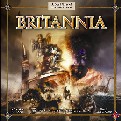
If there is an online community for games something like yours then that may be a source for playtesters. Boardgamegeek is the first place to look, followed by Yahoo groups. For example there’s an entry on boardgame geek for Britannia and a Yahoo group for Britannia (Eurobrit), so if I want to find playtesters for a Britannia-like game those are the first places to look.
For video games you might look for local “game lounges” and other commercial in-person community game concerns.
Some of your friends may be game players and you don’t even know it. Friends are not necessarily good playtesters because they may be too nice to tell you your game has defects–depends on your friends! Mine like to find defects, and that’s usually good.
My experience of finding distant blind testers via various online contacts is that the volunteers rarely follow through and actually give you feedback. But it does happen.
I understand Reiner Knizia has groups that enable him to playtest six nights a week. But that’s Reiner, who is obviously an exception to the norm.
Wednesday, May 11, 2011


Sunday, May 08, 2011
So you’re going to make a game for the very first time
So you’re going to make a game for the very first time
You’ve thought about making games for a long time, but you haven’t seriously pursued it. Until you get serious about it, you’ve accomplished nothing, you’re a mere dilettante. So today you’ve decided to make a game. How are you going to go about it?
First, unless you have well-developed programming skills you’re going to have a much better chance of achieving something if you make a tabletop game, or (perhaps) make a level for a videogame. The most important thing is to get to where you play the game. All the idea generation and other preliminary stuff is effectively airy-fairy head-in-the-clouds daydreaming that almost anyone can do but which does them no good if it doesn’t result in a playable prototype. Without well-developed programming skills or at least a good working knowledge of small game engine such as Gamemaker, you won’t be able to make a videogame prototype soon enough for it to be practical. You may be able to use a level editor that’s included in an existing game to make a variation, and that can be a good way to start.
Second, beginners almost always make a game based on another game. Often the best way to start out is to make a variation of an existing game, because it takes a lot less time and work to get to the point where you can play it. Again this applies to tabletop games or to video games that provide ways to modify them, usually a level/scenario editor. If you can’t bring yourself to make tabletop games then the level editor is definitely the easiest way to start out, even though you’ll have to learn how to use the level editor, a non-trivial task.
Third, reign back your ambition. Try to pick a type or form of game that is fairly common, not one that’s unusual; unusual forms are frequently more difficult to achieve, that’s why they’re unusual. For example, cooperative games are especially difficult in tabletop form because it’s so hard to provide significant opposition. This is much easier to do with a videogame IF you have the programming and “artificial intelligence” skills. But it is still much harder to program a game that can be played by two or more people at the same time, than to program one that is played by one person at a time.
In other words try to choose a project you actually have a chance to complete. This can be generalized to “keep it simple”. Making a game is almost always harder than it seems at first, even for experienced people. The most common mistake of people seriously trying to make a video game is to plan a project that they have virtually no chance of ever finishing, because it will take much too long. Remember, AAA video games take hundreds of man-years to complete for professionals with vast budgets.
Fourth, focus on the gameplay not on the appearance (or the story) of the game. You’re making a prototype, not a finished game. You want something that people can play so that you find out whether they enjoy playing, and how you can improve it. You can’t rely on flashy looks to make games fun, even if you’re an outstanding artist. A major mistake of novice game designers is to make something that’s pretty rather than something that’s functional. If you have something that just looks functional and people like to play then imagine how much more they’ll enjoy it when it looks professionally pretty. You only need it to look good enough that playtesters will be willing to play, and that depends in great part on what playtesters are available, how well you know them, how persuasive you are, and many other factors not related to the game itself.
In most cases, you may be excited about your story, but other people won’t be. Most games are played for the game, not the story (which is often only an excuse to get to the action). If you’re heavily into story, write a novel, don’t design a game! When you’re experienced you may be able to rely on a story to make a game enjoyable, when you start out that’s a big mistake.
Fifth, when you have a playable prototype play it yourself, solo, before you inflict on other people. I say “inflict” deliberately. You may be super excited, you may think it’s the greatest thing ever, but in reality it will be like almost every other initial prototype of a game, it will suck. Experienced designers have a much better chance of recognizing what will suck before the game is played: they play the game in their mind’s eye, so to speak, and anticipate many problems before it’s ever played in reality. Beginners should try to do the same but will be much less successful at spotting the flaws. What solo testing can do is quickly reveal where the game really sucks so that you can change it before other people have to put up with it. In other words, be nice to your playtesters: get rid of the really bad aspects yourself rather than foist them on other people who want to play a fun game.
Some people confronted with the notion of solo playing a multiplayer tabletop game will say they just can’t do it, they just can’t dissociate themselves from one side when they play another side. Wags like to say “well at least when you play solo always win”. Of course you also always lose. But the point of solo playtesting is not to win or lose, it’s to find out whether the game is worthwhile and how it can be improved. And that dispassionate dissociation from one side to another when you play a solo game will actually help you recognize what’s good and bad about the game.
I cannot say this enough: play the game yourself before anybody else plays.
Sixth, if you got this far you’re doing really well. But you’ve only just begun. The really hard part of making a game is a last 20% of improvement that takes 80% of the time. This is a process of playtesting, evaluating the results, modifying the game to improve it in light of the results, playtesting again, and going through the whole cycle again and again and again. This is called the iterative and incremental development of the game. If you want to make a really good game then you are probably going to be sick and tired of it by the time you get toward the end of this process.
Finally, the game is never really done, you just come to a point where the value of the improvement is less than the cost of the time required to achieve it (Law of Diminishing Marginal Returns). Moreover, you might think you’re “done”, and then find out that improvements need to be made either for your peace of mind or because the publisher requires it.
Good luck. And remember: "A designer knows he has achieved perfection not when there is nothing left to add, but when there is nothing left to take away." --Antoine de Saint-Exup'ery
Summary:
• make a tabletop game, or use a simple level editor to modify an existing videogame
• make something based on a game you know
• reign in your ambition--try to complete a small project, not a large one
• focus on gameplay not prettiness or story
• play the game yourself before anybody else plays, even if it isn’t intended to be a one person game
• iteratively and incrementally playtest and improve the game
• your never really finish
You’ve thought about making games for a long time, but you haven’t seriously pursued it. Until you get serious about it, you’ve accomplished nothing, you’re a mere dilettante. So today you’ve decided to make a game. How are you going to go about it?
First, unless you have well-developed programming skills you’re going to have a much better chance of achieving something if you make a tabletop game, or (perhaps) make a level for a videogame. The most important thing is to get to where you play the game. All the idea generation and other preliminary stuff is effectively airy-fairy head-in-the-clouds daydreaming that almost anyone can do but which does them no good if it doesn’t result in a playable prototype. Without well-developed programming skills or at least a good working knowledge of small game engine such as Gamemaker, you won’t be able to make a videogame prototype soon enough for it to be practical. You may be able to use a level editor that’s included in an existing game to make a variation, and that can be a good way to start.
Second, beginners almost always make a game based on another game. Often the best way to start out is to make a variation of an existing game, because it takes a lot less time and work to get to the point where you can play it. Again this applies to tabletop games or to video games that provide ways to modify them, usually a level/scenario editor. If you can’t bring yourself to make tabletop games then the level editor is definitely the easiest way to start out, even though you’ll have to learn how to use the level editor, a non-trivial task.
Third, reign back your ambition. Try to pick a type or form of game that is fairly common, not one that’s unusual; unusual forms are frequently more difficult to achieve, that’s why they’re unusual. For example, cooperative games are especially difficult in tabletop form because it’s so hard to provide significant opposition. This is much easier to do with a videogame IF you have the programming and “artificial intelligence” skills. But it is still much harder to program a game that can be played by two or more people at the same time, than to program one that is played by one person at a time.
In other words try to choose a project you actually have a chance to complete. This can be generalized to “keep it simple”. Making a game is almost always harder than it seems at first, even for experienced people. The most common mistake of people seriously trying to make a video game is to plan a project that they have virtually no chance of ever finishing, because it will take much too long. Remember, AAA video games take hundreds of man-years to complete for professionals with vast budgets.
Fourth, focus on the gameplay not on the appearance (or the story) of the game. You’re making a prototype, not a finished game. You want something that people can play so that you find out whether they enjoy playing, and how you can improve it. You can’t rely on flashy looks to make games fun, even if you’re an outstanding artist. A major mistake of novice game designers is to make something that’s pretty rather than something that’s functional. If you have something that just looks functional and people like to play then imagine how much more they’ll enjoy it when it looks professionally pretty. You only need it to look good enough that playtesters will be willing to play, and that depends in great part on what playtesters are available, how well you know them, how persuasive you are, and many other factors not related to the game itself.
In most cases, you may be excited about your story, but other people won’t be. Most games are played for the game, not the story (which is often only an excuse to get to the action). If you’re heavily into story, write a novel, don’t design a game! When you’re experienced you may be able to rely on a story to make a game enjoyable, when you start out that’s a big mistake.
Fifth, when you have a playable prototype play it yourself, solo, before you inflict on other people. I say “inflict” deliberately. You may be super excited, you may think it’s the greatest thing ever, but in reality it will be like almost every other initial prototype of a game, it will suck. Experienced designers have a much better chance of recognizing what will suck before the game is played: they play the game in their mind’s eye, so to speak, and anticipate many problems before it’s ever played in reality. Beginners should try to do the same but will be much less successful at spotting the flaws. What solo testing can do is quickly reveal where the game really sucks so that you can change it before other people have to put up with it. In other words, be nice to your playtesters: get rid of the really bad aspects yourself rather than foist them on other people who want to play a fun game.
Some people confronted with the notion of solo playing a multiplayer tabletop game will say they just can’t do it, they just can’t dissociate themselves from one side when they play another side. Wags like to say “well at least when you play solo always win”. Of course you also always lose. But the point of solo playtesting is not to win or lose, it’s to find out whether the game is worthwhile and how it can be improved. And that dispassionate dissociation from one side to another when you play a solo game will actually help you recognize what’s good and bad about the game.
I cannot say this enough: play the game yourself before anybody else plays.
Sixth, if you got this far you’re doing really well. But you’ve only just begun. The really hard part of making a game is a last 20% of improvement that takes 80% of the time. This is a process of playtesting, evaluating the results, modifying the game to improve it in light of the results, playtesting again, and going through the whole cycle again and again and again. This is called the iterative and incremental development of the game. If you want to make a really good game then you are probably going to be sick and tired of it by the time you get toward the end of this process.
Finally, the game is never really done, you just come to a point where the value of the improvement is less than the cost of the time required to achieve it (Law of Diminishing Marginal Returns). Moreover, you might think you’re “done”, and then find out that improvements need to be made either for your peace of mind or because the publisher requires it.
Good luck. And remember: "A designer knows he has achieved perfection not when there is nothing left to add, but when there is nothing left to take away." --Antoine de Saint-Exup'ery
Summary:
• make a tabletop game, or use a simple level editor to modify an existing videogame
• make something based on a game you know
• reign in your ambition--try to complete a small project, not a large one
• focus on gameplay not prettiness or story
• play the game yourself before anybody else plays, even if it isn’t intended to be a one person game
• iteratively and incrementally playtest and improve the game
• your never really finish
Thursday, April 07, 2011
The Essence of a Game
.
Every game has an essence, what makes it the game it is, what comes to mind when people think about it, what people are doing (or contending with) when they play. The essence characterizes the game, and can be quite brief. For example Diplomacy is about negotiation and simultaneous tactical movement. Chess is about positional play with perfect information, and about looking ahead several moves. Monopoly (a poor game) is about collecting sets (of properties), managing funds, and random movement. Video game shooters are about killing and blowing stuff up. Some games aren't quite as "pure", of course.
Recently I've been trying to formally write the "essence" of some of my game designs to try to help me see what I should concentrate on, and what I might improve. It's another way to focusing the designer's attention on various aspects of the game: the more (different) ways you can look at a design, the more opportunities you have to find ways to improve it. I want the essence to be long enough that it will tell a person who hasn't played the game something about it. The very brief characterizations I used above aren't very informative for someone who hasn't at least seen the game being played.
So I began by making a list of what ought to be included in the essence statement:
• Tag line (characterizes the game and provides a hook at the same time-the hook is the more important part)
• What is the game obviously related to? (what is it about?)
• What does the player DO?
• How does the game work? (This may not be vital to the essence but most gamers want to know something about how the game works.)
• What is the "affect" (the emotional impact, sometimes called the "aesthetics") on the player? (As emotional impact varies so much from one person to another, I tend to leave this out for games that haven't been played widely, that is, haven't been published.)
• Including time of play is probably necessary these days, when so many people won't play games that take more than an hour, or two hours, or whatever.
• Perhaps a second tag-like line to end it, as playing time is an anticlimactic ending.
While first impressions when playing a game are becoming more and more important, and I try to make notes about what happens in the first 10 minutes and how long teaching and the setup takes, these are more marketing notes than part of the essence of the game.
So let's take Britannia as an example. There have been two tag lines, so I'll include one at the start and one at the end. Notice that the first one, from 1986, talks about what happens, while the second one from 2006 talks about the player's role. The first one is addressed to wargamers, who are interested in the event and in history; the second is addressed to contemporary game players, who are more interested in the feeling of "being there," of what part they play. Both are quite active statements. (And I wrote neither of them.)
Britannia
"On an anvil of blood and terror they forged the destiny of an island!" In this epic wargame four players each control several nations playing at different times with different objectives throughout the Dark Ages history of Great Britain. Romans, Britons and Gaels, Anglo-Saxons, Vikings, Normans --they all play a part in this history. Combat is resolved with dice. This is a strategic game of achieving objectives, not of conquest, though many invaders conquer much of Britain at different times. 4 to 5 hours for experienced players. "Invade Britain. Rewrite history. Rule."
I'm not sure that's a very good description of essence, but I'm perhaps too close to the game to judge. Nor am I a good promoter of my own games, so someone else might be able to come up with better.
Here are some other examples, the first three are unfinished prototypes:
AAARRRRRHH! (the Pirate game)
"Fortune sits on the shoulder of him what schemes." Two to seven players are pirate leaders capturing ships on the Spanish Main. Begin with a pirate cutter, recruit more crew, avoid the hunting warships, add ships to your fleet, interfere with your rivals, capture a town or Spanish silver fleet if you're lucky, and accumulate the most Loot to win. The game uses hands of specialized cards (110), and dice. A "screwage" game something like Bang! or Nuclear War but without player elimination. 1 to 2 hours depending on players. "Beware the Black Spot!"
The Rise and Fall of Assyria: the History of the Ancient Near East
"2,000 years of early history in two to three hours". Two to five players control ancient empires as they rise and fall, including the dour, hated, ultimately doomed Empire of Assyria. There are no chance elements in the game other than the choices of the players. This sweep of history game is much less restrictive than Britannia (though there is a four player Britannia-like version) but much more historical than History of the World. 2 to 3 hours. "Pay tribute or die!"
Zombie Apocalypse
"Run for your lives!" The Zombie Apocalypse is here, with each of 2-7 players representing a small group of survivors. The last survivor "wins". The game uses hands of specialized cards (110), and dice. Players often play zombies against other survivors. A "screwage" game something like Bang! but without player elimination (when you "die" you become zombies!). An hour or more depending on number of players. "Send those zombies down!"
Law & Chaos
"Manage the chaos to win the game." While this abstract game can be played by 2 to 4, it is that most unusual game, one that is perfect for three players. You try to establish a pattern with your pieces on a small board, and you can capture opposing pieces, but capture methods and victory conditions vary for each player and can be changed by other players, using cards. You try to anticipate what other players are doing while disguising your own intentions. The game takes as little as 15 minutes with inexperienced players but sometimes one hour and up with experienced players. "A simple game that requires full attention."
This game is under contract to be published by Mayfair.
Dragon Rage
"The dragons are coming!" This two player wargame depicts an assault on a city or ork lair by dragons or other mythical creatures. The attacker must destroy a large portion of the city or lair before reinforcements arrive. Many scenarios and a scenario-builder are included. 90-120 minutes. Two sided mounted hex board, individually die-cut cardboard pieces. "Here there be giants."
This game was recently published in its second edition by Flatlined Games. BGG entry http://boardgamegeek.com/boardgame/3110/dragon-rage. Web site http://www.flatlinedgames.com/
To return to the point: if you as designer write the essence of your game early in your process, and revise it as you go along, this will help you focus on what's important, or what must be fixed. Remember, "A designer knows he has achieved perfection not when there is nothing left to add, but when there is nothing left to take away."
Every game has an essence, what makes it the game it is, what comes to mind when people think about it, what people are doing (or contending with) when they play. The essence characterizes the game, and can be quite brief. For example Diplomacy is about negotiation and simultaneous tactical movement. Chess is about positional play with perfect information, and about looking ahead several moves. Monopoly (a poor game) is about collecting sets (of properties), managing funds, and random movement. Video game shooters are about killing and blowing stuff up. Some games aren't quite as "pure", of course.
Recently I've been trying to formally write the "essence" of some of my game designs to try to help me see what I should concentrate on, and what I might improve. It's another way to focusing the designer's attention on various aspects of the game: the more (different) ways you can look at a design, the more opportunities you have to find ways to improve it. I want the essence to be long enough that it will tell a person who hasn't played the game something about it. The very brief characterizations I used above aren't very informative for someone who hasn't at least seen the game being played.
So I began by making a list of what ought to be included in the essence statement:
• Tag line (characterizes the game and provides a hook at the same time-the hook is the more important part)
• What is the game obviously related to? (what is it about?)
• What does the player DO?
• How does the game work? (This may not be vital to the essence but most gamers want to know something about how the game works.)
• What is the "affect" (the emotional impact, sometimes called the "aesthetics") on the player? (As emotional impact varies so much from one person to another, I tend to leave this out for games that haven't been played widely, that is, haven't been published.)
• Including time of play is probably necessary these days, when so many people won't play games that take more than an hour, or two hours, or whatever.
• Perhaps a second tag-like line to end it, as playing time is an anticlimactic ending.
While first impressions when playing a game are becoming more and more important, and I try to make notes about what happens in the first 10 minutes and how long teaching and the setup takes, these are more marketing notes than part of the essence of the game.
So let's take Britannia as an example. There have been two tag lines, so I'll include one at the start and one at the end. Notice that the first one, from 1986, talks about what happens, while the second one from 2006 talks about the player's role. The first one is addressed to wargamers, who are interested in the event and in history; the second is addressed to contemporary game players, who are more interested in the feeling of "being there," of what part they play. Both are quite active statements. (And I wrote neither of them.)
Britannia
"On an anvil of blood and terror they forged the destiny of an island!" In this epic wargame four players each control several nations playing at different times with different objectives throughout the Dark Ages history of Great Britain. Romans, Britons and Gaels, Anglo-Saxons, Vikings, Normans --they all play a part in this history. Combat is resolved with dice. This is a strategic game of achieving objectives, not of conquest, though many invaders conquer much of Britain at different times. 4 to 5 hours for experienced players. "Invade Britain. Rewrite history. Rule."
I'm not sure that's a very good description of essence, but I'm perhaps too close to the game to judge. Nor am I a good promoter of my own games, so someone else might be able to come up with better.
Here are some other examples, the first three are unfinished prototypes:
AAARRRRRHH! (the Pirate game)
"Fortune sits on the shoulder of him what schemes." Two to seven players are pirate leaders capturing ships on the Spanish Main. Begin with a pirate cutter, recruit more crew, avoid the hunting warships, add ships to your fleet, interfere with your rivals, capture a town or Spanish silver fleet if you're lucky, and accumulate the most Loot to win. The game uses hands of specialized cards (110), and dice. A "screwage" game something like Bang! or Nuclear War but without player elimination. 1 to 2 hours depending on players. "Beware the Black Spot!"
The Rise and Fall of Assyria: the History of the Ancient Near East
"2,000 years of early history in two to three hours". Two to five players control ancient empires as they rise and fall, including the dour, hated, ultimately doomed Empire of Assyria. There are no chance elements in the game other than the choices of the players. This sweep of history game is much less restrictive than Britannia (though there is a four player Britannia-like version) but much more historical than History of the World. 2 to 3 hours. "Pay tribute or die!"
Zombie Apocalypse
"Run for your lives!" The Zombie Apocalypse is here, with each of 2-7 players representing a small group of survivors. The last survivor "wins". The game uses hands of specialized cards (110), and dice. Players often play zombies against other survivors. A "screwage" game something like Bang! but without player elimination (when you "die" you become zombies!). An hour or more depending on number of players. "Send those zombies down!"
Law & Chaos
"Manage the chaos to win the game." While this abstract game can be played by 2 to 4, it is that most unusual game, one that is perfect for three players. You try to establish a pattern with your pieces on a small board, and you can capture opposing pieces, but capture methods and victory conditions vary for each player and can be changed by other players, using cards. You try to anticipate what other players are doing while disguising your own intentions. The game takes as little as 15 minutes with inexperienced players but sometimes one hour and up with experienced players. "A simple game that requires full attention."
This game is under contract to be published by Mayfair.
Dragon Rage
"The dragons are coming!" This two player wargame depicts an assault on a city or ork lair by dragons or other mythical creatures. The attacker must destroy a large portion of the city or lair before reinforcements arrive. Many scenarios and a scenario-builder are included. 90-120 minutes. Two sided mounted hex board, individually die-cut cardboard pieces. "Here there be giants."
This game was recently published in its second edition by Flatlined Games. BGG entry http://boardgamegeek.com/boardgame/3110/dragon-rage. Web site http://www.flatlinedgames.com/
To return to the point: if you as designer write the essence of your game early in your process, and revise it as you go along, this will help you focus on what's important, or what must be fixed. Remember, "A designer knows he has achieved perfection not when there is nothing left to add, but when there is nothing left to take away."
Monday, April 04, 2011
"Take no prisoners"
.
That phrase, "take no prisoners", makes sense in some contexts, but D&D (Dungeons & Dragons) players seem to take it to extremes. I have almost never encountered a D&D group that takes prisoners (just as I rarely encounter D&Ders who run away). It doesn’t seem to matter which edition is being played. I like to get information about what I'm going to fight (or avoid); prisoners are sometimes a source of such information.
There are spells and techniques (I don't mean torture, which is unreliable even if your world-view approves of it) that have a good chance of getting useful information out of a prisoner (if it's there); especially if you have more than one prisoner.
I suspect that many referees simply refuse to let prisoners provide any useful information. This encourages a hack n slash sort of game. (To me, D&D is mostly about combat (a wargame), but combat informed by good planning, not merely "rush in and slay".)
As I don’t care for pure “hack n slash”, because it tends to be mindless rather than informed with intelligence, I don’t want to discourage planning and thinking. If you can take prisoners, and it makes sense that they know something useful, and you go about getting the information reasonably, then you’ll succeed to a greater or lesser extent. Nor does this involve merely an “intimidation” or “bluff” or “diplomacy” roll (depending on circumstances. Most of my play with D&D was first edition, where no such official character skills existed. In a sense, in third and fourth editions we’ve given players further crutches for not thinking, by the inclusion of such skills and skill rolls.
I mentioned running away. An old mate of mine, having moved away many years ago, recounted a case where he was playing with a new group and urged them to run away from a random encounter. It had never entered their minds; yet all the encounter offered was a chance to get hurt, and to earn a few experience points, it could not further their mission goals. In the end they did run away, and were better off for it. This is another case where a referee (or DM if you prefer) can offer players a chance to use their brains. There is no reason why every encounter should be one they player characters can be expected to cope with. Why not make them decide when they need to run away?
I have recently been playing the “March of the Phantom Brigade” official D&D encounters, to learn about 4th edition (which might be a decent game (though awfully encounter-oriented), but isn’t really D&D). That is a very linear progression, of necessity to keep everyone on the same page throughout the country, of one encounter after another. Taking prisoners might help a little, but there’s certainly no intention that the adventurers should run away. It is quite different from a “normal” campaign, in other words. At least, I should hope your campaign doesn’t work this mostly-mindless way.
That phrase, "take no prisoners", makes sense in some contexts, but D&D (Dungeons & Dragons) players seem to take it to extremes. I have almost never encountered a D&D group that takes prisoners (just as I rarely encounter D&Ders who run away). It doesn’t seem to matter which edition is being played. I like to get information about what I'm going to fight (or avoid); prisoners are sometimes a source of such information.
There are spells and techniques (I don't mean torture, which is unreliable even if your world-view approves of it) that have a good chance of getting useful information out of a prisoner (if it's there); especially if you have more than one prisoner.
I suspect that many referees simply refuse to let prisoners provide any useful information. This encourages a hack n slash sort of game. (To me, D&D is mostly about combat (a wargame), but combat informed by good planning, not merely "rush in and slay".)
As I don’t care for pure “hack n slash”, because it tends to be mindless rather than informed with intelligence, I don’t want to discourage planning and thinking. If you can take prisoners, and it makes sense that they know something useful, and you go about getting the information reasonably, then you’ll succeed to a greater or lesser extent. Nor does this involve merely an “intimidation” or “bluff” or “diplomacy” roll (depending on circumstances. Most of my play with D&D was first edition, where no such official character skills existed. In a sense, in third and fourth editions we’ve given players further crutches for not thinking, by the inclusion of such skills and skill rolls.
I mentioned running away. An old mate of mine, having moved away many years ago, recounted a case where he was playing with a new group and urged them to run away from a random encounter. It had never entered their minds; yet all the encounter offered was a chance to get hurt, and to earn a few experience points, it could not further their mission goals. In the end they did run away, and were better off for it. This is another case where a referee (or DM if you prefer) can offer players a chance to use their brains. There is no reason why every encounter should be one they player characters can be expected to cope with. Why not make them decide when they need to run away?
I have recently been playing the “March of the Phantom Brigade” official D&D encounters, to learn about 4th edition (which might be a decent game (though awfully encounter-oriented), but isn’t really D&D). That is a very linear progression, of necessity to keep everyone on the same page throughout the country, of one encounter after another. Taking prisoners might help a little, but there’s certainly no intention that the adventurers should run away. It is quite different from a “normal” campaign, in other words. At least, I should hope your campaign doesn’t work this mostly-mindless way.
Tuesday, March 22, 2011
March 2011 Ruminations
.
Those who dislike kingmaking, who feel people shouldn't talk about what others are doing in the game while playing, who want to turn it into individual manipulation of the system, really want puzzles (multiplayer solitaire) rather than games.
*****
What I haven't seen discussed much about wargames is the number of players in a typical wargame. Traditionally, it is two. In Euros, it is about four.
Can wargame "grognards" conceive of a game for at least three separate sides--not two sides with more than one player per side--as a "wargame"? Necessarily, multi-player games with separate sides are going to be grand strategic, so that the details so loved in two-player battle games simply cannot be there.
Moreover, most of the games I'm working on have turns at least 10 years long, up to 200 years long. Can that be a "wargame" to the grognards?
Fortunately, when you combine trends toward simplicity, efforts to shorten games, multi-player situations, grand strategic level, and "sweep of history", it all works together. Whether it is acceptable to "grognards" is another matter.
Another consideration is the old notion that "you are there", "you are in command". You can't feel this at a grand strategic level, certainly not in a sweep of history game. That never made a difference to me, I'm playing a game, not living a role, but it seems to make a lot of difference to many wargamers.
If I want to play a role, I'll play a role-playing game (RPG). I think some wargamers are suspicious of RPGs, the rules aren't highly defined, they're too "loosy-goosy". So they find their role-playing in their wargames.
*****
You can design video games that encourage regular, simple activity. And that might keep a person playing the game. But is that what you, as a designer, want, to make a game that becomes a mechanical exercise, a very simple puzzle? Or a form of chemical addiction? Not me.
Ian Schreiber calls it "sticky" games. I call it minor league addiction. And that's not what I want to design. I hope online "social netowrking" games can rise above it.
*****
One of the reasons many people like Britannia-like games is that they are highly asymmetric, yet because you have multiple nations you're not trapped in a particular role that asymmetry might otherwise dictate (such as defend and preserve, or attack and conquer) for the entire game.
*****
Heard at PrezCon: Is it true that Britannia waives the rules?
Those who dislike kingmaking, who feel people shouldn't talk about what others are doing in the game while playing, who want to turn it into individual manipulation of the system, really want puzzles (multiplayer solitaire) rather than games.
*****
What I haven't seen discussed much about wargames is the number of players in a typical wargame. Traditionally, it is two. In Euros, it is about four.
Can wargame "grognards" conceive of a game for at least three separate sides--not two sides with more than one player per side--as a "wargame"? Necessarily, multi-player games with separate sides are going to be grand strategic, so that the details so loved in two-player battle games simply cannot be there.
Moreover, most of the games I'm working on have turns at least 10 years long, up to 200 years long. Can that be a "wargame" to the grognards?
Fortunately, when you combine trends toward simplicity, efforts to shorten games, multi-player situations, grand strategic level, and "sweep of history", it all works together. Whether it is acceptable to "grognards" is another matter.
Another consideration is the old notion that "you are there", "you are in command". You can't feel this at a grand strategic level, certainly not in a sweep of history game. That never made a difference to me, I'm playing a game, not living a role, but it seems to make a lot of difference to many wargamers.
If I want to play a role, I'll play a role-playing game (RPG). I think some wargamers are suspicious of RPGs, the rules aren't highly defined, they're too "loosy-goosy". So they find their role-playing in their wargames.
*****
You can design video games that encourage regular, simple activity. And that might keep a person playing the game. But is that what you, as a designer, want, to make a game that becomes a mechanical exercise, a very simple puzzle? Or a form of chemical addiction? Not me.
Ian Schreiber calls it "sticky" games. I call it minor league addiction. And that's not what I want to design. I hope online "social netowrking" games can rise above it.
*****
One of the reasons many people like Britannia-like games is that they are highly asymmetric, yet because you have multiple nations you're not trapped in a particular role that asymmetry might otherwise dictate (such as defend and preserve, or attack and conquer) for the entire game.
*****
Heard at PrezCon: Is it true that Britannia waives the rules?
Tuesday, March 15, 2011
Dragon & Pearl Brit-like game
I'm going to be at the UK Game Expo in Birmingham this June 3-5. While checking out some exhibitors, I discovered that the China Britannia-like game The Dragon & the Pearl is evidently back in print (for 19.99 pounds, though shipping to this country would be expensive). See
http://www.spiritgames.co.uk/gamesin.php?UniqueNo=1969
I have a copy of this game, though I haven't played it. It appears to be avoid the major error of China: the Middle Kingdom (which is, limiting action to within modern Chinese boundaries). It is closer to Brit in its rules than CtMK is.
http://www.spiritgames.co.uk/gamesin.php?UniqueNo=1969
I have a copy of this game, though I haven't played it. It appears to be avoid the major error of China: the Middle Kingdom (which is, limiting action to within modern Chinese boundaries). It is closer to Brit in its rules than CtMK is.
Saturday, March 12, 2011
What’s important in board and card game design
. I was asked to write something for the blog of Buffalo Games, a smallish mass-market game company that, I confess, I had not heard of. They have since abandoned the blog, and posted it on their Facebook page.
They also published a "Q&A" with me.
Game design is 10% inspiration and 90% perspiration. Don’t think that the idea is important. What makes a marketable game is the execution, the creation of a complete game, not the idea. Some ideas are better than others, true, but there are hardly any original ideas–if you’ve thought of it, probably a hundred others have as well. Virtually no publisher pays for an idea, publishers pay for completed games (though they may then change them...). So be prepared to work!
The second most important thing to remember about ideas is, you need to work at getting lots of them: maybe a few will work out well.
Ideas come from everywhere, from all kinds of associations: you must actively seek to get ideas, don’t wait for them to come floating by.
Lots of people have game ideas, fewer make a prototype, fewer still actually play the game. You don’t really have a game until you have a prototype that can be played. It needn’t be pretty, but it must be functional. If people enjoy playing a merely functional version of the game, they’ll enjoy the pretty published version even more. Maybe when you submit the completed game to a publisher you’ll make a pretty version.
You don’t have to have a full set of rules to start with, you just need to know how to play. Writing nearly-perfect rules is the hardest part of designing a game. Trying to write perfect rules when the game is new may be a waste of time, as the game IS going to change. In the end, though, if the rules are inadequate, the game won’t be played correctly, which is usually a disaster, and you can’t leave rules writing until the very end because the rules must be tested just as the game must be tested.
“Playtesting is sovereign”. Play your prototype, probably solo at first to work out the worst kinks, then have others play. And play. And play. Virtually no game prototype is good at first. The key to a good game is to playtest it, revise it, playtest it, revise it, playtest it, revise it, and so forth until the gameplay is polished to a gleam. Change is the norm.
You will probably get sick of the game before it’s “done!” As Reiner Knizia says, it’s easy to get a game to an 80% completion state, hard to get it to 100%. And you may think it’s “done” only to find that something MUST be changed.
Getting your game playtested is an invitation to say it sucks! Your playtesters must be in your target audience (you ALWAYS have a target audience), and you need a lot of them. Your family is not sufficient! You need people who are willing to tell you the truth.
If you just want to design one game at a time, go for it. If you want to be a game designer, you need to be designing a lot of games at the same time.
Unless you are very very lucky, you aren’t going to get rich designing games. Do it because you love it, and perhaps you’ll make some money along the way.
They also published a "Q&A" with me.
Game design is 10% inspiration and 90% perspiration. Don’t think that the idea is important. What makes a marketable game is the execution, the creation of a complete game, not the idea. Some ideas are better than others, true, but there are hardly any original ideas–if you’ve thought of it, probably a hundred others have as well. Virtually no publisher pays for an idea, publishers pay for completed games (though they may then change them...). So be prepared to work!
The second most important thing to remember about ideas is, you need to work at getting lots of them: maybe a few will work out well.
Ideas come from everywhere, from all kinds of associations: you must actively seek to get ideas, don’t wait for them to come floating by.
Lots of people have game ideas, fewer make a prototype, fewer still actually play the game. You don’t really have a game until you have a prototype that can be played. It needn’t be pretty, but it must be functional. If people enjoy playing a merely functional version of the game, they’ll enjoy the pretty published version even more. Maybe when you submit the completed game to a publisher you’ll make a pretty version.
You don’t have to have a full set of rules to start with, you just need to know how to play. Writing nearly-perfect rules is the hardest part of designing a game. Trying to write perfect rules when the game is new may be a waste of time, as the game IS going to change. In the end, though, if the rules are inadequate, the game won’t be played correctly, which is usually a disaster, and you can’t leave rules writing until the very end because the rules must be tested just as the game must be tested.
“Playtesting is sovereign”. Play your prototype, probably solo at first to work out the worst kinks, then have others play. And play. And play. Virtually no game prototype is good at first. The key to a good game is to playtest it, revise it, playtest it, revise it, playtest it, revise it, and so forth until the gameplay is polished to a gleam. Change is the norm.
You will probably get sick of the game before it’s “done!” As Reiner Knizia says, it’s easy to get a game to an 80% completion state, hard to get it to 100%. And you may think it’s “done” only to find that something MUST be changed.
Getting your game playtested is an invitation to say it sucks! Your playtesters must be in your target audience (you ALWAYS have a target audience), and you need a lot of them. Your family is not sufficient! You need people who are willing to tell you the truth.
If you just want to design one game at a time, go for it. If you want to be a game designer, you need to be designing a lot of games at the same time.
Unless you are very very lucky, you aren’t going to get rich designing games. Do it because you love it, and perhaps you’ll make some money along the way.
Thursday, March 10, 2011
PrezCon Games
.
Some people go to PrezCon to play games for days on end, last year my roommate played something like 19 games of Roborally. This year he was focused on Merchant of Venus, long out-of-print pickup and deliver Avalon Hill game. So he played at least all three heats of the tournament as well as the final, winning two heats and finishing second in the other but not doing as well in the final. He also discovered another level of play. At one point, I think in the final, another player saw where he was going next to purchase goods, and beat him to it to disrupt my friend's entire scheme: a perfect example of anticipatory interaction, something that's quite common in Eurogames. I don't think many people would call Merchant of Venus a Eurogame, but it has some Eurogame characteristics such as no player elimination and no direct or even indirect conflicts. (For me, anticipatory conflict does not even count as indirect; someday I have to finish my description of types of conflict.)
The Britannia tournament had two heats and the final, with 12 different people participating, which is probably more than usual for PrezCon. Mark Smith from Kentucky won for something like the third year out of four or maybe the fourth year out of five!
I watched History of the World quite a bit--the version before the Hasbro plastic piece version--and asked the players, some of whom also play Britannia, why they played. Because it became fairly evident that the distribution of empires in the last round, which has a large random element to it, strongly determined who won the game. The guys really didn't have much to say about that, and I think in the end they enjoy playing because they enjoy the journey, the experience of trying to convince other people that they should attack somebody else, persuading people do go somewhere else rather than toward their holdings, and so forth.
The game itself has very little to do with reality because of the way scoring works. Although you can score extra points for dominating a region, it's more practical to have a presence in several regions, that is, hold at least one territory in that region. So you get things like the Romans, instead of conquering northern Europe, heading all the way to Southeast Asia in order to get presence in several regions. Empires tend to be strung out rather than concentrated. Concentration doesn't help, nor is your defense better when you have more armies in an area or own more adjacent areas. This has very little to do with how empires actually behave, of course. But what this does do is lead to a lot of variation in each game, especially because at least one Empire and possibly two in each epoch (generally out of seven available empires) does not appear. The ideal History of the World game is six players though some of these games were for five.
I should say that there is a new short History of the World game out, and from what I recall reading about it some months ago it may be a much better game.
But studying the game did give me an idea for a way to change how my game Eurasia works that may make it less random and more satisfying; only playtesting will tell.
It's not easy to get people to playtest games at a heavily tournament oriented convention because there are so many tournaments people want to play in. We did get up a session of my pirates card game, and I saw how much difference there is in play between the casual players that normally playtest my games and the "sharks" that tend to come to PrezCon. The sharks are happy to try to twist/distort the text on the cards whereas the casual players will generally take the meaning that appears to be intended. Even though the game is still pretty early and fairly rough, it seems that everybody who plays it likes it. Then again, one guy said "everything's better with pirates".
I also once again watched some Age of Renaissance. At one point a year or two ago I thought about trying to make a simplified "if this game were designed today" version, but it doesn't seem to be worth it.
I watched the only Kingmaker game at the con; for some reason people weren't up for playing Kingmaker, so this game consisted of the convention organizer (who uses kingmaker as his e-mail name), one fellow who had not played before, and two guys who had some experience but did not seem to be sharks. One of them, in particular, did not want anything to do with Parliament because he felt it was boring, though Parliament is supposed to be a big part of the game.
I especially wanted to see the start of the game, which people say is more fun than when the game settles down. Unfortunately this all confirmed what I had gathered from previous observations and from reading about the Wars of the Roses: this game has virtually nothing to do with historical reality. What the players are doing and what the game does just don't correspond to what actually happened or might have happened. So my project to do Kingmaker as if it were designed today will have to focus on the aspects that people seem to like, which are chaos management and negotiation, without actually adopting any of the mechanics of this game. Fortunately I had a long conversation about the game with Jim Jordan, who is the Britannia game master but who also really likes the Wars of the Roses period, and used to be a Kingmaker player but now despises it.
The topic is popular: we have Richard the Third, a block game from Columbia, Wars of the Roses, a Eurogame from Zman, and the upcoming Crown of Roses, another block game from GMT. The block games are for two players. The Eurogame, like most Eurogames, doesn't have much to do with reality, it's for 2 to 4 players. My game will be for 2 to 5 or 6 players. That is, if I ever get to the point of a playable prototype.
I watched some Axis and Allies being played and was struck again with the great variety of play, the different strategies that people employ, and also with the lack of attention to terrain and supply. But it has become, I'm told, a game that lasts as long as eight hours. So I resurrected the idea of trying to do a two (perhaps three) hour strategic World War II game that provides the advantages of Axis and Allies without the interminable dice rolling and the tremendous unnecessary detail. I have always hit a wall on this before, but I think this time I can make it work as a two player block game. The first version will be just Europe in World War II because that should be easier to cope with than trying to do the entire world. The entire world game will be the ultimate goal however. The difficulty with blocks is that I want noticeably different kinds of blocks for sea, land, and air, and I should have noticeably different blocks for five different nations, and that means a heck of a lot of different kinds of blocks! I have Command and Conquer blocks that will do for the Axis, but only one size of three more colors for the allies...
Naturally I asked some people why they like A&A, and the answers have convinced me that I need some dice rolling in this new game. Formerly I wanted deterministic or card-based combat. A few dice are cheaper than cards, at least. (And it must be said, everyone expects dice rolling in a block game.)
Some people go to PrezCon to play games for days on end, last year my roommate played something like 19 games of Roborally. This year he was focused on Merchant of Venus, long out-of-print pickup and deliver Avalon Hill game. So he played at least all three heats of the tournament as well as the final, winning two heats and finishing second in the other but not doing as well in the final. He also discovered another level of play. At one point, I think in the final, another player saw where he was going next to purchase goods, and beat him to it to disrupt my friend's entire scheme: a perfect example of anticipatory interaction, something that's quite common in Eurogames. I don't think many people would call Merchant of Venus a Eurogame, but it has some Eurogame characteristics such as no player elimination and no direct or even indirect conflicts. (For me, anticipatory conflict does not even count as indirect; someday I have to finish my description of types of conflict.)
The Britannia tournament had two heats and the final, with 12 different people participating, which is probably more than usual for PrezCon. Mark Smith from Kentucky won for something like the third year out of four or maybe the fourth year out of five!
I watched History of the World quite a bit--the version before the Hasbro plastic piece version--and asked the players, some of whom also play Britannia, why they played. Because it became fairly evident that the distribution of empires in the last round, which has a large random element to it, strongly determined who won the game. The guys really didn't have much to say about that, and I think in the end they enjoy playing because they enjoy the journey, the experience of trying to convince other people that they should attack somebody else, persuading people do go somewhere else rather than toward their holdings, and so forth.
The game itself has very little to do with reality because of the way scoring works. Although you can score extra points for dominating a region, it's more practical to have a presence in several regions, that is, hold at least one territory in that region. So you get things like the Romans, instead of conquering northern Europe, heading all the way to Southeast Asia in order to get presence in several regions. Empires tend to be strung out rather than concentrated. Concentration doesn't help, nor is your defense better when you have more armies in an area or own more adjacent areas. This has very little to do with how empires actually behave, of course. But what this does do is lead to a lot of variation in each game, especially because at least one Empire and possibly two in each epoch (generally out of seven available empires) does not appear. The ideal History of the World game is six players though some of these games were for five.
I should say that there is a new short History of the World game out, and from what I recall reading about it some months ago it may be a much better game.
But studying the game did give me an idea for a way to change how my game Eurasia works that may make it less random and more satisfying; only playtesting will tell.
It's not easy to get people to playtest games at a heavily tournament oriented convention because there are so many tournaments people want to play in. We did get up a session of my pirates card game, and I saw how much difference there is in play between the casual players that normally playtest my games and the "sharks" that tend to come to PrezCon. The sharks are happy to try to twist/distort the text on the cards whereas the casual players will generally take the meaning that appears to be intended. Even though the game is still pretty early and fairly rough, it seems that everybody who plays it likes it. Then again, one guy said "everything's better with pirates".
I also once again watched some Age of Renaissance. At one point a year or two ago I thought about trying to make a simplified "if this game were designed today" version, but it doesn't seem to be worth it.
I watched the only Kingmaker game at the con; for some reason people weren't up for playing Kingmaker, so this game consisted of the convention organizer (who uses kingmaker as his e-mail name), one fellow who had not played before, and two guys who had some experience but did not seem to be sharks. One of them, in particular, did not want anything to do with Parliament because he felt it was boring, though Parliament is supposed to be a big part of the game.
I especially wanted to see the start of the game, which people say is more fun than when the game settles down. Unfortunately this all confirmed what I had gathered from previous observations and from reading about the Wars of the Roses: this game has virtually nothing to do with historical reality. What the players are doing and what the game does just don't correspond to what actually happened or might have happened. So my project to do Kingmaker as if it were designed today will have to focus on the aspects that people seem to like, which are chaos management and negotiation, without actually adopting any of the mechanics of this game. Fortunately I had a long conversation about the game with Jim Jordan, who is the Britannia game master but who also really likes the Wars of the Roses period, and used to be a Kingmaker player but now despises it.
The topic is popular: we have Richard the Third, a block game from Columbia, Wars of the Roses, a Eurogame from Zman, and the upcoming Crown of Roses, another block game from GMT. The block games are for two players. The Eurogame, like most Eurogames, doesn't have much to do with reality, it's for 2 to 4 players. My game will be for 2 to 5 or 6 players. That is, if I ever get to the point of a playable prototype.
I watched some Axis and Allies being played and was struck again with the great variety of play, the different strategies that people employ, and also with the lack of attention to terrain and supply. But it has become, I'm told, a game that lasts as long as eight hours. So I resurrected the idea of trying to do a two (perhaps three) hour strategic World War II game that provides the advantages of Axis and Allies without the interminable dice rolling and the tremendous unnecessary detail. I have always hit a wall on this before, but I think this time I can make it work as a two player block game. The first version will be just Europe in World War II because that should be easier to cope with than trying to do the entire world. The entire world game will be the ultimate goal however. The difficulty with blocks is that I want noticeably different kinds of blocks for sea, land, and air, and I should have noticeably different blocks for five different nations, and that means a heck of a lot of different kinds of blocks! I have Command and Conquer blocks that will do for the Axis, but only one size of three more colors for the allies...
Naturally I asked some people why they like A&A, and the answers have convinced me that I need some dice rolling in this new game. Formerly I wanted deterministic or card-based combat. A few dice are cheaper than cards, at least. (And it must be said, everyone expects dice rolling in a block game.)
Wednesday, March 09, 2011
Buying used games
.
I bought two items at the PrezCon auction store. Those who know me will be unsurprised to learn that they were the same item, because I was buying for pieces, not for a game to play. On my second walk-through of the auction store (later in the afternoon when the prices were sometimes cheaper) there were two copies of Exalted: War for the Throne. I could not place the game in my mind, so I supposed it was one of those self published games that one sometimes sees at small booths at conventions. Someone designs a game, which often appears to be like Risk (conquer the world), often with lots of plastic pieces that they've had made in China, and they go to a convention to publicize the game. You almost never see them back the next year because they found that the trip and booth cost them more money than it was worth. But when I later looked the game up via the Internet I discovered that it's a game published by well-known RPG company White Wolf, tying into their world setting. That helps explain how they could put so many plastic pieces into the game and not lose an arm and a leg, by using a large print run (and only three molds). But this $70 list game was being offered brand-new for $20.
When I saw that it included plastic ships that look like Viking ships I decided to buy one copy, then went back to the room and opened it up and check things out, and then went back and bought the second copy.
The game includes 30x5 ships, which on closer examination are galleys, 75x5 medieval spearmen, and 50 “manses”, which look rather pagoda-like. Along with that are 75 cards, 120 small glass beads, over 100 large cardboard “coins”, five very heavy cardboard information plaques for the five aspects of magic, and a few other bits, as well as 10 rather elaborate 10 sided dice. The plastic is fairly hard and very detailed: I decided the ships were galleys rather than Viking ships when I saw the eye bulges on the bow and the rowing superstructure along each side that characterize galleys but not drakkars. And there’s the mounted (but warped) board, which is rather small and plain and cursed with “four-color mapism”. That is, each dominion is colored separately like a typical political map of nations or states, which looks absolutely unrealistic if not garish on a game map. The only other board I can think of that does this is China: the Middle Kingdom, and it looks similarly unsuitable and unedifying.
So buying these for $20 each for parts, especially the ships, is a pretty good deal for a game designer. But this made me think about the materialist inclinations of game buyers. If I were buying this as a game, the fact that it has lots of plastic pieces would be relatively unimportant. I want a game that's good to play, over and over again. But in contemporary terms, many people don’t seem to expect to play a game more than a few times, so they’re not as worried about whether they are getting a really good game and more worried about whether they’re getting “their money’s worth” for the parts. This in itself is ridiculous because most people are not game designers and are not going to reuse the parts. But that seems to be the way many people think and talk.
It reminds me of the novice game designers who put lots of time and money into the looks of their prototypes. Manufacturers are much more interested in whether it’s a good game than in how the prototype looks. And designers should make simple prototypes, and spend their time on making the game better. But even here things are changing, because it’s harder and harder to get people to playtest a game unless it looks good. I spend more time on the looks of a game by far than I used to, but fortunately thanks to computers and having thousands of pieces like the ones I got from Exalted: War for the Throne, it doesn’t take me more time to make prototypes that it used to take.
I did read the comments about the game on Boardgamegeek, and read/skimmed the rules. An awful lot of the game seems to amount to spending magical essence to get additional dice rolls. It seems to be a Risk-like game, but better than Risk, or at least it would have been if it had been thoroughly play tested which may not be the case. But I confess that the first thing I did with the rulebook is look at the list of playtesters and see that there weren't many. That may not mean much or it may mean that the testing was insufficiently broad, and so some very effective strategies were not tried or certain situations were not played much.
But for people spending the $70 list price (about $45 online, compare with something like $30 or less for Risk), it’s really important to have lots of nice components. I suspect the game really has appeal only to people who play the role playing games in the Exalted world setting.
I bought two items at the PrezCon auction store. Those who know me will be unsurprised to learn that they were the same item, because I was buying for pieces, not for a game to play. On my second walk-through of the auction store (later in the afternoon when the prices were sometimes cheaper) there were two copies of Exalted: War for the Throne. I could not place the game in my mind, so I supposed it was one of those self published games that one sometimes sees at small booths at conventions. Someone designs a game, which often appears to be like Risk (conquer the world), often with lots of plastic pieces that they've had made in China, and they go to a convention to publicize the game. You almost never see them back the next year because they found that the trip and booth cost them more money than it was worth. But when I later looked the game up via the Internet I discovered that it's a game published by well-known RPG company White Wolf, tying into their world setting. That helps explain how they could put so many plastic pieces into the game and not lose an arm and a leg, by using a large print run (and only three molds). But this $70 list game was being offered brand-new for $20.
When I saw that it included plastic ships that look like Viking ships I decided to buy one copy, then went back to the room and opened it up and check things out, and then went back and bought the second copy.
The game includes 30x5 ships, which on closer examination are galleys, 75x5 medieval spearmen, and 50 “manses”, which look rather pagoda-like. Along with that are 75 cards, 120 small glass beads, over 100 large cardboard “coins”, five very heavy cardboard information plaques for the five aspects of magic, and a few other bits, as well as 10 rather elaborate 10 sided dice. The plastic is fairly hard and very detailed: I decided the ships were galleys rather than Viking ships when I saw the eye bulges on the bow and the rowing superstructure along each side that characterize galleys but not drakkars. And there’s the mounted (but warped) board, which is rather small and plain and cursed with “four-color mapism”. That is, each dominion is colored separately like a typical political map of nations or states, which looks absolutely unrealistic if not garish on a game map. The only other board I can think of that does this is China: the Middle Kingdom, and it looks similarly unsuitable and unedifying.
So buying these for $20 each for parts, especially the ships, is a pretty good deal for a game designer. But this made me think about the materialist inclinations of game buyers. If I were buying this as a game, the fact that it has lots of plastic pieces would be relatively unimportant. I want a game that's good to play, over and over again. But in contemporary terms, many people don’t seem to expect to play a game more than a few times, so they’re not as worried about whether they are getting a really good game and more worried about whether they’re getting “their money’s worth” for the parts. This in itself is ridiculous because most people are not game designers and are not going to reuse the parts. But that seems to be the way many people think and talk.
It reminds me of the novice game designers who put lots of time and money into the looks of their prototypes. Manufacturers are much more interested in whether it’s a good game than in how the prototype looks. And designers should make simple prototypes, and spend their time on making the game better. But even here things are changing, because it’s harder and harder to get people to playtest a game unless it looks good. I spend more time on the looks of a game by far than I used to, but fortunately thanks to computers and having thousands of pieces like the ones I got from Exalted: War for the Throne, it doesn’t take me more time to make prototypes that it used to take.
I did read the comments about the game on Boardgamegeek, and read/skimmed the rules. An awful lot of the game seems to amount to spending magical essence to get additional dice rolls. It seems to be a Risk-like game, but better than Risk, or at least it would have been if it had been thoroughly play tested which may not be the case. But I confess that the first thing I did with the rulebook is look at the list of playtesters and see that there weren't many. That may not mean much or it may mean that the testing was insufficiently broad, and so some very effective strategies were not tried or certain situations were not played much.
But for people spending the $70 list price (about $45 online, compare with something like $30 or less for Risk), it’s really important to have lots of nice components. I suspect the game really has appeal only to people who play the role playing games in the Exalted world setting.
Tuesday, March 08, 2011
PrezCon
Once again I attended PrezCon in Charlottesville, VA. Organizer Justin Thompson says "600 players attended PrezCon 2011 which is a record! We ran 90 boardgames [tournaments] which was a record! Dominion had 84 players which is a non [-standard deck] card game record! We had our 1st Auction store in which we sold over 600 items." As usual PrezCon took place in the last full weekend of February, beginning with pre-cons on Monday and really getting started Wednesday or Thursday.
PrezCon appears to run like a well-oiled ship, you get exactly what you expect if you've been there in past years. It is a smaller version of WBC, heavily tournament oriented with some vendors/manufacturers, an auction, and auction store, and some open gaming. There are no miniatures, no RPGs, no collectible card games: just boardgames and specialized card games. The majority of attendees appear to be over 40 (especially if we don't count their teenage children who are often along). Some people I know don't come to PrezCon because they don't want to compete with the "sharks". Mayfair, ZMan, and GMT were among the vendors.
Most cons don't run tournaments, it seems. WBC and PrezCon, because they are meant to be tournament cons, are the exception. GenCon runs a few big ones, sponsored by manufacturers in many cases (thus leaving me/Brit out). Origins is about individual games, not tournaments.
The PrezCon organizers are running a new convention they have dubbed "National Eurogame Championships" on Memorial Day weekend in the District of Columbia. When I saw "Eurogame" I turned right off, and in any case I have other plans for that weekend. (I am atypical because I go to conventions to talk to publishers not play games.) I'm told there will be more than Eurogames played. There's more potential for a Memorial Day convention than for one at the end of February, but they need a broader title.
PrezCon appears to run like a well-oiled ship, you get exactly what you expect if you've been there in past years. It is a smaller version of WBC, heavily tournament oriented with some vendors/manufacturers, an auction, and auction store, and some open gaming. There are no miniatures, no RPGs, no collectible card games: just boardgames and specialized card games. The majority of attendees appear to be over 40 (especially if we don't count their teenage children who are often along). Some people I know don't come to PrezCon because they don't want to compete with the "sharks". Mayfair, ZMan, and GMT were among the vendors.
Most cons don't run tournaments, it seems. WBC and PrezCon, because they are meant to be tournament cons, are the exception. GenCon runs a few big ones, sponsored by manufacturers in many cases (thus leaving me/Brit out). Origins is about individual games, not tournaments.
The PrezCon organizers are running a new convention they have dubbed "National Eurogame Championships" on Memorial Day weekend in the District of Columbia. When I saw "Eurogame" I turned right off, and in any case I have other plans for that weekend. (I am atypical because I go to conventions to talk to publishers not play games.) I'm told there will be more than Eurogames played. There's more potential for a Memorial Day convention than for one at the end of February, but they need a broader title.
Tuesday, February 22, 2011
Opposites in why people play
A few years ago I was listening to taped lectures about the Roman Republic. The lecturer was a young man who recounted the experience of a much older scholar who was an expert on the Roman Republic’s constitution. The Roman constitution is an unwritten and often puzzling mishmash of traditions. The lecturer said the older scholar described his experiences: when he was young he thought he understood the Roman constitution, but as he got older he felt he understood less and less, so now as senior faculty he wasn’t at all sure how it worked!
The young lecturer found this a little depressing but I can understand it completely, because I sometimes feel the same way about my understanding of why people play games. Apparently some game scholars simply assume that people play games to win, but that’s clearly not even close to the truth, especially for many Euro gamers and for many people of the younger generation. When I wrote a piece about why people play games for my book that’s been printed on GameCareerGuide (republished in this blog ), I listed a wide variety of motivations, but that was only a beginning.
But what’s brought this to mind right now is watching people play two very different games: one is Betrayal at House on the Hill and the other is Hansa Teutonica (HT). These games are about as different as two games can be, yet the players in both cases were late teens and twenty-somethings. I’m pretty sure the players of Betrayal would immediately fall asleep if they played HT. Though I think the HT players would not be quite so put off by Betrayal I think they’d rapidly find it pointless.
Betrayal is a story driven game (exploration of a haunted house) with lots of chance involved; HT has a tacked-on “theme” of traders in the Hanseatic League but is for all practical purposes a rather complex abstract game with no chance, yet of the kind I call “mental gymnastics”.
At the NC State gamers club Betrayal is played virtually every week. Most of the players are as much role-playing gamers as boardgamers. "Casual" would describe them, most don't own enough games to say so (this is a club-owned copy), and play tabletop games once a week for 3-4 hours.
I have been reading reviews and watching video reviews of the game to try to understand exactly what it is that attracts the players. It seems to me that the story-driven aspect of it is what makes it popular, along with relatively short gameplay (an hour). The players don't seem to mind the initial wandering (which the hard-core on BoardgameGeek call "pointless"), but as someone pointed out, it's not much different than when D&D came out and you wandered around a dungeon. And certainly not different from the "leveling up", without interest a larger purpose, that characterizes most computer MMORPGs. Someone suggested that there was a resmblance in purpose to Munchkin, where the game goal is to reach a particular level.
I am not into tactically oriented story driven games--though I played D&D for 30 years, I hated being made to follow a particular story. I do like the sweep of history in games ("story" is part of "history"). But I am not a horror-movie fan. So I'm not the least tempted the play Betrayal.
The players of HT play games several times a week, sometimes for six hours or more. HT itself seems to be a one hour game, with three players anyway. As with many Euro games HT feels to me like a game where you do things for the sake of doing them, where complexity is introduced for the sake of complexity, where there are lots of different things you can do and yet none of them feels like you’re doing something that actually represents anything anyone would do in reality. To me either a game is completely abstract, and should be simple to play but have complexity in playing well, or the game should be one where everything I do can be *easily* seen to represent something that might be done or occur in reality. I don’t try to design simulations but if I’m designing a historical game I often want it to be a representation. Britannia is a representation of British history not a simulation, Dragon Rage is a representation of an attack on a city, not a simulation. In fact I think simulations of history are a delusion and a dead-end, perhaps excepting highly tactical games. (I’ve written two long articles about some of these topics, one of which was recently published in Against the Odds magazine.)
For me, either a game is entirely abstract (chess), or it is a model of some reality, but it doesn't have to be a highly detailed or "accurate" model. HT, like many recent Euro games, is neither, it's abstract but complex, pretending to be a model, yet frequently but not always turns out to be a particularly poor model.
So my reaction to HT is like my reaction to a great many Euro games, “why would anyone bother?” Yet obviously a lot of people do bother, and must enjoy what they’re doing.
The young lecturer found this a little depressing but I can understand it completely, because I sometimes feel the same way about my understanding of why people play games. Apparently some game scholars simply assume that people play games to win, but that’s clearly not even close to the truth, especially for many Euro gamers and for many people of the younger generation. When I wrote a piece about why people play games for my book that’s been printed on GameCareerGuide (republished in this blog ), I listed a wide variety of motivations, but that was only a beginning.
But what’s brought this to mind right now is watching people play two very different games: one is Betrayal at House on the Hill and the other is Hansa Teutonica (HT). These games are about as different as two games can be, yet the players in both cases were late teens and twenty-somethings. I’m pretty sure the players of Betrayal would immediately fall asleep if they played HT. Though I think the HT players would not be quite so put off by Betrayal I think they’d rapidly find it pointless.
Betrayal is a story driven game (exploration of a haunted house) with lots of chance involved; HT has a tacked-on “theme” of traders in the Hanseatic League but is for all practical purposes a rather complex abstract game with no chance, yet of the kind I call “mental gymnastics”.
At the NC State gamers club Betrayal is played virtually every week. Most of the players are as much role-playing gamers as boardgamers. "Casual" would describe them, most don't own enough games to say so (this is a club-owned copy), and play tabletop games once a week for 3-4 hours.
I have been reading reviews and watching video reviews of the game to try to understand exactly what it is that attracts the players. It seems to me that the story-driven aspect of it is what makes it popular, along with relatively short gameplay (an hour). The players don't seem to mind the initial wandering (which the hard-core on BoardgameGeek call "pointless"), but as someone pointed out, it's not much different than when D&D came out and you wandered around a dungeon. And certainly not different from the "leveling up", without interest a larger purpose, that characterizes most computer MMORPGs. Someone suggested that there was a resmblance in purpose to Munchkin, where the game goal is to reach a particular level.
I am not into tactically oriented story driven games--though I played D&D for 30 years, I hated being made to follow a particular story. I do like the sweep of history in games ("story" is part of "history"). But I am not a horror-movie fan. So I'm not the least tempted the play Betrayal.
The players of HT play games several times a week, sometimes for six hours or more. HT itself seems to be a one hour game, with three players anyway. As with many Euro games HT feels to me like a game where you do things for the sake of doing them, where complexity is introduced for the sake of complexity, where there are lots of different things you can do and yet none of them feels like you’re doing something that actually represents anything anyone would do in reality. To me either a game is completely abstract, and should be simple to play but have complexity in playing well, or the game should be one where everything I do can be *easily* seen to represent something that might be done or occur in reality. I don’t try to design simulations but if I’m designing a historical game I often want it to be a representation. Britannia is a representation of British history not a simulation, Dragon Rage is a representation of an attack on a city, not a simulation. In fact I think simulations of history are a delusion and a dead-end, perhaps excepting highly tactical games. (I’ve written two long articles about some of these topics, one of which was recently published in Against the Odds magazine.)
For me, either a game is entirely abstract (chess), or it is a model of some reality, but it doesn't have to be a highly detailed or "accurate" model. HT, like many recent Euro games, is neither, it's abstract but complex, pretending to be a model, yet frequently but not always turns out to be a particularly poor model.
So my reaction to HT is like my reaction to a great many Euro games, “why would anyone bother?” Yet obviously a lot of people do bother, and must enjoy what they’re doing.
Monday, February 21, 2011
Ruminations
* We often say that the essence of a game is player interaction. If so, what is the essence of a puzzle? I'm at a loss.
* I say I like cooperative games (D&D) but I don't go for cooperative boardgames. Why not? Because cooperative boardgames are puzzles, there's no semblance of intelligent opposition.
* I have been thinking I should write an article about game myths. Maybe "10 myths about games", but it could be another number. So far I have (in random order):
Everyone plays to win.
Everybody plays games.
You can gamify anything.
Games are complicated.
Games are all about shooting and blowing stuff up.
Girls don't play games.
Games are like puzzles.
Games are about math.
* Perhaps I ought to write "10 myths about game design" as well...
* I say I like cooperative games (D&D) but I don't go for cooperative boardgames. Why not? Because cooperative boardgames are puzzles, there's no semblance of intelligent opposition.
* I have been thinking I should write an article about game myths. Maybe "10 myths about games", but it could be another number. So far I have (in random order):
Everyone plays to win.
Everybody plays games.
You can gamify anything.
Games are complicated.
Games are all about shooting and blowing stuff up.
Girls don't play games.
Games are like puzzles.
Games are about math.
* Perhaps I ought to write "10 myths about game design" as well...
"Rules" of rules-writing
.
I've been reading the rules of some of the "strategy" and wargame category games on thegamecrafter.com. There are dozens of games in this category. (You may not have heard of this site, it's as close as we come to Print on Demand for board and card games.) Many of these games are designed by first-timers who have no editor or publisher to assist them.
Elementary "rules" of writing rules are often broken. For example, early in a rule set you should say how many players, how long the game takes, and (briefly) what you do to win. (Full victory conditions come later.) But most of these rule sets don't say the first two ANYWHERE, and often save "how to win" to the end. Having these three items of information early on helps the reader understand the rules. When you don't know how to win, for example, understanding what kinds of actions you might take, and why, can be difficult.
I think rules should include a section, near the end, "rules often missed or forgotten at first play". Not seen here.
I usually describe the components early on, so that as the owner has just removed things from the box, he can have some idea of their purposes. Not seen here.
Illustrations are good, but it must be said that the creators of these games are likely trying to keep costs down by fitting the rules onto fewer pages.
The rules tend to be devoid of examples, too. The best rules include a "playthrough" of a turn or two, so that the reader will know whether he is playing the game right. (True, many people will not bother to read through a playthrough, but some will.)
I've been reading the rules of some of the "strategy" and wargame category games on thegamecrafter.com. There are dozens of games in this category. (You may not have heard of this site, it's as close as we come to Print on Demand for board and card games.) Many of these games are designed by first-timers who have no editor or publisher to assist them.
Elementary "rules" of writing rules are often broken. For example, early in a rule set you should say how many players, how long the game takes, and (briefly) what you do to win. (Full victory conditions come later.) But most of these rule sets don't say the first two ANYWHERE, and often save "how to win" to the end. Having these three items of information early on helps the reader understand the rules. When you don't know how to win, for example, understanding what kinds of actions you might take, and why, can be difficult.
I think rules should include a section, near the end, "rules often missed or forgotten at first play". Not seen here.
I usually describe the components early on, so that as the owner has just removed things from the box, he can have some idea of their purposes. Not seen here.
Illustrations are good, but it must be said that the creators of these games are likely trying to keep costs down by fitting the rules onto fewer pages.
The rules tend to be devoid of examples, too. The best rules include a "playthrough" of a turn or two, so that the reader will know whether he is playing the game right. (True, many people will not bother to read through a playthrough, but some will.)
Friday, February 18, 2011
Game designing and writing as professions
I was at a local game shop the other day to try out 4th edition D&D seasonal adventures. One of the players had played Warhammer 40,000 but had never played D&D. I discovered on further acquaintance that she likes to write fiction. This seems to be the most common hobby cum professional objective of people in their late teens or early 20s, after wanting to make video games, though that observation comes from my own experience rather than surveys. (Before someone comments that surveys show that teens want to be doctors, lawyers, teachers, and sports people, I’m talking about what they really want to do, not what they think they ought to want to do, or think that others think they should do, or what they think they will have to do.)
Fortunately this 19-year-old recognizes that she isn’t likely to make a living from writing; unfortunately she doesn’t really have any idea of what else she might want to do.
I guess that the number of people who make a full living from fiction writing worldwide is in the hundreds rather than the thousands. I recently read an interview with Glen Cook, who is one of my favorite fantasy authors, who said:
"Even in my best years of the first thirty it was never more than hobby money. The last maybe five I've made enough to support myself in genteel poverty. Certainly not enough to support a family and put three sons through college."
This is a man who worked full-time and retired from General Motors, and wrote in his spare time, but had a lot of books published. Now that he's retired he does about two a year.
In contrast the number of people who make a full living from tabletop game design is very likely less than 100, total, no more than a quarter of those freelancers. The obvious freelancers are Reiner Knizia, Klaus Tauber (Catan), and Alan R. Moon (Ticket to Ride), and likely Richard Borg (Liar's Dice, Memoir '44 etc.), plus people who work at Hasbro and a few other companies.
Perhaps even more in fiction writing than in games, it's very rare for young person to become well-known. Despite the exception of the author of Eragon (who got a lot of help), how many successful fiction authors, people who make enough to make a living, can you name who are less than 30 years old? There's probably somebody in tabletop game design under 30, but the ones I've named above are much older than that. Part of this may simply be that you need to do quite a few things before you become well-known, but in fiction writing I also think it's a matter of personal experience. The authors of really affective [sic] fiction can draw upon a wealth of life experience: they've personally experienced love and death and disappointment and betrayal. (When I talked about experience to my 19-year-old acquaintance she pointed out all the things she had *done* (such as skydiving and horse riding) rather than all the emotional experiences she had had.)
In the age of instant gratification it's now even harder for young people to recognize that practice makes a difference, THE difference. This is true for fiction writing and it's also true for game design. This is what Cook had to say about fiction writing when asked "Do you have any advice for beginning writers?"
"This is the easiest answer of all. Write. Don't talk about writing. Don't tell me about your wonderful story ideas. Don't give me a bunch of 'somedays.' Plant your ass and scribble, type, keyboard. If you have any talent at all, it will leak out despite your failure to pay attention in English. And if you didn't pay attention, learn. A carpenter needs to know how to use a hammer, level, saw, and so forth. You need to know how to use the tools of writing. Because, no, the editor won't fix it up. S/he will just chunk your thing in the shit heap and go on to somebody who can put together an English sentence with an appropriate sprinkle of punctuation marks."
Jerry Pournelle used to say you too can be a novelist if you're willing to throw away your first million words. Brandon Sanderson, who is finishing the Wheel of Time series following the unfortunate death of the original author, wrote something approaching a dozen novels before he sold one. Glen Cook apparently wrote a great many novels before he sold one. And none of those old novels will ever be published.
Fortunately my 19-year-old is writing rather than just talking about writing. I know another 19-year-old who wants to be a novelist who can only make herself write as part of National Novel Writing Month every November. With the support provided by others then and the aspects of a contest she can do it; the rest of the time it doesn't seem to happen. That's not going to work in the long run, is it?
Perhaps several hundred people work as game and level designers in the video game industry and make a living. But very few of them came out of school to get a job as a designer. Just as it's necessary for an aspiring fiction writer to have a fallback career in mind that will enable them to actually make a living, it's necessary for an aspiring game designer to gain other skills that can make them a desirable employee in the game industry. This would usually be programming or art, of course, although many people in game design and even game writing started out doing something for game companies that was not directly involved with game creation, such as game testing, working in the mailroom, working in the IT department, working in marketing, and so forth
Just as Cook says that you have to write I tell students that if you want to be a game designers you've got to design games. And you've got to take them all the way through to completion, it doesn't help just to get ideas or to flesh out the ideas a bit and then stop. A playable prototype is only the beginning.
One of the problems with video games is that it takes a long time to produce a playable prototype. It's much more practical to begin by designing tabletop games, where you can make a playable prototype in a few hours or less.
Of course, to begin with it makes a lot of sense to modify existing games to improve them rather than to do games from scratch. When I was a teenager and early 20 something I designed Risk variants and Diplomacy variants. But I had also designed games to play by myself, once I'd been exposed to commercial wargames beginning with Conflict when I was very young, then American Heritage Broadsides, and then especially Stalingrad, Afrika Korps, and other Avalon Hill games. But I tended to design games that were not commercially viable: for example I designed a massive space wargame that I played solitaire with many many sides, far too many to be practical, and also it used fog of war but there was no mechanism for it, I just pretended as I played each Empire that I couldn't see where the opposition was and didn't know what they were doing.
So when I teach beginners game design, one of the first things I do is talk about what an inadequate game Monopoly is (especially for adults), and why, and then have them try to come up with ways to improve it. And I have them actually play their variant to see that it usually won't turn out the way they think it will.
Cook quotes from http://www.sfsite.com/10a/gc209.htm
I hope I've cleaned up all the oddities introduced by Dragon Naturally Speaking.
Fortunately this 19-year-old recognizes that she isn’t likely to make a living from writing; unfortunately she doesn’t really have any idea of what else she might want to do.
I guess that the number of people who make a full living from fiction writing worldwide is in the hundreds rather than the thousands. I recently read an interview with Glen Cook, who is one of my favorite fantasy authors, who said:
"Even in my best years of the first thirty it was never more than hobby money. The last maybe five I've made enough to support myself in genteel poverty. Certainly not enough to support a family and put three sons through college."
This is a man who worked full-time and retired from General Motors, and wrote in his spare time, but had a lot of books published. Now that he's retired he does about two a year.
In contrast the number of people who make a full living from tabletop game design is very likely less than 100, total, no more than a quarter of those freelancers. The obvious freelancers are Reiner Knizia, Klaus Tauber (Catan), and Alan R. Moon (Ticket to Ride), and likely Richard Borg (Liar's Dice, Memoir '44 etc.), plus people who work at Hasbro and a few other companies.
Perhaps even more in fiction writing than in games, it's very rare for young person to become well-known. Despite the exception of the author of Eragon (who got a lot of help), how many successful fiction authors, people who make enough to make a living, can you name who are less than 30 years old? There's probably somebody in tabletop game design under 30, but the ones I've named above are much older than that. Part of this may simply be that you need to do quite a few things before you become well-known, but in fiction writing I also think it's a matter of personal experience. The authors of really affective [sic] fiction can draw upon a wealth of life experience: they've personally experienced love and death and disappointment and betrayal. (When I talked about experience to my 19-year-old acquaintance she pointed out all the things she had *done* (such as skydiving and horse riding) rather than all the emotional experiences she had had.)
In the age of instant gratification it's now even harder for young people to recognize that practice makes a difference, THE difference. This is true for fiction writing and it's also true for game design. This is what Cook had to say about fiction writing when asked "Do you have any advice for beginning writers?"
"This is the easiest answer of all. Write. Don't talk about writing. Don't tell me about your wonderful story ideas. Don't give me a bunch of 'somedays.' Plant your ass and scribble, type, keyboard. If you have any talent at all, it will leak out despite your failure to pay attention in English. And if you didn't pay attention, learn. A carpenter needs to know how to use a hammer, level, saw, and so forth. You need to know how to use the tools of writing. Because, no, the editor won't fix it up. S/he will just chunk your thing in the shit heap and go on to somebody who can put together an English sentence with an appropriate sprinkle of punctuation marks."
Jerry Pournelle used to say you too can be a novelist if you're willing to throw away your first million words. Brandon Sanderson, who is finishing the Wheel of Time series following the unfortunate death of the original author, wrote something approaching a dozen novels before he sold one. Glen Cook apparently wrote a great many novels before he sold one. And none of those old novels will ever be published.
Fortunately my 19-year-old is writing rather than just talking about writing. I know another 19-year-old who wants to be a novelist who can only make herself write as part of National Novel Writing Month every November. With the support provided by others then and the aspects of a contest she can do it; the rest of the time it doesn't seem to happen. That's not going to work in the long run, is it?
Perhaps several hundred people work as game and level designers in the video game industry and make a living. But very few of them came out of school to get a job as a designer. Just as it's necessary for an aspiring fiction writer to have a fallback career in mind that will enable them to actually make a living, it's necessary for an aspiring game designer to gain other skills that can make them a desirable employee in the game industry. This would usually be programming or art, of course, although many people in game design and even game writing started out doing something for game companies that was not directly involved with game creation, such as game testing, working in the mailroom, working in the IT department, working in marketing, and so forth
Just as Cook says that you have to write I tell students that if you want to be a game designers you've got to design games. And you've got to take them all the way through to completion, it doesn't help just to get ideas or to flesh out the ideas a bit and then stop. A playable prototype is only the beginning.
One of the problems with video games is that it takes a long time to produce a playable prototype. It's much more practical to begin by designing tabletop games, where you can make a playable prototype in a few hours or less.
Of course, to begin with it makes a lot of sense to modify existing games to improve them rather than to do games from scratch. When I was a teenager and early 20 something I designed Risk variants and Diplomacy variants. But I had also designed games to play by myself, once I'd been exposed to commercial wargames beginning with Conflict when I was very young, then American Heritage Broadsides, and then especially Stalingrad, Afrika Korps, and other Avalon Hill games. But I tended to design games that were not commercially viable: for example I designed a massive space wargame that I played solitaire with many many sides, far too many to be practical, and also it used fog of war but there was no mechanism for it, I just pretended as I played each Empire that I couldn't see where the opposition was and didn't know what they were doing.
So when I teach beginners game design, one of the first things I do is talk about what an inadequate game Monopoly is (especially for adults), and why, and then have them try to come up with ways to improve it. And I have them actually play their variant to see that it usually won't turn out the way they think it will.
Cook quotes from http://www.sfsite.com/10a/gc209.htm
I hope I've cleaned up all the oddities introduced by Dragon Naturally Speaking.
Wednesday, February 16, 2011
Puzzles disguised as games. And Zombie Risk.
Nomenclature varies; what many people call games (such as card Solitaire) I call puzzles. Most single-player video games are puzzles, some (such as Pac-Man) with an exact but sometimes very difficult solution. Many Euro-style games are much more puzzles than games, such as the ones called "multi-player solitaire". Players are playing against the non-sentient system, not against each other. At most, the player interaction is of the anticipatory kind, "I'd better take that role before so-and-so gets it".
What brings this on is a game someone brought into the NC State game club recently, Zombie State: Diplomacy of the Dead. The title invokes possibilities, but it falls flat on its face. The game exhibits many of the sins of poor contemporary Euro-style games. Quite apart from virtually no player interaction, which goes far to make it a puzzle rather than a game, there is insufficient justification for the complexity, too many bits for what it does (at least there aren't a mass of cards with minuscule text), much too long for what there is to it: just too clunky. Add to that Tom Vasel's comments that the puzzle is too simple and too dependent on technology dice luck, too obvious, and it seems as though the game is a badly missed opportunity. The resemblance to Pandemic are pretty obvious, and while that isn't bad, there's nothing to justify the much longer game. I did not play (thank heaven, that would have been extraordinarily tedious), but it did tie up five players for several hours.
The question is, when is there justification for the complexity? If complexity is there in service of a story, or of an educational message, if the complexity results in a much richer and more interesting interaction amongst the players, then it can be justified. Substituting complex pieces and rules for substance seems to be a common characteristic of contemporary boardgames.
But I know that reasons for liking games vary immensely, as I've written about in this blog and elsewhere. So I went to boardgamegeek to see what people say.
The people who like it seem to like the semi-cooperative aspects but especially like "getting into the theme". The theme does nothing for me--I've designed two zombie games, but I've only ever watched two zombie movies in my life (well, plus the Resident Evil movies), and the idea that zombies can defeat tanks is just too much to swallow.
It certainly illustrates how slippery the term "fun" is. To me it's deadly dull. To some people it's really "fun". I strongly suspect that those people like puzzles (I despise formal puzzles). One BGG video reviewer who said the game was really fun, played with his buddies, and they all got into the theme. I'm sure he and his buddies had fun with acting out the theme (evidently they helped each other as much as possible), but it's a case of the fun coming from the people, not from the game. (The same thing happens all the time with Monopoly; a mediocre game at best, but people often remember it fondly because of when and who they played it with.)
I think Tom Vasel was being nice about Zombie State when he said something like "it's not a very good game". To me it may be a (barely) acceptable puzzle for cooperative play, but as a *game* it's a bust.
A text review: http://boardgamegeek.com/thread/580075/an-exceptionally-misleading-title-amongst-other-di
I was so disappointed with the promise of the phrases "Zombie state" and "Diplomacy of the Dead" that I devised, and solo tested three times, Zombie Risk. The zombies are like a disease, and absorb enemy armies as they defeat them. I need some folks to playtest it with real people, now (write to me if you'd like to try). And I have ideas for an actually competitive and interactive game involving world nations, zombies, and vampires...
What brings this on is a game someone brought into the NC State game club recently, Zombie State: Diplomacy of the Dead. The title invokes possibilities, but it falls flat on its face. The game exhibits many of the sins of poor contemporary Euro-style games. Quite apart from virtually no player interaction, which goes far to make it a puzzle rather than a game, there is insufficient justification for the complexity, too many bits for what it does (at least there aren't a mass of cards with minuscule text), much too long for what there is to it: just too clunky. Add to that Tom Vasel's comments that the puzzle is too simple and too dependent on technology dice luck, too obvious, and it seems as though the game is a badly missed opportunity. The resemblance to Pandemic are pretty obvious, and while that isn't bad, there's nothing to justify the much longer game. I did not play (thank heaven, that would have been extraordinarily tedious), but it did tie up five players for several hours.
The question is, when is there justification for the complexity? If complexity is there in service of a story, or of an educational message, if the complexity results in a much richer and more interesting interaction amongst the players, then it can be justified. Substituting complex pieces and rules for substance seems to be a common characteristic of contemporary boardgames.
But I know that reasons for liking games vary immensely, as I've written about in this blog and elsewhere. So I went to boardgamegeek to see what people say.
The people who like it seem to like the semi-cooperative aspects but especially like "getting into the theme". The theme does nothing for me--I've designed two zombie games, but I've only ever watched two zombie movies in my life (well, plus the Resident Evil movies), and the idea that zombies can defeat tanks is just too much to swallow.
It certainly illustrates how slippery the term "fun" is. To me it's deadly dull. To some people it's really "fun". I strongly suspect that those people like puzzles (I despise formal puzzles). One BGG video reviewer who said the game was really fun, played with his buddies, and they all got into the theme. I'm sure he and his buddies had fun with acting out the theme (evidently they helped each other as much as possible), but it's a case of the fun coming from the people, not from the game. (The same thing happens all the time with Monopoly; a mediocre game at best, but people often remember it fondly because of when and who they played it with.)
I think Tom Vasel was being nice about Zombie State when he said something like "it's not a very good game". To me it may be a (barely) acceptable puzzle for cooperative play, but as a *game* it's a bust.
A text review: http://boardgamegeek.com/thread/580075/an-exceptionally-misleading-title-amongst-other-di
I was so disappointed with the promise of the phrases "Zombie state" and "Diplomacy of the Dead" that I devised, and solo tested three times, Zombie Risk. The zombies are like a disease, and absorb enemy armies as they defeat them. I need some folks to playtest it with real people, now (write to me if you'd like to try). And I have ideas for an actually competitive and interactive game involving world nations, zombies, and vampires...
Monday, February 14, 2011
PrezCon attendance
I expect to be at PrezCon in Charlottesville VA from Wednesday to Sunday (Feb 23-26). I'll have some games to playtest, of course, both Brit-like and much, much different. You can see many of my projects at:
http://pulsiphergames.com/projects.htm
http://pulsiphergames.com/projects.htm
Wednesday, January 12, 2011
What characterizes broad game markets?
I have been thinking about what characterizes the broader market in games, both tabletop and video. I haven't come to any generalized theory yet (if I ever will), but I have some observations.
"Twitch games" are games requiring a player to move and react very quickly. This is the most common form of hard core video game, as epitomized by shooters, but can also be seen in many casual games such as Tetris.
The 21st century is the world of Instant Gratification, of "oh shiny", of the "Easy Button", of myriad distractions and encouragements to "just do it" rather than think about it. It's the world of "listen to your feelings, Luke", where something other than logic is preferred (e.g. "The Force" is better than any computer). K-12 education in most places in the USA consists of memorization of material to pass multiple choice tests. Students aren't encouraged to think. ("Life is an essay test, not multiple choice", but that's not the trend in education.) Twitch games are far more popular than strategy games because so many people in the modern world are unwilling to shift their brain out of first gear. I am talking about general points of view, not necessarily what YOU are like, of course. We don't need to concern ourselves with whether this is good or bad, it is what it is.
In the past decades we've "dumbed down" the twitch games to reach a broader market, as typical games are easier than in the past, repleat with such features as auto-aim and auto-save. I'm *not* saying this is bad, in fact I think we should go further in story-driven games so that those who want to enjoy the story without the work of playing the game can do so, while those who enjoy challenge can do so. A game can be hard for those who want it to be hard, and can provide auto-pilot for those who just want to enjoy the story.
But the "dumbing down" also means there is even more of a market now for "twitch games" than for thinking games. Kids especially are far more willing to learn the highly repetitive hand movements and the eye coordination, than to apply a lot of brainpower to a game.
There may have been a time--or may not--when the population as a whole were more willing to think than to twitch, but if so those days are long gone.
Not surprisingly, many of the people who like thinking games play tabletop games more than video games. The proportion of "twitch" is much higher in video games (of course), the proportion of thinking games much higher in tabletop because there are few ways to make them games of reaction and movement, and because people are more formidable and resourceful opponents than the computer.
Social networking games on Facebook are an extreme, in a sense a reversion to the original video games that required very little brainpower. Most if not all social networking games are deliberately designed to present very simple puzzles each day (often repetitive puzzles) that any normal person can solve without frustration, if they choose to do so. Nor are they actually social, as almost all of them can be played solitaire; other people are not required.
As a lifelong "strategy gamer" and one who enjoys playing games with other people, I find all of this disappointing, but game designers must deal with it.
"Twitch games" are games requiring a player to move and react very quickly. This is the most common form of hard core video game, as epitomized by shooters, but can also be seen in many casual games such as Tetris.
The 21st century is the world of Instant Gratification, of "oh shiny", of the "Easy Button", of myriad distractions and encouragements to "just do it" rather than think about it. It's the world of "listen to your feelings, Luke", where something other than logic is preferred (e.g. "The Force" is better than any computer). K-12 education in most places in the USA consists of memorization of material to pass multiple choice tests. Students aren't encouraged to think. ("Life is an essay test, not multiple choice", but that's not the trend in education.) Twitch games are far more popular than strategy games because so many people in the modern world are unwilling to shift their brain out of first gear. I am talking about general points of view, not necessarily what YOU are like, of course. We don't need to concern ourselves with whether this is good or bad, it is what it is.
In the past decades we've "dumbed down" the twitch games to reach a broader market, as typical games are easier than in the past, repleat with such features as auto-aim and auto-save. I'm *not* saying this is bad, in fact I think we should go further in story-driven games so that those who want to enjoy the story without the work of playing the game can do so, while those who enjoy challenge can do so. A game can be hard for those who want it to be hard, and can provide auto-pilot for those who just want to enjoy the story.
But the "dumbing down" also means there is even more of a market now for "twitch games" than for thinking games. Kids especially are far more willing to learn the highly repetitive hand movements and the eye coordination, than to apply a lot of brainpower to a game.
There may have been a time--or may not--when the population as a whole were more willing to think than to twitch, but if so those days are long gone.
Not surprisingly, many of the people who like thinking games play tabletop games more than video games. The proportion of "twitch" is much higher in video games (of course), the proportion of thinking games much higher in tabletop because there are few ways to make them games of reaction and movement, and because people are more formidable and resourceful opponents than the computer.
Social networking games on Facebook are an extreme, in a sense a reversion to the original video games that required very little brainpower. Most if not all social networking games are deliberately designed to present very simple puzzles each day (often repetitive puzzles) that any normal person can solve without frustration, if they choose to do so. Nor are they actually social, as almost all of them can be played solitaire; other people are not required.
As a lifelong "strategy gamer" and one who enjoys playing games with other people, I find all of this disappointing, but game designers must deal with it.
Friday, January 07, 2011
"Most players are not like us"
One of the fascinations of game design is seeing how differently people play the same game. And that includes how differently people play games that I've played solo. I am by nature a minimaxer and a strategy gamer, which is different from most game players nowadays. In a sense game hobby playing is become more casual than it used to be. And in any case, any game designer has to recognize that he's "not typical".
The latest example of this is a very simple post-apocalyptic-setting card game that I've devised, derived from a card game that has turned out to be appropriate for a mass or at least broad market. (That's not the market I normally aim for, of course.) The game involves survival item cards that sometimes do something for players but are mostly there to give them opportunities to score points. When I played I scored as often as possible and had relatively few cards in front of the "players". In fact, I added a rule that if a player used up all the cards in front of him he got a new one for free. When four people played the game for the first time yesterday they tended to collect these cards rather than use them up when the opportunity arose, with the result that the deck of these cards was often exhausted. One player had nine cards in front of him at one point, much more than had happened in three solo games I'd played.
Now if they play more they may decide that using the cards up by scoring is the best thing to do, but only time will tell. Nonetheless, this is why we playtest games, to find out what people are going to do recognizing that most players are not like us.
Addendum:
Brett at http://www.brettspiel.co.uk/2011/01/game-spaces-why-everything-not.html has expounded at length on this experience, but implies that I was disappointed in the result. I was not disappointed, I was surprised. We playtest games to find out what "reality" is, and the reality is that some people play this way: as confirmed by more playtesting by an entirely different (though similarly aged) group. I think in the long run my method will be more efficient for those who want to win, but only time will tell.
Serendipitously, I ran across a bit in Wikipedia that applies: "Murphy's Law is really a design principle: if something can be done in more than one way (such as inserting a two-socket plug the wrong way around), somebody will eventually do it." As a design principle, then, game designers must recognize that if someone can play differently than you expect or intend, sooner or later they will.
Which reminds me also of Mike Gray's story of a game he showed to Hasbro's design group (Mike's job s finding games Hasbro might consider for publication). The game didn't really get going until a 50-50 chance came up positively. As Mike demonstrated the game, again and again the result was negative. But the time it did come up positive (something like the 13th time), the game was so skewed and screwed up that it had no chance of being accepted.
The designer should have taken this possibility into account in some way, even though it was very unlikely to occur.
The latest example of this is a very simple post-apocalyptic-setting card game that I've devised, derived from a card game that has turned out to be appropriate for a mass or at least broad market. (That's not the market I normally aim for, of course.) The game involves survival item cards that sometimes do something for players but are mostly there to give them opportunities to score points. When I played I scored as often as possible and had relatively few cards in front of the "players". In fact, I added a rule that if a player used up all the cards in front of him he got a new one for free. When four people played the game for the first time yesterday they tended to collect these cards rather than use them up when the opportunity arose, with the result that the deck of these cards was often exhausted. One player had nine cards in front of him at one point, much more than had happened in three solo games I'd played.
Now if they play more they may decide that using the cards up by scoring is the best thing to do, but only time will tell. Nonetheless, this is why we playtest games, to find out what people are going to do recognizing that most players are not like us.
Addendum:
Brett at http://www.brettspiel.co.uk/2011/01/game-spaces-why-everything-not.html has expounded at length on this experience, but implies that I was disappointed in the result. I was not disappointed, I was surprised. We playtest games to find out what "reality" is, and the reality is that some people play this way: as confirmed by more playtesting by an entirely different (though similarly aged) group. I think in the long run my method will be more efficient for those who want to win, but only time will tell.
Serendipitously, I ran across a bit in Wikipedia that applies: "Murphy's Law is really a design principle: if something can be done in more than one way (such as inserting a two-socket plug the wrong way around), somebody will eventually do it." As a design principle, then, game designers must recognize that if someone can play differently than you expect or intend, sooner or later they will.
Which reminds me also of Mike Gray's story of a game he showed to Hasbro's design group (Mike's job s finding games Hasbro might consider for publication). The game didn't really get going until a 50-50 chance came up positively. As Mike demonstrated the game, again and again the result was negative. But the time it did come up positive (something like the 13th time), the game was so skewed and screwed up that it had no chance of being accepted.
The designer should have taken this possibility into account in some way, even though it was very unlikely to occur.
Friday, December 10, 2010
Brief definition of "game designer"
I have been trying to write a description/definition of "game designers" in 50 words or less. This is my latest:
“A game designer conceives the framework for a series of interesting challenges in the form of a ‘game’, devises mechanics (rules), creates or helps create a working prototype, and repetitively and incrementally modifies the design in the light of playtesting until it is a good game for the target audience.”
(Update: I've substituted "design" for "game" because the latter implies that the designer will create/produce the actual changes in the game, which is unlikely to be the case for a video game: someone else will actually make the modification.)
“A game designer conceives the framework for a series of interesting challenges in the form of a ‘game’, devises mechanics (rules), creates or helps create a working prototype, and repetitively and incrementally modifies the design in the light of playtesting until it is a good game for the target audience.”
(Update: I've substituted "design" for "game" because the latter implies that the designer will create/produce the actual changes in the game, which is unlikely to be the case for a video game: someone else will actually make the modification.)
Wednesday, December 08, 2010
Game Playing Styles
(This was originally published on Gamedev.net, 25 Jan 10. You can click on the post title to go to that version.
Some Game Playing Styles, and How Games Match One Style or Another
Lewis Pulsipher
A big obstacle for beginning game designers is the common assumption that everyone likes the same kinds of games, and plays the same way, that they do. If they love shooters, they think EVERYone loves shooters. If they like strategic games, they assume EVERYone likes them. If they love puzzles, they suppose EVERYone does. They may say they understand the diversity, but emotionally they don’t.
Sometimes the nature of the traditional video game, a kind of interactive puzzle or interactive movie for one person, obscures all the different things games can be. Today I’m going to rely on 50 years of playing games of all kinds to describe several quite different points of view. Since some aspects of these points of view depend heavily on having several human or human-like opponents, many of the examples will be from tabletop games.
The first, of course, is that some people, especially many video gamers, prefer interactive puzzle “games” that have no human/psychological component, while other people strongly prefer games involving two or more people in opposition. In fact, “multiplayer” in the tabletop game hobby doesn’t mean “more than one player”, it means “more than two, and more than two sides”. A two-player game provides some human/psychological interaction, but it’s the more-than-two-sided games where the human element, not the puzzle-like challenges set by the video game designer, becomes paramount.
Classical and Romantic
A second difference that I’ll describe in much more detail has been called the “Classical” vs. the “Romantic”, following philosophers who have discussed this difference in a variety of contexts (e.g., Nietzsche’s Apollonian and Dionysian). A more modern term for the Classical player is “mini-max”, someone who tries to maximize his minimum gain (or minimize maximum loss) in every situation—the “perfect player” of mathematical game theory, if I recall correctly. In game theory terms this player seeks the “strategy that would guarantee the highest minimal expected outcome regardless of the strategy of the opponent.” (Wikipedia)
The Classical player tries to know each game inside-out. He wants to learn the best counter to every move his opponent(s) might make. He takes nothing for granted, paying attention to little details which probably won’t matter but which in certain cases could be important. The Classical player does not avoid taking chances, but he carefully calculates the consequences of his risks. He dislikes unnecessary risks. He prefers a slow but steady certain win to a quick but only probable win. He tries not to be overcautious, however, for fear of becoming predictable. A cliche among football fans is that the best teams win by making fewer mistakes, letting the other team beat itself. So it is with the Classical gamer, who concentrates on eliminating errors rather than on discovering brilliant coups.
The idea of managing risk doesn’t lend itself to single-player video games that have just one solution. In some of these games that involve no chance element (everything is set by the designer), something like game theory calculations of the “perfect strategy” don’t come into play. There is what is called a “saddle point” or dominant strategy, a perfect way to play that will win every time. If you make the right moves in, say, arcade Pac-Man, you will go all the way through all 255 levels every time without a single death, because there is no random element. (See Inside Pac-Man, http://www.gamasutra.com/view/feature/3938/the_pacman_dossier.php.) On the other hand, if the single-player game includes randomness that changes with each play, the player must manage risk, and the game becomes quite Classical. In general, single-player games are going to tend toward the Classical unless the “opposition” approaches a human in complexity.
The Romantic looks for the decisive blow which will cripple his enemy, psychologically if not physically on the playing arena. He wishes to convince his opponent(s) of the inevitability of their defeat; in some cases a player with a still tenable position will resign the game to his Romantic opponent when he has been beaten psychologically. The Romantic is willing to take a dangerous risk in order to disrupt enemy plans and throw the game into a line of play his opponent is unfamiliar with. He looks for opportunities for a big gain, rather than to maximize his minimum gain. A flamboyant, but only probable, win is his goal. He may make mistakes, but he hopes to seize victory rather than wait for the enemy to make mistakes. The Romantic is more likely to try to “get into the head” of his opponent, to divine which strategy the opponent will use and play his own strategy that best counteracts it.
In the standard single player interactive puzzle video game, there is no human opponent to “psyche out” or to fool. Yet some of the more sophisticated modern games are designed to provide a “computer opponent” that behaves in some ways like a human, and clever players figure out ways to take advantage of the programming to “fool” the opponent. When playing a multi-sided game such as Civilization or Warcraft III against several computer opponents you can find ways to “make the opposition look foolish”: in fact, this may be easier than when playing against good human opponents. A political victory in Civilization, in effect persuading the computer players to give up, can be seen as a Romantic goal. Further, real-time games tend toward the Romantic simply because there isn’t time for the Classical player to make careful calculations. Under great time-stress some people will still try to play Classically, it will simply be harder for them to do so effectively.
In the single-player video game with no chance element, the Romantic very likely has no opportunity to “take the path less trodden” in order to fool the computer.
Here’s a simple comparison of these two types of players. The Classical player, in Tic-Tac-Toe, will always play to the center square when playing second if his opponent doesn’t take it—and will always take the center if he moves first. The Romantic may try to fool his opponent into playing badly by making a less-than-optimal play, in order to try for a win rather than accept the otherwise-inevitable draw.
To further generalize, playing against the computer tends to encourage the Classical, playing against people tends to encourage the Romantic. However, when the stress of limited time is introduced, it becomes difficult or impossible to play Classically as you have less and less time to calculate risks.
Many good players depend on intuition rather than study and logic to make good moves, yet the moves can be either Classical or Romantic. A Romantic player can also be a very cerebral or intellectual player who happens to prefer the Romantic style. Nonetheless, the Classical player tends to use logic while the Romantic tends to use intuition. Some people would refer to Classical players with derision as “mathematical” players. It is true that Classical players are concerned with odds and expected losses and saddle points (though this alone doesn’t identify or qualify a person as a Classical player). Nonetheless, Classical players do quite well in non-mathematical games.
Games sometimes tend to favor one playing style over the other. Chess is clearly a Classical game. Single-player video games are often Classical. Poker tends to favor Romantic play, because so much depends on bluffing. Most shooters (the frenetic kind) are Romantic, while stealth shooters tend to be Classical, as far as you can categorize single-player games. A game like two player Street Fighter can be played either way. It seems that the very best players, though, play Street Fighter Romantically, somehow reading their opponent’s intentions and beating them to the punch, the ultimate in playing the opponent rather than playing the game. For more about this see David Sirlin’s book, Playing to Win: Becoming the Champion (http://www.lulu.com/content/205476 ) (http://www.sirlin.net/ptw/).
Diplomacy, though without any overt chance factor, is a good game for both Classical and Romantic players. The negotiations and alliance structures give both types plenty to work with. The Classical player tends to be better at tactics and strategy; he prefers long alliances to continuous free-for-all, for there are too many risks and incalculable factors inherent in a fluid situation. The Romantic tends to prefer the fluid state, and his big weapon is the backstab.
It’s hard to say whether an extreme form of Classical play, in a typical one-player video game, would involve rare resort to reloading a saved game, or would involve frequent saves and attempts at all kinds of different tactics to find out which one is best. I tend to be a Classical player, and I prefer the former, but I’m not going to make the mistake of assuming I’m typical!
While “Minimaxers” are usually Classical players, I have known gamers who apply minimax methods to characters or unit mixes, to more or less tactical concerns, but play the overall game Romantically. “Yomi” is David Sirlin’s term for reading the opponent’s mind; the best Romantic players probably have “Yomi”, but this is not necessarily so, and it’s possible that a Classical player may be able to read opposing intentions but still relies on attaining the minimum maximum gain.
Nonetheless, you’d expect most Classical players to be mimimaxers, and most Romantic players to rely on Yomi.
Reaction to Chaos and Randomness
But this is only one way of looking at game playing styles. The third and last for this article, is to look at a player’s reaction to fluidity and randomness. I’ll call the three points of view:
• the “Planner”,
• the “Adapter” (who tends to represent the middle ground) and
• the “Improviser”
The Planner likes to plan ahead-well ahead. He loves it when things he did long ago in a game come together to give him a big success. He is likely, though not certainly, going to prefer a game where much if not all of the information is always available, e.g. chess. He’s likely to prefer turn-based rather than real-time games. When it’s time for him to make a play, to execute a strategy, he doesn’t want to find that the game has changed drastically owing to a recent move by someone else, or because of the nature of the game itself. The Planner will often be a Classical player as well, though this is not necessary.
The “Improviser” does not like to plan ahead. He wants to react to circumstances at the time he makes his play, and he doesn’t mind at all if circumstances change drastically between one play and the next, or in a short time (in a real-time game). Games with limited information availability aren’t going to bother him, while games with perfect information aren’t likely to be attractive. Such players tend to be Romantic, obviously.
The “Adapter” likes to impose order on chaos, he wants to be able to see ahead a couple moves (or a short while in real-time) and then adapt to them, that is, arrange to “take control” of what’s going on. As you can see, this falls somewhere between the other two.
Once again, some games favor one of the three styles or another. Team video games, if the team actually tries to plan and work together, can be for Adapters. Real-time strategy games may attract Adapters, who can plan ahead some, having gained some information about what’s going on. Two multi-sided boardgames that fit the “Adapter” mindset are Vinci and RoboRally. Vinci is a game with perfect information, and with little overt chance, yet you can’t plan far ahead because the rise and fall of empires and selection of new empire capabilities results in great changes on the Europe-like board in a few turns. RoboRally requires players to program movements of their Robot in a violent race through several checkpoints in a bizarrely-dangerous factory. Each player is dealt nine movement cards, and must lay five face down to be executed in order one at a time. You can plan a route, but you won’t always get the cards you need. Chaos sometimes results from player mistakes, yours and mistakes of others.
Civilization (board or video) tends to be a game for the Planner. Card games tend to be for the Improvisers, though some can favor the Adapter. Poker is a game for Improvisers, except that there can be long-term bluffing plans that are characteristic of a Planner.
Diplomacy could attract Planners, Adapters, or Improvisers, depending on how it’s played.
In Tetris, if you’re just reacting to each shape as it appears, you’re playing as an Improvisor; if you’re trying to calculate which shapes will go well, so that you’ll know where to put one when it shows up, you’re playing more as an Adaptor. Because of the time stress and uncertainty about what will appear soon, it’s hard to play Tetris as a Planner.
Because arcade Pac-Man is ultimately predictable, a Planner may have been the first to notice the patterns and find ways to take advantage of them. Insofar as video games tend to conceal a lot of information, they’re not fruitful ground for a Planner, rather encouraging Improvisation.
Platformers reward short-range planning of the kind common amongst Adaptors. Some RTS games (the ones that are short on time-stress and long on strategy) are good for Adaptors. Survival Horror games with limited ammunition available are good for Adaptors. But something like Left4Dead, with practically unlimited ammo and a Director that increases the challenge as necessary, fits an Improviser point of view.
Depending on circumstances, a Planner or Adaptor should be a good leader in a team deathmatch or capture the flag using maps that are well-known.
Race games can favor any type depending on how much information is known to players when the race begins.
Role of Chance
People might tend to assume that these playing styles are closely related to the role of chance in the game. But it’s not a matter of “how many dice rolls”. Some chance can be managed. Tabletop or video Dungeons and Dragons, on the face of it, is full of dice rolls or equivalent, but a player can do his best to minimize the number of times he must rely on dice to save his bacon, or he can “go with the flow” and rely on the dice.
If there are few dice rolls or equivalent, and some are very important while many are not, then chance is very hard to manage. Randomness is largely unmanageable chance. The Planner doesn’t like randomness, while the Improvisor won’t mind at all. Adapters like some fluidity as a result of what other players do, but don’t much like randomness. Classical players tend to hate randomness, while Romantics may welcome it.
In general, games that provide difficulty by requiring quick reactions tend to favor the Improvisor style and make Planning difficult. You don’t have time to plan a lot in Halo or Combat Arms; you can in the “stealth” shooters such as many Red Storm games like Rainbow Six. Real-time games tend to be better for Improvisors, turn-based games for Planners. Games with most information hidden from the players make Improvising much easier than Planning, hence the AAA video games that usually use “fog of war” (hidden information, even the map is hidden to begin with) tend to be games for Improvisors more than Planners.
In other words, “traditional” one-player video games tend to favor the Improvisor rather than the Planner. But this will gradually change over time: as the market for video games continues to expand, many new players will dislike being time-challenged, they’ll want to relax while they play their games, they’ll want to play a little bit (one turn) at a time. The trend is already obvious in casual games.
These are only three spectra of game-playing styles, out of many. For example, I know someone whose main pleasure in playing games is in helping someone else win! I suspect this is such a tiny minority view that designers need not worry about it—though cooperative games have become quite popular this year--but it helps illustrate how many different “favorite ways to play” exist among game players.
(Parts of this were originally published in Dragon magazine, September 1982, and in revised form in The Games Journal, February 2005, and revised again on GameCareerGuide, 26 November 2009.)
Some Game Playing Styles, and How Games Match One Style or Another
Lewis Pulsipher
A big obstacle for beginning game designers is the common assumption that everyone likes the same kinds of games, and plays the same way, that they do. If they love shooters, they think EVERYone loves shooters. If they like strategic games, they assume EVERYone likes them. If they love puzzles, they suppose EVERYone does. They may say they understand the diversity, but emotionally they don’t.
Sometimes the nature of the traditional video game, a kind of interactive puzzle or interactive movie for one person, obscures all the different things games can be. Today I’m going to rely on 50 years of playing games of all kinds to describe several quite different points of view. Since some aspects of these points of view depend heavily on having several human or human-like opponents, many of the examples will be from tabletop games.
The first, of course, is that some people, especially many video gamers, prefer interactive puzzle “games” that have no human/psychological component, while other people strongly prefer games involving two or more people in opposition. In fact, “multiplayer” in the tabletop game hobby doesn’t mean “more than one player”, it means “more than two, and more than two sides”. A two-player game provides some human/psychological interaction, but it’s the more-than-two-sided games where the human element, not the puzzle-like challenges set by the video game designer, becomes paramount.
Classical and Romantic
A second difference that I’ll describe in much more detail has been called the “Classical” vs. the “Romantic”, following philosophers who have discussed this difference in a variety of contexts (e.g., Nietzsche’s Apollonian and Dionysian). A more modern term for the Classical player is “mini-max”, someone who tries to maximize his minimum gain (or minimize maximum loss) in every situation—the “perfect player” of mathematical game theory, if I recall correctly. In game theory terms this player seeks the “strategy that would guarantee the highest minimal expected outcome regardless of the strategy of the opponent.” (Wikipedia)
The Classical player tries to know each game inside-out. He wants to learn the best counter to every move his opponent(s) might make. He takes nothing for granted, paying attention to little details which probably won’t matter but which in certain cases could be important. The Classical player does not avoid taking chances, but he carefully calculates the consequences of his risks. He dislikes unnecessary risks. He prefers a slow but steady certain win to a quick but only probable win. He tries not to be overcautious, however, for fear of becoming predictable. A cliche among football fans is that the best teams win by making fewer mistakes, letting the other team beat itself. So it is with the Classical gamer, who concentrates on eliminating errors rather than on discovering brilliant coups.
The idea of managing risk doesn’t lend itself to single-player video games that have just one solution. In some of these games that involve no chance element (everything is set by the designer), something like game theory calculations of the “perfect strategy” don’t come into play. There is what is called a “saddle point” or dominant strategy, a perfect way to play that will win every time. If you make the right moves in, say, arcade Pac-Man, you will go all the way through all 255 levels every time without a single death, because there is no random element. (See Inside Pac-Man, http://www.gamasutra.com/view/feature/3938/the_pacman_dossier.php.) On the other hand, if the single-player game includes randomness that changes with each play, the player must manage risk, and the game becomes quite Classical. In general, single-player games are going to tend toward the Classical unless the “opposition” approaches a human in complexity.
The Romantic looks for the decisive blow which will cripple his enemy, psychologically if not physically on the playing arena. He wishes to convince his opponent(s) of the inevitability of their defeat; in some cases a player with a still tenable position will resign the game to his Romantic opponent when he has been beaten psychologically. The Romantic is willing to take a dangerous risk in order to disrupt enemy plans and throw the game into a line of play his opponent is unfamiliar with. He looks for opportunities for a big gain, rather than to maximize his minimum gain. A flamboyant, but only probable, win is his goal. He may make mistakes, but he hopes to seize victory rather than wait for the enemy to make mistakes. The Romantic is more likely to try to “get into the head” of his opponent, to divine which strategy the opponent will use and play his own strategy that best counteracts it.
In the standard single player interactive puzzle video game, there is no human opponent to “psyche out” or to fool. Yet some of the more sophisticated modern games are designed to provide a “computer opponent” that behaves in some ways like a human, and clever players figure out ways to take advantage of the programming to “fool” the opponent. When playing a multi-sided game such as Civilization or Warcraft III against several computer opponents you can find ways to “make the opposition look foolish”: in fact, this may be easier than when playing against good human opponents. A political victory in Civilization, in effect persuading the computer players to give up, can be seen as a Romantic goal. Further, real-time games tend toward the Romantic simply because there isn’t time for the Classical player to make careful calculations. Under great time-stress some people will still try to play Classically, it will simply be harder for them to do so effectively.
In the single-player video game with no chance element, the Romantic very likely has no opportunity to “take the path less trodden” in order to fool the computer.
Here’s a simple comparison of these two types of players. The Classical player, in Tic-Tac-Toe, will always play to the center square when playing second if his opponent doesn’t take it—and will always take the center if he moves first. The Romantic may try to fool his opponent into playing badly by making a less-than-optimal play, in order to try for a win rather than accept the otherwise-inevitable draw.
To further generalize, playing against the computer tends to encourage the Classical, playing against people tends to encourage the Romantic. However, when the stress of limited time is introduced, it becomes difficult or impossible to play Classically as you have less and less time to calculate risks.
Many good players depend on intuition rather than study and logic to make good moves, yet the moves can be either Classical or Romantic. A Romantic player can also be a very cerebral or intellectual player who happens to prefer the Romantic style. Nonetheless, the Classical player tends to use logic while the Romantic tends to use intuition. Some people would refer to Classical players with derision as “mathematical” players. It is true that Classical players are concerned with odds and expected losses and saddle points (though this alone doesn’t identify or qualify a person as a Classical player). Nonetheless, Classical players do quite well in non-mathematical games.
Games sometimes tend to favor one playing style over the other. Chess is clearly a Classical game. Single-player video games are often Classical. Poker tends to favor Romantic play, because so much depends on bluffing. Most shooters (the frenetic kind) are Romantic, while stealth shooters tend to be Classical, as far as you can categorize single-player games. A game like two player Street Fighter can be played either way. It seems that the very best players, though, play Street Fighter Romantically, somehow reading their opponent’s intentions and beating them to the punch, the ultimate in playing the opponent rather than playing the game. For more about this see David Sirlin’s book, Playing to Win: Becoming the Champion (http://www.lulu.com/content/205476 ) (http://www.sirlin.net/ptw/).
Diplomacy, though without any overt chance factor, is a good game for both Classical and Romantic players. The negotiations and alliance structures give both types plenty to work with. The Classical player tends to be better at tactics and strategy; he prefers long alliances to continuous free-for-all, for there are too many risks and incalculable factors inherent in a fluid situation. The Romantic tends to prefer the fluid state, and his big weapon is the backstab.
It’s hard to say whether an extreme form of Classical play, in a typical one-player video game, would involve rare resort to reloading a saved game, or would involve frequent saves and attempts at all kinds of different tactics to find out which one is best. I tend to be a Classical player, and I prefer the former, but I’m not going to make the mistake of assuming I’m typical!
While “Minimaxers” are usually Classical players, I have known gamers who apply minimax methods to characters or unit mixes, to more or less tactical concerns, but play the overall game Romantically. “Yomi” is David Sirlin’s term for reading the opponent’s mind; the best Romantic players probably have “Yomi”, but this is not necessarily so, and it’s possible that a Classical player may be able to read opposing intentions but still relies on attaining the minimum maximum gain.
Nonetheless, you’d expect most Classical players to be mimimaxers, and most Romantic players to rely on Yomi.
Reaction to Chaos and Randomness
But this is only one way of looking at game playing styles. The third and last for this article, is to look at a player’s reaction to fluidity and randomness. I’ll call the three points of view:
• the “Planner”,
• the “Adapter” (who tends to represent the middle ground) and
• the “Improviser”
The Planner likes to plan ahead-well ahead. He loves it when things he did long ago in a game come together to give him a big success. He is likely, though not certainly, going to prefer a game where much if not all of the information is always available, e.g. chess. He’s likely to prefer turn-based rather than real-time games. When it’s time for him to make a play, to execute a strategy, he doesn’t want to find that the game has changed drastically owing to a recent move by someone else, or because of the nature of the game itself. The Planner will often be a Classical player as well, though this is not necessary.
The “Improviser” does not like to plan ahead. He wants to react to circumstances at the time he makes his play, and he doesn’t mind at all if circumstances change drastically between one play and the next, or in a short time (in a real-time game). Games with limited information availability aren’t going to bother him, while games with perfect information aren’t likely to be attractive. Such players tend to be Romantic, obviously.
The “Adapter” likes to impose order on chaos, he wants to be able to see ahead a couple moves (or a short while in real-time) and then adapt to them, that is, arrange to “take control” of what’s going on. As you can see, this falls somewhere between the other two.
Once again, some games favor one of the three styles or another. Team video games, if the team actually tries to plan and work together, can be for Adapters. Real-time strategy games may attract Adapters, who can plan ahead some, having gained some information about what’s going on. Two multi-sided boardgames that fit the “Adapter” mindset are Vinci and RoboRally. Vinci is a game with perfect information, and with little overt chance, yet you can’t plan far ahead because the rise and fall of empires and selection of new empire capabilities results in great changes on the Europe-like board in a few turns. RoboRally requires players to program movements of their Robot in a violent race through several checkpoints in a bizarrely-dangerous factory. Each player is dealt nine movement cards, and must lay five face down to be executed in order one at a time. You can plan a route, but you won’t always get the cards you need. Chaos sometimes results from player mistakes, yours and mistakes of others.
Civilization (board or video) tends to be a game for the Planner. Card games tend to be for the Improvisers, though some can favor the Adapter. Poker is a game for Improvisers, except that there can be long-term bluffing plans that are characteristic of a Planner.
Diplomacy could attract Planners, Adapters, or Improvisers, depending on how it’s played.
In Tetris, if you’re just reacting to each shape as it appears, you’re playing as an Improvisor; if you’re trying to calculate which shapes will go well, so that you’ll know where to put one when it shows up, you’re playing more as an Adaptor. Because of the time stress and uncertainty about what will appear soon, it’s hard to play Tetris as a Planner.
Because arcade Pac-Man is ultimately predictable, a Planner may have been the first to notice the patterns and find ways to take advantage of them. Insofar as video games tend to conceal a lot of information, they’re not fruitful ground for a Planner, rather encouraging Improvisation.
Platformers reward short-range planning of the kind common amongst Adaptors. Some RTS games (the ones that are short on time-stress and long on strategy) are good for Adaptors. Survival Horror games with limited ammunition available are good for Adaptors. But something like Left4Dead, with practically unlimited ammo and a Director that increases the challenge as necessary, fits an Improviser point of view.
Depending on circumstances, a Planner or Adaptor should be a good leader in a team deathmatch or capture the flag using maps that are well-known.
Race games can favor any type depending on how much information is known to players when the race begins.
Role of Chance
People might tend to assume that these playing styles are closely related to the role of chance in the game. But it’s not a matter of “how many dice rolls”. Some chance can be managed. Tabletop or video Dungeons and Dragons, on the face of it, is full of dice rolls or equivalent, but a player can do his best to minimize the number of times he must rely on dice to save his bacon, or he can “go with the flow” and rely on the dice.
If there are few dice rolls or equivalent, and some are very important while many are not, then chance is very hard to manage. Randomness is largely unmanageable chance. The Planner doesn’t like randomness, while the Improvisor won’t mind at all. Adapters like some fluidity as a result of what other players do, but don’t much like randomness. Classical players tend to hate randomness, while Romantics may welcome it.
In general, games that provide difficulty by requiring quick reactions tend to favor the Improvisor style and make Planning difficult. You don’t have time to plan a lot in Halo or Combat Arms; you can in the “stealth” shooters such as many Red Storm games like Rainbow Six. Real-time games tend to be better for Improvisors, turn-based games for Planners. Games with most information hidden from the players make Improvising much easier than Planning, hence the AAA video games that usually use “fog of war” (hidden information, even the map is hidden to begin with) tend to be games for Improvisors more than Planners.
In other words, “traditional” one-player video games tend to favor the Improvisor rather than the Planner. But this will gradually change over time: as the market for video games continues to expand, many new players will dislike being time-challenged, they’ll want to relax while they play their games, they’ll want to play a little bit (one turn) at a time. The trend is already obvious in casual games.
These are only three spectra of game-playing styles, out of many. For example, I know someone whose main pleasure in playing games is in helping someone else win! I suspect this is such a tiny minority view that designers need not worry about it—though cooperative games have become quite popular this year--but it helps illustrate how many different “favorite ways to play” exist among game players.
(Parts of this were originally published in Dragon magazine, September 1982, and in revised form in The Games Journal, February 2005, and revised again on GameCareerGuide, 26 November 2009.)
Subscribe to:
Posts (Atom)