





 Posts
Posts


Monday, October 08, 2012
Maintenance based economies vs. “accumulation” economies OR Economic “Limits”
“War” games are fundamentally different from “battle” games, although most people would call both wargames. In the former there’s an economy and the war is essentially about controlling a better economy that ultimately gives you the preponderance of force. The focus tends to be strategic rather than tactical with maneuver contributing to gaining or keeping control of economic locations.
In a battle game you have an order of appearance that rarely changes, and no economy. Then the focus tends to become tactical, finding better ways to butcher the enemy before they butcher you. There may be objectives that are locations on a map, but if you slaughter enough of the enemy you’re likely to take those objectives. Maneuver then contributes to killing the enemy (or scaring them off) not to capturing/controlling economic resource/production locations.
Wargames for more than two players are almost always of the first type, and wargames for two players are usually of the second type. The scale of wargames of the first type tends to be much greater both geographically and chronologically than the scale of the “battle” type, as well, which befits the importance of economy. In a few days, the time-scale of most battles, economy is not going to matter.
Wars are about economies (and technology in recent times). Battles are about troops and terrain.
I’ve discussed this at much greater length in an article that will appear in Against the Odds magazine. Here I’m only interested in the fundamental types of economies and how they affect games with an economy.
The first and more true-to-life economy is the “maintenance model.” You must have the resources to support the units you already possess before you can recruit/build new ones. Consequently there’s an upper limit on how many units you can have because of the cost of maintaining them.
The simpler “accumulation model” lets you use your economic power to build new units regardless of how many you already have.
In some sense the maintenance model is zero-sum insofar as when you reach the limit of units, the only way to get more is to take economic capability away from another player, which will also reduce the number of units he can have. Sometimes this is explicit as in the classic game Diplomacy, where there are 34 “supply centers” on the map of Europe and each one can support exactly one army or fleet. A player wins with 18, because he then has a majority of the board and (presumably) will gradually overwhelm all further opposition.
Sometimes this zero-sum affect is much less obvious because players rarely hit their maximum maintenance level. They keep losing units at such a rate that they can’t build enough to “max out”.
Frequently when the maintenance model is used explicitly it costs much more to build the unit than to maintain a unit. For example in my prototype “Seas of Gold” about the Italian maritime cities in the age of the Crusades, maintenance costs one economic unit for an army or fleet, but an army costs three economic units to build and a fleet four to build.
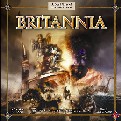
In my highly simplified version of Britannia that will be part of the new editions of the game, the number of units a player has on the board is subtracted from the economic value of his holdings, and that results in him losing an army, standing pat, gaining one army, or in rare cases gaining two armies. This does away with the Increase Point Track of Britannia and also means that overpopulation rules are not required, because if the comparison is bad enough the player actually loses an army.
There are hybrid economies that let a player build units as though in an accumulation economy but provide a limit on the number of units. This limit can be “overpopulation”, as in Britannia, or it can be a maximum army, fleet, or air force size as in Britannia and many other games, usually reflected in the piece mix. For example, if you have no more battleship pieces for your nation you can’t build more battleships. In Britannia the maximum force size is supposed to represent the limits on communication and control for primitive Dark Age nations; for more modern games it may not represent anything specific but still has the maintenance limit affect. Britannia’s economic model is consistent with the idea that the armies represent both populations and military forces, as was generally the case in the dark ages where there were no professional armies and few trained/experienced warriors. Most of an army was essentially farmers armed with whatever they had to hand. The more farmers you had, the bigger your army could be.
But piece mix limits can represent real-world limits. In World War II most of the major participants reached a maximum size military because some 10% of their population was under arms - most of the men of military age – and the rest were required to run the economy or were not of an appropriate age or gender to fight. In earlier times the percentage of participation in the military was usually much less at any given time, although if we go back to Greece and Republican Rome we’ re again at high levels of participation. While population is not strictly an economic variable it becomes a limit for the size of militaries unless mercenaries are available. There’ve certainly been times when mercenaries were commonly available as in Greece after the Peloponnesian War and in Hellenistic times, in Italy at the time of Machiavelli, and during the 30 Years War.
So there’s a variety of ways to introduce limits on the size of military forces in a game that are not directly related to the economy but have many of the same effects as an economic limit.
In contrast to the maintenance model we have the accumulation model as seen in games like Axis and Allies, traditional (pre-2008) Risk, and Vinci. You could play Axis and Allies for quite a long time without fighting much, and still have more pieces to use to create new units. A&A is not much like the real world but you don’t really notice because of the constant slaughter of units that means the real economic limits, if any, will never be reached.
We get the massive armies of traditional Risk because it’s an accumulation economy. Imagine how different the game would be if you could only have, say, three armies per area you own, or maybe only two. The latter is my initial step in turning Risk into something that might resemble a real “war” game. Vinci and Smallworld go one step further in providing no economy for most empires most of the time. An Empire begins with its maximum military and can only go downward unless the Empire characteristic includes a special rules to gain more armies
In general, "games about war" with no pretense to being models of reality (Risk, Vinci, Smallworld, Conflict and Broadsides from back when, and many many others), as opposed to war games, tend to have accumulation or no economy at all.
In games that depict a single battle there is rarely an economy, but there can be order-of-battle based objectives that introduce something like an economy. For example, a side may get a few reinforcing units if they can take a particular road junction. This pseudo-economy can occur in games that have a regular economy, as well. For example, in Britannia there are two cases where the Angles won’t get a leader if they don’t control a particular area. In effect, that area becomes a temporary economy that “produces” the leader.
In games with more than two sides - what tabletoppers call “multi-player”, though that means something else to video gamers - the nature of the economy can be critical to successful design. An accumulation economy encourages turtling, that is, sitting on the sidelines while the turtle watches the other players fight and lose resources or units, as he accumulates resources and units (also known as “camping” in video game shooters). If Risk didn’t have the territory cards then turtling would be very common because you can accumulate armies quickly while other players lose armies quickly when they fight. In fact I strongly suspect the cards were added to Risk to discourage turtling, you can only get a card by capturing an opponent’s territory, that is by attacking and risking losses. And you have to get cards so that you can turn them in for large numbers of armies. In a long Risk game more armies will be acquired through the cards than through the economy.
This is in contrast to Diplomacy where you cannot sit on the sidelines if you want to win. Some other players will be gaining supply centers and consequently units while you will be static. If no one gains or loses supply centers for a while then you have a stalemate and the game ends in a draw.
If there is no economy in a more-than-two-sided game, no player will want to fight because while he and his opponent lose resources or units the other players do not. A multi-sided conflict game with no economy is likely to be a “turtle-fest.”
These are not problems with two player wargames because each player only has the other to fight, so fighting rather than turtling is going to happen.
Economies of one kind or another are common in big video games. They are obvious in games like Civilization and real-time strategy (RTS) games, games that are (or can be, in Civ’s case) wargames involving more than two sides. Civilization tends to have some limits on how big your economy can grow because of population unhappiness and pollution, but when you produce a unit there’s no reference to how many units you already have, there’s no limitations. In the end you have an accumulation economy. In most RTS games your buildings produce units as long as they have resources without regard for how many units you already have, a classic accumulation economy. Turtling can work, but if there are limited resources in the “world” and you’re sitting in one corner rather than gaining those resources you will probably lose in the end. I think particularly of WarCraft III where the amount of gold in the world is limited because there are only so many gold mines and so much gold in each mine, and gold is needed to create new units. If other players gain control of this gold while you turtle then you will probably lose, unless they managed to slaughter themselves down to a level that lets you take over.
Even a shooter has an economy of sorts as the players pick up various weapons and medical supplies that miraculously lay about. This is an accumulation economy except that you don’t need to own any particular economic resources to produce more, you just find it - so the affect of economics on maneuver is much smaller. And there is a limit sometimes on how much you can accumulate because your inventory allows you to carry only so much, though some of these games allow you to store the rest of your “stuff” somewhere else.
In platformers and Nintendo-style games like Mario there are still things to pick up but there’s not really an economy because you don’t accumulate a lot of “stuff”.
What I said about shooters brings to mind an important aspect of economy. In the shooter you don’t have to hold any particular place in order to gain more stuff, you just pick it up where it’s lying about. Although some players would say you have to kill things in order to take what they “drop,” who plays a shooter without killing things, since that’s the major focus of most such games? The point is, if there are no locations that can be gained or lost in order to improve or lose economic capability, then you’ve lost the major point of strategy and maneuvering in the game, and it can once again become a matter of slaughtering more of the enemy than you lose. But that doesn’t work well in a multi-sided game because it encourages turtling.
Some non-wargames have ways to gain new forces or assets. These can resemble an economy or they can resemble an order of battle. Within those economic models you can also have maintenance or accumulation. Monopoly (the accumulation) has a minor economy from passing Go and collecting $200. Money is victory points in Monopoly, and there would be no sense in limiting what you can accumulate. Chess and checkers are mainly tactical games with a strategic component, mainly battle games, but they do have economic appendages. Chess has a minor economy from promoting pawns, just as checkers enables you to make Kings. In both cases they contribute to the importance of maneuver in the game as you want prevent your opponent from reaching the last rank with a pawn or checker.
The unlimited supply of X’s and O’s in Tic-Tac-Toe or the unlimited supply of letters in Scrabble are more or less an order of battle rather than economy.
The economy/ order of battle question, and the maintenance/accumulation economy question, tend to be much more important in conflict games where you are hindering the other player(s) by destroying their assets. This isn’t common in Eurostyle games, though common in screwage games like Bang! and Munchkin.
There are board and video games that are essentially economic engines, resource management games. The economy here may be of either type, though there’s often a technology element that lets you remove the hybrid economy’s limitations on maximums. The contrast with wargames is that in many wargames the economy is an aspect of the game rather than the major focus, while in many non-wargames the economy is the major focus.


Thursday, October 04, 2012
“Is this game like Britannia?”
At the NC State Tabletop Game Club I attend five people were playing my prototype “The Rise and Fall of Assyria”. Someone came by and asked if the game was like Britannia. I answered no, because this game is much more fluid, is designed for 3 to 5 players, has less randomness in the combat though still using dice, has simpler scoring, and involves the rise and decline of empires rather than ones that can in some cases play through the entire game (as with the Welsh and Picts in Britannia).
But later I thought that compared with the other games that were being played in the room – we had over 50 people that day – the game is much like Britannia. Because they are both games that require “strategic thinking” (strategic in contrast with tactical, though also in the sense of having to make difficult choices about the best play) that are also games of maneuver and location. And they are both wargames. In contrast most of the games that are played at this game club do not involve maneuver and location nor are they wargames.
Sometime I’ll describe at greater length what I mean by games of maneuver and location, but briefly, if you think about traditional non-commercial games such as chess, checkers, Parcheesi, mancala, Nine Men’s Morris, Go, and Tic-Tac-Toe (Noughts & Crosses) they are all games where the spatial/geographical location of the pieces is important, and you either maneuver to arrive at locations, or you place pieces at locations in the case of Go and Tic-Tac-Toe. Traditional non-commercial boardgames are, without any exception I can think of, games of spatial location with either maneuver or placement or possibly both. In fact this is the essence of boardgames, until recently. (In contrast, the essence of card games is hidden information. See http://gamasutra.com/blogs/LewisPulsipher/20120219/91123/The_Fundamental_Differences_between_Board_and_Card_Games_and_How_Video_Games_Tend_to_Combine_Both_Functions.php )
For example, one of the most popular games at the club is Red Dragon Inn. In this game each player is a fantasy adventurer who has just come back from a successful adventure and wants to spend his money gambling and drinking until comatose (or until he runs out of money). The player who keeps some money and is awake when others are comatose wins the game. Each player has a unique deck of cards that he can play plus some money tokens and so forth. Obviously this is not a wargame. Perhaps not so obviously, it’s not a game where spatial location plays any part, and that virtually always means that maneuver plays no part.
The game at the next table was Agricola. I’ve not paid a whole lot of attention to the game, because I’m not interested in pretending to be a farmer, nor am I in sympathy with Eurostyle games. But as I understand from talking with players and limited observation, location in the sense of location relative to other players’ assets - spatial location - plays no part in the game, just as is true of a great many Eurostyle games. In many Eurostyle games the board or what passes for one is used to keep track of information, not to show maneuvers or relative locations. Some of these games have “worker placement” but what you’re doing in that situation is recording which option you have selected. You could just as well use tokens or cards, and take a token or card when you “place” a worker. Many of these games are turn order games and the turn order might be represented on the board as in Last Will, but there is no actual location and no placement in the sense of occupying a particular spatial location.
In a sense they are not “real” boardgames at all. You can write down all the statuses on pieces of paper and still play the game, or you can use tokens or cards to represent turn order or worker placement and still play the game. While you can write down the positions of pieces on a chessboard those positions have no meaning except in relation to where the other pieces are: they have spatial locations.
Another way to look at this is that traditional strategic games and virtually all wargames are geographical/spatial games. One place is not the same as another and the relationship between the locations of those places is important. As this corresponds to the real world, it may provide a feeling of familiarity to some, and it certainly helps model real-world situations.
Magic: the Gathering is by far the most played game at the club. I’ve asked players specifically whether spatial location matters, and my impression from having watched Magic and Yu-Gi-Oh a lot over the years is that they are rarely if ever games where location is important and almost never games where maneuver is involved. The cards are placed on the table as record keeping markers. When you “tap” a land you’re recording that it has been used. There are different zones in Magic: the Gathering that indicate the status of cards but those are not spatial locations, those are record-keeping or status tracking.
Not all the other games being played at the club lacked maneuver and location. Probably the most popular game other than Magic is Betrayal at House on the Hill. A great many of the club members who play games other than Magic are essentially role-playing gamers who also play board and card games. Our meetings are too short and too loud to accommodate RPGs during the meeting, so people play RPGs at other times as arranged. Betrayal is a story driven game much as an RPG can be. It does have a considerable element of maneuver and location as the players explore the old mansion, drawing tiles to add rooms to the mansion and moving from one place to another. Once the “traitor” has been identified maneuver can become quite important as various characters are trying to kill each other off or find particular items or go to particular places to use particular items. I wouldn’t exactly call it a boardgame in the traditional non-commercial sense but it is a game where maneuver and location are important.
Another popular game is Dominion, and Ascension is another deck building game that is played a lot. Clearly Dominion is a game where the cards are used to keep a record of what’s happening, as well is to provide randomization. Information hidden from other players in the cards in each player’s hand is at least theoretically important despite the low levels of player interaction in this kind of game. That is, if you knew what cards the other players had you could gain an advantage in play.
It may not be surprising that many of the games, like Dominion, that have only atmospheres and not themes – that is, the so-called story does not actually affect how the game is designed and played – are also games lacking entirely in maneuver and location.
So in this sense almost all wargames are like Britannia, and all those other games I’ve mentioned that are played at the game club are not. Betrayal is the only one that goes in the distance toward Britannia and wargames in general.
Wargames also tend to be games of direct conflict, whereas many games played at the club are not (Magic: the Gathering being an obvious exception). That is more obvious, and we can talk about that another time.
I’ll have more to say about maneuver and location in contrast other kinds of games at another time.
**
My book “Game Design: How to Create Video and Tabletop Games, Start to Finish" is now available from mcfarlandpub.com or Amazon (Books-a-Million has a PDF version).
I am @lewpuls on Twitter. (I average much less than one post a day, almost always about games, not about other topics.)
Web: http://pulsiphergames.com/
Sunday, September 30, 2012
Review: Atlas of World Military History
Atlas of World Military History: the art of war from ancient times to the present day. By Richard Brooks and others. Hardcover, 256 pages, large (“coffee-table”) format . Originally published by HarperCollins in England in 2000, this edition by Barnes & Noble in the same year.
Although this book is out-of-print I was able to get a pristine “used” copy very inexpensively through a used bookseller on Amazon.
This is a typical contemporary large-format “Atlas” insofar as there are maps on almost every page but also a very extensive commentary and narrative. (Old-style atlases were just maps.) It is also lavishly illustrated with drawings, paintings, and photographs. And as you would expect the book focuses much more on the past century or two than on earlier times. The American Civil War gets the same number of pages (four) as the Russo-Japanese War of 1905. The Crusades and Mongol invasions get two pages each. The European part of World War II gets 28 pages.
The sections include:
The First Military Empires (ancient times)
Men on Horseback (Medieval)
the Military Renaissance (1500 to 1650)
Line of Battle (1650 the 1785)
Nations in Arms (1792 to 1815)
Heirs of Napoleon (1815 to 1905)
Storm of Steel (1914 to 1916)
Restoring Mobility (1917 to 1939)
Zenith of Industrial Age War (1939 to 1945)
the Cold War and the End of Modern War
An unusual feature of the book is that several of the authors are well-known wargame designers, including Richard H. Berg, Mark Herman, and David C. Isby.
The book is very good at getting to the heart of matters - as many books are not. As I read I wondered if this was partly the influence of the game designers, who as model-makers have to get to the heart of what’s important in a situation and leave everything else out.
The authors have a way with words and the phrase I most remember is "cosmic levels of incompetence" as a description of the Russian army in the Russo-Japanese War.
Atlases in general have the virtue of providing a view "of the forest, not the trees." Yet the accompanying text here can show you many of the trees, as well. You get both an overview and occasional details. Many of the maps are of individual battles or doctrine, others show the sweep of empire (including such topics as trade and economics). An excellent book.
**
My book “Game Design: How to Create Video and Tabletop Games, Start to Finish" is now available from mcfarlandpub.com or Amazon (Books-a-Million has a PDF version).
I am @lewpuls on Twitter. (I average much less than one post a day, almost always about games, not about other topics.)
Web: http://pulsiphergames.com/
Wednesday, September 26, 2012
Six words about game sequels
According to tweetdeck, one of the trending:worldwide topics on twitter not so long ago was 6 word stories. In the past few months I've asked people to say 6 words about game design, programming, wargames, stories in games, casual games, zombie games, chance/randomness in games, and innovation and plagiarism in games.
This time the challenge is this: say six words about game sequels.
Sunday, September 23, 2012
Abstractions and plans for new edition(s) of Britannia
As you probably know, the Fantasy Flight version of Britannia has sold out its second printing and all rights have reverted to me.
The plan for the new editions of Britannia - don't forget that plans don't always work out - is that there are several versions. The standard version that has been available in the past will be changed more than I anticipated when I started out two months ago, primarily to make it work better as a way of teaching/understanding British history - to make it closer to reality, if you will. In the process the game has changed some, which I also think will be interesting for players. In particular I've eliminated some things that I strongly dislike. First, it won't be possible for the Romans to make a deal with the Welsh, who then submit although never touched. This time, they Will Fight. Second, it won't be possible for a "starving army" to commit virtual suicide by making a bad-odds attack. Its compatriots will have to come along. Third, we won't have the Romano-British scurrying for the hills, abandoning their homes and farms. But they'll be in better shape than in the old game.
It also won't be a Roman walkover with Romans even known to be killing Caledonians. The Roman will have more difficult choices. Unfortunately, players who tend to make a hash of the Romans now, when it IS often a cakewalk for an experienced player, may REALLY make a hash of it in the new version. There's always a problem in games, whether to design for the 99% expert player or the 33% or the 75%. When the 99% expert is going to work a bit, the 33% may just get creamed. Fortunately, the Roman-British are MUCH more prominent in the game - for a while.
There's a smaller, diceless version (“Rule Britannia”) that uses a new board (21 land areas); and a quick, really small (8 nations) "broad market" version (no set title) that also uses a new board. I expect these versions will appeal more to current tastes, and may (should) outsell the standard version.
There's also an "Epic" version that uses the standard board with the addition of Ireland, and will be significantly longer than the standard game (Epic, get it?). So Ireland will be on the standard board, even though it won't be used in the standard game.
The standard game will come with several shorter scenarios (4-9 turns), and a new three player game that I am trying very hard to balance, and a 6-7 turn game that covers the entire period using the same colors/sides.
All of these except the new 3 player version were originally developed years ago, but Fantasy Flight was not interested in expansions/spinoffs/add-ons. Britannia was essentially a trophy game for them, because the owner likes the game. (After the game had been in print about two years, I could no longer get anything posted on the FFG Britannia Web site. They were "too busy.") With the new edition we can try to bring these other versions to the public. Most likely there will be a Kickstarter with several choices, and various perks (perhaps a wooden set?). Time will tell.
In the shadowy background as standalone or expansions are a Britannia card game and a couple games that use the setting, board, and pieces but are new game systems.
With that introduction we can now talk about abstractions and things left out in relation to the Epic and standard versions.
Designing a game that's a model of some reality is an exercise in abstraction. (Keep in mind that many of today's popular games are not models of any reality. They are simply "abstract" with an atmosphere tacked on.) You cannot begin to represent all of reality, it's too complex. You have to combine things together into one thing constantly, and you have to ignore a lot of things that were very important to people at the time.
For example, in Britannia the "armies" represent (in most of the Dark Age) poorly-armed agricultural settlers. (The exceptions are the Romans at one end of the time scale, and the Norwegians and Normans at the other - more or less professional soldiers.) Armies are both population and soldiers. That’s the way it tended to be in the Dark Ages, quite different from some of late antiquity and most of the modern world. A more complex game could represent population separately from soldiers. One of those shadowy add-on games does, though it's generally fairly simple otherwise.
An obvious compromise is the coherence of large ethnic groups that were usually not politically united. The Welsh were never one kingdom, really, though most of them occasionally acknowledged an overlord such as Rhodri Mawr (who is now in the game under present rules). Picts, Romano-British, Norsemen, etc. weren't united much of the time.
What I've done in "Epic Britannia" is undo some of these compromises made in standard Britannia, decreasing the level of abstraction. It's "more true-to-life", though it's still so abstracted that it models effects more than causes. That is, it's good for showing what happened, and even for giving some idea of why things happened, but it doesn't try to model the causes of why things happened.
So what does Epic do differently than Second Edition Brit?
• Caratacus Welsh leader with change in play order (now also in standard)
• Arthur appears for all British nations (now also in standard)
• Ravaging/Forays (now also in standard)
• Disorder/disunity (Settled Nations in standard now)
• Several nations separated (3 R-B nations, 3 Angles)
• Separates Roman control from Roman forts
• Reduction of Roman capabilities in later years but addition of one relief expedition
• Changes the sides (colors)
• Ireland included
• Absorption of Picts by Scots, Jutes by Saxons
• Revolts and second submissions possible
• Plague
• Stronger Saxons at the end
• More leader movement at end
The reduction in abstraction makes for a longer game, of course. Contrast it with a game with only 8 nations instead of 16-17 and 6 turns instead of 16 (the broad market version), which is 60-90 minutes (I hope).
As the simpler, shorter games are likely to become the "standard" for this topic, I have not been too reluctant to add features to Britannia itself that may lengthen the game, if only because there may be more fighting in the early part. As you see, some of the features of Epic have now been incorporated into the third edition standard game.
Plenty is still left out, for example the Roman Carausian revolt. http://en.wikipedia.org/wiki/Carausian_Revolt
And once again, we’ll remember what happens with plans, and see where we end up - next year.
Monday, September 17, 2012
September 2012 Miscellany
September 2012 Miscellany
Since I got back from WBC and GenCon, I've posted several articles at my "home" blog. Not all are posted on other blogs (e.g., ones heavily video-game-related aren't posted on BGDF and F:AT). Here's a list with links:
Observations about changes in game distribution (and publishing)
http://pulsiphergamedesign.blogspot.com/2012/09/observations-about-changes-in-game.html
Getting a foot into professional (tabletop) game design How to be taken seriously by publishers (more cautionary advice)
http://pulsiphergamedesign.blogspot.com/2012/09/getting-foot-into-professional-tabletop.html
Zynga and Fundamental Problems with their Social Network Games http://pulsiphergamedesign.blogspot.com/2012/09/comparing-this-years-game-conventions.html
Comparing this year’s game conventions
http://pulsiphergamedesign.blogspot.com/2012/09/comparing-this-years-game-conventions.html
Interface (and other) game design lessons from a rental car
http://pulsiphergamedesign.blogspot.com/2012/09/interface-and-other-game-design-lessons.html
"Seven years and a million dollars"
http://pulsiphergamedesign.blogspot.com/2012/09/seven-years-and-million-dollars.html
Review: Gratuitous Space Battles
http://pulsiphergamedesign.blogspot.com/2012/08/review-gratuitous-space-battles.html
And for what it's worth, I seem to post on the "home" location a couple days before posting elsewhere, in any case.
**
People outside the USA who want to buy my game design book might consider using Book Depository to order, as they offer free shipping to about 50 countries. I have not used them myself but have seen a reference to it. Amazon UK has the book, and perhaps other Amazons in other countries do as well. Singapore Books (http://www.singaporebookstore.net/2012/04/game-design-how-to-create-video-and-tabletop-games-start-to-finish-by-author-lewis-pulsipher/) seems to be a related source.
**
I have posted a nearly 2 hour audio file of my session about game design at WBC: http://bit.ly/O7GRJJ
**
One never tires of unsolicited appreciation, especially because individual books and games don't really make that much money for the author/designer. As in this email I recently received:
"Dear Mr. Pulsipher,
Just finished your book on tabletop and video games and it was awesome! i appreciate all the great advice and the realistic expectation level it sets for designers. The supporting website is so helpful. thank you so much for taking the time to do this book and sharing your knowledge and experience.
Lori Nelson"
**
There are all kinds of words applied to games that, for many people, are interpreted to mean "what I like", regardless of any dictionary meaning of common connotation. "Immersive," "intuitive" (which also means 'what I'm familiar with'), "interactive," and that's only some words starting with "i"; there's also "social," "deep," and so on.
**
Rampant egalitarianism - the idea that everyone must be the same, that no one should be allowed to stand out - is already filtering into video games, and is crippling our schools. A former teaching colleague of mine, who went back to university for four years to get a Ph.D., wonders if it's too much to ask university students to call him "Dr." instead of Mr. But "a former [Department] Chair once explained to me, 'By asking them to call you this, they may feel that you are demeaning them because you have something they don't. ' (And no, that is -NOT- a joke.)"
The students are half my former colleague's age. Of course they can't expect to have everything he has. But they will have the *opportunity* to get a Ph.D. Most of them won't get one, but that's the point of equal opportunity, not everyone will take every opportunity.
Critics already remark on the gradual disappearance of "consequence-based" gaming in the single-player video game world. It doesn't matter what you do, as long as you keep trying you'll finally "beat the game". You die, you come back, usually without harm. You cannot lose. So it doesn't really matter what you do, there are no long-term and few short-term consequences to your actions, no responsibility. And everybody is "equal".
**
I read on Purple Pawn about a large game company called Fundex that has filed for bankruptcy reorganization. Somehow their sales went from over $25 million in 2010 to just over $2.5 M this year.
Aside from wondering how that happened, I was unsurprised to see that there's no indication on their Web site that this is going on, even though I have a PDF of their filing, downloaded through PP.
Which reminds me of some familiar hobby game companies that have had financial trouble yet you'd never have known from their Web sites.
**
I looked for "game design" groups on Yahoo the other day. Most of the ones I checked out have been overrun with spam. Difficult to run such a group effectively and not monitor (approve) messages. I get lots of junk messages (advertising some Website or other) on my Blogger blog, so I have to monitor all comments.
**
People who like to play poker online worry about an analysis, not about yomi. So they don't need to see people or smell them or hear them, they just need to know what those people do.
I suspect a really good analysis of poker play might work pretty well against ordinary players. I have to think that against outstanding players, it would not. Predictability cannot be a good trait for high-stakes poker.
**
While I was a guest on the Ludology podcast, I spontaneously said something about games with a certain personality (the topic was epic games), but later I couldn't really remember what I meant. So here's the question. Can a game have a personality? Do all games have a personality of one kind or another? Are there several categories that all game personalities fall into, or are they more varied than that? Any suggestions?
**
If you want to write stories, become a story writer, not a game designer. You have much more control over stories in novels, plays, movies, short stories, and so forth. Talk with anyone who writes game stories, and you'll soon hear some frustration, because the needs of the game override the needs of the story. Quite rightly. People may start to play a game because of story, but they continue to play (or not) because of gameplay. Stories get used up.
**
One possible outcome of my Britannia publisher search is that I'll become a "publisher." Any suggestions for name of the company?
Pulsipher Games, PulsGames, PulseGames, all seem mundane. Not sure how much name recognition is in "Pulsipher", unusual though it is.
**
A lot of people fool themselves about the "simulation" value of commercial board wargames. If they were really simulations, the games would be so chaotic (and yet require so much planning, paradoxically) that they wouldn't be enjoyable, for most players. Real war is "a mess". As well as being "hell".
**
The mania for seeing certain kinds of events, such as sports, live on your mobile phone or otherwise, rather than time-shifted, is another symptom of the failure of imagination in modern culture.
**
Attentive publisher! McFarland wanted to put a space in "boardgame" in my book to make two words. They called to make sure it was OK with me! Not likely to happen in the game world.
Sigh. And then they failed to send out review copies, and didn't ship any copies to GenCon with all their other books. Oh, well.
**
A phrase to describe the Russian army in the Russo-Japanese War: "cosmic levels of incompetence." I like it. I'll talk about the book it's from another time.
Since I got back from WBC and GenCon, I've posted several articles at my "home" blog. Not all are posted on other blogs (e.g., ones heavily video-game-related aren't posted on BGDF and F:AT). Here's a list with links:
Observations about changes in game distribution (and publishing)
http://pulsiphergamedesign.blogspot.com/2012/09/observations-about-changes-in-game.html
Getting a foot into professional (tabletop) game design How to be taken seriously by publishers (more cautionary advice)
http://pulsiphergamedesign.blogspot.com/2012/09/getting-foot-into-professional-tabletop.html
Zynga and Fundamental Problems with their Social Network Games http://pulsiphergamedesign.blogspot.com/2012/09/comparing-this-years-game-conventions.html
Comparing this year’s game conventions
http://pulsiphergamedesign.blogspot.com/2012/09/comparing-this-years-game-conventions.html
Interface (and other) game design lessons from a rental car
http://pulsiphergamedesign.blogspot.com/2012/09/interface-and-other-game-design-lessons.html
"Seven years and a million dollars"
http://pulsiphergamedesign.blogspot.com/2012/09/seven-years-and-million-dollars.html
Review: Gratuitous Space Battles
http://pulsiphergamedesign.blogspot.com/2012/08/review-gratuitous-space-battles.html
And for what it's worth, I seem to post on the "home" location a couple days before posting elsewhere, in any case.
**
People outside the USA who want to buy my game design book might consider using Book Depository to order, as they offer free shipping to about 50 countries. I have not used them myself but have seen a reference to it. Amazon UK has the book, and perhaps other Amazons in other countries do as well. Singapore Books (http://www.singaporebookstore.net/2012/04/game-design-how-to-create-video-and-tabletop-games-start-to-finish-by-author-lewis-pulsipher/) seems to be a related source.
**
I have posted a nearly 2 hour audio file of my session about game design at WBC: http://bit.ly/O7GRJJ
**
One never tires of unsolicited appreciation, especially because individual books and games don't really make that much money for the author/designer. As in this email I recently received:
"Dear Mr. Pulsipher,
Just finished your book on tabletop and video games and it was awesome! i appreciate all the great advice and the realistic expectation level it sets for designers. The supporting website is so helpful. thank you so much for taking the time to do this book and sharing your knowledge and experience.
Lori Nelson"
**
There are all kinds of words applied to games that, for many people, are interpreted to mean "what I like", regardless of any dictionary meaning of common connotation. "Immersive," "intuitive" (which also means 'what I'm familiar with'), "interactive," and that's only some words starting with "i"; there's also "social," "deep," and so on.
**
Rampant egalitarianism - the idea that everyone must be the same, that no one should be allowed to stand out - is already filtering into video games, and is crippling our schools. A former teaching colleague of mine, who went back to university for four years to get a Ph.D., wonders if it's too much to ask university students to call him "Dr." instead of Mr. But "a former [Department] Chair once explained to me, 'By asking them to call you this, they may feel that you are demeaning them because you have something they don't. ' (And no, that is -NOT- a joke.)"
The students are half my former colleague's age. Of course they can't expect to have everything he has. But they will have the *opportunity* to get a Ph.D. Most of them won't get one, but that's the point of equal opportunity, not everyone will take every opportunity.
Critics already remark on the gradual disappearance of "consequence-based" gaming in the single-player video game world. It doesn't matter what you do, as long as you keep trying you'll finally "beat the game". You die, you come back, usually without harm. You cannot lose. So it doesn't really matter what you do, there are no long-term and few short-term consequences to your actions, no responsibility. And everybody is "equal".
**
I read on Purple Pawn about a large game company called Fundex that has filed for bankruptcy reorganization. Somehow their sales went from over $25 million in 2010 to just over $2.5 M this year.
Aside from wondering how that happened, I was unsurprised to see that there's no indication on their Web site that this is going on, even though I have a PDF of their filing, downloaded through PP.
Which reminds me of some familiar hobby game companies that have had financial trouble yet you'd never have known from their Web sites.
**
I looked for "game design" groups on Yahoo the other day. Most of the ones I checked out have been overrun with spam. Difficult to run such a group effectively and not monitor (approve) messages. I get lots of junk messages (advertising some Website or other) on my Blogger blog, so I have to monitor all comments.
**
People who like to play poker online worry about an analysis, not about yomi. So they don't need to see people or smell them or hear them, they just need to know what those people do.
I suspect a really good analysis of poker play might work pretty well against ordinary players. I have to think that against outstanding players, it would not. Predictability cannot be a good trait for high-stakes poker.
**
While I was a guest on the Ludology podcast, I spontaneously said something about games with a certain personality (the topic was epic games), but later I couldn't really remember what I meant. So here's the question. Can a game have a personality? Do all games have a personality of one kind or another? Are there several categories that all game personalities fall into, or are they more varied than that? Any suggestions?
**
If you want to write stories, become a story writer, not a game designer. You have much more control over stories in novels, plays, movies, short stories, and so forth. Talk with anyone who writes game stories, and you'll soon hear some frustration, because the needs of the game override the needs of the story. Quite rightly. People may start to play a game because of story, but they continue to play (or not) because of gameplay. Stories get used up.
**
One possible outcome of my Britannia publisher search is that I'll become a "publisher." Any suggestions for name of the company?
Pulsipher Games, PulsGames, PulseGames, all seem mundane. Not sure how much name recognition is in "Pulsipher", unusual though it is.
**
A lot of people fool themselves about the "simulation" value of commercial board wargames. If they were really simulations, the games would be so chaotic (and yet require so much planning, paradoxically) that they wouldn't be enjoyable, for most players. Real war is "a mess". As well as being "hell".
**
The mania for seeing certain kinds of events, such as sports, live on your mobile phone or otherwise, rather than time-shifted, is another symptom of the failure of imagination in modern culture.
**
Attentive publisher! McFarland wanted to put a space in "boardgame" in my book to make two words. They called to make sure it was OK with me! Not likely to happen in the game world.
Sigh. And then they failed to send out review copies, and didn't ship any copies to GenCon with all their other books. Oh, well.
**
A phrase to describe the Russian army in the Russo-Japanese War: "cosmic levels of incompetence." I like it. I'll talk about the book it's from another time.
Thursday, September 13, 2012
Observations about changes in game distribution (and publishing)
At GenCon I attended several seminars about game publishing and game distribution. I’m not intending to self publish games, though I will self-publish some books, but I am interested in distribution in connection with selecting a publisher for the new edition of Britannia. A designer negotiating contracts needs to know how games are sold. So I’m not an expert about this compared with an experienced publisher. But I think I can tell you enough to make this interesting. I knew most of this before I went to GenCon but still we can call it “what I learned about game distribution and publishing at GenCon”.
Typical distribution. Tabletop hobby games are sold in three fundamentally different ways. One is sales directly by the publisher to customers, either at conventions or online. The second is online sales by retailers. The third is sales in “brick-and-mortar” retail game stores where people walk in and buy games.
Another but much less common method is sales through non-specialty retailers such as Barnes & Noble and Target. Mass-market games such as Monopoly are sold through Toys “R” Us, Walmart, and other big retailers. Hobby game publishers always want to “get in on the action” of mass-market distribution, and that’s why sales in Barnes & Noble and Target are exciting for those publishers.
I’ve listed the three major methods in reverse order of sales volume. Most hobby games are still sold through game shops, or shops that list games is one of their major segments along with comics and other popular culture.
Only the first method, direct sales by the publisher, enables the publisher to receive 100% of the “manufacturer’s suggested retail price”, MSRP. Sales to distributors are typically at 40% of MSRP, though some of the bigger manufacturers evidently get a little more. The distributor then adds 10% of MSRP to the cost when they sell to the retailer. So the retailer is typically getting a game at 50% of the MSRP and they have to decide how close to the MSRP they will sell it for. The brick-and-mortar shops generally go to the full MSRP while the online retailers take a smaller percentage and hope to succeed through volume and through much lower fixed costs, because they’re not supporting a storefront.
The by-far largest hobby games distributor in the United States is Alliance. A distributor in similar position in Britain is SDVM. Why there is one distributor that’s the “800 pound gorilla” in these two countries I do not know.
The percentage of MSRP received by the publisher from sales through game shops and online retailers may be the same, about 40%. The problem is that online retailers rely on volume and low fixed costs because they don’t have a shop to maintain. As a result they can undersell the brick-and-mortar retailers. This can drive the brick-and-mortar game shops out of the equation. In the 21st century it’s very common for people to go into a shop, learn all they can about an item, and then go home and buy it online for (say)
five dollars less. In the age of smart phones it’s not exceptional to see someone point a smart phone at a barcode and look at the online price right on the spot. Though I rarely visit a game shop, I’ve seen this happen at Origins.
Cheap Internet sales tend to crowd out sales direct from the publisher. In general, the publisher itself must charge MSRP online so that it won’t be seen as underselling retail shops. Usually the publisher can give a discount at a convention - which doesn’t mean it will - because that’s expected, and the volume is low enough that it doesn’t bother the brick-and-mortar people.
If the online sellers charge much less than MSRP, the publisher itself isn’t likely to sell much online. That’s a big hit, because they get 40% (roughly) from the online seller’s sale, compared to 100% of their own online sale.
Price setting. Some publishers, consequently, are trying to find ways to keep online retailers out of the equation so that the actual price to consumers is closer to the MSRP. That helps brick-and-mortar retailers immensely, and the idea is that more games will be sold if the game is available in brick-and-mortar retailers. I don’t know if anyone has any data about this, but clearly some percentage of games is purchased on impulse, someone sees it in a store and decides to buy it. This is helped in hobby game stores by various demos and events that may go on to bring attention to certain games. Your average game player is not someone who reads BoardgameGeek frequently, and the same may be true about the average game buyer.
One way to keep the price near MSRP is a fairly new law that allows manufacturers to require sellers to maintain at least (IIRC) 80% of MSRP price on items. A few manufacturers, such as Mayfair, take advantage of this but one can wonder how well it can be enforced.
Another method is to keep the games out of the hands of the online retailers. But if you work through normal distributors the distributors happily sell to the online retailers who may give them much bigger orders than a typical brick-and-mortar shop. GameSalute (see below) has an option for small publishers to sell only through GameSalute’s online store and through brick-and-mortar stores in order to keep the actual price of the game close to the MSRP. Also, if a manufacturer negotiates exclusive distribution with a distributor, as Mayfair and FFG have recently, then perhaps part of the deal is agreement that the distributor will not sell to online retailers. I don’t know, but I cannot figure out why else a big company would negotiate an exclusive distribution deal (well, other than getting better than 40% of the MSRP. But then would the distributor do it?).
While many hobby game buyers accustomed to online purchases may feel that buying a game for 30% off the MSRP is their god-given right, it doesn’t necessarily make sense for publishers. And it’s the publishers who are risking their money.
Aggregation and fulfillment. If you’re a small publisher you may not be able to get the attention of a big distributor like Alliance or SDVM. If they don’t expect your game to sell a lot then they may not bother to bring it to the attention of their customers, the retail shops. And if you’re a small publisher, the distributor may simply assume your game isn’t going to sell much, if they bother to think about it at all amongst the hundreds of games published each year. In that case you may go to an aggregator. The aggregator puts together packages from many small publishers to sell to distributors. In order to make a profit the aggregator pays the publisher just 33% of the MSRP.
There are publishers who try to act as their own distributors, selling directly to retailers, but this is time-consuming and requires some knowledge and data about retailers. In this category we also have GameSalute. This is a relatively new company that offers fulfillment to small publishers. Fulfillment means that GameSalute takes care of all the details of sales for the publisher, taking a cut of the revenue. GameSalute has gone to this in a big way and has a large stable of games, sometimes with exclusive distribution. I think that in effect they have become a distributor for the small publishers because they try to sell directly to shops rather than to Alliance or other distributors. (Another fulfillment company I’ve heard of but know nothing about: Impressions.)
The difference between aggregation and fulfillment is that the latter may warehouse the inventory of small publishers games and take care of all the details of selling while the aggregator is more strictly a middleman between small publishers and distributors. I’m sure there are shades in between, each company may offer somewhat different services
These percentages are very important to publishers of course, but are also very important to game designers because royalties are usually based on the revenue of the publisher, not on the MSRP. Frequently in the revenue calculations some shipping is subtracted as well - the publisher usually pays to ship product to distributors - so it’s difficult to calculate anything exactly.
The mass-market. Mass-market games are often purchased around Christmas time as gifts. One of the things that sets mass-market games apart from hobby games is that people who are not game players recognize the titles of mass-market games like Monopoly and Sorry and Battleship. They’re more likely to buy a game as a gift if they recognize the name. Another aspect of mass-market games is that many people think they already know how to play the game that they’re purchasing as a gift – even though in practice most people don’t even play Monopoly correctly. Mass-market titles become brands so strong that we see big movies being produced “based on” mass-market game titles like this past summer’s Battleship movie.
Just as important, when people buy tabletop games as gifts they typically don’t want to pay $50 or $60, so it’s another characteristic of mass-market games that they tend to be down in the $25-35 range.
Settlers of Catan, while it is a little too complicated to be a mass-market game, is nonetheless approaching the brand recognition status of some of the mass-market games. There is actually a simpler version of Settlers of Catan aimed at the mass market, unfortunately called Catan: Junior.
Kickstarter
The most popular seminar subject at GenCon was Kickstarter, because Kickstarter.com is a source of funding for many creative projects including games. At present it is available only in the US, and I know of one foreign company that incorporated in the US specifically so that they could use Kickstarter.
Kickstarter is part of crowd funding, raising funds to produce something from a lot of people rather than from individual investors or venture capitalists. As far as I know the original crowd funding was called the “ransom method.” A writer offered to write a short story and distribute it for free to everyone if enough people offered contributions to meet his stated goal. He used this method several times and may still be doing it.
Kickstarter was founded on a patron model. The contributors were supposed to offer funding for worthwhile projects as patrons rather than as customers who were receiving something specific in return. But for games at least it has become the equivalent of a pre-order system, not so different in effect from the P 500 system used by GMT and other wargame publishers. In a pre-order system you get enough orders for whatever you’re going to produce that you know you have enough money to afford to produce it. GMT originally called it P 500 because they wanted 500 pre-orders, although nowadays 750 would be desirable.
Kickstarter includes lots of perks other than the actual game to help people feel like they’re part of the process, to “see how the sausage is made” as one GenCon panelist put it, but there are potential tax differences between a patron model and a pre-order model important enough that the Kickstarter people insist that they’re running a patron model even as game companies use it for pre-orders.
A survey of people involved with supporting video games on Kickstarter shows that most of them feel it’s very important that they get a downloadable or even physical copy of the game they’re supporting:
http://www.gamasutra.com/view/feature/176839/gamasutras_kickstarter_survey_.php
(Anyone interested in using Kickstarter for funding should read the survey results.)
Pre-orders are very important to small and even medium-sized companies. GMT deviated from their model once with a game that they were sure was excellent. They printed a larger-than-usual run. When that game sold poorly they nearly went out of business. When a Kickstarter campaign achieves 10 times as much funding as desired – this is not unheard of for games – that makes a publisher’s job that much easier.
Publishing
Let me interject a few comments here about publishing. One factor dominates publishing costs: the number of copies of a game that are printed. Much of the costs of printing are fixed costs, the same lump sum no matter how many are printed. As a result the price per unit goes down rapidly as a number printed goes up. For example I saw the difference between the price for 1,500 and 2,000 copies of a boardgame through Ludofact in Germany not long ago and it was “awesome”. Yet the major problem with printing more copies is that if you don’t sell them you’re going to lose money. And the almost-as-important problem is, if you print more games where are you going to store them? The third problem is if you print more games you need to have more money up front. Since the economic downturn, printers are much less likely to print without money in hand.
Many years ago the conventional wisdom was that your MSRP for a game would have to be six times the manufacturing costs. Lately I’ve heard 5 to 1, 4 to 1 (which must really be pushing it), even 8 to 1 for a company that’s known for selling fairly expensive games. If you think about it, if you’re selling most games through distributor at 40% of MSRP and your printing costs are half that (20%) then you have a ratio of 5 to 1. But that means that the other 20% of the MSRP has to pay for all your other expenses including shipping, and provide your profit. If you go to 6 to 1 then your printing costs are about 16% and you have 24% for other expenses. That assumes you’re going through a normal distributor; if you’re a small publisher and you have to go through an aggregator then you’re really getting squeezed even at 6 to 1.
Publishing on demand (POD) avoids the up front/fixed costs of conventional printing and avoids the inventory costs because a game is only printed when someone buys it. But the quality of POD board and card games is not quite as good as the quality of typical game printing, and there is less flexibility in components. If you’re only printing books, as in RPG books, print quality is no longer a problem. The print quality of RPG Now and associated companies (who I’m told use Lightning Source, the biggest POD printer in the country) is just as good as the printing of many conventional book publishers. There are a few publishers who have their own printing equipment – more or less POD equipment – to take yet another middleman out of the equation.
I was going to talk about considerations for game designers to negotiate a contract in light of the numbers above but this is already quite long so I’ll leave that for another day.
Tuesday, September 11, 2012
Getting a foot into professional (tabletop) game design (more cautionary advice)
Getting a foot into professional (tabletop) game design
(more cautionary advice)
After “Seven Years and a Million Dollars” I want to talk about how you, as an aspiring hobby tabletop game publisher, can help yourself to be taken seriously by game publishers. While you’re important to your self, your family, and your friends, to a game publisher you’re no different than hundreds of other people who think they have games worth publishing, most of whom are wrong.
I’m sorry that this might appear to be negative. Dreams are OK, but you need to have goals and ways to get there, not dreams, if you want a chance to succeed. ("A goal is a dream with a deadline." Napoleon Hill)
Don't think you're going to make a lot of money. Very likely, you'll spend a great deal of time for little return. Non-electronic gaming is "small potatoes", not a big source of money. "How do you make a small fortune in the game industry? Start with a big fortune." “What’s the difference between a pizza and a game designer? The pizza can feed a family of four.” If you think you’re going to get rich then you will not be taken seriously. (I recently read about a toy inventor who became indignant at the idea of receiving only a 5% royalty (probably of wholesale, not retail). If you’ve learned what the typical levels of compensation are, you won’t have this happen.)
Publishers want games, not ideas. Ideas are cheap, a dime a dozen; recognize that your "great idea" is not that great, not that original, not that interesting to others. That's reality. (How often do we get a really extraordinary new idea? D&D, Magic:the Gathering, maybe Mage Knight, maybe Dominion?) Yes you need a good idea but the execution of the idea in the form of a complete game is much more important than the idea itself.
You have to DO something to give yourself some credibility, before publishers are likely to look at your game. If you're a complete unknown, why would publishers deal with you?
• Volunteer to man booths at cons
• Write articles or blog posts
• Make variants/mods and publish them on the Web
• Have a decent Web site
• GM at conventions
• Be a part of the publisher’s game communities
Sorry, folks, while you're really important to yourself and your family, you're “nobody” to any publisher. You have to do something to change that.
Don’t patent your game (or if you do, don’t admit it to anyone!). Game ideas cannot be protected, by law. Until recently patents only protected specific non-obvious expressions of ideas in a product, but this has been corrupted lately by the Patent Office because they now fund themselves from the patents they approve - so they approve a lot more patents. (No, I am Not a Lawyer. But I Can Read.)
At $3,000-$10,000 fees per patent, not even considering the fees you’d pay lawyers to defend/enforce the patent in court, patents are a fool’s errand costing more than a tabletop game is likely to make. That’s why so few real games (tabletop or video) are patented. (I say real games: there are lots of ridiculous game patents approved, which appear to be the case of a lawyer convincing some poor sod to spend a lot of money unnecessarily to patent a betting method or something equally obvious.)
Be willing to talk about your game. If you’re too worried about someone stealing your ideas, you won’t be able to communicate. It’s most unlikely anyone will want to steal your unpublished game. Remember, ideas are “a dime a dozen.”
There are certainly examples of parallel development, because many people get the same idea. And there are even examples of theft. E.g., a wrestling game was offered to one publisher and rejected; later the publisher came out with a similar game, but by that time the game had been accepted by another, large (and wealthy), publisher, and legal proceedings put the first publisher in its place. But this is quite exceptional, and you simply cannot live in fear of theft and be a game designer.
Don’t even think about requiring the publisher to sign a Non-Disclosure Agreement (NDA). This is another mark of a “clueless noob”. They will laugh at you and tell you to go away. Some publishers require designers who submit games to complete a release form that essentially says, “if we publish a game just like this, you can’t sue us.” That’s to protect the publisher from lawsuits by clueless “game designers”! If they require it, you’ll have to sign it, or they won’t deal with you.
Avoid hyperbole (excessive exaggeration, a little exaggeration might be forgiven as enthusiasm). Here's a real example, from a designer's description of his board game on LinkedIn:
It's a great game for fun and for the development of entrepreneurial thinking, it's great for anyone who would like to develop their mind set around business, money, creative thinking and more.
I have taken it around the world in the last 2 years (you can check it out here :) , and I have played it with thousands of people in 10 countries, just to get the feeling of how it goes, and people love it !
. . .
I support the game by PR, Facebook, twitter and game based workshops around the world."
Here is my response: Exaggerated claims will put off a publisher quicker than anything else. For example, 730 days in two years. If he played the game with thousands, that must be at least 2,000, or about three every day for two years. Or say he played once a week, 104 weeks, that's 20 people at each session? Has he done anything else in the past two years? Or is it a game that can somehow be played by very large numbers of people? Sorry, it just isn't *believable*, even if it's somehow true.
Calling your game "great" twice in your first paragraph may be a good sign of enthusiasm, but it's likely to raise alarm bells to publishers who have encountered far too many designers who think they have a great game - but virtually never do.
I didn’t even bother to check the Web site in this case, because the hyperbole raised all those alarms. And that’s how a publisher is likely to react.
Don’t tell a publisher you’ve spent a million dollars (or more - real examples) developing a boardgame. Even if they believe you, it’ll mark you as absolutely clueless, because there are very few tabletop (or video) games that make a million dollars for the developers, and that would only break even! (Exaggeration again: they were counting how much they’d pay themselves for their time, and their time was apparently very valuable.)
Don’t make super-pretty prototypes. Publishers will suspect that you spent so much time and money on prototypes that you were unwilling to change the game as needed. Really, a super-pretty prototype is usually the mark of a “clueless noob.”
Patience is a virtue. Britannia existed in fully playable form in 1980. It was first published in 1986. In 2008, one major publisher told me, "it's a good thing you're immortal, because it's going to take a long time" to evaluate and publish one of my games. I was offered a contract more than a year later. It still has not been published, though it’s “in the queue.”
I know of several games that took eight or more years from acceptance to publication. I know of a well-known published game that was rejected 10 times. 10 rejections takes quite a while.
So if you're an "instant gratification" type, your instant gratification has to be in seeing people play and enjoy your prototype, not in the published game.
Design many games. If you're only working on one game, or a few, you're not likely to end up with a good one, AND you identify yourself as a dilettante, an amateur. Pros are working on many games.
Don't design games for yourself, design for others. They’re the ones who must enjoy it, your enjoyment in playing is unimportant! But don’t design something you dislike.
Self-publishing is practical, if you don't mind losing money. Moreover, at some point you become a publisher/marketer, not a designer. What do you want to do?
Or go the GameCrafter “Publish On-Demand” route, where you can have a published and professional-looking game without spending a lot of money. Thegamecrafter.com. There are others offering this service, but I have no experience of them.
Playtesting is sovereign. You have to playtest your game until you're sick of looking at it, until you want to throw the damn thing away. Then maybe you'll have something. But you have to be willing to change the game again and again: listen to the playtesters, watch how they react, recognize your game isn’t perfect and won’t be even when (if) it’s published.
When your game is rejected, there’s a good chance the rejection had nothing to do with the game’s quality. Be persistent.
**
My book “Game Design: How to Create Video and Tabletop Games, Start to Finish" is now available from mcfarlandpub.com or Amazon. I am @lewpuls on Twitter. (I average much less than one post a day, almost always about games, not about other things.) Web: http://pulsiphergames.com/
(more cautionary advice)
After “Seven Years and a Million Dollars” I want to talk about how you, as an aspiring hobby tabletop game publisher, can help yourself to be taken seriously by game publishers. While you’re important to your self, your family, and your friends, to a game publisher you’re no different than hundreds of other people who think they have games worth publishing, most of whom are wrong.
I’m sorry that this might appear to be negative. Dreams are OK, but you need to have goals and ways to get there, not dreams, if you want a chance to succeed. ("A goal is a dream with a deadline." Napoleon Hill)
Don't think you're going to make a lot of money. Very likely, you'll spend a great deal of time for little return. Non-electronic gaming is "small potatoes", not a big source of money. "How do you make a small fortune in the game industry? Start with a big fortune." “What’s the difference between a pizza and a game designer? The pizza can feed a family of four.” If you think you’re going to get rich then you will not be taken seriously. (I recently read about a toy inventor who became indignant at the idea of receiving only a 5% royalty (probably of wholesale, not retail). If you’ve learned what the typical levels of compensation are, you won’t have this happen.)
Publishers want games, not ideas. Ideas are cheap, a dime a dozen; recognize that your "great idea" is not that great, not that original, not that interesting to others. That's reality. (How often do we get a really extraordinary new idea? D&D, Magic:the Gathering, maybe Mage Knight, maybe Dominion?) Yes you need a good idea but the execution of the idea in the form of a complete game is much more important than the idea itself.
You have to DO something to give yourself some credibility, before publishers are likely to look at your game. If you're a complete unknown, why would publishers deal with you?
• Volunteer to man booths at cons
• Write articles or blog posts
• Make variants/mods and publish them on the Web
• Have a decent Web site
• GM at conventions
• Be a part of the publisher’s game communities
Sorry, folks, while you're really important to yourself and your family, you're “nobody” to any publisher. You have to do something to change that.
Don’t patent your game (or if you do, don’t admit it to anyone!). Game ideas cannot be protected, by law. Until recently patents only protected specific non-obvious expressions of ideas in a product, but this has been corrupted lately by the Patent Office because they now fund themselves from the patents they approve - so they approve a lot more patents. (No, I am Not a Lawyer. But I Can Read.)
At $3,000-$10,000 fees per patent, not even considering the fees you’d pay lawyers to defend/enforce the patent in court, patents are a fool’s errand costing more than a tabletop game is likely to make. That’s why so few real games (tabletop or video) are patented. (I say real games: there are lots of ridiculous game patents approved, which appear to be the case of a lawyer convincing some poor sod to spend a lot of money unnecessarily to patent a betting method or something equally obvious.)
Be willing to talk about your game. If you’re too worried about someone stealing your ideas, you won’t be able to communicate. It’s most unlikely anyone will want to steal your unpublished game. Remember, ideas are “a dime a dozen.”
There are certainly examples of parallel development, because many people get the same idea. And there are even examples of theft. E.g., a wrestling game was offered to one publisher and rejected; later the publisher came out with a similar game, but by that time the game had been accepted by another, large (and wealthy), publisher, and legal proceedings put the first publisher in its place. But this is quite exceptional, and you simply cannot live in fear of theft and be a game designer.
Don’t even think about requiring the publisher to sign a Non-Disclosure Agreement (NDA). This is another mark of a “clueless noob”. They will laugh at you and tell you to go away. Some publishers require designers who submit games to complete a release form that essentially says, “if we publish a game just like this, you can’t sue us.” That’s to protect the publisher from lawsuits by clueless “game designers”! If they require it, you’ll have to sign it, or they won’t deal with you.
Avoid hyperbole (excessive exaggeration, a little exaggeration might be forgiven as enthusiasm). Here's a real example, from a designer's description of his board game on LinkedIn:
It's a great game for fun and for the development of entrepreneurial thinking, it's great for anyone who would like to develop their mind set around business, money, creative thinking and more.
I have taken it around the world in the last 2 years (you can check it out here :
. . .
I support the game by PR, Facebook, twitter and game based workshops around the world."
Here is my response: Exaggerated claims will put off a publisher quicker than anything else. For example, 730 days in two years. If he played the game with thousands, that must be at least 2,000, or about three every day for two years. Or say he played once a week, 104 weeks, that's 20 people at each session? Has he done anything else in the past two years? Or is it a game that can somehow be played by very large numbers of people? Sorry, it just isn't *believable*, even if it's somehow true.
Calling your game "great" twice in your first paragraph may be a good sign of enthusiasm, but it's likely to raise alarm bells to publishers who have encountered far too many designers who think they have a great game - but virtually never do.
I didn’t even bother to check the Web site in this case, because the hyperbole raised all those alarms. And that’s how a publisher is likely to react.
Don’t tell a publisher you’ve spent a million dollars (or more - real examples) developing a boardgame. Even if they believe you, it’ll mark you as absolutely clueless, because there are very few tabletop (or video) games that make a million dollars for the developers, and that would only break even! (Exaggeration again: they were counting how much they’d pay themselves for their time, and their time was apparently very valuable.)
Don’t make super-pretty prototypes. Publishers will suspect that you spent so much time and money on prototypes that you were unwilling to change the game as needed. Really, a super-pretty prototype is usually the mark of a “clueless noob.”
Patience is a virtue. Britannia existed in fully playable form in 1980. It was first published in 1986. In 2008, one major publisher told me, "it's a good thing you're immortal, because it's going to take a long time" to evaluate and publish one of my games. I was offered a contract more than a year later. It still has not been published, though it’s “in the queue.”
I know of several games that took eight or more years from acceptance to publication. I know of a well-known published game that was rejected 10 times. 10 rejections takes quite a while.
So if you're an "instant gratification" type, your instant gratification has to be in seeing people play and enjoy your prototype, not in the published game.
Design many games. If you're only working on one game, or a few, you're not likely to end up with a good one, AND you identify yourself as a dilettante, an amateur. Pros are working on many games.
Don't design games for yourself, design for others. They’re the ones who must enjoy it, your enjoyment in playing is unimportant! But don’t design something you dislike.
Self-publishing is practical, if you don't mind losing money. Moreover, at some point you become a publisher/marketer, not a designer. What do you want to do?
Or go the GameCrafter “Publish On-Demand” route, where you can have a published and professional-looking game without spending a lot of money. Thegamecrafter.com. There are others offering this service, but I have no experience of them.
Playtesting is sovereign. You have to playtest your game until you're sick of looking at it, until you want to throw the damn thing away. Then maybe you'll have something. But you have to be willing to change the game again and again: listen to the playtesters, watch how they react, recognize your game isn’t perfect and won’t be even when (if) it’s published.
When your game is rejected, there’s a good chance the rejection had nothing to do with the game’s quality. Be persistent.
**
My book “Game Design: How to Create Video and Tabletop Games, Start to Finish" is now available from mcfarlandpub.com or Amazon. I am @lewpuls on Twitter. (I average much less than one post a day, almost always about games, not about other things.) Web: http://pulsiphergames.com/
Saturday, September 08, 2012
Zynga and Fundamental Problems with their Social Network Games
As you probably know, Zynga's stock is priced far below its IPO cost, and many executives are leaving the company. It's not like they're losing money, but they're losing mind-share rapidly. Will Zynga be able to turn around this trend?
Zynga's fundamental problem may be the fundamental characteristic of the video game industry as a whole: video games are designed to be played for a while and then discarded. You "beat the game" or you learn the story, or you get tired of "the grind", because there's an emphasis on the destination, not on the journey.
Good board and card games are played over and over again, over the course of many years. I know people who have played my five hour board game Britannia five hundred times, and undoubtedly there are other board and card games of similar longevity. I may have played the tabletop RPG D&D that many hours. Video games do not match that, though MMOs can approach it. But social network games are nothing like MMOs.
Inevitably, in a video game that more or less constantly asks you for money, that builds in frustration so that you'll spend money to stop being frustrated, the player will get tired of the game and quit playing. And when the next game is practically just like the last (as is typical of Zynga Facebook games), the player is going to get tired of the next one that much sooner.
Yet Zynga is so big, every incentive is to avoid risk, hence the games are the same over and over again. Because they still draw millions of players, it's just the same group over and over again. But that group may be getting smaller.
Traditional arcade games were so hard you couldn't beat them, so many players kept going until they could no longer improve. But this is a new century, people don't want hard games, they want entertainment and time-killing and playgrounds, so social network games are stupendously easy to play. They are mass-market games, a completely different "kettle of fish".
Contrast Zynga's big-company low-risk mentality with King.Com's small teams churning out games every 3 months for online trials. Then they turn the most successful into social networking games.
The following explains the key to making really good games:
. . . Just Cause 2 developer explains that while most developers produce downloadable content to prolong user engagement, the real trick to long-term success is to make a game that players don't want to put down in the first place.
'We create a game allowing players to properly explore and have fun and not focusing so much on the actual end goal of the game,' he says. "
In other words, make a game where people enjoy the journey, not just the destination.
Thursday, September 06, 2012
Comparing this year’s game conventions
This is not a “convention report,” because I don’t care about many of the events at conventions such as the Origins Awards, and I didn’t bother to attend the really big D&D Next event at GenCon, and I don’t much care about the latest new games. I’m interested in certain aspects of things and that’s what I’m going to talk about.
Generalization about four conventions: GenCon is a story convention - not just story in games. WBC and PrezCon are wargame cons. Origins is a non-story, mostly non-wargame, game con.
GenCon is a convention where stories are king. Aside from games you have many fiction writers, and costuming/anime/film, mostly in those five ancillary hotels that I never visit (I stick to the convention center). Nichelle Nicols (Uhuru from original Star Trek) was the major (“media”) guest of honor. Brandon Sanderson, author of the Mistborne books and also the writer who completed the Wheel of Time series, was also a guest of honor. But even in the convention center the stories have a strong presence. RPGs are the dominant story-in-game genre, but even in boardgames there’s an emphasis on story, *personal* story, that I don’t see at other conventions I attend.
I say *personal* story (including RPGs, boardgames, fiction, costumes, anime . . .) as opposed to national/collective story. At GenCon panel sessions and seminars, people tend to talk and think in terms of role-playing game books rather than board or card games. The traditional boardgamers are not prominent and the companies known for wargames, such as GMT, Worthington, Compass, Avalanche, and so on, were not there. (Some of them also weren't at Origins, but that's a cost-benefit matter given how Origins has diminished; they used to be at Origins.) GenCon is very much a convention for Fantasy Flight Games (FFG) and Wizards of the Coast (WotC). Those companies don't even attend the other conventions.
In contrast Origins is about games that don’t have personal stories built in. (Every game has a personal narrative in the sense of "what I did as I played this game". But a personal narrative of this kind is of much more limited interest than a built-in story, which (if good) appeals to a large number of people.) Mayfair and Rio Grande (publishers of many dusty abstract Euros) dominate Origins, especially the former. Some of the wargame companies attend Origins. Origins does include collectible card games and miniatures but not so much in the way of role-playing games.
WBC is about board and card games, wargames traditionally though nowadays there are many non-wargames as well. FFG can’t even be persuaded to contribute, last I knew, let alone come as an exhibitor. GMT is definitely there. Not even Mayfair or Rio Grande attend, let alone FFG and WotC. (Mayfair is at PrezCon because part of the company is located in the same city.) Then again, it’s a small convention (1500+), so it’s a small market for the bigger companies. Same for even-smaller PrezCon.
And (personal) story makes for bigger companies in the 21st century.
When is a theme not a story? For purposes here I'm suggesting that the theme is a setting that may have a somewhat likely direction, for example what actually happened in history. A story in this context is an actual plot imposed upon the game by the designers, though in some games players may not be forced to follow it.
Attendance
WBC (Lancaster Pennsylvania) again posted a 2% increase in attendance. In all, nearly every state plus 17 nations sent participants in 2012. This is roughly 1,500 unique visiors. PrezCon (Charlottesville Virginia) is about one third the size. Origins (Columbus Ohio) is somewhere more than 10,000 unique visitors, but not much more, and many only by the inexpensive path that lets you go through the exhibit hall and a few other places for a day. At GenCon (Indianapolis Indiana) 300+ exhibitors displayed in the Exhibit Hall, showing more than 45 debuting games. 41,000+ unique and 134,000+ turnstile attendees took part in the Best Four Days in Gaming™. WBC and PrezCon are much longer conventions.
Compare this with Essen Spiel in Germany where attendance is said to be near 150,000, but I have never ascertain whether that's unique visitors or turnstile, but I think it's the former. I've never been to Essen Spiel.
For another comparison we have the UK Game Expo which is larger than WBC but not nearly as large as Origins. (The population of the UK is between a fourth and a fifth of the US population.) I'd compare the Game Expo most closely to Origins, except that where Origins seemed to be diminishing, the Expo I attended in 2011 seem to be "going great guns."
I'm from southeastern North Carolina, and encountered two people from North Carolina that I know. Yet another from my university game club, a fellow who's easy to spot because he is tall and has a deep singer's voice, was at GenCon and neither of us saw the other (and I'm even easier to spot because I'm 6'6"). In my two times at GenCon I've never gone to the subsidiary hotels where many of the more story-based activities occur. The Indiana Convention Center is huge, and with more than 40,000+ unique attendees this year the convention is much larger than it was three years ago at 27,000+.
Miscellaneous comments
I attended lots of seminars that GenCon, and they were always interesting and useful. They make their guests of honor work, by having them sit in on many of the seminars that are panel discussions. In fact the one-man seminar is the exception. In contrast there are many fewer seminars at Origins and the quality is less consistent. The WBC and PrezCon have few seminars. Also many of the Origins seminars are the "National war College", which are not free. In all the other conventions they are usually free.
If you’re interested in how the game industry works, then anytime you get a chance to listen to Matt Forbeck, James Ernest, or Ken Hite, do it.
I saw Risk Legacy on the Diana Jones award nominee list. Readers of this blog know that I really despise the disposable nature of this game, something that was not necessary to the concept of the game. Evidently people LIKE to be abused by commercialism/planned obsolescence.
I stopped at a GenCon booth for "Gaming Paper". These are big rolls of paper with printed squares intended to be used with role-playing games. I asked what made this better than the fabric battle mats that you can write on with a water-soluble pen and reuse indefinitely. I was told what makes it better is, it's disposable! Once you've used it you're done with it. Consequently it is much cheaper per square inch than battle mats. At that point I said I don't hold with disposability (which is ultimately a waste of scarce resources) and walked away. I'm old enough to remember my mother's stories from the Great Depression about taking leftover bits of soap bars and melting them together to make new soap bars – in fact we did this when I was a kid – and I despise the wastefulness of the modern world.
Thegamecrafter.com had a booth and is evidently going strong, with 400 games available and more and more options in pieces and boards (including mounted boards).
Good story. One person's Kickstarter project offered the opportunity (for $1,000, I think) for someone to have the author of the RPG book come to his house anywhere in the country and run a game. Surprisingly, someone contributed the $1000. At some point the contributor met with the author to talk about the upcoming trip, and afterward the author's daughter was excited. Why? She recognized that the contributor is a rock star, the drummer for "Fall Out Boy". (If that doesn't mean anything to you, Fall Out Boy was ranked the 93rd Best Artist of the 2000–10 decade by Billboard.) They'll be playing on one of those fancy (and expensive) gaming tables that you see at Origins and GenCon, as well.
GenCon is largely a "non-electronic" convention. I say that partly because there was no usable Wi-Fi available in the convention center as far as I could make out (though I only asked one of the volunteers about it), but mainly because it's not about video games. Nonetheless there was a large ballroom where people could play video games for a per hour fee. There were tournaments organized on the hour and I sat for a while watching the end of a Gears of War tournament (I don't know which version). There were two players on a side with the sides video projected on the wall more than 10 feet wide so that people could look at one team or the other as they played. I watched another four player team tournament where the objective in each heat was to win two out of three matches in which, when you died, you were out of the game. I also heard a call for a Dance Dance Revolution tournament so it wasn't all shoot'em ups. At Origins we only have the 'mech free-for-all where players actually walk into large pods and sit to play; it looked like the same gang was at GenCon.
While I'm at it I might compare hobby tabletop game conventions with videogame conferences. The major differences are that there is little game playing at videogame conference, less than video games ard played at GenCon. And that's because the conferences are for game creation professionals and students, not for consumers. The tabletop game conventions include tabletop game creation professionals but most of the people are consumers, ordinary game players, and the conventions are primarily about playing games. So at the East Coast Game Conference in Raleigh, NC, the primary activity is attending seminars or occasionally panel discussions where people talk about making video games.
Typically when I get to the door of a convention, having driven a long way (as much as 680 miles), I find myself asking "why the hell am I here, why have I bothered to spend so much time and money?" That's easily answered at PrezCon and WBC because I know fairly well the folks who play Britannia in the tournaments, and I enjoy talking with them and watching the games. Occasionally I persuade them to playtest a game. But there's nothing like that at Origins or GenCon. Fortunately I usually encounter folks who I can have long and interesting talks with, at Origins Steve Rawlings and Paul Rohrbach of Against the Odds Magazine, at GenCon Lisa Camp who is the managing editor for my publisher McFarland. And of course it's possible to have interesting conversations with lots of people on the floor as they man their booths. GenCon also has lots of interesting seminars and panel discussions, though there was not much for me at Origins this year.
Must-have item? I succumbed and bought 100 plastic inch-tall skeletons in three colors. I don't know why, other than the possibility that they might be used as pieces in a game. I suppose it's more practical than the wooden cutlass I bought at Origins last year. Thank heaven I don't buy games these days so at least I avoid that expense.
I have to admit, if I didn't have some design/publishing business to conduct I'd not attend as many conventions, because of the long trips and expense. But the cons are rarely dull or tedious!
**
My book “Game Design: How to Create Video and Tabletop Games, Start to Finish" is now available from mcfarlandpub.com or Amazon. I am @lewpuls on Twitter. (I average much less than one post a day, almost always about games, not about other things.) Web: http://pulsiphergames.com/
Tuesday, September 04, 2012
Interface (and other) game design lessons from a rental car
Recent experiences with a rental car brought home to me the importance of familiarity in the game interface.
The word “intuitive” is often used in connection with interfaces. As far as I can make out, intuitive in this context just means “familiar”. There are certainly some things that are more natural to people than others, or at least that can take advantage of how people behave. For example, if you put a button at the very edge of a video game screen it’s a lot easier to point at with a mouse or similar pointing device than if the button is not at the edge. [You really should read http://www.asktog.com/columns/022DesignedToGiveFitts.html ] But familiarity is what matters most.
I’m accustomed to driving Fords and Plymouths, but my rental was a Nissan Altima. Moreover, it had a high-tech starting system. Instead of a key it had a small American-football-shaped key fob that I first found inserted into a suitable port; and it had a start button. And here is where lack of familiarity set in. Neither the port for the fob nor the start button were in either of the two places I’ve seen ignition keyholes (either on the steering column or in the area between the two front seats). The fob port is placed to the left of the driver and near the bottom of the dashboard, lower than the steering column. The start button is on the dashboard to the right of and a little above the level of the steering column.
When I first tried to start the vehicle I pressed the start button after inserting the fob and nothing happened. It turned out that I needed to have my foot on the brake to start the car. I was accustomed to vehicles where you could not shift out of park without a foot on the brake, but not vehicles that required the brake to start. There was an electronic note on the dashboard display that said something like press brake down, but by the time I noticed that I had already checked the quick start manual and discovered the right way to do it. (Why the brake? The start button also controlled auxiliary power, so something needed to differentiate Auxiliary Power from Start.)
Another interface problem was the wipers interval control. In my vehicles there is a turnable control to set the length of the interval, with a series of lines from short to long. But where the long line meant more wipes per minute, in the Nissan it was exactly reversed, with a long line meaning a longer interval between wipes which results in fewer wipes per minute. This may make more sense, but was unfamiliar.
How does this relate to games, especially video games? When the method of manipulating a game is unusual, it will get in the way, at least initially, compared with tried-and-true methods. Interface is one of the few areas of games where innovation may be a bad idea, because the user will struggle with the unfamiliar.
Still, I’d only scratched the surface of the new car interface. It wasn’t until I read the entire Quick Reference Manual - which I did after most of the above - that I found out the interface is “a lot more different” than I thought. The key fob provides a radio signal. You don’t have to insert it anywhere, you just need to have it close to the car. While the key fob is in your pocket, you can lock or unlock all the doors from the outside by pressing a button on the door handle. You can open the trunk by pressing a concealed button under the edge of the lid, which won’t do a thing if the key fob is not nearby. You can start the car with the key fob in your pocket. (Which also means, you can’t lock your “keys” in the car, because you can unlock using the handle button as long as the fob is within the car.)
The drawback of all this is that without reading the brief manual it would have taken me some time, if ever, to learn how it all worked. And when we translate this back to game terms, how many video gamers read even a 10 page manual for a game? How many don’t even read the text within the game? Even if your new video game interface is as slick as the Altima’s radio key fob, if people don’t know how it works, it won’t help them.
So what do you do? For a video game, you make the first “level” (if it’s a game with that kind of structure) the tutorial that makes people notice the new interface methods. For a tabletop game, someone has to read the rules, and you try to make sure that person reads about the new interface. But we have to say, unusual and unfamiliar interface capabilities are much less likely to be in a tabletop game than in a video game.
I do wonder what happens when the batteries in the key fob run out of power . . . There is a conventional keyhole in the door, but not an ignition keyhole. Nor do I know whether owners, as opposed to renters, get a key.
And another thing I had to be careful of, in my motel room, was to put the key fob as far from the car as possible, out of range. It was parked just outside the room door. Unlikely as it may be, I didn’t want someone to walk up in the middle of the night and press the door handle button to unlock the car, as I’d left things in the trunk . . .
Another lesson. The Nissan has a CVT (Continuously Variable Transmission) that I really liked. It had no problem in cruise control going up or down mountains on my way to GenCon, even with a mere 4 cylinder engine. All of my vehicles are old (1995-98), so not surprisingly I looked up the Altima online to see what people thought of it, in case I decided I might buy one. The owner comments revealed how different opinions and likes can be about exactly the same thing, another reminder of how there is no "ideal" in games (as well as in cars), and of how much depends on what you're used to. For example, some people felt the transmission (and the car in general) was much too loud. To me, used to my old trucks and van, it wasn't loud at all. But compared with an expensive luxury car, it probably was quite loud.
Saturday, September 01, 2012
"Seven years and a million dollars"
Here's the kind of really sad story you can hear sometimes from novice designers. At one of the game design/game publishing seminars at GenCon, right at the end, someone raised his hand and said he and a group of friends had been working on a game for seven years, and it was a great game, and they had spent over seven years and a million dollars developing it including paying Marvel comic artists to do the art; and how could he get to talk to Fantasy Flight Games about it? The three panelists were taken aback – if I wrote in contemporary style I would say they were "stunned" – and said nothing for a moment. Because there's really nothing to say. These “designers” were in cloud-cuckoo land to spend so much time and money, and their game very likely wasn't particularly good, either.
Finally James Ernest said "when you talk to Fantasy Flight I wouldn't mention the million dollars". (Because it would mark them as clueless noobs.) And it turned out that much of the million dollars was a calculation of how much the developers would have paid themselves if they had paid themselves anything. But those Marvel artists must've cost a lot of money. Yet anyone who knows anything about the tabletop publishing business knows that the manufacturer provides the art and the designer should use clipart for the prototypes, even if it's copyrighted (fair use), rather than spend money on art. And that virtually no game is so good as to earn a million dollars for the developers, so you shouldn't be spending a million dollars. Yet they had done so little research that they had no idea how to approach Fantasy Flight, and while that is very far from easy to achieve, the basic steps are well-known.
The session then ended and no more was said publicly. But this is the kind of sad story one hears occasionally from stars-in-their-eyes "game designers". They've done little or no research, they think their game's great because it's their game (and they probably designed it for themselves, not for other people), and they evidently think there's a lot of money in tabletop game design. One can only shake one's head. (And yes, I realize that it's just barely possible that they do have a great game but the odds are astronomically against it.)
So at that moment I started to write down "Most important cautions for novice game designers ". And after further thought, here they are.
You won't be very good to start with. Practice makes perfect. When someone begins a creative endeavor they are very rarely good at it to begin with. Nowadays so much that's involved in so many professions is hidden away or occurs in someone's mind that young people get the notion that it's easy simply because they don't see it happening. No, there is no Easy Button. So be prepared to throw way or give away much of your early work.
You need to design and complete games. Publishers don't want to buy ideas, they want to buy complete games. It is extraordinarily rare for someone to have an original idea, that is, one that no one else has had. An idea may be original to you but that doesn't mean a lot of other people have not also thought of it. And may well have used it in a game years ago. As a result, ideas are seen as worthless by publishers.
Don't spend much money on making a prototype. In particular, don't pay anybody for art, don't pay a lot for high-quality printing or fancy boxes, don't pay an "agent", don't pay an "evaluator". Many prototypes don't even have a box, they are in some kind of pouch or wallet (especially considering that it's pretty hard to reduce a large board to box size, the board is often separate). Really slick prototypes tend to put publishers off because they're afraid the designer has put so much time into the prettiness of the prototype that they've been reluctant to change it!
With modern computer software and printers you can produce a nice-looking prototype quite cheaply. I discuss software and other points about making prototypes in my "Game Design" book if you need more information. Ask you local library to get a copy.
The 4 P's. When you deal with publishers be professional, polite, punctual, and persistent. And be friendly. But remember that publishers are busy people who have hundreds of designers wanting to show them prototypes. If you stand out because you're a butthead you're not going to get anywhere.
Playtest, playtest, playtest. Be sure to playtest your game with a wide variety of players. Don't rely on your family to tell you whether it's a good game or not.
You will never be finished with a game. You'll just reach the point of diminishing marginal returns or the time it takes to make an improvement is just not worth the value of the improvement. Even if your game is published, there will be things you may want to do in a second edition should that ever occur.
Real designers work on many games at the same time. But there are cases where someone designed one game that proved to be so good that they are independently wealthy (for example Blokus). If you're working on just one game however. it probably won't be published; good luck.
Designing a game is a form of work. My favorite game is a game of designing games, but there are still times when I really wish I could just think of the prototype I wanted and it would appear before me, or when I get tired of tweaking rules the umpteenth time. Shoving cards in the card sleeves, painstakingly drawing boards or pieces, is rarely enjoyable but it is necessary.
It's even tougher in the video game industry because you almost never get to make the game you want to make, you have to make someone else's game or work with someone else's idea. On the other hand there are many more people making a living as game designers in the video game industry than in the tabletop game industry.
Design a game, not a story. Stories can be important in some kinds of games, but people play a game because of the gameplay, not because of the story.
Read. Read articles, read blog posts, read books, about game design. Quite apart from the many books on video game design, which admittedly often have little immediately practical advice for tabletop designers, there are books that cover tabletop game design specifically. One objective of a book is to convey the experience of the writer to the reader so that the reader doesn't have to go through the "school of hard knocks". And nowadays no one wants to take hard knocks.
Game Design: How to Create Video and Tabletop Games, Start to Finish. L. Pulsipher.
This is my book, and because my publisher sells a lot of books to libraries you may be able to persuade your local library to buy it if you don't want to buy it (and if they don't have it already).
Tabletop Analog Game Design. This is a freely downloadable book of contributions that vary widely in their approach.
Complete Kobold Guide to Game Design. A quite small $10 book of contributions about game design.
Contemporary Perspectives on Game Design and
Design Elements of Contemporary Strategy Games
by George Phillies and Tom Vasel.
There are other books that specifically discuss tabletop game and toy licensing and marketing, as opposed to game design:
The Game Inventor's Guidebook: How to Invent and Sell Board Games, Card Games, Role-Playing Games, & Everything in Between! by Brian Tinsman.
Paid to Play: The Business of Game Design by Keith Meyers.
See also my "Student Illusions About Being a Game Designer" May 7, 09 http://gamecareerguide.com/features/701/student_illusions_about_being_a_.php
Just realized I missed a big one:
Do not worry about someone “stealing” your game! Your “great idea” likely isn’t great at all, and game designers have their own ideas. Moreover it’s a small industry, the word gets around rapidly. And if you don’t want to tell anyone about your great idea for fear of theft, how can anyone (especially publishers) begin to evaluate it?
A sure sign of a clueless noob “designer” is one who has patented his game. At $3,000-$10,000 the patent costs more than the game is likely to make if it’s published! And patents cost much more in legal fees if you want to try to enforce one. Copyright is as much protection as you can expect, and copyright is free and immediate, though if you want to sue someone about copyright you’ll have had to register it, which does cost money ($35?).
Finally James Ernest said "when you talk to Fantasy Flight I wouldn't mention the million dollars". (Because it would mark them as clueless noobs.) And it turned out that much of the million dollars was a calculation of how much the developers would have paid themselves if they had paid themselves anything. But those Marvel artists must've cost a lot of money. Yet anyone who knows anything about the tabletop publishing business knows that the manufacturer provides the art and the designer should use clipart for the prototypes, even if it's copyrighted (fair use), rather than spend money on art. And that virtually no game is so good as to earn a million dollars for the developers, so you shouldn't be spending a million dollars. Yet they had done so little research that they had no idea how to approach Fantasy Flight, and while that is very far from easy to achieve, the basic steps are well-known.
The session then ended and no more was said publicly. But this is the kind of sad story one hears occasionally from stars-in-their-eyes "game designers". They've done little or no research, they think their game's great because it's their game (and they probably designed it for themselves, not for other people), and they evidently think there's a lot of money in tabletop game design. One can only shake one's head. (And yes, I realize that it's just barely possible that they do have a great game but the odds are astronomically against it.)
So at that moment I started to write down "Most important cautions for novice game designers ". And after further thought, here they are.
You won't be very good to start with. Practice makes perfect. When someone begins a creative endeavor they are very rarely good at it to begin with. Nowadays so much that's involved in so many professions is hidden away or occurs in someone's mind that young people get the notion that it's easy simply because they don't see it happening. No, there is no Easy Button. So be prepared to throw way or give away much of your early work.
You need to design and complete games. Publishers don't want to buy ideas, they want to buy complete games. It is extraordinarily rare for someone to have an original idea, that is, one that no one else has had. An idea may be original to you but that doesn't mean a lot of other people have not also thought of it. And may well have used it in a game years ago. As a result, ideas are seen as worthless by publishers.
Don't spend much money on making a prototype. In particular, don't pay anybody for art, don't pay a lot for high-quality printing or fancy boxes, don't pay an "agent", don't pay an "evaluator". Many prototypes don't even have a box, they are in some kind of pouch or wallet (especially considering that it's pretty hard to reduce a large board to box size, the board is often separate). Really slick prototypes tend to put publishers off because they're afraid the designer has put so much time into the prettiness of the prototype that they've been reluctant to change it!
With modern computer software and printers you can produce a nice-looking prototype quite cheaply. I discuss software and other points about making prototypes in my "Game Design" book if you need more information. Ask you local library to get a copy.
The 4 P's. When you deal with publishers be professional, polite, punctual, and persistent. And be friendly. But remember that publishers are busy people who have hundreds of designers wanting to show them prototypes. If you stand out because you're a butthead you're not going to get anywhere.
Playtest, playtest, playtest. Be sure to playtest your game with a wide variety of players. Don't rely on your family to tell you whether it's a good game or not.
You will never be finished with a game. You'll just reach the point of diminishing marginal returns or the time it takes to make an improvement is just not worth the value of the improvement. Even if your game is published, there will be things you may want to do in a second edition should that ever occur.
Real designers work on many games at the same time. But there are cases where someone designed one game that proved to be so good that they are independently wealthy (for example Blokus). If you're working on just one game however. it probably won't be published; good luck.
Designing a game is a form of work. My favorite game is a game of designing games, but there are still times when I really wish I could just think of the prototype I wanted and it would appear before me, or when I get tired of tweaking rules the umpteenth time. Shoving cards in the card sleeves, painstakingly drawing boards or pieces, is rarely enjoyable but it is necessary.
It's even tougher in the video game industry because you almost never get to make the game you want to make, you have to make someone else's game or work with someone else's idea. On the other hand there are many more people making a living as game designers in the video game industry than in the tabletop game industry.
Design a game, not a story. Stories can be important in some kinds of games, but people play a game because of the gameplay, not because of the story.
Read. Read articles, read blog posts, read books, about game design. Quite apart from the many books on video game design, which admittedly often have little immediately practical advice for tabletop designers, there are books that cover tabletop game design specifically. One objective of a book is to convey the experience of the writer to the reader so that the reader doesn't have to go through the "school of hard knocks". And nowadays no one wants to take hard knocks.
Game Design: How to Create Video and Tabletop Games, Start to Finish. L. Pulsipher.
This is my book, and because my publisher sells a lot of books to libraries you may be able to persuade your local library to buy it if you don't want to buy it (and if they don't have it already).
Tabletop Analog Game Design. This is a freely downloadable book of contributions that vary widely in their approach.
Complete Kobold Guide to Game Design. A quite small $10 book of contributions about game design.
Contemporary Perspectives on Game Design and
Design Elements of Contemporary Strategy Games
by George Phillies and Tom Vasel.
There are other books that specifically discuss tabletop game and toy licensing and marketing, as opposed to game design:
The Game Inventor's Guidebook: How to Invent and Sell Board Games, Card Games, Role-Playing Games, & Everything in Between! by Brian Tinsman.
Paid to Play: The Business of Game Design by Keith Meyers.
See also my "Student Illusions About Being a Game Designer" May 7, 09 http://gamecareerguide.com/features/701/student_illusions_about_being_a_.php
Just realized I missed a big one:
Do not worry about someone “stealing” your game! Your “great idea” likely isn’t great at all, and game designers have their own ideas. Moreover it’s a small industry, the word gets around rapidly. And if you don’t want to tell anyone about your great idea for fear of theft, how can anyone (especially publishers) begin to evaluate it?
A sure sign of a clueless noob “designer” is one who has patented his game. At $3,000-$10,000 the patent costs more than the game is likely to make if it’s published! And patents cost much more in legal fees if you want to try to enforce one. Copyright is as much protection as you can expect, and copyright is free and immediate, though if you want to sue someone about copyright you’ll have had to register it, which does cost money ($35?).
Wednesday, August 29, 2012
Review: Gratuitous Space Battles
I don’t normally review games because I don’t play published games enough to review them. This puzzle-like video game is an exception.
You’re in charge of fleet creation for a species, fighting various scenarios with various opponents. You can give general orders to ships or groups of ships in the actual battle, but you don’t control individual units. It’s somewhere in the range of tower defense, or of the old video game Majesty. You give the orders, you watch the battle. If you win, you score honor points for the money you didn’t spend on the fleet, and those points help you buy new technology (new modules and hulls for your ship designs) and ultimately new races to use.
So your primary activity is designing ships. There are three kinds of hulls of increasingly larger size, fighters, frigates, and cruisers. (This confused me a little as cruisers have always been middle sized ships in water navies, but here they’re the largest ships. I’d hae called them fighters, cruisers, and dreadnoughts.) Each type has slots or pigeonholes for weapons modules and for other modules such as armor, engines, and crew accommodation. There are variations in the size, module capacity, and the bonuses of each hull such as a bonus to speed or to power production. The other modules can go into weapons slots, which seems to happen a lot, but the weapons cannot go into the “other” slots. Weapons include various missiles, rays, and science fiction fare such as tractor rays and EMP generators (and defenses).
So you assign, by drag-and-drop, modules to go into the slots on the ship that you’re designing. As you do so the game calculates whether you have enough crew space and enough power for the modules you have selected, and it calculates the speed of the ship which is important not only for maneuver but because faster ships are harder to hit. Each module has a weight, a structural strength that can add to the hit points of the ship, and an energy cost.
The $20 game comes with several scenarios, and for five dollars more ordered at the same time you can get additional scenarios and species. There is also a “campaign game” that I have not purchased.
Each scenario specifies the opposing forces in three difficulty levels and the amount of money you can spend for ships and the number of pilots available. The latter evidently was added because players found that they could buy vast numbers of cheap fighters and beat almost anything. The scenario may also specify unusual circumstances such as gas clouds that slow down ships or even prevent the use of certain kinds of weapons. There is never any terrain per se. The opposing force may consist of imperials, rebels, or other species, each with a different style and different kinds of ships.
Once you have designed your ships you go to a scenario and drag-and-drop a fleet onto the screen, up to the total value specified by the scenario. You can place them on your third of the map, which is divided vertically, while the enemy is on the far third of the map. You can see enemy ships (all hulls have distinctive silhouettes) but you never know how they are armed or protected or powered, and at the hardest difficulty level you don’t see them at all until the battle starts. You can give general orders to your ships, such as to be cautious or to concentrate fire on damaged opponents. You can also assign ships as escorts or assign ships to formations.
Finally you turn it all loose and watch the battle. I’ve seen someone compare this game to the tower defense genre because you develop and select your forces but then have no control over what they do. That is, you cannot direct a particular unit, you can only watch them as they follow their orders (and sometimes curse them for being stupid!). As a person who has bad wrists (repetitive motion syndrome) and bad hands (arthritis) I’m perfectly happy to play a video game that doesn’t require me to move quickly and control individual units. But many video gamers play primarily because they want to control what’s going on, and they may not be happy with GSB.
The combat has lovely graphics and sound (even though we know there is no sound in outer space). You see the individual missiles or rays flying across the screen in two dimensions, not three. Ships can go “over” or “under” other ships but essentially it is a 2-D display, and movement of most ships is fairly slow. You can slow the view way down or speed up to four times normal speed, and you can zoom in so that one cruiser just about fills your screen. (I’m playing on 1600 x 1080 with an I7 quad core machine, 9 GB of RAM, and 2 GB of RAM on a middling video card; the game has only crashed a couple of times even though I’m running a lot of other things at the same time.) There’s a mini map in the lower left corner to help you keep track of what’s going on because you can zoom far enough out to see everything at once when there are dozens of ships blasting away. Although the fighters are just dots at the normal resolution you can zoom in during the fight and see them shaped individually and even see the smoke trails when they’re hit. I haven’t played enough recent video space wargames to compare this to but it certainly looks and sounds good to me and there is lots of detail in the ships, the weapons, and the damage.
You can see the individual modules in one ship - see the rays recharging, the missiles preparing the next missile, reductions in armor and shield and efforts of modules to repair those defenses. But you can’t change anything during the battle.
Without the right orders, things won’t go your way. For example putting fighters in formation with larger ships is a bad idea, use them to escort a large ship within a radius so that they’ll go on the attack to protect the larger ships.
It doesn’t matter how much you win by as long as you win. If you can see that things aren’t going to work you can stop the fight. Occasionally the computer will stop the fight a while before the last ship of one side has been lost although you can still let it go on and watch on a more constrained basis. Successfully beating a scenario unlocks the next scenario.
The way to acquire some of the many additional ship modules available is to use “honor” gained by successful battle. Your honor acquisition is the amount of ship credits that you did not spend for your fleet. And this can be measured at each level, normal, hard, and expert. Once you get better ship modules you may go back with your newer designs and try some of the older scenarios to gain additional honor.
You begin as the Federation but as you play you can acquire hulls for the other factions and ultimately build fleets for the other factions, though you cannot mix factions.
The game becomes a puzzle, as you try to design more efficient ships using more advanced modules and find ways to use smaller fleets to defeat particular scenarios at particular difficulty levels. If you’re like me you try things like having ships that are almost all offense, putting them in formations so that they’re somewhat farther away from the enemy and less likely to be shot at. Judging from the additional constraints mentioned in some scenarios there are players who don’t even give engines to some of their ships, more or less setting up “orbital forts.“
I rarely use frigates as they seem too fragile in relation to their costs but other players may have found ways to prosper with them.
There is an online segment of the game where you can devise scenarios to challenge other players or you can play scenarios devised by other players. I’ve gone online but I’ve not tried the challenge system.
It’s an animated military puzzle, with the virtue that old guys with arthritic hands and repetitive motion syndrome, like me, can play it just as well as the young twitchers. Like any puzzle this game wears out its welcome once you solve the puzzle reasonably well.
I have enough programming experience to be a little in awe of what one man, Cliff Harris, has been able to do with this game. His latest game is Gratuitous Tank Battles, which I’ve not tried.
Interview with Cliff Harris: http://www.gamesindustry.biz/articles/2012-02-08-cliff-harris-and-middle-aged-game-development
Subscribe to:
Posts (Atom)