





 Posts


Six words about innovation or plagiarism (or both) in games
According to tweetdeck, one of the trending:worldwide topics on twitter not so long ago was 6 word stories. In the past few months I've asked people to say 6 words about game design, programming, wargames, stories in games, and casual games.
This time the challenge is this: say six words about innovation or plagiarism (or both) in games.
Tuesday, March 13, 2012


Sunday, March 04, 2012
Cooperative games
I recently listened to episode #16 of the “Ludology” podcast, about cooperative games. As usual the discussion between Ryan Sturm and Geoff Englestein was quite interesting. And it made me reflect again on a cooperative game I designed recently and played several times, but which I put aside because it doesn’t work suitably.
The game is about up to four players representing star faring nations defending themselves against the attack of massive war-machine intelligences whose only objective is the destruction of all life. You may have read Fred Saberhagen’s “Berserker” series that depicts such a situation. My game is a wargame where the players are trying to hold off the annihilators long enough that their research will give them an upper hand and enable some of their planets to survive. The very powerful annihilator units are face down for “fog of war”, and their movements are regulated by a deck of cards. Toward the end of the game as the players’ units and mobility improve tremendously thanks to research, they have lost so many planets that they cannot maintain many units. It’s a race to see whether enough planets can be saved and enough annihilators destroyed to save humanity.
A key part of the game is four annihilator bases at the outer edges of the concentric-circle board, bases that produce more annihilators. The players have to eliminate at least some of these bases, and ultimately all of them, while still defending enough planets to support enough units at the end of the game. They have to devote enough economy to research, while still having enough units to slow down the annihilators and destroy the bases. Inexorably the annihilators move inward and destroy human planets. If the humans win a battle, there are always more annihilators coming if the bases are intact. If the humans send strong forces to the bases, will they have enough to slow down the annihilators?
I planned to include a set of event cards to provide more variety but my main purpose in testing was to see whether the idea would work.
And it does work as a model of the situation, but as I said not suitably for a commercial cooperative game. The biggest flaw is that there’s no “momentum” toward a finish. In a close game the balance between the remaining annihilators and remaining humans could be such as to produce a near stalemate. This is poison to a cooperative game. People want the game to come to a tense climax and then end. Yet the theme of the game does not encourage a time limit or a believable way to maintain the momentum. I could introduce a Deus ex machina research track that would automatically save the humans when it was reached, but I don’t much like that idea.
Another flaw is that all of the players are doing the same things. In a good cooperative game you want each player to be doing different things so that one idea or person will not dominate play. If each person is doing different things and is individually accountable you’re less likely to get the situation where one player is essentially persuading everyone else how they should behave. In my game each player is accountable insofar as the success of his nation is concerned, but he’s doing the same kinds of things as every other player.
Another flaw, which is very hard to avoid in the game without intelligent opposition, is that the game is always essentially the same puzzle. In the first few plays a group of players is learning how to solve the puzzle, but when the puzzle doesn’t change then the flaws in group dynamics for solving problems begin to appear. I read long ago, and cannot specify the source, that if a problem is well-understood, for best results you should assign one person to solve it rather than a group. As a trivial example, one person should add a column of numbers, not a committee! If it's a poorly-understood problem, then a group of people will do better than one. The first time people play a co-op the problem is likely to be poorly understood. But after playing some times, the players understand the problem and may begin to lose interest, or to interfere with each other in undesirable ways.
Event cards could help vary the circumstances and increase the amount of plays before this “too well understood” situation occurs. The only way to really solve this is to have intelligent opposition. RPGs are different-than-boardgames cooperative games, and much better ones, because there is intelligent opposition (controlled by the referee). The traitor mechanism works well in otherwise-cooperative boardgames because it provides some intelligent (albeit hidden) opposition.
Computers can be programmed to provide a semblance of intelligent opposition, board and card games cannot. A game with nothing more than card "programming" to provide opposition is definitely a puzzle, and is likely to be solved with just a few plays.
And of course, where there's human opposition, the problem can and likely will change over time, so "this problem is well-understood" does not apply as strongly.
I don’t think people want to play very long cooperative games, either. And my game, even if it had momentum, appears to be 2 to 3 hours
There are ways to avoid one of the big problems of cooperative games, that they are essentially solitaire games and one person of a group can end up being the main player with the others as followers. One method is to limit the communication between the players; another is to include a time limit so that no player has enough time to figure out what he’s going to do and also advise everybody else. In conjunction with different functions for each player this may work pretty well, but we still have the problem that the cooperative “game” is a relatively simple puzzle, not a game, and it will soon be solved.
I have had in mind for many years, and have designed the mechanics for the non-cooperative part, a cooperative role-playing game that does not require a referee. I’ve even tested it a little bit with myself acting as the referee. But I have no confidence that I can devise a set of cards to control the opposition that will be sufficiently interesting.
During the Ludology podcast the guys talked about the necessity that players buy into the theme of the game and not treat it merely as a set of mechanics, not treat Shadows over Camelot as just poker hands. My game, being a wargame-model, doesn't appear to have that problem.
Another technique they discussed was a game where there is only one winner instead of the group winning, yet the group must cooperate sometimes or everyone will lose. The flaw there is a player who regards everyone-losing as just as good as everyone-winning, and so will hold the others to ransom by threatening to cause the loss. I do not care for this technique; in effect with this technique you're providing a form of intelligent opposition from the players themselves, but I prefer the traitor method so that the roles are clear cut, rather than"one wins but everyone can lose".
They also talked about the desirability of co-op games with one way to win but many ways to lose. Again in sync with my theme, there is only one way to lose as the annihilators destroy planet after planet. In a sense it is too linear, even as it models the situation well. But models don't always make good games, as we saw again and again in the SPI era.
Something my game does have is the feeling that you're making progress, because you're researching technologies that help you resist the annihilators, yet things are getting worse and worse as the annihilators move toward the center of the board and destroy planets along the way.
I suppose that, in the end, I am not much attracted to co-op tabletop games without intelligent opposition, because without that opposition the game must be a puzzle, and must lack gameplay depth (though it may have puzzle or story depth, or even model depth).
So the game is "on hold", and likely will remain so forever. Unless I try to rework it so that there is one player for the annihilators, but that kind of "one against many" game must be a nightmare to balance.
Tuesday, February 21, 2012
February Miscellany
Thoughts about some game-related topics that are not long enough for separate blog posts.
**
I will be at PrezCon in Charlottesville, VA from Thursday through Sunday. I'm scheduled to give a talk and question/answer session about game design at 9PM Friday.
**
We've been talking about depth in games, and how games and gamers have changed. The following quote from Dame Eileen Atkins, a famous British stage actress ("Dame" is the female equivalent of "Sir"), provides some backup for what I've been saying, from an entertainment realm other than games. She was talking to a newspaper writer in New York in October 2003, more than eight years ago now:
"In England, as here, there are always two kinds of audiences: the Royal Shakespeare and the West End. In the last 10 years, audiences have been changed by television. One can tell: people don't concentrate and they expect lighter fare - and I do hate disappointing the audiences. One lady came up to me afterwards here [NY], very complimentary, and then she said 'Well, this is terribly heavy.' And I thought 'Oh dear, you think this is heavy? Because it isn't, it's just serious.'"
Gameplay depth, which requires concentration and planning and some attention to detail, tends to be "terribly heavy" entertainment these days.
**
"Copy-cat" games--direct, blatant clones--are a big problem in the video game industry, especially the small games popular on Apple iOS. For example see http://www.gamesindustry.biz/articles/2012-02-06-apple-removes-cloned-games-from-app-store . Long ago, Diplomacy was cloned in Brazil (with the addition of a supply center somewhere in the south, I think). I recall seeing an ad a couple years ago for a game called something like "Tetris the Strategy Game" that was clearly a blatant copy of Blokus, but I don't follow publishing closely enough to hear of other examples of cloning. Is cloning becoming a problem on the tabletop?
**
5th edition D&D is supposed to unify the editions so that players can customize the game to suit their tastes, whatever edition they prefer. But I notice that to comment on Monte Cook's discussions, you must be a subscriber to D&D Insider, so people who aren't 4e fans (Insider subscriptions are for 4e players) are excluded.
**
"Multiplayer solitaire" is usually a case of a puzzle that's been turned into a contest. A contest is any activity that can be timed or assigned points, or measured in some other way (as in how far a coin falls from a wall or how far one can throw a baseball). If two or more people try to beat one another's performance in this, and have no way to hinder or help other participants, then you have a contest. Another example, type for five minutes and whoever types the most words wins the contest.
Races are much like contests, but include some method (if only blocking) to hinder an opponent.
Contests, in and of themselves, are not games. There is no design involved. Games and puzzles require design.
**
For generals and admirals, war is a lot of risk-taking in the face of high uncertainty. There's sometimes a strong element of "yomi", reading the intentions of the other side and taking advantage of that. Chess, in contrast, is full of certainty, with nothing hidden other than the intentions of the other player.
This is one of the big problems with wargames: if they truly reflect conditions in war, they're games with a lot of chance and yomi, and that's not what some game players want. I was attracted to Stalingrad and Afrika Korps, 50 years ago, because I was able to have some control over what went on, it was something like war but also something like chess. It was "strategic". But it wasn't anything like a real war. (Of course, you can say NO boardgame is going to be anything like a real war . . .)
As Patrick Carroll says, "Chess players have the advantage of lots of 'live practice.' Generals don't. There just aren't enough wars. Of course, this relates to the issue of friction, that study does not equal reality. "
**
Someone tweeted "sometimes I feel like @lewpuls just doesn't like euro games, and he tries to justify this by denigrating them."
Say what? Obviously I don't care for them as a category. No, I don't have many good things to say about them. Yet I certainly have no need to "justify" my dislike, any more than I need to justify dislike of coconut or extremely horrific movies or regular-season baseball. Did the poster assume that Euros are "good" and anyone who dislikes them has to justify being "ungoodthinkful", as Orwell would say?
The odd thing is that some people (not necessarily this tweeter) take it personally. If you like the kinds of games you like, what the hell do you care what someone else says? I don't frenetically blast away as Michael Barnes used to (eloquent as he could be), I try to explain. But not over and over when someone is convinced that I'd like the games if I just really understood them. I do understand them, and I don't like them, *as a category*. They do not supply what I am looking for in games, in fact for me many of them are much closer to puzzle-contests than to games. I don't much like puzzles.
**
I received a PDF of McFarland's spring 2012 catalog listing my book "Game Design: How to Create Video and Tabletop Games, Start to Finish". I'm guessing it will be out in spring or summer; at this point I have not received galleys nor have I made the index. Web site at http://www.mcfarlandpub.com/book-2.php?id=978-0-7864-6952-9 .
Why would you read a book? When I was a kid in the 50s and 60s, as for generations before, a book was a treasure trove of information, something to be read carefully and absorbed as much as possible. While the book is no longer the absolute treasure trove, it still organizes information in an easily digestible form. But more important, a book can convey the experience of the author to the reader, and if that experience is valuable then this is something the reader won't get anywhere else. A major purpose for me in writing the book is to help beginning game designers avoid the "school of hard knocks" that I had to go through, applying my experience in teaching novice game designers as well.
Nowadays people are much less impressed by books because there are so many other sources of information, but if you really want to learn about something in depth a good book is probably the best way to do it other than having an experienced person teach you directly.
**
The Web and computing in general have brought about a mindset that "digital should be free". Fortunately tabletop gaming is relatively immune to this, because a tabletop game is a very tangible product. But what will happen in the long run with video games, especially now that so many are free-to-play? Will the "digital should be free" mindset ultimately drive many of the AAA video game makers out of the AAA business because they won't be able to successfully charge $60 or so for a game? If it does happen, that won't necessarily be a Good Thing, but market forces often cause Bad Things to happen.
**
I was the guest on the Ludology podcast #26 about epic tabletop games (not about the video game company). It was posted Feb 19 (find it on BGG or search for "Ludology podcast site"). Ludology is the only podcast I listen to, because it's about "the why of games", not about new games or community chit-chat or fanboyism.
**
I am gradually extracting my old articles from various game magazines to compile three novel-sized books. Often because of poor scanning or weak OCR I have to make quite a few corrections so I'm reading some of it as I go along. It's always interesting to read something that you wrote as much as three decades before, though I'm glad to say that I usually agree with myself. :-) Most of what I'm working on is RPG material and I see that much has stayed the same over three decades.
**
I need to find a 50-60 year old dictionary and look at the definition of "trial and error". To me it means guessing at a solution, trying it, and then if it doesn't work, guessing at another and trying--until you get lucky and guess right. But dictionary definitions now are broad enough that the scientific method, which is quite different from guessing, could be called trial and error. Someone suggested the substitute phrase "guess and check", so that's what I'll try to use from now on. "T&E" appears to be yet another phrase whose meaning has changed significantly over time.
**
I will be at PrezCon in Charlottesville, VA from Thursday through Sunday. I'm scheduled to give a talk and question/answer session about game design at 9PM Friday.
**
We've been talking about depth in games, and how games and gamers have changed. The following quote from Dame Eileen Atkins, a famous British stage actress ("Dame" is the female equivalent of "Sir"), provides some backup for what I've been saying, from an entertainment realm other than games. She was talking to a newspaper writer in New York in October 2003, more than eight years ago now:
"In England, as here, there are always two kinds of audiences: the Royal Shakespeare and the West End. In the last 10 years, audiences have been changed by television. One can tell: people don't concentrate and they expect lighter fare - and I do hate disappointing the audiences. One lady came up to me afterwards here [NY], very complimentary, and then she said 'Well, this is terribly heavy.' And I thought 'Oh dear, you think this is heavy? Because it isn't, it's just serious.'"
Gameplay depth, which requires concentration and planning and some attention to detail, tends to be "terribly heavy" entertainment these days.
**
"Copy-cat" games--direct, blatant clones--are a big problem in the video game industry, especially the small games popular on Apple iOS. For example see http://www.gamesindustry.biz/articles/2012-02-06-apple-removes-cloned-games-from-app-store . Long ago, Diplomacy was cloned in Brazil (with the addition of a supply center somewhere in the south, I think). I recall seeing an ad a couple years ago for a game called something like "Tetris the Strategy Game" that was clearly a blatant copy of Blokus, but I don't follow publishing closely enough to hear of other examples of cloning. Is cloning becoming a problem on the tabletop?
**
5th edition D&D is supposed to unify the editions so that players can customize the game to suit their tastes, whatever edition they prefer. But I notice that to comment on Monte Cook's discussions, you must be a subscriber to D&D Insider, so people who aren't 4e fans (Insider subscriptions are for 4e players) are excluded.
**
"Multiplayer solitaire" is usually a case of a puzzle that's been turned into a contest. A contest is any activity that can be timed or assigned points, or measured in some other way (as in how far a coin falls from a wall or how far one can throw a baseball). If two or more people try to beat one another's performance in this, and have no way to hinder or help other participants, then you have a contest. Another example, type for five minutes and whoever types the most words wins the contest.
Races are much like contests, but include some method (if only blocking) to hinder an opponent.
Contests, in and of themselves, are not games. There is no design involved. Games and puzzles require design.
**
For generals and admirals, war is a lot of risk-taking in the face of high uncertainty. There's sometimes a strong element of "yomi", reading the intentions of the other side and taking advantage of that. Chess, in contrast, is full of certainty, with nothing hidden other than the intentions of the other player.
This is one of the big problems with wargames: if they truly reflect conditions in war, they're games with a lot of chance and yomi, and that's not what some game players want. I was attracted to Stalingrad and Afrika Korps, 50 years ago, because I was able to have some control over what went on, it was something like war but also something like chess. It was "strategic". But it wasn't anything like a real war. (Of course, you can say NO boardgame is going to be anything like a real war . . .)
As Patrick Carroll says, "Chess players have the advantage of lots of 'live practice.' Generals don't. There just aren't enough wars. Of course, this relates to the issue of friction, that study does not equal reality. "
**
Someone tweeted "sometimes I feel like @lewpuls just doesn't like euro games, and he tries to justify this by denigrating them."
Say what? Obviously I don't care for them as a category. No, I don't have many good things to say about them. Yet I certainly have no need to "justify" my dislike, any more than I need to justify dislike of coconut or extremely horrific movies or regular-season baseball. Did the poster assume that Euros are "good" and anyone who dislikes them has to justify being "ungoodthinkful", as Orwell would say?
The odd thing is that some people (not necessarily this tweeter) take it personally. If you like the kinds of games you like, what the hell do you care what someone else says? I don't frenetically blast away as Michael Barnes used to (eloquent as he could be), I try to explain. But not over and over when someone is convinced that I'd like the games if I just really understood them. I do understand them, and I don't like them, *as a category*. They do not supply what I am looking for in games, in fact for me many of them are much closer to puzzle-contests than to games. I don't much like puzzles.
**
I received a PDF of McFarland's spring 2012 catalog listing my book "Game Design: How to Create Video and Tabletop Games, Start to Finish". I'm guessing it will be out in spring or summer; at this point I have not received galleys nor have I made the index. Web site at http://www.mcfarlandpub.com/book-2.php?id=978-0-7864-6952-9 .
Why would you read a book? When I was a kid in the 50s and 60s, as for generations before, a book was a treasure trove of information, something to be read carefully and absorbed as much as possible. While the book is no longer the absolute treasure trove, it still organizes information in an easily digestible form. But more important, a book can convey the experience of the author to the reader, and if that experience is valuable then this is something the reader won't get anywhere else. A major purpose for me in writing the book is to help beginning game designers avoid the "school of hard knocks" that I had to go through, applying my experience in teaching novice game designers as well.
Nowadays people are much less impressed by books because there are so many other sources of information, but if you really want to learn about something in depth a good book is probably the best way to do it other than having an experienced person teach you directly.
**
The Web and computing in general have brought about a mindset that "digital should be free". Fortunately tabletop gaming is relatively immune to this, because a tabletop game is a very tangible product. But what will happen in the long run with video games, especially now that so many are free-to-play? Will the "digital should be free" mindset ultimately drive many of the AAA video game makers out of the AAA business because they won't be able to successfully charge $60 or so for a game? If it does happen, that won't necessarily be a Good Thing, but market forces often cause Bad Things to happen.
**
I was the guest on the Ludology podcast #26 about epic tabletop games (not about the video game company). It was posted Feb 19 (find it on BGG or search for "Ludology podcast site"). Ludology is the only podcast I listen to, because it's about "the why of games", not about new games or community chit-chat or fanboyism.
**
I am gradually extracting my old articles from various game magazines to compile three novel-sized books. Often because of poor scanning or weak OCR I have to make quite a few corrections so I'm reading some of it as I go along. It's always interesting to read something that you wrote as much as three decades before, though I'm glad to say that I usually agree with myself. :-) Most of what I'm working on is RPG material and I see that much has stayed the same over three decades.
**
I need to find a 50-60 year old dictionary and look at the definition of "trial and error". To me it means guessing at a solution, trying it, and then if it doesn't work, guessing at another and trying--until you get lucky and guess right. But dictionary definitions now are broad enough that the scientific method, which is quite different from guessing, could be called trial and error. Someone suggested the substitute phrase "guess and check", so that's what I'll try to use from now on. "T&E" appears to be yet another phrase whose meaning has changed significantly over time.
Tuesday, February 07, 2012
The Fundamental Differences between Board and Card Games and How Video Games Tend to Combine Both Functions
What are the fundamental functional differences between boardgames and card games? I’m not sure how important this question is from a game player’s point of view but it’s certainly important for game designers (even for video game designers). The obvious physical format is important, but now that we can convert physical non-electronic games to electronic formats the lines are less clear. More importantly, each type of game emphasizes or encourages different kinds of challenges and gameplay, regardless of the physical format.
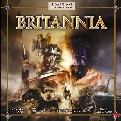
It’s also possible to take a game that originated in one format and make something like it in the other format. I have done this with a dungeon delving game and even made a prototype version of Britannia using cards. I believe this happens a fair bit in the Eurostyle games. For example, San Juan is a card game based on Puerto Rico, and so is Race for the Galaxy. But as we’ll see many Eurostyle boardgames do not use a board in the traditional way, for maneuver and location, instead they use the board to keep track of other information. So what is the traditional way?
The most important difference between the two kinds of games is that card games are inherently games of hidden information and boardgames are inherently games of maneuver and location. (When I say location I mean the location of actual pieces, not a representation of some virtual commodity such as the amount of money you have or the amount of victory points. “Location” implies maneuver or placement.)
Card Games
By their nature cards make it easy to hide information. The information is often hidden from all the players, but commonly in card games one player has some information that none of the other players can access: the cards in his hand and what they can be used for and what they can do. Anyone who has played many card games has encountered this usage again and again.
There are exceptions. The traditional card game Bridge is unusual insofar as, after bidding, one player’s cards are revealed (the dummy). And this tells the Dummy’s partner what cards his opponents have, though not which individual opponent has which cards. Texas Hold ‘em is another card game where some of the information is revealed to everyone and only two cards per player are hidden from the other players. But Five Card Draw poker hides all the cards, sometimes even after the game ends.
Hobby card games such as Bang!, Atlantic Storm, Brawling Battleships, and Lost Cities have hands of cards but some cards are placed on the table so that they can affect everyone in the game.
Boardgames
Most really old traditional board games are games location and maneuver-mancala, chess, checkers, Nine Men’s Morris, Parcheesi, backgammon, Go, and Japanese/Chinese forms of chess. In some of these games there is only placement (and removal) of pieces, for example in Go. In others the initial placement is predetermined and the game is all about maneuver, as in chess or checkers. There are few games that include both placement and maneuver.
Notice that few of these old games use dice. Dice provide uncertainty within a range of possibilities, a kind of hidden information but not the same kind as we get with cards. Dice were the typical way to provide uncertainty before games could include cards. Handmade playing cards first entered Europe in the late 14th century. The technology to make uniform decks of cards did not exist until the invention of printing, so the really old traditional games do not use cards.
Card games are probably more popular than boardgames for a variety of reasons. First they’re less expensive, second they tend to take less time to play, third they can be more colorful than boardgames because of the artwork on each card. Most important perhaps, the hidden information tends to make it harder for a planner-style player to dominate play, introducing elements of uncertainty and chance that make it possible for a less calculating player, or perhaps I should say one who is less a classical/planner player, to win a minority of the time. Another way to put this is that casual players have a better chance of winning in hidden information games than in games of perfect information, most traditional boardgames being perfect information games.
Hybrids
It is possible to use cards to create the equivalent of a board, but then we have something that is functionally a boardgame not a card game. I have done this in two prototypes were my objective was to make a game with only cards as components (to simplify production), yet I wanted to have maneuver and location. Many games that now use cardboard tiles to create a board on the table would once have used cards for the same purpose. While we might think of these as boardgames, such as Settlers of Catan and Betrayal at House on the Hill, they could have been produced with cards, and in the latter game the tiles are used to hide information in the same way that cards hide information before they are drawn from a deck. Tikal and Carcassonne do the same kind of thing. Settlers uses the board for placement, Betrayal uses it for maneuver, Carcassonne uses the “board” as the unit of placement rather than placing pieces on a board.
In a boardgame location and maneuver tend to dominate play. Chess, checkers, backgammon, even Parcheesi, are games of maneuver. Hex and counter wargames are typically games of maneuver, though we also have combat and chance elements in dice rolling. Monopoly is not a game of maneuver because you have no control over where you go, but there is the element of location. In Tic-Tac-Toe (Noughts and Crosses) you don’t actually move pieces once you put them on the board but where you put them is vitally important.
Race games (getting to a finish line before anyone else) are generally about maneuver and location, whereas speed contests (something is timed individually and best time wins) are not.
You can introduce an element of hidden information into boardgames, of course. This is not new. More than a century ago we had a variation of chess called Kriegspiel where each player could only see his own pieces and a referee told a player when an opposing piece took his piece or checked his King. While the phrase “block games” tends to put one in mind of the wargames published by Columbia Games, the technique goes back at least to the game L’Attaque patented in 1909, more familiar in the copycat game Stratego. The Columbia games add dice and more complex boards to the equation but the key element is hiding some of the information that normally is exposed everyone in a boardgame.
Flat (cardboard/chipboard) pieces that are placed face down introduce another element of hidden information.
In contrast to typical boardgames, many Eurostyle games include boards that are not used for maneuver or even for location. The board is used to help keep track of other kinds of information. Player layouts for tracking amounts of virtual commodities are small boards. But even in games with larger boards, the board may not represent location or present opportunities for maneuver. Kingsburg is an example.
Actual warfare is a combination of hidden information and maneuver, among other things. Given the prominence of maneuver in warfare, it’s not surprising that board wargames are much more common than card wargames.
Games that are neither type
There are many games that are not primarily either hidden information games or location and maneuver games. Some Euro games that have lots of parts and cards and boards are primarily games of resource management– Puerto Rico for example. There is neither maneuver nor much hidden information, though there is uncertainty. Resource management depends on hidden information and uncertainty. Uncertainty can come from many places, but mainly comes from the players, hidden information, or dice or other random elements (which cards can also provide).
Auction games aren’t really either type, though they lean toward hidden information more than location and maneuver. You can argue that resource management comes down to set collection, just as auction games do.
Further afield we have games of deduction (which is largely about hidden information, though Clue/Cluedo includes location and maneuver as well). It might be nice if we could pigeonhole all games into a very few slots like “hidden information”, “resource management”, “location and maneuver”, and “auctions”. But I don’t think this is practical, at any rate I see too many exceptions to almost any set of categories at this point.
Collectible card games are largely about hidden information, though some have an element of location (cards face up on the table) just as some traditional card games do.
Tabletop RPGs involve both maneuver and hidden information in abundance. They are closer to video games than to either board or cardgames.
Competition in board and card games
It's fashionable in the hobby tabletop game industry to produce "Eurostyle" games that reduce direct conflict between players to a minimum. They are often more like puzzles that have been turned into speed contests, not games, and "multi-player solitaire" is a common description of many tabletop games. Wargames, on the other hand, emphasize competition and confrontation, of course.
Mark Johnson suggested in a recent "Ludology" podcast that card games are less competitive than boardgames. Is that so, and why? I think it is. Because boardgames are naturally about maneuver and location, they tend to involve more direct interaction than cards, where you can play cards onto the table and do very little to affect other players. Traditional boardgames tend to involve tearing down the opposition, not building up, you start with some pieces and lose them as the game goes along. (Even in Go, where you add pieces to the board, you're taking your opponent's pieces as well. Go is not much like other traditional boardgames, in any case.) Traditional card games usually involve building up sets or tricks. You start with nothing but a hand of cards and gradually build up your position.
In more-than-two-sided boardgames the system of maneuver and location often means that you are not able to attack/hinder all the opponents, because some are too far away. In more-than-two-sided card games you do have a player on your right and on your left, and the rules may allow you to attack only those players, or "anyone".
Video Games
We can ask what the nature of video games is in comparison to card and boardgames. First, it’s relatively easy to make a computer game where most of the information is hidden from the player or players, a card game characteristic. When you program a video game you have to deliberately decide to show information to the player, or he’ll know nothing.
That information can be shown on the equivalent of a board, though the board can be rather more complex than a physical board. Pac-Man is a quintessential game of maneuver, as is Space Invaders. Civilization uses a board, a square grid through Civilization IV and a hex grid in Civilization V (version V generally exhibits a greater influence from board wargames).
Many “strategy” video games appear to be games of maneuver, for example Starcraft and Civilization. Hidden information is also quite dominant. But there are so many layers of production and technology involved that these games are more about resource management than either maneuver or hidden information. When cut down to a simple version as a social network game, Civilization becomes almost entirely a resource management game.
A video platformer is a game of maneuver. An old-style text adventure game is a game of hidden information. Yes there is more to both, especially to the old-style adventures, but these are the major delineations.
The abstract game Tetris is a game of maneuver much more than a game of hidden information. Bejeweled is a game of location and maneuver insofar as you move gems in order to cause groups of gems to disappear. Shooters are games of location and maneuver as well as games of hidden information.
What video games are particularly good at is combining the two major elements of board and card games together as in shooters and real-time or turn-based strategy games.
Thursday, February 02, 2012
Some distinctions between types of war-related games
One of the disadvantages of writing articles for magazines, such as “Against the Odds,” is that it can be literally years from the time it is submitted to the time it is published. I recently sent ATO an article about different kinds of war related games, and I’m going to briefly categorize its 4,000 words in 400.
I will not respond to any comments here, sooner or later the full article will be published.
Joe Angiolillo’s taxonomy of war related games:
● Games about war
● Wargames
● Simulations
Games about war
● no connection with reality
● symmetric
● no variation in terrain and units
● no representation of actual or even fictional events
● no attempt to tell a story
Games such as Conflict, Risk and Chess fall into this category.
Wargames
● asymmetric
● variation in terrain and units
● real or fictional event is depicted
● there is an explicit story involved (remember "story" is part of hisSTORY)
Simulations
● wargames taken to an extreme
● term papers with board and pieces and no concern for play balance
● more or less forces particular outcomes in order to match history
Now a different distinction, between war game (two words) and battle game:
War game
● the heart is economy
● ultimate objective is to improve your economic capacity and destroy the enemy's
● for two players, occasionally for more than two
● cover years or even centuries
● territory usually equates to additional forces, following the age-old principle that land equals wealth
● more likely to use areas (like a normal map)
● generally large-scale and strategic
Battle game
● no economy, instead an order of appearance
● ultimate objective is to destroy opposing units because they cannot get more
● intermediate objective (e.g. territorial, or even “capture the king”) as a victory avoids much of the tedium of destroying units
● almost always for two players
● usually cover a few days to a year or so
● territory is only useful for the terrain and geopolitical implications
● usually maneuver-focused, and often use a hex or square grid
● generally smaller scale and tactical/grand tactical
Finally another category:
Conquest games (Risk, History of the World, Vinci/Smallworld)
● can be either war or battle game, usually war
● are usually in Joe’s “Games about war” category
● very few "realistic" or real world restrictions on what you can do--"freedom to do whatever you want"
● attacker can always get the upper hand (odds favor those who attack-attack-attack), so it’s not strategically wise to play defensively
● usually symmetrical
● typically large scale
● combat typically very simple
● particularly attractive type of game related to war for those who aren’t hobby gamers
Take it as it is, please, I am not at liberty to discuss it further.
Friday, January 27, 2012
What do we mean by "elegance" in games?
When someone says a game is "elegant", what do they mean? I'm not sure, so I've done a bit of investigating.
Is it used much? In my Info Select database, which includes my own notes about game design and teaching, and material that I've scraped off the Internet about those same topics in the past seven years, there are 84 notes containing the word "elegant" and another 34 containing "elegance". Clearly the term is used a lot in conversations and writing.
What about dictionary definitions of the word?
dictionary.com
el·e·gant adjective
1. tastefully fine or luxurious in dress, style, design, etc.: elegant furnishings.
2. gracefully refined and dignified, as in tastes, habits, or literary style: an elegant young gentleman; an elegant prosodist.
3. graceful in form or movement: an elegant wave of the hand. [my emphasis]
4. appropriate to refined taste: a man devoted to elegant pursuits.
5. excellent; fine; superior: an absolutely elegant wine.
Synonyms: 1. See fine. 2. polished, courtly. [my emphasis]
World English Dictionary
elegant — adj
1. tasteful in dress, style, or design
2. dignified and graceful in appearance, behaviour, etc
3. cleverly simple; ingenious: an elegant solution to a problem [my emphasis]
Wikipedia
Elegance is a synonym for beauty that has come to acquire the additional connotations of unusual effectiveness and simplicity. It is frequently used as a standard of tastefulness particularly in the areas of visual design, decoration, the sciences, and the esthetics of mathematics. Elegant things exhibit refined grace and dignified propriety. [my emphasis]
So could we say, for games: "A solution to a design problem that is seen as ingenious or cleverly simple, polished, and effective?"
At some point I wondered what the difference is between "elegant" and "clever"? For me, something can be clever without being worth doing; something that is elegant is likely worth doing. So I might see a game and say "that's a clever juxtaposition of mechanics", and still not think the game was worth bothering with. I would tend to think of games that model something in interesting or intriguing ways as elegant, whereas games that don't model something may only be clever.
So one man's clever may be another man's elegant.
clev·er
adjective, -er, -est.
1. mentally bright; having sharp or quick intelligence; able.
2. superficially skillful, witty, or original in character or construction; facile: It was an amusing, clever play, but of no lasting value.
3. showing inventiveness or originality; ingenious: His clever device was the first to solve the problem.
4. adroit with the hands or body; dexterous or nimble.
Synonyms
ingenious, talented, quick-witted; smart, gifted; apt, expert.
There is no Wikipedia entry for the word "clever".
A last expression of the idea of elegance, from the point of view of design:
"A designer knows he has achieved perfection not when there is nothing left to add, but when there is nothing left to take away." --Antoine de Saint-Exup'ery
When you achieve this "perfection", you also achieve elegance.
So what do you mean when (if) you describe a game, or part of a game, as "elegant"?
Saturday, January 21, 2012
Impressions of Castle Ravenloft (Avalon Hill/Hasbro)
Recently I came across a new cooperative game related to Fourth edition (4e) Dungeons & Dragons, Castle Ravenloft. The game lets each player act as a novice 4e character, complete with hit points, armor class, and at-will, utility, and daily powers. There are replayable scenarios for 1 to 5 players, with the opposition governed by simple rules related by cards drawn from specific decks.
For $50 the contents of the box are quite impressive. There are several dozen unpainted plastic miniatures in various colors representing the five player characters, undead, typical dungeon denizens, a flesh golem, and the huge dracolich. There is a large stack of roughly 4 x 4" heavy cardboard interlocking dungeon tiles. There are several decks of cards. And there are lots of other heavy cardboard pieces such as hit point markers and character cards.
Gameplay in Castle Ravenloft is very tactical and decisions offer only a few choices. To a considerable extent you can say the same thing about 4e D&D, though the intelligent opposition from a referee ought to make a huge difference. When the opposition amounts to what the monster(s) do when you draw cards the simplicity is not surprising. The number of hit points for each character is much lower than in actual 4e D&D (e.g. 6 for the wizard), and each hit point is represented by a cardboard marker. You can customize your character though your choice of powers. There are five different classes, but no way for a group to have two of the same class. You can even gain second level, though this is unusual.
When you fight a monster it generally inflicts two hits when it succeeds and one hit when it misses. Everyone on a tile fights all the monsters, and all take damage, so there isn’t maneuver doesn’t amount to much, other than which tile you’re in. If you move to the edge of the “board” you draw a tile and one kind of card to see what you encounter; if you are anywhere else (probably fighting a monster) you draw a different kind of card. Adult players can be frustrated because some of the cards simply inflict damage on everyone, regardless of location. This moves the game toward a conclusion, but does not seem “fair” or real.
The party has two healing surges, plus some of the characters have healing powers. The game ends when one of the characters in the party dies and there is no healing to bring them back into the game, or when the objective (such as unmaking the Draclich) is achieved.
A five player scenario takes more than an hour.
Cooperative games without human opposition have become quite popular. I’m sure there are many reasons for this, but one is that such games are essentially puzzles, and they rarely have much gameplay depth to them (as is often the case with puzzles), so players don’t have to concentrate/think hard, even if they’re playing solo. And of course when they’re playing with several other players then the truism “two heads are better than one” means they have to think even less.
I suspect this game is aimed at non-adults, though I saw it at a college game club. It looks great but there really isn’t much to it. Like many games nowadays it offers variety but not depth. Compared to real D&D there’s little if anything to recommend it, other than no need for a referee/DM. Those who have never played a fantasy RPG may well find it much more interesting than those who have.
It’s a cooperative game. It’s good-looking, and clever for what it is. But what it is, is a game for 10-15 year olds, or for adult game players who want to play a youth-like game, for adults more a time-waster than a mental exercise.
Saturday, January 14, 2012
Six words about stories in games
According to a recent tweetdeck, one of the trending:worldwide topics on twitter was 6 word stories. In the past few months I've asked people to say 6 words about game design, programming, wargames, and casual games.
This time the charge is this: say six words about stories in games (or stories and games, if you prefer).
Wednesday, January 11, 2012
Depth versus Variety: a Fundamental Change in Game Playing in the Past 30-40 Years
Recently I was discussing via blog posts what depth is in games (http://gamasutra.com/blogs/LewisPulsipher/20111219/9125/What_is_Depth_in_Games.php and elsewhere), and then ran across a discussion of how role-playing games have changed since D&D was first published
(http://shirosrpg.blogspot.com/2011/12/i-weep-for-newbs.html#comment-form ). I’ve realized that there is a connection between the two, that what gamers are looking for in games has changed in a fundamental way in the past 30-40 years.
That fundamental change is that 30-40 years ago many hobby game players looked for gameplay depth (and occasionally narrative depth) in their games. Now most game players don’t look for gameplay depth but look instead for variety, which is quite a different thing. Many more people now also look for narrative in their games, but I’m not sure whether they’re looking for narrative depth or narrative variety. Game playing has become much more passive where long-term decision-making is concerned, and that's incompatible with gameplay depth. Yes, there's lots of activity in many kinds of video games, and short-term decision making, but the decisions and choices often don't really matter in the long run.
Variety tends to lead to replayability, but game depth also leads to replayability. So they are two paths to the same objective, getting people to play the game over and over again.
Is variety "bad?" Certainly not. Is gameplay depth "good?" Not in and of itself, though it's what I have tended to look for in over 50 years of game playing. Regardless of my preference, this discussion is a recognition of reality, what IS, not a criticism of the change.
(At this point I hope it's obvious that I'm talking about trends and tendencies, about majorities, not about every hobby game player. Of course there are many, many exceptions in a group as large as ours.)
I’m talking here about hobby gamers, about people who play games frequently as a hobby. Family gamers are a very different group, and have never been people who looked for depth in a game. Nor did they look for variety, 30-40 years ago, their purpose in playing games was and is to socialize with their families and friends.
What do I mean by depth and variety? I’m working on a very long piece discussing gameplay depth and other kinds of depth in games. For our purposes here I'll say that deep gameplay requires players to make many significant decisions, decisions that make a difference in the outcome of the game, and those decisions have multiple viable choices so the player can pick a better choice rather than a worse one, but more than one choice has a good chance to be successful. (A "viable" choice is one that, at least a reasonable part of the time, can lead to success, as opposed to "plausible" but not viable choices that look like they might work out well but rarely if ever will.) There is often an element of emergence in such games, choices (and sometimes decisions) that players don’t even recognize when they first play the game. This is often associated with decision trees, decisions that lead to others that lead to others and so on in a sort of tree shape, that give a good chance of success in the game. Yet perhaps paradoxically, if a game has *too many* decisions and *too many viable choices*, then it loses depth as each individual decision and choice becomes insignificant to the outcome of the whole.
Variety, on the other hand, is doing lots more of the same kinds of actions and related activity without providing additional significant decisions and viable choices. Variety occasionally replace one decision with a different one, or more often replaces a choice or choices with different ones, but the volume of significant decisions and viable choices, and the depth of the decision trees, remains the same. Variety can be added by additional scenarios or levels, variable maps, different character classes, and random events (among others).
How things have changed
So much for brief definition. How (and why) have things changed? 40 years ago we didn’t have video games, nor did we have CCGs, we had board and card games and we had RPGs just about to emerge. The development of RPGs reflects the 30-40 year fundamental change. Many of the players of original, first, and second edition D&D wanted gameplay depth. In third edition D&D the emphasis changed to ways of optimizing characters using a stupendous variety of published classes and skills and feats, a striving to make the perfect one man army for tactical combat. D&D became fantasy Squad Leader. It was much harder to die and in fact the “fear of death” was slowly being removed from the game.
In computer RPGs this was happening much more strongly. If you died then at worst you just loaded your saved game and continued. In many computer MMO (massively multiplayer online) RPGs you don’t even need to save your game, you just respawn and continue. After all, the makers of the MMOs do not have gameplay depth as an objective, their objective is to keep you playing the game as long as possible so that they can collect the monthly fees. (Now monthly fees are much less common because we’ve gone to free to play games, but the objective is still to have people play as long as possible so that they will spend money on virtual goods and other advantages.) In order to retain players, many online video games reward players constantly rather than make them responsible for earning their advancement and advantages. If there’s no responsibility for earning advancement, decisions become much less significant, and choices matter much less. Social networking games have taken this to the extreme. Engagement has replaced gameplay. (See http://whatgamesare.com/2011/04/how-engagement-killed-gameplay-language.html for more.)
Not only responsibility for your actions but the fear of death has been removed from electronic RPGs, and with it most of the gameplay depth has been removed. If it doesn’t really matter whether you die, if you can try again when you fail, then your decisions no longer make a difference to what happens in the long run, so they are no longer significant in the gameplay depth sense. World of Warcraft is a game with so little gameplay depth to it that professional “pharmers” can, in an economically feasible period of time, play characters up to high levels and sell them to other people who don’t want to *bother* to play the game to get to the maximum level. “The grind” characterizes play, and for many people playing the game is “like work.” (See http://www.nickyee.com/daedalus/ .) I’ve said that variety has been substituted for depth in games but in WoW there doesn’t seem to be much interest from the players in variety until after you’ve reached maximum level. As characters work their way up there's little interest in the journey, only in the destination of maximum level. For those at max level, variety is essential to maintain interest in the game.
Even at maximum level, big raids amount to characters doing the same thing, their “role” (DPS, healer, etc.), for extended periods of time. By all accounts it’s regimented and repetitively automatic, and does not involve making significant decisions with multiple viable choices.
In some video games we have the phenomenon of “mini-games”, completely different games that have been inserted into the main game for players to play when they get bored of the main game. Again it’s variety that is the attraction, not depth.
The recent fourth edition (4e) of D&D reflects this change of emphasis. Some responsibility is still there, but the fear of death has been almost entirely removed through lots of beginning hit points, healing surges, easy ways to come back into the action when you’ve been incapacitated, cheap healing potions, and so forth. Characters no longer have much capability to gather strategic (or tactical) information through spells. In the past D&D players had to speak in character to gather information, or figure out how to use spells to gather information: now they roll dice. Some of this may derive from video games where the referee–the computer–is nowhere close to smart enough to deal with a wide variety of dialogue and a wide variety of player intentions, so everything is reduced to dialog trees and numbers and dice rolls. 4e is now, in its "natural" form, almost entirely tactical battles without much long-range planning and consequently with very little strategy.
The blog commenters I mentioned above talked about players complaining about secret doors in 4e D&D. This appeared to be regarded as a “nasty DM trick”. As a counter-comment a 4e DM said he didn’t use secret doors because he knew where he wanted his players to go and what he wanted them to do and there was no point in hiding the path. In other words, in a game where variety and linear narrative is the objective then secret doors only get in the way. In a game where gameplay depth is the objective then secret doors can be a differentiator, and the choice to look for secret doors or not look for them can be significant.
RPGs are now arranged much more for players to experience variety, rewards, and winning rather than to experience gameplay depth and the possibility of losing. They are becoming more entertainments (something like movies) than games, if by games we mean something where there’s a significant opposition that requires thoughtful reaction.
I also think it’s much more common in RPGs nowadays that the referee devises a story and makes the players conform to that story. As Monte Cook observed several years ago at Origins, the published tabletop adventures tend to be much more story-based than in the past. The old-style alternative was to set up a situation and let the players make a story rather than forcing them to follow a linear path. In video RPGs, the Japanese/console style has been to force the players to follow along a particular linear story. (The American/PC style is more like WoW.) In fact some people have characterized the famous Final Fantasy series as stories punctuated with repetitive episodes of exploration and combat that make virtually no difference to what actually happens in the stories.
Favorite Games
30-40 years ago most game players had one or a few favorite games, ones that they wanted to play over and over again. This is far less common now. Ask younger gamers, especially video gamers, what their favorite game is and most will be unable to tell you or will simply name the game they’re currently playing. Some are even surprised at the idea of having a favorite game. They want to name a dozen or more as their favorites, if they can narrow it down that far. The very idea of playing a game a hundred times or 500 times (I know people who have played my 4 to 5 hour tabletop game Britannia more than 500 times), or the video game equivalent, playing the same game for many hundreds of hours, is foreign to most contemporary gamers. Many of the younger people who do have a favorite game that they play over and over have settled on Magic:the Gathering or Yu-Gi-Oh. Yet the very nature of CCGs is to change the game over time (providing immense variety) in order to persuade players to buy new cards; sometimes the game rules are changed as well.
Many AAA video games involve a puzzle or a story, and once you solve the puzzle or experience the story there is no reason to continue. Some of the games will give you several different characters to play so that variety is added to the game. But there is little gameplay depth. A game with deep gameplay can be played again and again while revealing new aspects and possibilities. Puzzles tend to be solved, and once solved hold little interest.
This fundamental change may reflect all forms of leisure activity these days. There are many more distractions and many more opportunities for entertainment than 30-40 years ago. Now we have the World Wide Web, we have hundreds of TV networks, we have movies and TV programs on recordable media and available through instant download, we have smart phones and texting and free long distance and iPads and MP3 players and so forth, none of which was available 30 or 40 years ago. People just don’t seem to stick to one thing the way they used to and that applies to games as well as everything else.
Playing a game with deep gameplay usually requires patience and a commitment to planning. These characteristics are in short supply nowadays as people rely on their cell phones to provide both distractions (time killing) and a way to compensate for poor planning or lack of interest in planning.
We have become “entertainment bathers.” Sound/music bathers like to have 1000 or 10,000 songs on their MP3 players but likely don’t listen to any one of the songs very much. (Clearly of an older generation, I can listen to the same song over and over for an hour sometimes, if it’s a really good song; how many young people would even dream of doing that?) Game bathers like to have lots and lots of games to play but don’t play any one of them very much. Variety is the goal. We've become a jaded society.
This is not the only fundamental change over that period. Even among many who want to fully use their brains when playing games, puzzle-solving (which rarely involves gameplay depth, it is a different kind of skill) has displaced gameplay depth. And in the video game world, engagement has tended to replace gameplay as the objective of designers. But those are topics for another time.
Sunday, January 08, 2012
Game descriptions, rules, and mechanics: what are the differences and similarities?
Recently a student in a video game design curriculum posted a note on the IGDA Game Design SIG about an assignment. The assignment was to describe mechanics for a game and he said his instructor had told him he’d written rules instead, with the result being a poor grade. I generally emphasize to students that the rules for a tabletop game detail the mechanics of the game, so the question became “what is the difference between rules and mechanics.” And as I discussed this privately with the student I saw that part of the possible confusion was the difference between description and specification, between the general and the specific.
From a teaching point of view the problem is that students often describe what they would like a game to do– a wish list--but not how the game is going to do it. (Which is usually because they really don’t have a clue how it’s going to do it.) If you’re writing rules or writing a specifications of game mechanics you have to say how the game is going to “do it.” (See “When you start a game design, conceive a game, not a wish list” http://pulsiphergamedesign.blogspot.com/2011/10/when-you-start-conceive-game-not-wish.html). A general description is not good enough for tabletop players to play the game, or for game programmers to produce the software.
When you’re conceiving a game you can say that you intend to use such and such mechanic, for example simultaneous movement or combat using a combat table. But when you write rules or specify mechanics, whether in a video game design document or in actual game rules, you’re going to have to go into much more detail (especially about combat). Sometimes the name of the mechanic, such as “simultaneous movement,” can say a lot to experienced game players or video game developers, but there are lots of ways to implement simultaneous movement and your game rules or game design document specifying mechanics must be absolutely clear. That’s hard to do.
When you’re starting a game you begin with what you want the game to do and you need to get to the point of how it’s going to do it. I think there’s an intermediate stage where you’re considering the structure of the game, and that’s where my nine structural subsystems and the essential questions to ask yourself help you bridge the gap between the what and the how. (The latest version of each will be in my forthcoming book about game design, and you can find versions on gamecareerguide.com.) It’s usually hard to simply jump from what you want the game to do directly to the specific mechanisms or even to the categories of mechanisms.
But back to the original question, what is the difference between rules and mechanics? The rules of a game must include details of mechanics so that someone reading the rules understands exactly how the mechanics work. If the rules are complete, they MUST describe the mechanics of the game as well. The mechanics are a subset of the rules. The principle purpose of the rules is to describe how the mechanics work, but usually include other things as well.
By the way, I have seen people confuse what the player does with the mechanics of the game. Mechanics are what the computer enforces, the player’s actions are his choices that interact with the mechanics to provide a result. A tabletop game requires the players to enforce the mechanics as specified in the rules. Player actions to play the game are not mechanics.
But it’s easy to say what a mechanic is NOT. I haven’t even attempted to get into the morass of exactly what a “mechanic” is. I once started to make a list of “all” categories of game mechanics. I quickly discovered as I looked around the Internet to see what other people have done that “mechanics” varies in meaning greatly from one place to another. As I made my list I found many items “on the edges”. In other words it is not clear what a mechanic is and what isn’t. This is compounded by the tendency to use categories instead of specifics when discussing a mechanic. For example, “simultaneous movement” or “roll and move” are categories of mechanics that can be implemented many ways. For example, the latter can be “roll two dice and move your piece forward that many places,” or “roll two dice and move your piece forward or backward a number of spaces equal to one die and then the second” or “roll two dice and move your piece forward the distance equal to one of the dice, or the sum of both”, or “roll two dice and move one piece the distance of each die” and so forth. And those brief phrases (especially the second one--I’m taking shortcuts) may not be sufficiently detailed to be absolutely clear. All four are of the category “roll and move” but each is different from the others. Mechanics are specific, categories are general.
Mechanics must be sufficiently explicit, sufficiently specific, that there can be no misunderstanding. Most take the form of “if situation A exists, player can do (choices),” or, “if player does X, result is Y (with possible multiple possibilities)”, both forms of if:then:else statements. You don’t have to be a programmer to write rules, but you have to be as explicit in the rules as programmers are in their software.
Despite the uncertainty about exactly what a mechanic is, I’m pretty sure there are some things in game rules that are not mechanics. For example there’s usually an introduction, something that gives the player an idea of the context of the game, what in general he’s doing, without referring to any mechanics let alone specifying any. There is also early in the rules a “how to win” section that lets players know the objective of the game but does not necessarily specify all of the mechanics that determine who wins. The actual mechanic(s) of winning are usually at the end of the main section of the rules along with mechanic(s) determining how the game ends. The early sections provide a context for the play of the game, and extend the atmosphere or theme, if any.
A set of rules may also include hints about good play. Finally, a good set of rules will include examples, which are not mechanics but which illustrate how the mechanics work. These sections provide a different kind of context but are still included to help people enjoyably play the game.
Once again, however, the main thrust of rules is to describe exactly the mechanics of the game. You could write a set of rules that only did that but it would seem abrupt to many players and might be difficult for some to grasp. Something that sets traditional classic games apart from most contemporary games is that they have few mechanics and the rules can include only mechanics and still be understood by most gamers.
I think you could argue that the more a game is marketed to people who are not accustomed to playing games, then the more the rules will include information other than mechanics. I thought it quite notable, when I first bought a copy of tabletop Settlers of Catan to find out what made it so popular (this is about 2004-5), that there were two differently-explained sets of rules included to try to help non-gamers understand how to play the game. There was also a table showing the probabilities when rolling two dice, which is an important part of the game. Those probabilities are not part of the mechanics but are a consequence of the mechanics of rolling two dice. Yet for players who don’t understand the probabilities this inclusion probably helped. Once again this is part of the context of playing the game although it’s not part of the story of the game. But as with the story-context, if you understand the probabilities you’ll enjoy the game more and better understand what’s happening.
So we can in summary say that game rules include specifications of mechanics and a description of the context of the game: “how” and “what/why.” That context can include the atmosphere or theme as well as other game-related material.
One of the problems of teaching people to design games is that they really don’t understand how complex game mechanics can become, and so they don’t try to set in their minds exactly what mechanics they’re going to use. After all, most of them are accustomed to video games that enforce the mechanics on the players without effort from the players. If they’ve played traditional tabletop games that “everybody knows how to play” because they grew up with them, they don’t remember misunderstanding how to play the games. So they might think it enough to say that a game uses the risk assessment mechanic. Well, the game player says, “what the heck is the risk assessment mechanic?” Even if the beginning game designer uses a mechanic name that is more informative such as “simultaneous movement” there are still many more questions to be answered.
The result is that when students write rules they very commonly leave out important considerations. But heck, even experienced designers leave out important considerations from early drafts of rules, despite all their experience. So we keep plugging.
Thursday, December 22, 2011
Christmas Miscellany
Periodic notes not individually demanding a separate post:
**
I gave four one-hour talks about game design at Origins this past summer. MP3s of the talks, and some wordy slides, are posted on my Web site, along with other MP3s and slides from older presentations. http://pulsiphergames.com/teaching1.htm
**
I have two Risk variants that need playtesting (variants of traditional non-mission Risk, not of the 2008 revision). One is "Zombie Risk", where for every two armies the zombies kill, one becomes a zombie, and the other is Barbarian Risk, where a new map is used, and players represent barbarians fighting over the end of the Roman Empire.
If you're interested in playtesting either or both of these, let me know and I'll send you the rules/map electronically.
When I can do no more with them (I can't spend much time developing them, of course, since they're not commercially viable), I'll post them on my Web site and on the Risk section of BGG.
**
While dropping off a prescription recently I overheard two senior citizen ladies talking about Farmville and other games. They both averred that if Farmville started to charge a fee, they would no longer play. Although a third person who came by said that in order to finish something, if she had to spend up to $20 she might do it. One of them specifically said you have to be careful not to play such games too much or you might miss out on enjoying a beautiful day like today (which it certainly was).
I found it interesting that these people played, although they were not likely much older than I am (60). It did make me wonder how games like Farmville make money, but I keep in mind that what people say they'll do, and what they actually do, are often two different things. It's also true that only around two percent of players of "social network" games actually spend money doing it.
**
Eleanor Roosevelt is quoted as saying "Great minds discuss ideas. Average minds discuss events. Small minds discuss people." I'm trying to adapt this to other situations.
This may be harsh, but it started me thinking about ways to adapt this statement to game design and game players. How about:
Great game designers think it's about playtesting and modification, average game designers think it's about planning, weak game designers think it's about ideas.
Great Britannia players think it's about understanding what opponents are trying to do, average Britannia players think it's about measured use of resources, weak Britannia players think it's all about conquering as much as possible.
Great game players think about strategies, average game players think about think about puzzle solutions, weak game players think about being lucky.
**
IGDA's Facebook page asked what is the most important characteristic for game developers. My reply was: For game designers, ability to think critically about their own efforts. For programmers, problem-solving. For artists, ability to understand what others (designers) have imagined, but to improve it if possible. And for all, a productive orientation.
**
Game titles are sometimes changed by the publisher. My title for Britannia was "The Invasions of Britain". I like the publisher's title better. On the other hand, "Dragon Rage" is my title.
I read that Robert Louis Stevenson called his book that we know as Treasure Island "The Sea Cook", title changed editorially. Another example of a good change.
I called my game design book Learning Game Design. The published title will be “Game Design: How to Create Video and Tabletop Games, Start to Finish". Works for me.
But I'm sure it goes the other way as well, the publisher choosing a less suitable title. I don't know of an example, though. (Magazine article titles are often changed.)
**
Dragon Rage was originally published in 1982. Much later, 3DOpublished a video game of the same name for the Playstation 2, though there is nothing in common between the games in actual play. For the Sony game see http://en.wikipedia.org/wiki/Dragon_Rage
**
Many Euro games seem to be treated, by the players themselves, like puzzles to be solved. It's not unusual to see "opponents" suggesting (in a helpful way) what moves a player might make. No wonder Pandemic proved to be so popular.
**
I discovered on Dec 13th that somehow some comments on my blogspot blog were waiting for moderation that I missed. Though at least one of them had in fact already been moderated and posted. Now taken care of.
I get a lot more SPAM comments than I get real ones, these days, including an ad for a program that will enable you to SPAM blogs by beating the captcha. Which I suppose is where many of them come from. Sigh, what a waste of time.
Wednesday, December 14, 2011
Six words about casual games
According to tweetdeck, one of the trending:worldwide topics on twitter is 6 word stories.
I've asked for 6 words about game designers, 6 about programmers, and 6 about wargames, with interesting results. Now I want to ask about another type of game.
Can you say in 6 words what makes casual games interesting--or not? (And you'll have to decide what "casual games" are.)
I've asked for 6 words about game designers, 6 about programmers, and 6 about wargames, with interesting results. Now I want to ask about another type of game.
Can you say in 6 words what makes casual games interesting--or not? (And you'll have to decide what "casual games" are.)
Monday, December 12, 2011
Innovation in Game Design
I rarely listen to podcasts, I suppose because I think writing provides a more concentrated form of information. (I don’t read blogs much, either, preferring more formal articles.) It takes more effort to read something than to listen, but in a given amount of time I think reading something that has been carefully written about a topic is more effective than listening to a podcast, which by its nature can be diffuse rather than focused.
Recently I was asked to participate in a podcast, “Ludology,” with Ryan Sturm and Geoff Englestein, “a podcast about the why of gaming” (in their case, tabletop gaming). So I listened to some episodes before agreeing (it will be recorded in January). The podcast is quite focused, the hosts have a topic in mind, may have a guest, and they talk about that topic. There are no feedback segments or other distractions, just discussion of the topic and related topics.
A recent episode is about innovation and this set me to thinking about a topic that I think Does Not Matter in game design. Most game players Don’t Care either, but clearly some people do.
Definitions are important, as people seem to have different things in mind when they see the word “innovation” and its variations.
Dictionary.com: “in·no·va·tion noun
1. something new or different introduced: numerous innovations in the high-school curriculum.
2. the act of innovating; introduction of new things or methods. “
Wikipedia:
“Innovation is the creation of better or more effective products, processes, technologies, or ideas that are accepted by markets, governments, and society. Innovation differs from invention in that innovation refers to the use of a new idea or method, whereas invention refers more directly to the creation of the idea or method itself.”
These definitions are different as Wikipedia emphasizes the use of innovations rather than the creation of innovations, and uses “invention” for the creation of what others might call innovations. In effect dictionary.com in #1 is defining what “an innovation” is while Wikipedia is defining what innovation itself is (dictionary.com’s #2).
However you look at it, why doesn’t “innovation” matter in game design? First, true innovation in the sense of an entirely new mechanic in games is quite unusual. "There is nothing new under the sun" applies to games more often than most might think. Those brilliant ideas of today have often been used in the past. This is typical:
That's kind of a common pattern in everything I do. One minute I'm completely on my own and I think, “Wow, I'm a genius, I can't believe this idea nobody else had!” And then you look at the references on it, and it turns out that a hundred other people have done the same things in the 1980s. And then you look, and you get your additional ideas from those. Between invention and stealing, you come up with a really good combination of ideas. --Tim Sweeney (founder of Epic Games, publishers of Unreal Tournament series, Gears of War series, in Gamasutra interview 2009).
Second, whether something is innovative depends almost entirely upon one’s knowledge of previous usage. To someone who is only accustomed to games like Monopoly and Sorry and Risk, Settlers of Catan may appear to be highly innovative, though to most hobby gamers it’s old hat. In other words, innovation is entirely relative.
Once again, the question is what is “new”? What’s new to a typical game player may not be new to a veteran gamer of broad experience. And what is new to veteran gamer of broad experience today will not be new a few months from now.
Being concerned about Innovation (with a capital “I”) reminds me of people who need to know sports scores NOW, even though the score will be just the same if they don't find out until tomorrow. That is, what's innovative now, isn't later. While an element new to a player may be a form of surprise, what counts in the long run is how the game plays, not whether any element of it is “new.”
The relativistic view that it all depends on what the players are familiar with, was brought home when the hosts of the podcast asked themselves whether Stratego was an innovative game. However, they were unaware of the history of Stratego. There is no innovation in Stratego because it's an almost exact (and entirely legal) post-World War II copy of L'Attaque, a game originally patented and published in 1909 and still in print along with a group of spinoff games when I lived in Britain in ‘76-‘79. By any definition, there is no innovation in Stratego. But to most people who are unaware of those older games it is “new” in its methods.
The idea that a game is more desirable to play because it is "innovative" puzzles me immensely. This appears to be part of the “Cult of the New”. On the other hand, as Shigeru Miyamoto has said, game designers are entertainers and are trying to surprise people. Mechanics that are new to a player are a form of surprise.
My view is that what’s important in games is how the mechanics work together, the whole not the parts. A focus on innovative mechanics strikes me as one step removed from the focus that novice game designers have on “great ideas.” As I and many other designers have explained many times, ideas for games are virtually worthless. It’s the execution of the ideas, how the ideas are carried out, that matters. In other words a focus on innovative mechanics, mechanics that have not been used before, misses the point of games and game design. To me games are 10% inspiration and 90% perspiration. A focus on innovation implies the reverse of those percentages, and implies that ideas are much more important than execution. I don’t think so. The point is to have a game that’s enjoyable for a target market to play, not to have a game that is in some way “new”.
Having said that, obviously there are game players who value “new”. Game designers may be occasionally excited by the appearance of a new mechanic that they can then incorporate into their games. And there is certainly that the cited reaction to an innovative game (as opposed to innovative mechanic) such as Dominion: we now have dozens of deck building games.
I wonder if the modern habit of playing a game only a few times, then moving on to the next one, is in part a quest for “something new”, fundamentally a hunt for games that aren’t kind of boring after the first few plays. On the other hand, keeping in mind that many contemporary board and card games are much more puzzles than games, just as most single player video games or puzzles, we can understand why people lose interest after playing a few times and “figuring out the puzzle”.
A focus on game mechanics also strikes me as reflecting a “component” notion of game design rather than a holistic notion. It views games as collections of mechanics. This implies that games are mechanical/scientific rather than artistic. Yes, there are certainly mechanical aspects, but to me a game is greater than the sum of its parts, it's the combination that matters, not the individual mechanics. Of course, I also view games as models of some reality (it can be a fictional reality). You may evaluate the individual parts of a model but you mainly evaluate the model as a whole.
The exception to that “model view” is wholly abstract games. An entirely abstract game is necessarily a collection the mechanics, but to me it needs to be very few mechanics: there is no reason to obscure what’s going on by throwing lots of mechanics or other information into the mix. Now if a game is a puzzle to be solved, which seems to be a common view in the Eurostyle, then complexity helps make the puzzle harder to solve. I view most games as competitions, player versus player, and I don’t want too many mechanics to get in the way of the interaction of the players. In the typical Eurostyle the interaction of the players tends to be minimized, just as competition tends to be minimized, and we have something more akin to puzzles. There are of course Eurostyle games that are not typical, and these are often the ones that become popular over the long term.
Now if you play games because they have new/"unique" elements, not because you're interested in winning or mastery or a model or any of the other things people are usually interested in, then I guess perceived innovation (not encountered before by the player) makes a difference.
I must also ask, if you play a game because it's innovative (as far as you know), does that mean you lose interest after playing once (or twice) because it's no longer an innovation to you?
I also see an assumption in some quarters that “innovative equals good.” But if you think about it, most "innovative" games are likely to be weak if not junk. Thankfully most of them aren't published. Why is it likely? When you innovate for the sake of innovation, as I'm sure many try to do, then you're ignoring what's more important about the game, how it plays and whether players enjoy it. If you deliberately include innovative elements, more often than not your innovation will at least be unsuitable for the situation, if not out-and-out junk in and of itself.
Video Games
Often the originally innovative game fails/has little impact, and a follow-up becomes much more well-known. The Sims video game was thought of as a highly innovative game. Many years before there was a video game called Little Computer People that did much the same thing but got little attention. In other words The Sims was not nearly as innovative as most people thought it was. But (in all its incarnations) it’s the best-selling PC game of all time.
AAA video games cost so much to produce that innovation is very risky. There's innovation in video games nowadays, but only from the indie publishers. Big games are dominated by sequels. All 13 games listed in a recent PC Gamer magazine as “most anticipated” by readers are sequels. All of them.
AAA games are also straightjacketed by genres. Players expect games to behave in the way other games of a genre behave, but slightly better. World of Warcraft isn't innovative, nor is Call of Duty, but they dominate revenues.
Social network games seem to be dominated by a lack of innovation, at least if we judge Zynga’s Facebook games, which are said in some cases to be shameless copies of other games. Zynga’s well-known games are repeats of a formula. Zynga has become such a big company and makes so much money off their standard games that they can’t risk devoting a lot of effort to a entirely different sort of game.
Innovation in the sense of new methods is not important to success in the video game world. It’s enough to use old methods in a slightly new way, much as all those 13 sequels are likely to do. Angry Birds is absolutely not an innovative game, not even in the limited sense of using old methods in a slightly new way, but it has parlayed its atmosphere–it’s not a theme because it doesn’t modify how the game is played– into a branding empire. (There are certainly successful video games that are innovative, such as Minecraft.)
Another Definition
There seems to be another definition of innovation which amounts to “how many games did this game spawn.” By that definition Dominion is very innovative, as are the founding games of each of the standard video game genres. By that definition Britannia was pretty innovative. Brit was innovative for a number of reasons, but not the most obvious one. One of the major elements of Britannia, each player controlling more than one nation and each nation having different point objectives, was actually used first in Ancient Conquest I. Almost everything else about the two games is different, even the sequence of play, as a player’s nations in Ancient Conquest all play at the same time and can cooperate closely.
I agree with Geoff and Ryan that the two most innovative tabletop games of our time are Dungeons & Dragons and Magic: the Gathering, both of which spawned entirely new categories/genres of games (both tabletop and video). Still, what’s really important about those games to game players is that they were outstanding play experiences, not that they were innovations. (I might note that an obscure World War II role-playing game preceded Dungeons & Dragons. . .)
I suspect that you’re as likely to be innovative in a game design, if you’re not trying to be, as those who are trying to be.
Thursday, December 08, 2011
More December 2011 Miscellany
I expect I'll be at PrezCon in late February in Charlottesville, VA. I'm scheduled to talk about game design at 9PM Friday evening. This will be an hour of (mostly) me talking, then an hour or more of questions, answers, and discussion.
**
Another review of Dragon Rage, by Michael Barnes of fortressat. http://www.gameshark.com/features/871/Cracked-LCD-225-Dragon-Rage-Review.htm
Yes, it is expensive, though it will be carried once more by FunAgain and that eliminates the enormous shipping expense.
**
The old SPI "simulations" weren't games, they were puzzles. Players would "solve" the puzzle, which would cause the result to be just as history dictated. The problem with that is that history is what happened, which often was not what was most *likely* to happen. "History is not merely what happened: it is what happened in the context of what might have happened" — H R Trevor-Roper
**
I've decided to self-publish in electronic formats three (or more) books that are, for the most part, reprints of material I've written for magazines and the Web.
One will be RPG material, including everything from Dragon and White Dwarf as well as other magazines (I always sold only First World Serial Rights back then; in fact, I stopped writing for Dragon when they required all rights). It will also include character classes I've used in my own First Edition AD&D campaigns since then. I'll have to decide whether to include the "D&D Army" rules that I devised and used, as well.
Another will be Diplomacy material, especially Diplomacy variants.
The third will be other, non-RPG non-Diplomacy, gaming material, especially blog posts and Gamasutra/GamerCareerGuide articles.
I have no idea when these will be available. Getting the old (pre-computer) stuff into publishable shape is a chore, often requiring scanning. Almost certainly they won't be available until after my game design book from McFarland is available, whenever that will be.
**
I read a story in the book the *Ultimate History of Video Games* the reminds me of a frequent debate in games. That debate is, does it make sense to keep information hidden in a game if that information is in fact trackable. My view is that it does not make sense because somebody will track it. Other people take the position that it's perfectly reasonable and anybody who does track it is a jerk. I'd say the person is just doing what he can to win the game but in any case as soon as somebody does then that's the end of any sense to keeping the information hidden.
So here's the story. Ralph Baer, the inventor of the Magnavox Odyssey that was the first home game playing console, even before the Atari 2600, also invented a camera to use with arcade machines. The idea was that when somebody got a high score the camera would take a photo of them and that photo would be displayed on the machine. When they tested this at an arcade, for the first day it worked well. On the second day some wiseguy got a chair, stood on it, and mooned the camera. And that was the end of the product.
Just as, when somebody actually tracks the information, that should be the end of the notion that you try to hide trackable information.
**
ALL games have some form of victory points, but in many there is no accumulation during the game. The fundamental reason to have VP accumulate during a game is to end the game before it's really "ended", that is, someone completely dominates. (Points accumulate in Settlers of Catan even though they're not overtly tracked, with the important difference that you can lose points.) (Lots of subsidiary reasons for points, of course.) In the games where there is no accumulation during the game, scoring the point ends the game. Chess, for example (score one point when opposing king is checkmated). If chess clocks were not used then we might want victory points and a time limit for chess, because games could potentially last ridiculous lengths of time. The point values of the pieces would become the points.
**
Video games are getting more and more into fantasies of omnipotence and omniscience etc.
In Payday: the Heist and Diablo III, I read, you can switch from one character class to another without penalty. I suppose that means you don't have to worry about making a poor decision, so it makes the game easier to play. I understand it continues to get easier and easier to aim, to get your hit points back, and so forth.
**
More and more it seems that a game needs to have a "Wow factor" to attract attention of players.
Because of the influence of big movies (that often use CGI) and the Internet, people expect a wow factor to be flashy. "Mind blowing" is the phrase I see, and when I see it I think "you must have a weak mind if
Yet chess, Britannia and most other wargames, Tetris, lots of games are not that way at all. And might have more trouble penetrating the market now than in the past.
**
I've noticed among young people that often a person is given as much credit for an intention, as for what he or she actually does. So if someone intended to do such-and-such, it's OK that they didn't. This is taken to extremes as in "I intended to come to class" but failed to wake up. Someone much older is likely to say, one can have some sympathy, but the fact is you didn't come. And act accordingly.
In a way, equating intentions and actions puts a stamp of approval on incompetence. I remember the phrase "the road to hell is paved with good intentions".
**
A D&D analogy:
1st and 2nd edition AD&D is like American football in how it requires cooperation of different classes to achieve success.
3rd edition D&D is like basketball, where one person can so easily dominate (though even in basketball, it's usually teams with the best teamwork that win)
4th edition is like soccer, where the range of skill requirements is more circumscribed than in American football, but cooperation is definitely required for success. The character classes in 4th, despite their seemingly infinite differences, all amount to a kind of sameness relative to the differences in character classes in 1st-2nd D&D. At least, that's the way it has seemed to me.
**
In modern first person shooters, the contrast of photo-realism to "make it seem real", and the ridiculous events that occur (no fear of dying, extraordinarily easy aiming, ammo and miraculous healthpacks just lying around, etc.) could be related to the board wargamers who want games that make them feel like they're "there" even though the games are not in any real sense "realistic" even within the confines of the tabletop.
**
Most of the people who play board and card games at our college club are also (and often primarily) role-playing gamers. (Heck, even for me, the only game I play strictly for pleasure is Dungeons & Dragons.) I'm not entirely sure why, but I'd speculate that amongst Euro game players, that is, people who primarily play Euro games rather than other types of tabletop games, the proportion who play role-playing games is much smaller. (Probably the proportion who play video games is also smaller.)
Tuesday, December 06, 2011
Strategic Thinking Is Becoming Rare Among Game Players
When I was a teenager one of the best aspects of the new Avalon Hill style board wargames such as Stalingrad and Afrika Korps was that they were games of strategy. They were not family games, they were not games dominated by chance although chance was involved, they were games of skill where a good grasp of strategy made a big difference.
These games were succeeded as my favorite at age 19 by Diplomacy, a game with no overt chance elements, and a game for more than two players rather than for two, so that playing the player became much more important and playing the system much less. But it was still a game where strategy was very important, though strategy at a higher level: grand strategy.
When I began to design games in my mid-teens, before I knew Diplomacy, I designed games of strategy and grand strategy. All of my published games from “back when” are games of strategy and grand strategy. They can be described as “chess-like” even when dice and more than two players are involved. (Though I have to say that I “retired” from playing chess itself when I was 15: it was too much like work, perhaps because there was no chance element and it was too puzzle-like.)
But that was 30-40 years ago. Lately I have found that strategic thinking amongst gamers is in short supply, and many prefer a less cerebral form of entertainment that is more like playing cards than playing chess. Consequently, many of my recent games are “screwage games”, relatively short games that allow the players to competitively mess with their friends and acquaintances in a relaxed context. This kind of game does not appeal to Eurostyle gamers who are accustomed to an absence of direct competition, but it appeals quite strongly to most college-age gamers. These are definitely games that you play with and against other players, far from multi-player solitaire or the puzzles disguised as games that are now quite popular in the Eurostyle.
In game design terms, players of screwage games are happy to compete, and prefer to adapt and improvise rather than to plan [see http://pulsiphergamedesign.blogspot.com/2010/12/game-playing-styles.html]. They prefer fewer plausible choices rather than many choices [see http://gamasutra.com/blogs/LewisPulsipher/20111025/8731/How_Many_Choices_is_Too_Many.php]. They prefer games that they don’t have to study to master. In terms of “strategic depth” they like relatively shallow games, and by their nature screwage games are not strategically deep.
Before going any further let’s look for some definitions.
Google: “strategy Noun:
A plan of action or policy designed to achieve a major or overall aim.
The art of planning and directing overall military operations and movements in a war or battle.”
Wikipedia: “Strategy, a word of military origin, refers to a plan of action designed to achieve a particular goal. . . Building on the work of many thinkers on the subject, one can define strategy as "a comprehensive way to try to pursue political ends, including the threat or actual use of force, in a dialectic of wills – there have to be at least two sides to a conflict. These sides interact, and thus a Strategy will rarely be successful if it shows no adaptability."
Notice that planning is central to both definitions.
So why is strategic thinking in games less common now than it used to be? My view is that people are much less likely to plan ahead for any purpose, not just in games, now than they were 35 years ago. Part of this is the very large number of distractions of modern life. Furthermore, people have been trained by advertisements and government regulation to believe that someone else will take care of them and that they don’t have to take responsibility for themselves, and that means feel less need to plan. Furthermore , they’re less likely to have the patience to time their actions most effectively, compared with 35 years ago. This is the “microwave” age, the age of instant gratification, the age of convenience.
Players are also less willing to think when they play a game than they were 35 years ago. Video games, after all, tend to emphasize movement and action/reaction rather than thought. Students are taught to minimize logic and precision and rely on their feelings. “Use the Force Luke” (rather than rely on a targeting computer to destroy the Death Star) is from 1977's Star Wars but applies more and more to modern attitudes as time passes. The result is that what I’d think were obvious points about strategy are lost on the average board and card game player, even those who play every week. Most people “don’t have it”.
There has been a shift in the kind of thinking that people bring to games as well. Strategic thinking has been displaced, where people are willing to think about what moves to make as they play a game, with another kind of thinking which video games and Euro-style games encourage and which allows success in those games. That is puzzle-solving.
What’s the difference? Military strategy is closely related to maneuver, use of forces, and economics. These are rarely prominent in puzzle-solving. Military strategy depends heavily on interaction with the opposition, and the best generals often correctly anticipate what the opposition will do and take advantage of that anticipation. In puzzles there is no opposition, nor can you “read the mind” of a puzzle the way you can read the mind of an opponent.
So in the largest sense strategy is about outwitting or out-thinking intelligent opposition, while puzzle solving is a completely different skill. Strategy involves both logic and intuition (“yomi”, reading the mind of the opponent). Puzzle-solving is also logic and intuition, but differs in an important respect. If you use trial and error in strategy, you lose, while in puzzle solving you can fail to solve the puzzle but in most cases that does not mean that you lose, you just try again. This is why you can resort to trial and error. In a video game you can just keep playing again and again until you succeed. In a Eurostyle game you lose, but the elements of competition have been strongly minimized in typical Eurostyle games so that people are much less likely to feel disappointed about losing. They focus more on what they’re doing in a game than on the possibility of losing. In a strategy game the possibility of losing looms larger.
Whatever the reasons, in practice, in game playing we have many more players now who prefer to improvise, or to adapt to circumstances with short-range plans, and fewer players who are willing to plan for the long term, which is a necessary element of strategy. Yes, we know the old maxim that a plan does not survive beyond first contact with the enemy, but that is less true in a game than in reality, and even in reality we know that the planning itself can include contingencies to deal with what happens when we first contact enemy.
When I was 24 Diplomacy was succeeded as my favorite game by Dungeons & Dragons, about as different from Diplomacy as two games can be. Much of the reason was that I no longer was keen to play against other people and D&D is a cooperative game, though there is still intelligent opposition as conducted by the referee. For the rest I had always been a fan of fantasy, and the role-playing aspects of being a goodguy, a hero (not a thug like the typical D&D player), attracted me. D&D is very versatile insofar as it can be played as a strategic game or it can be played as a game where players have to adapt or improvise, or it can even be played as a semi-random game (what I used to call “lever pulling/button pushing D&D”).
Moreover, it can be played as a wargame or it can be played as storytelling, and I played it is a wargame. To me D&D is a microcosm of life because it shows that sometimes no matter what you do things are going to come out against you, but it also shows that you can minimize the number of times that you need to depend on luck to get you through. Despite it being a game where lots of dice are rolled you can play it so that you rarely have to get a particular role to succeed. (I’m talking about first edition D&D. Fourth edition D&D is not much like first edition. Much of the decision-making and strategic depth has been removed and it’s really hard to fatally screw up, rather like World of Warcraft and most other video games.)
D&D is still my favorite commercial game to play, but my favorite “game” is the game of designing games. And I don’t design role-playing games. Perhaps because, as one boardgamer said, they are too “loosey goosey”, too imprecise, for my taste in design.
Someday I’ll get my long spiel about what constitutes strategy and strategic depth in a game up to speed.
Subscribe to:
Posts (Atom)