Monday, September 14, 2009

The nine structural subsystems of any game

This originally appeared on GameCareerGuide, 17 Mar 09

The nine structural subsystems of any game

(or game-like activity), video or non-video

Lewis Pulsipher


A game can be thought of as a system (as in "systems analysis", for the computationally inclined). What I'm trying to achieve here is a list of the fundamental sub-systems that are necessarily a part of any game (excluding sports such as baseball or swimming). This list may help inexperienced designers, because if they think about all nine of these systems as they rough out their game, this will help them conceptualize and arrive at a playable idea.

We could discuss endlessly what is a game and what is not; let’s just recognize that, within your definitions of “game”, you can probably find an exception that doesn’t have all nine characteristics. I think that’s a function of definition rather than a failure of the analysis, but that must remain a matter of opinion. If one of these systems is completely missing, you might have a toy or puzzle, but not a game.

There are many examples “on the edges”, such as Katamari Damacy. To me, Katamari Damacy is not a game, Solitaire (the card “game”) is not a game, because there’s no conflicting interest, no active opposition guided by intelligence–they are more like a puzzle or toy. But both of these activities fit the Nine Structures framework.

I want a framework that will help a designer think about games. Some people, in listing fundamentals of games, discuss "state" in considerable detail. I've tried to avoid "state" and "state-changes" as much as possible, simply because I don't think that an organization dominated by state is very useful to an inexperienced designer. "State-change", in particular, seems to lump an awful lot together in one pot. My ultimate goal is to have something that will be useful to inexperienced designers, and to be able to expand each category to exhaustively list alternatives within each structure. I want designers to be able to treat the extended list as a sort of checklist, to help them make sure they’ve thought about all the vital aspects of their game early in the process.

I've tried to list these subsystems in an apparently-logical order, but every one is just as fundamental as every other one.

Here is the list, followed by brief explanations and some examples:

1. Theme/History/Story/Emotion/Image.

2. Player Interaction rules.

3. Objective/victory conditions.

4. “Data storage”. (Information Management)

5. Sequencing.

6. Movement/Placement.

7. Information availability.

8. Conflict resolution/interaction of game entities.

9. "Economy" (resource acquisition).

Sometimes the system is assumed, or the choice is to have "none", but still a decision has been made about the category. For example, in Tic-Tac-Toe (Noughts and Crosses) there is no acquisition of resources, but it still has an economy of "unlimited pieces"--it could have a way to gain resources, and there are variations where you do. Another example: a very abstract game has no theme/history/story, but the designer chose to take that approach, nonetheless.

Theme/History/Story/Emotion/Image. These are listed in order of common usage, not necessarily importance. Story can be absolutely vital to a role-playing game, but is essentially absent from many games. Historical games use history to a greater or lesser extent. Many Euro-style boardgames have a theme that may or may not have affected the construction of the game. And we can still have abstract games without anything related to theme. Many video game designers want to design “an immersive experience” to elicit one or more emotions from players. And even a single image in one’s mind, a scene or “movie clip”, can characterize a game.

Player Interaction rules (and number of players). Is it a cooperative game, or a game like Doom (the boardgame) where one player controls the “badguys” and the others cooperate against him or her, or a competitive game (typical), or is there some other relationship between and amongst the players?

How many separate interests are there in the game? How many sides? Some “games” have only one and so may be more properly be called puzzles or toys. Some have several sides (many boardgames, some online RTS). Some have just two sides but several interests because there is more than one player per side (Team Fortress, etc.).

This subsystem determines how the players interact with one another. For example, in a multi-sided game, are negotiations allowed? Physical intimidation? (The answer to that is almost always "No", but it is a decision, and I have seen games that involved physical intimidation...).

Objective/victory conditions. In other words, what causes one player to win, or at least causes the game to end, or is the goal ever-pursued but perhaps never reached? The game ending can be arbitrary ("play five rounds"), yet there will usually be a way to determine the winner at that point. Role-playing games have no end, and usually don’t have winners, but do have objectives: usually to acquire experience points and (magic) items/skills/perks.

“Data storage”. (Information Management) Something has to record the current state of the game. This is often a board/map. In Tic-Tac-Toe, it's the nine-box layout. In card games, the layout of the cards on the table, and the cards themselves, store data. Pieces can store data, in particular the traditional cardboard pieces of wargames that contain movement, attack, and defense values. A detailed map stores LOTS of data. A computer can store vast amounts of data, of course, though early computers were very limited in data storage, which in turn limited the games.

Sequencing. In what order do things happen? "Simultaneously" can be the answer, but taking turns is the norm in non-video games.

Movement/Placement. The most typical “piece” in a computer game is an “avatar”, a figure/character representing the player. Players generally manipulate something, most often pieces on a board or cards in their hand or on the table. Chess and checkers have movement rules, the Asiatic game Go has placement rules. Movement/placement one at a time is the norm in traditional games, where in wargames a player can typically move all his pieces in one go. Even paper-rock-scissors has movement (as well as sequencing) rules.

Information availability. What information about the game is available to all players? In traditional boardgames all information is available, but in card games information is largely hidden. Five-card Draw poker has a lower level of information availability than Texas Hold 'Em, because in the latter you see some of the cards "held" by the other players.

Conflict resolution/interaction of game entities. What happens when an action of a player leads to a conflict? This can be as simple as in Tic-Tac-Toe (conflict is not allowed, you can't place your mark where the other player already has one), or it can be simple as in chess (when a conflict occurs, the moving player always wins). In checkers you jump a man in a conflict. In Go you surround stones to capture them.

You might prefer to say thatTic-Tac-Toe has no conflict rules, that movement rules govern where markers can be placed; but a choice has still been made, that there will be no conflict. It is quite possible to have a game without conflict, such as a race game or many card games (Solitaire) and Euro boardgames.

"Economy" (resource acquisition). How are new pieces/capabilities acquired? Some games have no way to acquire these, but that is still a decision made about the game. Even games that don't appear to have an Economy have some elements, for example, in chess you can promote ("queen") a pawn, and in checkers you can make a king. Many modern games, especially many computer games, are largely economic/resource management games.

In video games there are very often ways to obtain new capabilities, whether it involves mining resources and building factories, or just picking up medkits and weapons that sit in convenient spots.

Am I sure there are just these nine? No, but I haven’t added to the number in more than a year, though I have revised it. I also have a list of 20 questions that designers ought to think about, but which can generally be ignored when creating the framework of a game. This will have to wait for another time.

Very useful for learners is to take simple games and change one of the structural choices. This is especially easy with traditional games that “everyone knows” such as Tic-Tac-Toe, Chess, Monopoly, Risk. For example, the well-known hidden-movement chess variant “Kriegspiel” is a case of changing from perfect information to very limited information for the players (system 7). The Monopoly variant where someone on Free Parking collects miscellaneous fees that would normally go to the bank is an example of changing the economy of the game slightly (system 9). Increase the Tic-Tac-Toe board to four by four, and let a player win with four in a row or four in a square, and you have a much better game: you’ve changed the data storage and the victory conditions (systems 4 and 3).

Now for examples.

Traditional games are almost always turn-based in sequence, with one piece moving. Think chess (including oriental versions), checkers, Go, Monopoly, Parcheesi. Certain genres of video games are almost always simultaneous movement (real-time), such as most shooters (Worms Armageddon is an exception of sorts).

How do video games fit? Most “shooter” video games follow the same pattern:

1. Theme/History/Story/Emotion/Image. Usually, the story is an excuse to get to the action, though there are shooters with deeper stories that actually affect gameplay. Many “elicit an emotion” games are at least partly shooters.

2. Player Interaction rules (and number of players). Generally these are one-person games, though now we’re getting more cooperative/buddy versions. Many have a multi-player (but two-sided) version as well. There are rarely player interaction rules other than common courtesy. Some players try to install their own rules (such as the disdain of “camping”), even though “camping” is perfectly within the rules.

3. Objective/victory conditions. The objective is usually to kill as much as possible before you’re killed, but there can be overall game victory conditions.

4. “Data storage”. (Information Management) The computer/console provides the storage and management; how the software addresses the details is usually hidden from anyone not on the production team.

5. Sequencing. Almost always, shooters are simultaneous movement (real-time).

6. Movement/Placement. Almost always, the player has an avatar that moves in ways analogous to the real world. The difference can come in whether the character can jump, swim, fly, etc.

7. Information availability. Most video games involve much hidden information–one of the great virtues of electronic games as compared to non-electronic. In a shooter, you rarely have information that your avatar cannot reasonably see or hear, though there may be scanners or other devices that detect through walls and around corners. (Exception: many games show you, after you’re killed, where your killer was when he attacked you.)

8. Conflict resolution/interaction of game entities. Shooting. And perhaps melee.

9. "Economy" (resource acquisition). In most shooters you can find food, weapons, and medical kits. In some, when you score enough you gain additional “lives”, or can purchase better weapons. You may be able to despoil the bodies or the installations of your vanquished enemies, as well.

Let’s try a simple electronic game: Pac-Man

1. Theme/History/Story/Emotion/Image. The game is often credited as the first to have a character and there is a story of sorts, though once again the story is mostly an excuse for action.

2. Player Interaction rules (and number of players). One player vs. the computer.

3. Objective/victory conditions. Make it through all the levels.

4. “Data storage”. (Information Management). The game uses a square grid, more or less, as a “board”.

5. Sequencing. Simultaneous.

6. Movement/Placement. The player has one “piece” which can move constantly. The opposition has up to four ghosts, though not always all of them at once.

7. Information availability. Virtually all information is available!

8. Conflict resolution/interaction of game entities. Pac-Man eats dots, ghosts eat Pac-man, Pac-man can eat ghosts for a limited time after consuming special dots.

9. "Economy" (resource acquisition). Score points to gain lives.

The video game Civilization IV is not much different from most board wargames:

1. Theme/History/Story/Emotion/Image. Rise from barbarism to the moon. Conquer the world or persuade it to acknowledge your nation’s superiority.

2. Player Interaction rules (and number of players). Multiple separate interests and sides. Negotiation is possible.

3. Objective/victory conditions. As with some boardgames, there are multiple ways to win, such as flying to the moon/stars or conquest.

4. “Data storage”. (Information Management). Civ uses a square grid, which a player can actually make visible, to regulate movement. The computer keeps track of many details, which of course is why Civ the computer game includes far more detail than any boardgame.

5. Sequencing. Turn-based.

6. Movement/Placement. One side moves all of its pieces in a turn, many pieces can be in one area at a time, move into an enemy-occupied area to attack it.

7. Information availability. Thanks to the computer, much of the information is hidden, though Civ provides various aids and warnings to give you some idea of your standing in the world.

8. Conflict resolution/interaction of game entities. When pieces move into an enemy-occupied area, a fight occurs. Unlike most boardgames, the combat method involves one unit at a time on each side even though many may be in the area.

9. "Economy" (resource acquisition). Much of Civ revolves around acquisition of resources that enable technological research and construction of a great variety of pieces.

What about a non-conflict game, say Tetris.

1. Theme/History/Story/Emotion/Image. None.

2. Player Interaction rules (and number of players). One player vs. the computer, which probably administers things purely at random–it is not a conflicting interest.

3. Objective/victory conditions. The objective is to score points by making rows of blocks; but the game has no ending other than ultimate failure of the player’s efforts.

4. “Data storage”. (Information Management). The square-grid “board” and the computer.

5. Sequencing. Simultaneous.

6. Movement/Placement. The computer generates pieces, you can rotate them.

7. Information availability. You can see what’s on the board, and the type of piece that will fall next.

8. Conflict resolution/interaction of game entities. This is as close as we come to the rules for where blocks fall and when they disappear.

9. "Economy" (resource acquisition). The pieces keep coming.

Let’s try a sports video game, say Madden (or just about any other football simulation).

1. Theme/History/Story/Emotion/Image. Simulates real-world football.

2. Player Interaction rules (and number of players). The player vs. the computer, ordinarily.

3. Objective/victory conditions. The same conditions as real football; even in games involving a campaign (entire season), the objective is to win a championship, just as in the real world.

4. “Data storage”. (Information Management) The computer, the virtual football field.

5. Sequencing. Simultaneous with periods of thinking in between, just as in the real thing.

6. Movement/Placement. 11 “pieces” on a side, running, passing, causing collisions.

7. Information availability. Largely available, but similar to the real world.

8. Conflict resolution/interaction of game entities. Complex rules for collisions including blocking and tackling, rules for possession and movement (and loss of) the ball.

9. "Economy" (resource acquisition). Trades, drafts, and other ways of acquiring new “pieces”; injuries.

Finally, let’s try a game that may not fit, because it uses the human body only–Rock, Paper, Scissors:

1. Theme/History/Story/Emotion/Image. None.

2. Player Interaction rules (and number of players). One player vs. another.

3. Objective/victory conditions. The circular superiorities rule determines a winner.

4. “Data storage”. (Information Management). If there is any, it’s the human brain, and only insofar as, if you play best two out of three, something must keep track of the score.

5. Sequencing. Simultaneous.

6. Movement/Placement. No pieces, nothing, really, other than your hands.

7. Information availability. Only what you can glean from your reading of your opponent.

8. Conflict resolution/interaction of game entities. Here we have the paper beats rock, rock beats scissors, scissors beats paper.

9. "Economy" (resource acquisition). No new resources, but anyone with a hand can play.

Let’s use this framework to quickly make big changes in a game. Examples here are for chess (none have been playtested...):

1. Theme. Supposedly chess once represented real (Indian subcontinent) warfare. But today it is an abstract game, and adding a story that actually makes a difference in the gamepkay is more than we have room for here.

2. Players. There are commercial chess versions for three or four players. The board is larger and not quite square; for three players the overall shape is triangular. It would be quite difficult to change the player parameters without changing the board . . .

3. Victory/Objective. First player to take at least X pieces and have two more than opponent wins the game. Or simply, first to take X pieces. (X to be determined by playtesting.) Or even more unusual and less likely to degenerate into stalemate, first to take all opposing pawns wins. In either case, checkmate of the king is still a way to win.

4. Data storage. 3D chess exists commercially. Or make some squares safe havens, where pieces cannot be captured (king cannot go there). Or add one “hyperspace” connected to all of the middle 16 squares of the board. You can move to it from any of the 16, then must stop. You can move out to any of the 16. Perhaps the most practical change is to treat the board as a cylinder, that is, the left side and right side are connected to one another.

5. Sequencing. What would chess be like if you could move two pieces at once? Probably white would move one, then movement would be two at a time thenceforth.

6. Movement/placement. There are vast numbers of “fantasy chess” variants with new pieces (and even unusual captures). What if you could move through your own pieces (the knight can do this already)? Or through your own pieces of lesser power only? Bobby Fischer advocated a variant of chess in which the back-row pieces are distributed randomly at the start of the game (and mirrored for the two players, I believe). This could be regarded as a board (data storage) change as much as a movement change.

7. Information. The 19th century game “Kriegspiel” uses three chess sets, two players, and a referee. Only the referee can see all the pieces, each player has a board showing only his own pieces. The referee let a player know when one of his pieces disappears (is captured). You can add rules for “sight distance”, of course. This is a natural for computerization (e.g. http://www.kriegspiel.co.uk/).

8. Conflict resolution. When there’s a conflict, each player rolls a die, high number wins, attacker wins ties. Attacker also rolls one die type higher (or adds one point). Pawns roll d4, bishop/knight d6, rook d8, queen d10 (or even d12). Even the king has a d4, and there is no checkmate, you must actually capture, but still warn the opponent of check.

Or make it one die per level, so a pawn rolls one d6, bishop and knight two, rook three, queen four, king one. And the attacker gets an extra die, or one extra pip per die. This variation is more practical because unusual dice are not needed.

9. Economy. Specify some squares on the board to be “supply centers”. If a player occupies such a square, he gets a “supply point” at intervals (every 5 moves?). The points can be used to buy back dead pieces, using the standard point values for pieces (Queen 10 down to pawn 1). Pieces return to play as a move, showing up in a vacant square that they would have started in.

This can be done with other traditional video and non-electronic games as an interesting exercise in game transformation. (We need more video games that let the user actually change some of these parameters to try out their own versions.) Use this framework to help you see things in a different light, to notice things you might not otherwise notice in your games, whether you’re in conception or playtesting or modding an existing game.


Tuesday, September 08, 2009

Getting Your Game Manufactured (Self-Publishing)

Ben Clark of Imagigrafx gave a seminar about game production costs at GenCon this year. I'll try to summarize much of what he said. While Ben represents a particular printer (which evidently prints some or all of Mayfair's games), he tried to give us some idea of what costs would be in other circumstances. Because there were many questions-and-answers, there’s not a strong narrative-line here, rather it’s an assemblage of information bits. I did not record the session, this is derived from notes I typed as Ben talked. Hence there’s likely to be an error somewhere, blame me, not Ben. Ben has blog on their Website (evidently: http://www.imagigrafx.com/gameprinter/). His August 31 post is about cards. He is happy to talk to people who want their games printed, that’s his business. Ben also has a podcast site, click on the title of this post.

Never say what your retail price is before you know the manufacturing price. The "magic number” for production costs is 15-20% of retail cost (so a $50 game would cost $10 or less to produce). In America, small print runs are going to be at 25%, more likely. So you print for no more than 20% of retail, sell to a distributor for 40%, the retailer buys from distributor at 50%, online retailers discount heavily, brick&mortar shops can’t afford to, generally, so sell at 100% of list price.

Costs can be reduced by batching several games (e.g. printing play money for several games at one time). Much of the cost in printing comes from the setup rather than from the individual copies, so unit cost goes down as number printed goes up.

He was more interested in game than text costs, but gave as an example a 128 page full color document costs just under $5 each (1000 units?). Printing text is going to be much cheaper overseas. I’ll interject that many people doing small runs of games that are purely text and art (such as RPGs) often use LuLu or another POD site that prints copies on demand.

Boardgames:
Ben was talking about a two piece box, game board, platform (insert), rulebook, cards, parts. There’s an assembly price unless you assemble yourself, and a shipping carton for shipping to retailer/distributor, 20-30 cents per game for the carton. (As I have noticed, Fantasy Flight, for example, has a standard carton that holds six of their standard boxes.)

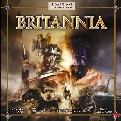
He recommended doing a square box, others cost too much and retailers hate it. So no Monopoly-shaped boxes (even though Monopoly still does it). The standard is about 10.5 inches on a side--Wal-mart’s desire– about3 inches deep. (I’ll interject that many boxes and boards seem to be made on an 11 by 11 inch square standard, near enough. For example, the FFG Britannia board is six 11 by 11 sections.)

Print together with someone else, if you can, to reduce costs.

You need a box. Plastic bags shelved edge on (as for DeskTopPublished games), don't do it. Use a hang tag on a tuck box (box for a deck of cards). Boxes, 1000, about 2.20/box. 2,500 boxes, maybe less than $1.80 maybe even $1.50 each.

You won't save money by not printing a box bottom. The back/bottom sells the game. Always use full color.

Price has an influence on size and weight of box. Mayfair had a standard small box for $20 games, crammed a lot into same box for $25, and it didn't sell. People don’t want to pay a lot for a small or light box, they want to feel they’re getting something substantial. (Yet the heavier the box, the more it costs to ship to the distributor. You’re trying to find a good middle ground in many of these decisions.)

Many games use a sheet (sometimes even diecut sheets of card-stock) instead of a mounted game board, to save money. Traditional mounted board 20" by 20" $1.80-2.40 for 1000 pieces. There’s a 23 by 33 inch limitation on the machines that make the boards, don’t make yours larger if you want it mounted. American style boards with the “valley” are cheaper than the “Euro” style.

The platform or insert avoids shifting of contents during shipping, such as forklift movement. Molded plastic is $3,000-5,000 just for the mold, so can cost over a buck each. Cardboard 35-50 cents.

Cards are the most expensive component pound for pound. Bridge size cards: 110 is the magic number on one piece of equipment (and this could be two identical decks of 55, for example). But it varies, with another machine the number might be 60. If the number is, say, 85 for a machine, then 85 card decks might be cheaper than 83 card decks. If 5-10K units, below that it “gets wonky.” (That’s what my notes say!) (thegamecrafter.com prints cards in sets of 16, for example.)

Magic”the Gathering card stock is 11.5-12 pt. Wargame cardboard counters 40-66 pt.
Board 75-80 pt. (A point is a hundreth of an inch?)

Cheapest printing: square corner, common white border or black, saves several cents per deck. Round corners are better for shuffling and holding in hand. Round corners can add as much as a quarter to the cost of a deck. Proper playing card stock is a laminate, "insanely expensive"--1000 sheets $660; 12 pt not laminate $250-280.
Linen is very expensive, more common in Europe.

Ballpark for art $3-5000. Make sure your art is good. Don't forget you have to sell the game before people will play it. (Lew: the old guide for novels was, a good novel with a bad color won’t sell, a bad novel with a good cover will. Presumably the same still applies, and to games as well.) Art should be at least 300 dpi.

Use high-end graphics programs, not Word for rules. Your rules are art, high quality PDF or Adobe Illustrator etc. file (InDesign). Printers use CMYK color. RGB won't convert well, blacks will be 90% gray. Bleeds are one eighth inch or three, gameboards 5/8 bleed. Purples and oranges a problem. Purple changes. Oranges hard to match. Avoid.

Set type in Illustrator, not Photoshop. (Lew: Photoshop is a bitmap program, keeping track of the location of every pixel (dot). Illustrator is vector graphics, keeping track of the formulas that define the objects. This makes for smaller files, but especially good because it scales easily, the program just recalculates the formula.)


US vs. China. Print your first game in US, then look to China. China cheaper. You can sue someone in the US if things go drastically wrong. China varies a lot, not much recourse. Catalyst recently had Chinese manufacturer vanish on them.

For a million units he got within a quarter per unit for Mattel vs. China cost. (Lew: Hasbro has a million square foot factory with injection molding equipment in New England. So they can do their own manufacturing.)

US you get your stuff in 4-6 weeks, China 90-120 days.

Make sure you get a “landed” price from China. $2,500 for a half container, $5K full container.

Rulebook 22 to 48 cents (per sheet). 60 pound paper. B&W. "Color is about five times more expensive 20 times more impact". 4 pages to a sheet.

Assembly. Can do it yourself. Shrink-wrapper expensive.

Custom plastics, go to China. Mold costs $20K in US vs $3,500 in China. Small run in pewter may be cheaper. Find someone with a mold that fits your requirements.

Wood pieces don’t use molds. (Lew: I understand wood pieces often come for Eastern Europe.)

Piece sources: Plastics for Games UK. Mr Chips US.

And a bit related to publicity: a GenCon 10 by 10 booth cost $1,300. I’ll interject here that every year at Origins, and probably GenCon as well (I’ve only been there once), you see little companies selling one or two games. The next year and following they’re not there, because it in’t worth the costs of booth and personnel and travel to do it again (if it was the first time...).

Monday, September 07, 2009

Where have "American games" gone?

Where have "American Games" gone? American games have lots of atmosphere as well as theme. This is as opposed to so many Euro games that have a so-called "theme", but the theme has no effect on actual play. "Atmosphere" induces a feeling in players that they are participating in or about to see something strongly related to the theme. The atmosphere may have nothing to do with reality. For example, the game Winds of Plunder (GMT) has almost nothing to do with the activities of real pirates, but it "feels" like pirates to the players. And in the past, American games included lots of dice rolling. Axis and Allies is an example.

At least one bastion of "new" American games is Fantasy Flight Games. Their new games positively drip with atmosphere, through miniatures and boards that look like artwork and lots of illustrations (usually on lots of cards). But there are rarely any dice. In other words, the "new" American game emphasizes atmosphere, but appeals to Euro players by using no dice. Cards substitute for the chance element, just as in many Euros. The games tend to be more complex than Euros to help maintain the atmosphere ("chrome", anyone?). I don't know whether their many-pieces lots-of-rules (if you include the cards) plastic-piece-dominated games, many designed in-house, have a gameplay that will attract people through many playings, but the atmosphere is immediately attractive. And that's what is needed nowadays to sell games, an immediately attractive atmosphere embodied in the comment "that looks cool, let's play".

More on this another time.

Sunday, September 06, 2009

The Nature of Games in the Twenty-first Century

This originally appeared on gamecareerguide (you can click the title of this post) on 5 Mar 09

The Nature of Games in the Twenty-first Century

Lewis Pulsipher

“I cannot give you the formula for success, but I can give you the formula for failure: which is: Try to please everybody.” Herbert B. Swope

Games have changed over the past few decades, because player preferences have changed. It’s hard to say whether video games helped cause this, or merely take advantage of the differences.

If you are designing for publication, you are not designing a game for you–you are much too unusual to be representative of a large target audience. As a designer you need to be aware of these changes. If the target audience for a game is people 50 and older, their game interests will be quite different from those of the latest generation (“millennials”, born around 1980 and younger). I am going to contrast present-day preferences with those of the 1950s-80s, and you’ll see how video games fit these newer preferences.

Here is a list of these characteristics, then I’ll discuss each one:

· Positive scoring mechanisms that reinforce success/encourage the player to continue

· Disinclination to plan or study

· Players won't write things down

· Players won’t do even simple math

· Players want a reduced number of plausible choices, and not many pieces/items to deal with

· Not much "down time"

· No lookup tables

· Episodic

· Dice vs. cards

· No player elimination

· Simple; short

· Pacifism

· Sharing/cooperation

· Much stronger visual orientation

· Uncertainty of information is much more common

· Player interaction without overt conflict

· Generational differences

(These remarks address both non-electronic and video games. Most of game design is the same whether you use computers or not, and if you’re starting to learn game design, you should be designing non-electronic games because it’s easy to experiment with your results, rather than be caught in the “production trap” where you spend almost all of your time trying to get the video game to work. See"Pulling the Plug: In Defense of Non-Digital Teaching and Learning"

http://www.gamecareerguide.com/features/602/pulling_the_plug_in_defense_of_.php.)

Positive scoring mechanisms that reinforce success/encourage the player to continue

A great many boardgames now use point scoring to determine success, and this was adopted by video games decades ago. Moreover, have you ever seen a game take points away, or run points into the negative? The purpose of points is to immediately reinforce what a player has done, and to encourage the player to continue. In contrast, an older game like Monopoly uses money as a substitute for points, and you lose money almost as often as you gain it. Other old games such as chess and checkers have no reinforcing mechanisms–you lose pieces and rarely gain them.

Disinclination to plan or study

Games tend to be more active, more frenetic, than in the past. People want to DO more than they want to think.

In the video game world, simpler games can include the rules within the game, with minimal reading. More complex games such as Civilization IV have manuals, but few players read them, even though those who do read learn enough to become experts long before the players who don’t read the manual.

In non-electronic games this tendency manifests in “Sequence of Play” rules. In older games, rules were written to be read thoroughly before play. They were organized to be easily referenced when a player forgot a detail. Now most rules are written in Sequence of Play style, on the assumption that the players will try to play the game while reading the rules for the first time. If that’s true, then the rules must follow the order in which the players will try to do something in the game. This makes for a poor reference, unfortunately. But the fact is, most game players want to be taught how to play rather than read the rules, and if no one can teach them, they often try to learn the game as they play.

Players won't write things down

Many non-electronic game publishers want nothing that requires written records in a game, and that’s a given in video games. The typical mechanism used in non-electronic games is a scoring track where a marker indicates the current score for each player.

My boardgame Britannia, originally published in 1986, had always required use of a scoresheet to write down victory points. When the second edition was published in 2006 by Fantasy Flight Games, they did not want to require players to write anything. At first they were going to use a scoring track, but I suggested that in a four-five hour wargame, likely someone would bump the game board or otherwise foul up the scoring. So they decided to include scoring counters in three denominations. As players score, they receive appropriate counters.

Many Britannia players, given a choice, will still keep score on a scoresheet. But when players agree not to keep track of the score separately, then the counters provide some uncertainty about scores, and consequently about who might be ahead.

Players won’t do even simple math

People are now very poor at doing math in their heads–“new math” and calculators have had a lot to do with this. I’ve seen intelligent young people count up the dots on dice one by one rather than quickly make the sum. And I’ve known intelligent young people who could not figure out the amount of a 10% tip at a restaurant (let alone 15%).

If this is true, why would people want to do math as part of a game, unless it was specifically a mathematical game? Video games take care of this automatically, of course, but boardgame designers have had to adjust how they do things.

Players want a reduced number of plausible choices, and not many pieces/items to deal with

Many popular strategy (war)games of the 60s and 70s involved moving dozens of cardboard counters each turn. There were many choices, much to think about. This has gone out of style: in a sense we’re back to centuries-old traditional games where only one piece is moved at a time. This “piece”, in video games, is usually the player’s avatar.

This helps avoid “analysis paralysis”, where the player has so much to think about that he cannot decide what to do.

This is related to entertainment: fewer people nowadays regard a thinking game as entertaining. So they want a game of physical challenges, or a game with only a few plausible choices at any given time, perhaps we could even say, a game where intuition (which is quick) is just as useful as logic (which frequently is not quick).

Not much "down time"

Players are less content with “waiting for their turn” than in the past. They want to constantly participate in a game. There is much less interest in patience, or in downtime that enables one to plan one’s next move.

Boardgames and card games can achieve downtime reduction with constant trading of resources (Settlers of Catan), with simultaneous movement, with small partial plays during an overall turn so that there’s less time between each part of a player’s turn, with interrupts (such as event cards) that a player can execute while another is playing. Video games are frequently simultaneous, all players playing at the same time, so the problem is rarely an issue.

No lookup tables

Lookup tables, such as dice-roll combat tables, were common in boardgames of the 60s and 70s. Now, players don’t want to look anything up. Often, cards are used to supply the rules/tables needed at a given time. In video games, of course, the computer keeps track of the tables and the rules.

Episodic

People have shorter attention spans, perhaps because there are so many distractions, so many ways to spend one’s leisure time. In any case, games tend to be more episodic these days. Many boardgames are a limited number of turns: you don’t actually play to completion (where one player predominates), you play for a while and then rely on the score to determine who won. Many card games are naturally episodic, as you play one “hand” after another. In video games, the entire concept of “levels” is a way of making a game episodic. The end of each level is a natural point to pause or even to save the game and stop playing for a while.

Dice vs. cards

This is not something strongly related to video games, but is obvious in boardgames. Many people nowadays do not like dice rolling in games. The preferred method of introducing a random element is cards. Cards are more manageable than dice, and much nicer to look at as well. Yet there are still many popular games, such as Risk and Axis and Allies, that are “dice-fests.” In video games the action of “dice” (random chance) is hidden away, but it’s often there; nonetheless, many players don’t like to feel that what happens is randomly determined.

No player elimination

In most video games, a player is never eliminated; he can go back to his save game, or he simply “respawns”. In older non-electronic games, players were often eliminated, knocked out of the game, as they are in Monopoly. Of course, in a two player game when one is “eliminated”, the game is over; here I’m talking about games with more than two sides. Today, player elimination in boardgames is quite unusual.

Players may have an inviolate area to survive in, or the game may simply have a time limit that will be reached before anyone can be eliminated. Moreover, in many cases, the game is designed so that most players have a chance to win at the very end of the game–do you want to continue to play if you have no chance at all? For example, there may be a progressively increasing scoring scale, or some mechanism allowing a "surprise" win. Insofar as the popular “Euro” boardgames have grown out of family games (some people refer to them as "family games on steroids"), it is not surprising that there is no player elimination, as that would leave someone out of the family fun.

Simple; short

Games tend to be simpler and shorter. “Simpler” is related to a dislike of reading rules (many teenagers skim almost everything they read, rather than read it thoroughly). “Short” is a matter of attention span. This sometimes means games that rely on intuition rather than logic, as intuition comes quickly, while logic generally requires information-gathering and long thought (sometimes resulting in "analysis paralysis"). Many people simply won't play a long game, or think they won't. (They often find that if the game is satisfying, they'll play two or three hours, at times; but many aren't willing to try.)

The trend in video games toward short experiences (“casual” games), and towards episodic play, reflects these changes.

Pacifism

This can be quite surprising for the “hard core” video gamers, who tend to prefer games where things blow up or die. But remember that half of game players are women, and the great majority of female game players are not interested in violence.

It is quite easy to find gamers who just will not “attack” other players. Games that are essentially multiplayer solitaire are fairly common in the boardgame world–you can’t do anything to harm or much to hinder the other players’ situations. “Euro”-aficionados might put this differently, saying that the games use indirect means of influencing other players rather than the direct means common in wargames.

The extraordinarily popular boardgame (and now video game) Settlers of Catan includes the “robber” in order to give players some way to negatively affect other players; yet this can be seen as a kind of kludge, perhaps added on when the game was otherwise too much like multiplayer solitaire.

Sharing/cooperation

The millennial generation is known to prefer sharing and cooperation more than preceding generations did. Competition is sometimes frowned upon by parents and teachers. We also now have a higher proportion of adult women playing games than in the past, who tend to be less interested in competition and more interested in cooperation.

People are much more interested in games where you build up things, than games in which you tear down an opponent. (Yes, the hardcore video game players are an exception–they often like to destroy.)

Perhaps the popularity of the Wii and Wii-like games reflects this change. Dislike of player elimination is another indication. The out-and-out pacifism of some players is another symptom.

Much stronger visual orientation

In the age of color television, of computers, of the Internet, this is hardly surprising. Inasmuch as people are less likely to read, they are more likely to be interested in images and good looks. Just as some players will criticize a video game for “outdated graphics”, players will criticize boardgames for “boring bits” (components). One reason why cards are much more popular, and dice less, in non-electronic games is that cards can include colorful, varied, interesting illustrations.

I’ve even heard a teenager say that music “isn’t real” until he sees something to go along with hearing the music. Hardly any older person would have that point of view (except, perhaps, for opera?).

Uncertainty of information is much more common

Traditional games, even commercial ones such as Monopoly and Risk, have “perfect information” or nearly so. On the other hand, card games were the bastion of hidden information. Early video games provided perfect information, as nothing was hidden from the players. Now hidden information (“fog of war”) is the norm, thanks to the power of modern processors. In boardgames, too, the use of cards and upside-down tiles is much more common, introducing uncertainty.

Player interaction without overt conflict

In wargames the inevitable conflict results in constant and strong interaction between players. In traditional commercial games not about war, such as Scrabble and Monopoly, some interaction exists but is not based on violence. Interaction in card games can vary a great deal from one design to another. Modern boardgames have many ways of encouraging interaction that were uncommon or unknown decades ago, such as auctions and trading. Early video games, almost always one player against the computer, technically involved no player interaction at all, though there was plenty of interaction with the computer opposition.

Much of the interaction in video games is still based in warfare and violence. But we have seen an increase in non-violent games, as in The Sims, in resource management games such as Settlers, in “casual” games such as Bejeweled and Diner Dash, and in a great many games made for the Wii. You could argue a case that the “real future” of interactive video entertainment is in games with more than one player and with lots of interaction among players, often of a non-violent nature.

Generational differences. I have already described many characteristics that differ between generations, here I’ll try to generalize about them. Some people prefer to think that everyone is the same, but employers and researchers have seen that there are definite differences between generations, and have described how this affects game preferences. Entire books have been written about generational differences, this is only a taste that will help you be aware of how differently people think about games.

The “Baby Boomer” generation (before “X”) is highly competitive and willing to forego immediate gratification for future reward. They don’t need constant encouragement to continue playing, in contrast to much younger people who do expect immediate reward for any accomplishment. “Gen X” (born around 1964 to around 1980) tends to be the generation of the lone hero, in game terms, while “Millennials” or Gen Y (born around 1980 and later) tend to think in terms of sharing and of groups accomplishing tasks. The MMO is the new face of video gaming, then, because it can accommodate both, in the individual adventuring that appeals to “X” and the multi-player raiding that appeals to millennials.

As you can see, modern video games reflect most of these changes very well, though early video games often did not. I’d guess that the changes came first, and video games reflect them, but video games have certainly reinforced these differences as they’ve become part of the national and international consciousness.

Monday, August 31, 2009

More about Patents

Yehuda B. has tracked game patents for some years (example: http://jergames.blogspot.com/2008/10/september-board-and-card-game-patents.html). The obvious and often impossibly useless nature of these patents only reinforces the idea that the patent office is incompetent, and that patent lawyers prey on the hopes of foolish inventors every day. I think most would fail in court because they're too obvious, or because or "prior art" (the "product" already being in use for a considerable period before the patent was filed).

Yehuda is doing a great service. I've read some patents and know how confusing and obscure they can be. He often cannot figure out just what the heck the filer is talking about.

Owing to limited time I only read two blogs regularly, both by video game designers now in academia who understand the value of using non-electronic games; yet I know that Yehuda's blog is very worthy of your attention.

Sunday, August 30, 2009

Patents and games

Note: I am not a lawyer and this is not legal advice.

Non-electronic and video games are rarely patented, both because it is expensive ($3,000-$10,000) and because a patent only protects a particular expression of an idea. Ideas alone are not patentable, though a business process may be. At least, that's how it is supposed to work. Patents are supposed to protect inventors from predatory companies who steal their product (not their idea) and mass produce and undersell the originator--something that used to be quite common long ago. Patents protect a particular expression of an idea in a product. Further, you're not supposed to be able to patent the obvious, because it's obvious. But somewhere along the line the patent office in the USA lost track of what it was about, and started to let people patent ideas, sometimes obvious ones, rather than particular products. One well-known game patent is for "tapping", turning a card sideways, in Magic: the Gathering. TAPping probably shouldn't be patented, and I don't think it would stand up in court because it's so obvious; further, other CCG makers seem to get around it, probably by giving it a different name.

So the telephone patent, if it had not actually expired, could not be used to stop Skype. BUT if the patent office had acted then as now, the patent would be for any long-distance communication over a wire (even though it was already done with the telegraph, of course), and would interfere.

I read some time ago that the patent office was going to allow someone to patent a particular plotline for a story. The patent-holder was then going to require royalties (in the manner of "patent trolls") from anyone whose story vaguely resembled that plot. This would be a true disaster, as well as just plain stupid, but I've heard nothing more about it so maybe the patent office had an attack of sanity.

Here is where the bull-in-a-chinashop behavior of the patent office has interfered with games. At GenCon Mike Gray of Hasbro pointed out that the big problem with non-electronic games, especially in the mass market, is that someone has to read the rules. I myself have advocated including a DVD in the game box with a video that is, for all practical purposes, someone teaching the game owner how to play the game. Publishers (including Hasbro) don't want to go for that, because of the expense. But Mike told me that the idea of someone calling an automated phone number to be taught how to play a game had been patented! This is a patent of an idea, which should not be allowed (especially because it is obvious), not a patent of a particular product; but the result is that anyone using this method would be required to pay royalties. And game players (and designers) suffer as a result.

I have tried but failed to find this patent through Google. What I did find was pretty interesting, some game patents that I'd say are "really strange", or really obvious.

Wednesday, August 26, 2009

Why Design Games?

A form of this article appeared on gamecareerguide, January, 2009. You can click the post heading for the original.


Why design games?

“I’m going to make a lot of money designing games”. This is a common notion, but rarely true in practice. Even in the video game industry, few game designers “get rich”. They usually work for a game developer full time, work fairly long hours, and aren’t paid particularly well (there are exceptions), because so many people want to be game designers. In fact, on average they’re paid less than the programmers, and no more than the artists! They are not paid royalties, though they might get a bonus for a game that sells very well.

Moreover, in the video game industry, people are rarely hired off the street as game designers. Instead they must serve an apprenticeship of many years as testers or (if they’re lucky and good) as level designers, or in other non-designer positions. Is the money they might eventually make worth it?

In non-electronic games, most designers are freelancers (like novelists) and barely make a profit. A few of the most famous, such as Klaus Tauber and Reiner Kniza, can actually become millionaires as freelancers. A few work for big companies such as Hasbro (which owns Parker Brothers, Milton Bradley, Wizards of the Coast, and Avalon Hill amongst others). The typical boardgame, card game, RPG (role playing game), or CCG (collectible card game) does not bring in the revenues of video games, and royalties are low, so most freelance designers have a “day job” just as most novelists do. Amongst novelists, Glenn Cook, most well known for the “Black Company” fantasy novels, wrote while commuting to his day job at a General Motors assembly plant, a job he retired from. Alan R. Moon, a very well known boardgame designer who has won two of the very important German Game of the Year awards, has said he would have had to get a part-time job if not for his second win with Ticket to Ride.

One observer suggested you could spend the time you use to design games, and instead pick up cans and bottles for deposits and recycling fees, and make as much money.

In other words, don’t design games in order to make a lot of money, because you probably won’t. You may not make any money at all.

But please, if you're going to call yourself a "game designer", then design seriously. Don't be a dilettante, don't dabble in it rather than do it half-heartedly. Or design just for yourself, but don't call yourself a "game designer".

Game designers as a group suffer from people who call themselves game designers, but work on just one game, produce a weak (though possibly pretty) prototype, don't alpha test it, and then inflict it on volunteer playtesters who walk away with the opinion that so-called game designers are "amateurs", or that "heck, anyone could design a game that weak". If you can't play your game solo, why expect anyone else to play it? Get your game to a decently enjoyable state before you inflict it on others, or you'll give game design a bad name.

Recognize also that in the "outside world", you won't get much respect. People who don't play games, or who only play traditional games on holidays (as many older people who aren't into video games), tend to assume that game design is easy, that it's "kid's stuff" that any adult can manage to do. So why respect someone who designs games? Or worse, they may wonder why any adult would be "playing with games" instead of doing something productive with their lives! (My 80-year-old English mother-in-law cannot understand why I spend my time teaching young people how to design games--though I'm paid to do it. To her it's just not an adult occupation.)

Even if you do well, you won’t be famous (again with a few exceptions). Yes, we know who Sid Meier is, or CliffyB (but that’s because he blogs), but mostly we know designers by their works. How many know who Carmack and Romero, or Will Wright are? But mention their works (Doom and Quake, The Sims) and they're recognized. I’m lucky to have a very unusual name, but more people know me through games, especially Britannia, than through my name. A game designer may be the “least unfamous” person among his friends and acquaintances, but he’s not famous the way an athlete or actor may be famous.

So if it’s not money or fame, what is it? Why design games? There’s the thrill of making something out of nothing, as an artist does with pen and paper, a composer does with music, a painter does with canvas and brush, etc. It may not be quite like what a woman feels when she bears a child, but it can be something like it.

Perhaps you’re driven to do it, the way some people are driven to write novels even without an expectation of publication. Perhaps you enjoy being creative, and this is your chosen field. When I came back to designing boardgames as an older person, after being “away” for twenty years, it was the realization that this was the best way I had to touch a large number of lives, if only through entertainment. Or you may love the thrill of seeing your game on the shelves, or of being asked to sign a copy of your game. It can certainly be a rush.

At Origins Game Fair 2008, as I was sitting at a booth talking to a boardgame publisher, someone walked by, evidently saw my name tag, shook my hand, said something like "Britannia is an excellent game, thank you for getting it back into print", and walked off. There's no substitute for that, folks, or for hearing someone say “I love this game”, when they’re talking about one you designed, or to hear someone say they’ve played your 4-5 hour game more than five hundred times. Not many people get to experience that.

You can love game design for many reasons. For me, it is truly fascinating to play your brand new prototype for the first time, not because it will be all that much fun (at this point it probably won’t be), but fascinating to see how things work or don’t work the way you expected, to “see what happens”, to puzzle out how to improve it. It’s also fascinating to watch the first time other people play, and perhaps see how different the game works than when you played it solo. Design because you like to design games, and like the “incidents”. It’s rarely a living, but it’s cool.

Sunday, August 23, 2009

Game Crafters (POD games)

Recently a POD (print on demand) game producer came online, thegamecrafter.com (you can click on the title of this post). I wondered whether they were actually legitimate, but at GenCon I found the company booth and spent some time talking with them.

They are still experimenting and figuring out how to make their business work efficiently. One of their problems is in sending games to individual consumers. They have a more or less industry-standard size box (10+ by 10+ inches), but have been relying on the box as a shipping container, and UPS has been clobbering many of them. They have a small sturdy box for games that are primarily or entirely cards, but it's much too small to ship safely via UPS. They are thinking of shifting to US Postal Service for shipping to consumers, which will certainly be better for the small boxes and might work better for the large ones. (Among other things, the games can be insured and fulfillment of insurance would be someone else's problem, not Gamecrafters.)

I learned from Ben Clarke of ImagiGrafx in GenCon seminars why games have an insert (which Gamecrafter has not used): to prevent the pieces shifting around inside the box during shipping. TGC has indeed seen some problems because of shifting, and may have to use an insert, which will of course raise their prices some.

I referred them to EAI Education online for pieces in general and the lovely stackable pieces that so many players like. I also suggested they do something like what Lost Battalion does (they also use POD machines): offer to print "pieces" on stickers, and include some kind of blank piece (Lost Bn uses wooden disks) so that player can stick the stickers on the pieces. This would allow them to do games with more complex piece assortments than pawns.

They use JPG or PNG, converting them to PDF so that they can avoid problems with so many different PDF formats. This contrasts with traditional printers, who usually use PDFs.

Their card printing is in multiples of 16, so the magic 55 card rule does not apply.

And I never did ask where they're actually located . . .

Wednesday, August 19, 2009

WBC 2009

I was at WBC (World Boardgaming Championships) Thursday through Saturday in Lancaster, PA. It seemed to be as well attended as last year, one fewer person participating in the Britannia tournament, for example.

Some of the best Brit players tried out Barbaria (the dice version) and Frankia. These two games have elicited interest from publishers, perhaps I'll say more later.

I talked about getting into the game design business at a seminar that was surprisingly well attended, about 20 people. There were so many questions I didn't get very far into my spiel, but the slides and a recording from last year at Origins are on my Web site (pulsiphergames.com).

Don Greenwood (convention director) reports: "Attendance was up for the convention as a whole and that was reflected in tournament participation as well with 17 events drawing triple-digit participation and the average attendance for the 151 events increasing 2.3 to 49.4, buoyed by 230 players for Dominion and 220 for Ticket to Ride." That average is probably a mean, I often wonder what the median was in these kinds of stats.

In the Brit tournament, red did very well early on. Blue did poorly throughout. This is fascinating because, in playtesting before this edition was published, blue was best and red worst. And in a past year the wins were very, very even. In games with inexperienced players, red tends to do better, but there aren't many inexperienced players in the WBC Britannia tournament. There were lots of green-yellow deals that left the Welsh unscathed--a stronger opponent for red, and letting yellow charge northward to keep down the Picts. Perhaps that was part of blue's problem. OTOH I saw Mark Smith suffer in a game where all his opponents (he was Roman) refused to submit, even the Belgae! I wasn't able to stay for the final, but I ran into Jim Jordan at GenCon and he said Rick Kirchner (I hope I'm spelling that correctly) had won with green in a close three-way game. He also won his semifinal as green. Rick is a matter-of-fact fellow who doesn't try to BS anyone and just does his thing with a combination of cheerfulness and resignation (see quote below). He has no enemies. Green works well him because it is, most of the time, "on the sidelines", just trying to survive. In the semifinal, for example, Mark Smith and Nick Benedict (Nick was yellow, I cannot recall whether Mark was red or blue) wore each other out while Rick took advantage.

I finally remembered to count king survival in the four semifinal games: 3, 2, 2, and 1, out of the four candidates.

Some notes: Nick Benedict: "Use a scalpel, not a bludgeon." Rick Kirchner: "I'm fighting with butterknives!" (bad dice rolls in the semis). Scott Pfeiffer would like everybody to have boats all the time. This would make for a more interesting game thanks to increased mobility, but would not be historical at all.

Tuesday, August 18, 2009

Impressions of GenCon

I attended GenCon Indianapolis for the first time last week. I'll have many comments and reports over the next couple weeks, but in the meantime here are a few observations:

It's Big. The convention center is larger than the Columbus center used for Origins, and there are many events in several hotels as well. I think the event count is over 6,000, compared to 4,500 for Origins, but I suspect the events tend to be smaller at Origins.

The exhibition hall dwarfs the one used at Origins. $1,300 for a 10 by 10 foot area. There were even a couple of companies (video game related, it must be said) that had "booth babes". (I talked briefly with one, dressed to be a character from an online trading card game related to Everquest, who travels with the company all over the nation, though she actually comes from California. Big bucks involved here.) The wargame-only publishers such as Clash of Arms, Avalanche, and GMT and others did not exhibit.

Pre-register. When I arrived Thursday about 1, an enormous line of hundreds of people snaked along the sidewalk, all waiting to register. I just walked in to pick up my pre-reg, no line at all at that point. There was another long line Friday.

Seminars. GenCon puts their guests of honor to work. And the results are good panel discussions.

The proportion of male and female appears to be about the same as at Origins (a quarter female). And as at Origins, there are very few black or obviously Hispanic attendees.

A lot more costumes were in evidence than at Origins. One hotel hosted the costume events, I didn't get over there.

One exhibitor mentioned 28,000 attendees, in ads prior to the convention the aim was evidently 30,000. Origins maxed at 15,000 two years ago, and was 10,000 this year.