





 Posts


One of my projects lately is an extension of earlier games. The general subject is card games, especially card games where cards can break the rules temporarily (quite common) or change the rules semi-permanently (much less common). Collectible Card Games rely on rule-breaking within the context of a single game, though in the long run CCG are effectively about breaking the rules. New cards are produced (and old cards banned) so that the winning strategies of the game are quite significantly changed. Designers of CCG say, if you have a tournament where the same kind of deck dominates, that dominated a year ago, you have failed. The whole point is to change the game so that players must buy the new cards (and that's why I strongly dislike CCG, an extrenal factor, how much money you're willing to spend, makes the game unfair).
Event cards, present in many boardgames, are usually rule-breakers rather than rule-changers.
Fluxx is a well-known game where many of the cards change the rules of the game "semi-permanently" (until someone else plays a card that changes the rules again). The result is very chaotic.
My game Law & Chaos uses both a board with piece placement (not movement) and cards, with the cards providing some rule-breaking, but more rule-changing, as victory conditions and capture methods change over time. In my card game Kung Fu, I stuck to cards that break the rules rather than change them. In the new game, I've tried a mix of cards, combined with a board and piece movement.
So far I'm not happy with the result, as the board seems too static, too territorial (which doesn't happen with L&C). We'll see if I can get away from that.
Friday, July 09, 2010


Saturday, June 12, 2010
Fallen Kingdoms game
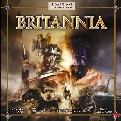
Fallen Kingdoms is a self-published multiplayer game that takes a considerable part of its inspiration from Britannia. See
http://ariel.bdeb.qc.ca/~ericp/cgi-bin/boardgame/games/fallen_kingdoms/index.php
Although the designer also mentions Vinci, he says he didn't borrow a lot from it. However, it appears to me to be as much Vinci as Brit.
There's a downloadable, cut--down version of the game that you can try.
Thursday, June 10, 2010
Contrasts in Playing Styles
(Let me say before I begin that, for the first time in several years, I will not be at Origins this year. I will be at WBC in August beginning about Thursday at noon. WBC and GenCon are at the same time this year and next, so I won't be at GenCon.)
Ordinarily when I talk about differences in playing styles, I'm talking about things like the planners vs the adapters and the Classical vs. the Romantic players. (See http://www.gamedev.net/reference/design/features/gameStyles/ for the latest version.) But this time I'm talking about how people behave during a game. Much of this comes from the players, but probably just as much comes from the game.
In this case, at a recent meeting of the NC State tabletop gamers club, we had one group playing Bang!, one playing Mah Jong (of all things), and one playing my prototype Germania. The Mah Jong game was very quiet, except when they started anew, when the noise of the expensive-looking set of pieces clicking and clacking on the table filled the room. The Bang! game was very loud (Bang! is a screwage game with some secret roles that encourages deception as well as general hilarity.) And Germania was mostly quiet, with an occasional bombastic boast or accusation. Germania is a Euro-wargame cross.
Of course, some of the Bang! players are always loud, some of the Mah Jong and Germania players are always quiet.
I suppose "screwage" games by their nature are frequently louder than strategy games that encourage planning. Imagine chess players being consistently loud (yeah, I'm sure it happens). Since screwage games involve messing with your friends via the game, they're unlikely to be calm or quiet.
Tuesday, May 25, 2010
Game design is no place for “perfectionism”
No game can be perfect–it depends so much on the audience, the individual player, the mood, the group (if played by a group), even the timing of creation and publication.
A game that “doesn’t get in the way” may be perfect for a group of friends to play, but dull for a group of strangers who are going to concentrate more on the game and less on the players.
The Law of Diminishing Marginal Returns always applies, in games. There is always a way to improve the game, but it may not be worth the time it will take to find that improvement, and the risk of “disimproving” when you change it. A “perfectionist” can never finish a game.
As someone once said about models in general– a game is a model of something–we need idealists to make models, not realists: people willing to recognize that the model cannot be perfect, people who will discover what the essence of the question is and concentrate on that, rather than try for the “perfect” solution.
Saturday, May 22, 2010
Authorship
What I do when I design a tabletop game is something like what a novelist does when he or she writes a book. A book has an author, one or more editors, and (we hope) readers. So does a game, but players instead of readers.
A tabletop game designer is responsible for most of the content of his game. Playtesters provide some of the rest, and the publisher may assign a "developer" (formally or informally) who also contributes to the game. The developer, like a book editor, may make big changes or only small ones. In any case, the game is primarily the product of one or two minds, plus the work of the artist who makes the production components.
A big difference between games and novels is that there is little or no "playtesting" of the novel. (There's more for a non-fiction title, possibly peer reviewers as well as editors.) Novels are not interactive, games are. Reader "testing" is much less important for a novel than gamer testing is for a game, because that interactivity takes some of the control out of the game-author's hands.
Looked at another way, the most important part of novel writing is the writing. The most important part of tabletop game creation is the playtesting.
What a video game designer in a AAA video game does is more akin to being head of a software project, or at best, being writer of a movie. If you know much about movies, you know that what's written is heavily influenced beforehand by the chiefs of the project, and then is often modified heavily by the director and crew during production of the film. For AAA games, hundreds of people may be involved in making the game. With rare exceptions, I'd suggest, the chief designer of a video game rarely has more than 25% influence over how the game plays, while the designer of a tabletop game has 90-99% influence in many cases.
Tuesday, May 04, 2010
Belated comments about PrezCon
Two people have reminded me that I haven't written anything specifically about PrezCon 2010. I don't write "After Action Reports", but I can make a few observations.
After a decline last year, attendance was a new record according to Justin Thompson, who organizes PrezCon. Probably the best thing you can say about a successful convention such as this one is that it was more of the same, lots of tournaments, an auction, some vendors and publishers, open gaming, a mix of middle-aged and older folks along with much younger ones who were often families of the older ones.
It is very much a one-third-sized WBC (Pennsylvania in August). If you like WBC you'll like PrezCon and vice versa. There may be other conventions like this elsewhere in the country, but I don't know of them. Both focus on boardgames and card games. Both are very much un-like Origins and GenCon, which are much, much larger conventions that include a much wider variety of gaming, such as RPGs, CCGs, and miniatures. (Ballpark attendance: PrezCon 500, WBC 1,500, Origins 10-15,000, GenCon 28,000). Occasionally the weather intervenes in late February, not a problem with the summer cons.
Some people really get honed in on one game at this convention. Two I know played 17 and 19 games of Robo-Rally (one won the tournament, the other finished third if I recall correctly). I am not a Robo-rally fan, I have trouble even seeing which way the robots are pointing, but I understand some of the pull of the game.
I did not hear the whole story, but a philanthropist enabled youngsters (12 and under) to each buy a free game (or at least part of one, something like $35). Quite a gesture. In general, as far as I could make out, sales of games seemed to be pretty good.
The Britannia tournament was pretty well attended, though we all missed usual GM Jim Jordan, who could not come this year. Mark Smith filled in. One lad (10 or 12) found out that I'd designed the game, and told me I must be the best player! I told him that I've never played the published version, and that designers often aren't the best players.
I've written down one quote:
Keith Altizer (who was subbing for the last turn for Kevin Sudy (I may have mangeld that last name) in the Brit final, Kevin had to leave before the end and was in no danger of winning): "I'm not losing, I'm not playing this game." I cannot recall who won, though I suspect it was Mark Smith.
Saturday, April 24, 2010
Essential Design Questions
(From GameCareerGuide, 14 April 09--you can click on the post title for the original)
Twenty questions that must be answered
by the designer about every game design
Lewis Pulsipher
“It is better to know some of the questions than all of the answers.” James Thurber
A while ago I discussed the nine fundamental structural sub-systems of any game. (17 March, http://www.gamecareerguide.com/features/720/the_nine_structural_subsystems_of_.php). (Summary below.) These elements are a good starting point for defining your game concept, but there’s a lot more to be said.
As a reminder, the structural elements are:
1. Theme/History/Story/Emotion/Image.
2. Player Interaction rules.
3. Objective/victory conditions.
4. "Data storage" (Information Management)
5. Sequencing.
6. Movement/Placement.
7. Information availability.
8. Conflict resolution/interaction of game entities.
9. "Economy" (resource acquisition/conversion).
The following are questions, or “decision points”, for a designer to consider after he or she has established a framework. It should be most useful to people who are learning to design games. This list has grown as I’ve tried to come up with a set of questions that can be used to define and refine the nature of a game (whether non-electronic or electronic), once we have settled on the structural choices.
What's the difference between the structural elements and these questions? A designer MUST choose something within each of the structural elements, or there is no game yet (not consciously choosing is itself a default choice). On the other hand, he or she can ignore any of the following questions, but other elements in the game will create some answer to each as the game is developed. Yet many of these questions are as important, in the long run, as those fundamental structures. As a designer, I'd prefer to answer the questions initially rather than stumble into an answer, but others may have a different point of view.
Many of these questions are primarily of interest in non-race games with more than two sides. Races aren't unusual in video games (Mario Kart is the most well-known recent race game), yet they are a very specialized version of multi-sided games because in most such games there is little you can do to hinder the opposition.
Many boardgames and most card games are “multi”-sided (more than two sides). A trend in video gaming is toward multi-sided games, a way to have several people participate and compete directly, rather than indirectly via high scores or times, with one another. Over time, then, some of these questions will become very important for many video game makers.
Here in summary are the twenty “questions” I've identified so far, followed after the question list by a brief discussion of each.
“Distinct” questions (yes/no, or just a few possible answers): (“digital-style” questions)
What is the genre of the game?
Is it competitive or cooperative?
Is it Symmetric or Asymmetric?
Is it Zero-sum (ZS) or Non-zero-sum?
How many (human) "sides" (generally, 1, 2, or many) and (human) players?
Is this an “emergent”/rules-dominant game or a “role-assumption”/story-dominant game?
Spectrum questions (a wide range of possibilities along a spectrum, “analog-style” questions)
How “big” and how long will the game be?
How complex is the game?
What is the level of action or “granularity”?
What is the role of chance, how much does chance play a part in the game?
How strongly will the decisions of the players influence the outcome of the game?
Which kind of skill does a player need to use, adaptability, or planning?
Which kind of skill does a player need, quick reactions (typical in shooters, for example), or careful deliberation?
What is the level of Fluidity or Chaos?
Is the game largely "mechanical" or "psychological"?
Other questions:
What is the outstanding mechanism involved?
What are the dynamics of being ahead or behind in the game?
What phases does the game naturally fall into?
Is the game "serious" or "just for laughs"?
Is the game “ruthless” or “nice” (a competition or an entertainment)
“Distinct” questions (yes/no, or just a few possible answers): (“digital-style” questions)
What is the genre of the game? This is related to theme/story, and is very important in electronic games, less so in non-electronic. Genres might be “sweep of history” game, “shooter”, role-playing game, real-time strategy game, resource management game, etc. But a designer may not think about genre to begin with, and may end up with a game that defies standard genre-categorization.
Is it competitive or cooperative? Most of the time the game will be competitive, but occasionally, all (or almost all) of the players will cooperate with each other. “Co-op”, to an electronic gamer, means two or more players cooperating against the computer, say in a “shooter” game. On the non-electronic side we have Reiner Knizia’s Lord of the Rings game, where all players cooperate, and Days of Wonder’s Shadows Over Camelot, where there might be a traitor amongst the players; in both cases the game system provides the opposition.
Is it Symmetric or Asymmetric?
$ symmetric--similar starting positions/forces (typical of abstract games)
$ asymmetric--different starting positions or forces, and sometimes different objectives, typical of historical simulations
AAA list electronic games are often symmetric from player to player, except that there may be asymmetry coming from different starting characters. Starcraft (as many other RTS games) is asymmetric because the three races are functionally different.
Is it Zero-sum (ZS) or non-zero-sum?--in the former, any gain by one player comes from a loss by another
Diplomacy is an epitome of zero-sum; Risk has some aspects of it, as do many wargames with strong economies (e.g. Axis & Allies). Role-playing games (electronic or otherwise) are rarely zero-sum, though there is the element of “I kill monster, I get monster’s stuff”. RTS games are zero-sum in the sense that there is usually a limited amount of resources available, and if one player gets a resource, the others cannot get that resource.
Another way to pose this: is your opponent's loss your gain, or your gain your opponent's loss? If the game is two player ZS, the answer will always be "yes" . If it is multi-player, someone will gain when someone else loses.
ZS vs. non-ZS can be posed a different way, not quite the same thing: how easy or hard is it to hinder an opponent while at the same time helping yourself? If it's easy, you're closer to ZS; if it's hard, you're farther from ZS. (An important aspect of most "Euro" boardgames is that they are far from ZS.)
Games in which you score points regularly through the course of the game tend to make zero-sum unlikely, I'd say, and encourage situations where it's hard to hinder an opponent while at the same time helping yourself. (How many games let you take points away from another person that have already been scored?) Of course, there are exceptions, this is a tendency only.
How many (human) "sides" (generally, 1, 2, or many) and (human) players?
This question is related to the “Player Interaction Rules” sub-system, and one could argue against including it here. This one concentrates on the number of players and sides, however.
Football has 22 players, but only two sides. When video game people say “multi-player”, they often mean in this sense of many people playing, but no more than one or two sides or “every person for himself”. “Multi-player” in the non-electronic world usually means “more than two sides, one player per side”.
Axis & Allies or War of the Rings can be played with four or five people, but is a two-sided situation (regardless of attempts to use strange victory conditions to make it appear otherwise, there are only two primary interests)
Electronic games, until recently, have almost always had one human side, and the computer as a second side. True “solitaire” games have one side and a non-active obstacle that is more like a puzzle than another side. Where there is only one side, as in the card “game” Solitaire, what you really have is a puzzle. Still, someone must design these “puzzles.”
Is this an “emergent”/rules-dominant game or a “role-assumption”/story-dominant game? Board and card games, especially the “traditional” games, tend to have no narrative, no story. There is a set of rules, and play “emerges” from those rules. “Rules-dominant” might be a better term. Many electronic games, such as Tetris, also have this characteristic. Another way to look at this is that in these games the player does not assume a role, he does not usually think of himself as a person experiencing some aspect of an imagined life. Even in Monopoly, theoretically a game about real estate trading, players don’t think of themselves as entrepreneurs.
But many electronic games, especially the newer ones, incorporate an avatar, and a story of some sort happens to that avatar. The player thinks of himself as the avatar. These might be called “role-assumption” or “story-dominant” games. Which is yours?
The epitome of the story-dominant game would be made in an environment like The Matrix or the Star Trek holodeck. Some designers believe that the designer should, as much as possible, “hide” himself within the game, so that players are less likely to think of it as a game and more like reality. Opposed to this is the rules-emgergent point of view, where the players know they are playing a game with rules, and want the designer to do his best to make rules that result in an entertaining game.
Spectrum questions (a wide range of possibilities along a spectrum, “analog-style” questions)
How “big” (and how long) will the game be? You can design little games, short games, “monster” games, games that take 10 minutes to play, games that take 40 hours to play. What will it be? The audience has a lot to do with the answer to this question.
How complex is the game? Complexity can come from the rules or from the play, or both. The rules of chess are fairly simple, but the play is complex. Generally speaking, the larger number of plausible choices a player has, the more complex the play, but that is not always true. “Euro-style” games try to keep the number of plausible decisions small at any given time, in order to avoid “analysis paralysis”. In many electronic games, anyone who dallies when making a decision is wiped out, so the number of plausible decisions must be fairly small.
What is the level of action or “granularity”?
This refers to what kind of “force” or “agent” the player controls. If it involves violence, is action conducted on a tactical (individuals), grand tactical (battles), strategic (warfare including economics), or grand strategic level (series of wars)? A shooter is always tactical, an RTS is generally strategic, Civilization is grand strategic. If the game does not involve violence, it still has a level of action, which is most likely individual. Mario games are always at that level, for example.
Another way to look at this is, how many “pieces” does the player control/keep track of, from one up to hundreds. At higher levels of granularity, economics of some kind (production of units) is likely to be important.
Abstract games may be difficult to gauge, though in the end they tend to involve one piece at a time, as in Tetris, or a few as in Bejeweled. Checkers and chess are tactical games, as the number of pieces is quite small and only one can move at a time. RPGs are necessarily tactical.
What is the role of chance, how much does chance play a part in the game?
This can range anywhere from essentially none (chess, checkers--the only chance is who plays first) to complete chance (Candyland, Chutes and Ladders; the cardgame "war"; or just rolling dice against each other)
How strongly will the decisions of the players influence the outcome of the game? Some Euro games, and almost all traditional American family games, are designed so that even if a player is making mistakes, the gameplay can allow them to recover and win. In other words, we want the non-adult or inexperienced players to still have a chance to win. Many wargames are not so designed, and a person who isn't concentrating and isn't making good decisions will rarely, if ever, win. Years ago I christened this characteristic the "gyp factor". If a game lets a less skillful player win often, the skillful player is "gypped" (you can see what school of thought I come from . . .). See http://www.pulsipher.net/gyp_factor.htm. Here's the lead sentence: "The Gyp Factor (GyF) of a game is the degree to which it permits or prevents the expert (near-perfect) player from winning consistently against less than expert but at least average players. If the GyF is very low, the expert will beat the good player virtually every time--chess is an example. If the factor is very high, the expert wins no more often than the good player--in other words the expert is gypped because his additional ability cannot be exerted in the game".
See http://www.pulsipher.net/game_playing_styles.htm or the February 2005 Games Journal.
Which kind of skill does a player need to use, adaptability, or planning? Some games such as War of the Ring, and "card driven wargames", place the premium on adaptability, because you don't fully control what your side does. The roll of the special dice, or the draw of the cards, makes a big difference. Other games (chess, obviously, and traditional hex wargames) place a premium on planning. Euro games tend to focus on adaptability, which often makes for less analysis than older wargames. You can also suppose that the more information is available, the more planning is emphasized (think chess), and vice versa.
Related to this is the question, what is the level of Fluidity or Chaos in the game. How much does the situation change from one "play" (turn) to the next? How much can a single "move" by one player change the situation? A high "take that" factor (one move changes things drastically) often indicates a highly fluid game, and a fluid game usually requires adaptability more than planning from the players.
Which kind of skill does a player need, quick reactions (typical in shooters, for example), or careful deliberation? Probably the majority of electronic games require quick reactions, while the vast majority of non-electronic games require deliberation.
Is the game "mechanical" or "psychological"? That is, is the game largely determined by positions and pieces, or by psychological effects? This is a very difficult question: Which one is Diplomacy? While the mechanical aspects are important and occasionally vital, mostly it is a psychological game determined by negotiation (as most people play it). "Romantic" players tend to make any game psychological, while "classical" players tend to concentrate on the mechanics.
Further, experienced electronic game players tend to turn all the single-player games they play into mechanical exercises, finding the very best set of circumstances to give them the greatest advantage.
Other questions:
What is the outstanding mechanism involved? It’s possible that nothing will stand out, but many games are essentially an exploration of one mechanism–e.g., checkers, Tic-Tac-Toe, Tetris, Pac-Man.
What are the dynamics of being ahead or behind in the game? "Leader-bashing" might be defined as the tendency of players to gang up on, and drag down, the leader. If this is too easy, the game becomes an attempt to avoid looking like the leader. If it is too hard, the game becomes multi-player solitaire. Some games address this question by making it unclear who the leader is. In a three-player game in particular, the "petty diplomacy problem" (as R. Wayne Schmittberger calls it in New Rules for Classic Games) is related to this: when one player realizes he cannot win, how easily can he determine, by his actions, which of the others wins? (This ability to determine who wins is called “kingmaking”.) If it is easy to do this, then the game probably isn't much fun to play, in the long run, for many types of players.
This could be generalized in a different way, as “how easy is it to hinder another player, and how much can you help yourself AND hinder the leader?”
Some people believe that a good game naturally falls into three phases, the opening or beginning, the middle game, and the end game. Chess is often looked at in this light. (This is something like the “natural” three-act form of plays and films.) While not all games need to have these phases, the question might be, What phases does the game naturally fall into? For example, the boardgame Britannia has four phases: the Roman dominance, the Anglo-Saxon dominance, the Viking invasions, and finally the endgame with three (or four, in Britannia Second edition) kings in competition. Many real-time strategy games fall into phases, one being base-building, another being securing adequate resources, the final one being destruction of the opponent’s base(s).
If the game feels the same at all times, it will be less interesting than when it changes through two or more phases.
Is the game "serious" or "just for laughs"? Chess is serious, party games are just for laughs. Games for the Wii tend to be less serious than XBox360 games. Both types can be combined in one game in different amounts.
Is the game “ruthless” or “nice” (a competition or an entertainment)? Some games are “entertainments”, games where winning is either not the main thing, or is something that everyone can do (via cooperative gaming). They’re “nice”. Some games are competitions, where winning is very important, and “nice” is not part of the equation–so for short I call it “ruthless”. This question is different from “serious or for laughs”, but certainly related to that.
Sunday, April 11, 2010
Analogy of RPG GM and game designer
An RPG gamemaster (GM) is more or less responsible for the entertainment of the group--if they're not entertained (overall) they won't continue to play. The players are also responsible, but not nearly to the same extent, each is mostly worried about himself. The GM has a lot more influence.
He's not there to be an opponent, he's not there to enjoy himself though we hope he will. He's not the opponent of the players, he's the neutral referee/facilitator.
The game designer has the same situation and responsibility. he should not be designing a (commercial) game to enjoy himself, but to enable players to enjoy it. He is not the opponent of the player, not there to laugh at the players and their frustrations. He's there to entertain the players.
Monday, April 05, 2010
Limited publisher's market for Brit-like games
The publisher's market for Britannia-like games doesn't seem to reflect the purchasing interest. That is, I'm finding it hard to find companies interested in publishing Britannia-like games.
Phalanx (publishers of Italia) has been pulled into its parent company, 999, which tends to a broader market, and Phalanx is winding down.
Clash of Arms published Chariot Lords long ago. But Ed Wimble seems more interested in a game where you could be a Viking Sea King than in Normannia (the Viking Age in the West). And while I have a game that might serve the purpose, it isn't anything like Britannia.
An obvious choice for wargames is GMT, but I've discovered that their taste in games (which may also be their customers' tastes, of course) doesn't run to Britannia-like games.
At PrezCon this February, four people (GMT fans, including the game acquisition person at GMT) played Barbaria. I already knew that I was "up against it" because of his dislike of Britannia. He said the reason was that he didn't like playing a quite long game where, if he screwed up early on, he had no chance of winning. Well, we all know that isn't really true of Brit (though you can screw up bad enough early on to make it really difficult). But I thought Barbaria, which has been played in an hour and 40 minutes, would erase that objection.
I also thought he might not like it because it is "predictable" when compared with many other games, especially the "card driven wargames" (CDW or CDG) that are so popular with GMT. I thought Andy prefers games that require constant reaction to circumstances ("improvisor" games) rather than games where you plan ahead ("planner" games). Britannia has a chess-like aspect that I always appreciated in the early Avalon Hill games, but which is absent from CDG. (Click on the title of this post for an article that explains these terms.) http://www.gamedev.net/reference/design/features/gameStyles/
And while that's true, I missed the other aspect of CDW that is vital to his (and the other players') satisfaction. They want to feel like they're really there, that they're participating in the event. The CDW allow this because each card represents an historical event. On the other hand, I don't feel that need to participate in the least when I play games, I'm playing a game, not leading an army or a nation; the game might represent history, but I'm not IN history. If I want to feel like I'm participating in something not of my current world, I play D&D. And I'd much rather be a hero of fantasy than a general in the Civil War (or whatever). If I want to learn history, I read a book; books are much better vehicles for history than games.
Well, Brit-like games have none of this participatory feeling, which is inevitable at the scale of hundreds of years per game. In many sweep of history games, few if any nations survive throughout the game, let alone individuals.
Barbaria has two versions, one longer and more complex than the other (and there's a third, five player version, using a different board, that I've spun off as a separate game, as it is MUCH more complex). There are 17 nations, only 6 turns, average 40 pieces, to represent 850 years of European (and N African/Near Eastern) history. Hence the game is quite short, simple to play, but not richly detailed (in boardgames you can have only two out of three).
So the upshot was, these folks--none of whom had played Brit more than a few times--found Barbaria to be too simple, too directed, lacking in anything that grabbed them, though one pointed out quite correctly that it would be good for educational purposes. They wanted to know why the Huns, e.g., scored for raiding in Bavaria, and I can compensate for that by using a much larger nation card that includes the history of the people. They wanted more differentiation of units (there are infantry, cavalry, and leaders), which is absolutely pointless historically at this scale. They wanted more freedom of action, and at that scale I cannot give it and still have the game reflect actual history. In other words, they wanted to feel like they were there, I think.
So in that mantra of "short, simple to play, and richly detailed," what might satisfy these folks is a long game that has the detail. I have a much bigger and longer five player version of Barbaria that might serve, though I am still doubtful about providing enough differentiation and color and variability to satisfy.
Yet most of the games I've been designing for the past several years have at their heart the saying "A designer knows he has achieved perfection not when there is nothing left to add, but when there is nothing left to take away."
I have another game system that might serve the purpose, though it, too, can lack some color at this scale. I am more likely to try new game systems for GMT than to try anything directly related to Britannia. But for wargames I am still primarily interested in the Sweep of History, and that poses a big "you are there" problem.
One hypothesis that came to mind out of this, is that Brit players may also play RPGs, where the CDW players may not. The game acquisition honcho doesn't play RPGs, too "loosey-goosey", he prefers to know exactly what he can do. I ran a little pole at a Brit site and (with too few responses) RPGs seem to be favored by half, not played at all by half. Which blasts my hypothesis. A different form would be, "CDW players don't play RPGs". Though that, too, has its flaws. Sometime I need to try a poll with braoder reach.
Who does this leave to me? In general, for broader-market publishers anything like Britannia is too complex (a Britannia card game might do for educational purposes, I should go back to that). And for narrow-market publishers, each has its own style (e.g., CDW for GMT). And there just aren't many publishers of wargames, period.
FFG, in case you weren't aware, has already said they have no interest in other Brit-like games or in Brit expansions. FFG games these days positively DRIP with atmosphere, lots of colorful, detailed cards, lots of plastic pieces, fairly complex rules, and that works fine for them.
I don't know what will happen when Brit goes out of print again. Reprints are rare, this edition has had one already, so I'm not expecting yet another reprint. Perhaps FFG will want to do "Brit 3", a more radical revision of the game, but I am not counting on it. On the other hand, if they decide not to continue, then the rights will revert to me. But the "out of print" time for Brit is quite a ways in the future, most likely, we're talking about several years before the ultimate determination.
Saturday, April 03, 2010
Games that don't fit the trends
Much of our playtesting lately has been with two quite different space wargames. People like to play, I like where I've gone with them and enjoy watching them (as you know, I rarely play games other than solo tests), but I have great doubts about being able to find a publisher because of the kinds of games they are.
The first, "Doomstar", is a radical development of L'Attaque, which is the close ancestor of Stratego. L'Attaque was patented in France (by a woman) in 1909; Stratego is a slightly-modified post WW II knockoff by a Dutchman. My game "Swords & Wizardry," published around 1980 by the British publishers of L'Attaque, is a considerable development of that game. But Doomstar is very different, far more fluid: fighters (there are many) are weak but two can move in one turn, and move great distances, and they can combine strength to attack the same square. Add to this the slingshot (90 degree turn) effect of "Black Holes" in the center of the board, and all kinds of different games can develop. Add ships with special abilities to vary the game further. The intro game is 18 ships a side and lasts 20 minutes. *I* would say, and others have said, that it's much better than Stratego, with most of the virtues of that game and few of the drawbacks.
There are a few mini-mass market firms to approach, and even the Dutch company that licensed Stratego to the US publisher (now Hasbro). Ultimately I may even try Hasbro just so that Mike Gray can tell me to forget it. Limited possibilities.
Doomstar is about 30 years old, though with significant improvements made since I dug it out of storage a year or two ago.
The other game is "The Star Princes." This started as a turn-based "introductory wargame" after a discussion with the future-publisher of the reissue of Dragon Rage. But it quickly became too complex to be an introductory wargame, though it isn't too complex for video gamers who don't ordinarily play boardgames. On the other hand, it IS too complex for someone who isn't used to playing games about war, too many decisions, whereas Doomstar doesn't present the same problem.
There's a strategic geomorphic board (each section is 25 hexes), and a small tactical hex board for battles. (I'll interject that the strategic boards look great, if I do say so myself.) The strategic board has various locations of economic value, plus black holes, "quasars" (impassable), and dust clouds that limit which ships can enter. Play starts with face-down placement of ships (which are one inch squares) two at a time, in turn. This introduces considerable fog of war, but any ship in a dust cloud must be revealed (to show it can legally be there), any ship in a battle will be revealed, and any ship that moves more than one hex must be revealed (to prove it can legally move there). Sometimes the revealed ships can go into a pile in a hex, and only the top piece can be seen by the opposition.
Unlike Doomstar, which is a tactical battle game, this is a war game, so economics rule. Whichever player gains the upper hand in valuable areas occupied will, in the long run, have more ships. The two player game actually ends when a player's Prince is killed or his "orbital fort" (which cannot move) is destroyed. And surprisingly often, this is what happens, as the player who has fallen behind economically takes desperate measures with his prince, who boosts morale of adjacent ships when in battle. Occasionally the player who is clearly "behind" can pull off a victory thanks to his Prince.
Attacks use the same combat resolution I devised for Valley of the Four Winds more than years ago, two dice, each unit has an attack number and adds the target's defense number. In battles the defender places one ship, then the attacker, and so forth according to simple rules. Then they fire, defender first, one at a time, NOT simultaneous (if a ship is destroyed before it fires, it doesn't get to fire). Most ships have a range of one hex, some two. There's more to it, but I must say the battles work remarkably well. Chance plays a part (there's the legendary Armed Merchantman that defeated a Mothership (fighter carrier) and a Dreadnought in single combat), but if you have the preponderance of force you usually win. Big battles (more than 4 or 5 ships, largest ever was 20) are sometimes spectator events at the NC State game club. You generally start with 11 or 18 pieces, depending on the version.
Tactics are fairly straightforward. Strategy is more important than tactics. Someone with good strategy will beat a poor strategist even if luck is with the latter.
I designed the game for two players and have some neat asymmetric scenarios, but it's as often played with three or four as with two. It's a long game with four, and I can't say it's particularly suitable for four, but people enjoy it that way.
But who sells hex space wargames that require thick pieces that can be manipulated well (face-down and face-up)? No one I can think of. But I sure have enjoyed developing it.
You can click on the article title to get to my "in process" page, where you can see the maps. The Doomstar map is a little out of date, I have eliminated one row at top and bottom.
Friday, March 26, 2010
Outline for a book
This is my proposed outline for a “library book” style game design book. I have written another book in a style to suit what I see as the primary audience, but there’s a place for a library/reference book as well. I’m interested in comments about what should (or should not) be included. After the outline there’s a detailed explanation of what’s going on here.
Title: “Guide to Video and Tabletop Game Design” or “Learning to Design video (and Tabletop) Games” or “How to Design Games”
Book Sections/Outline
The book will include many reference lists and explicated lists.
1. How to learn to design games
a. Objective: complete, Complete, COMPLETE the game
b. Start with the tabletop
c. Analysis of traditional games–often not what we want to emulate!
d. Learn a simple video game engine
e. Try to make simple video games
f. The impossibility of an individual making a AAA video game
g. Video games vs. tabletop games--differences and similarities
2. What is a game and what makes it good?
a. What is a “game”?
b. Characteristics of good games (Can it be well-designed and not attract its audience? No)
c. What makes a game epic?
d. What makes a game great?
e. What do games amount to?
f. Interaction in games
g. Types of challenges
3. The audience/target market
a. Styles of play
b. Convergence of tabletop and video games
c. Genres and game types
d. 21st century game characteristics
e. Hard core vs. casual gamers–characteristics
f. Replayability vs. repetition
4. The Process of Game Design
a. Ideas and origins of games
b. The key to successful games: iterative and incremental improvement
c. The design process diagrams (multiple explicated diagrams, in depth, both tabletop and video game)
d. The Nine Sub-Structures of games, with listings of most possible choices in each sub-structure (e.g., all categories of Victory conditions/Objectives, all categories of Economies, etc.)
e. Additional questions to ask yourself
5. Making a prototype
a. Comprehensive advice about making prototypes
b. Video game design documents
c. Lots of examples from my work
6. Playtesting and Modifying the Prototype
a. What to look for in the playtesters
b. What to look for in the play
c. Playtesting lists, questionnaires, Six Hats
d. When is it “done”?
7. Level Design (video and tabletop games)
a. Many lists from my level design classes
b. A level design editor’s advice
c. Examples of level design documents
8. Specific types of games
a. RPG (role-playing games)
b. CCG (collectible card games)
c. Board and card wargames
d. Miniatures games
e. MMOs (massively multiplayer online games)
f. Casual/”short experience” games
g. Social games (Facebook, etc.)
h. “Serious” games (education and training)
i. Others
9. Video game genres
a. List of genres including:
b. What is it
c. Who plays it
d. Salient features (types of challenges, settings)
10. Specific problems in game design
a. The three player problem
b. Fog of War
c. Cause vs. effect
d. Too much like work?
e. Flaws in multi-sided games (from TGC presentation)
f. Randomness, Chaos, and Manageable Variation
g. When do players score?
11. Marketing and the Law [or if space does not permit, leave this out as it is not strictly about design]
a. Making a video game pitch
b. Intellectual property
12. Resources
a. Books about game design (brief descriptions)
b. Software for VG production (brief descriptions)
c. Software for TT game production (brief descriptions)
d. Games you should know (brief descriptions)
e. Categorized list of tabletop and video game mechanics
f. Types of boards
g. Ways to use dice for combat
h. Online Resources (web sites, files, forums)
i. The International Game Developers Association (IDGA) Game Design curriculum suggestions
Example documents:
Video game concept documents
(There’s not room for a video game design document but I can certainly refer to ones I’ve found online)
Example of initial notes for a game (video and tabletop)
The game progress spreadsheet
Either I (at pulsiphergames.com) or the publisher will want to maintain a reference Web site for the book to update links and so forth.
Some explanation is called for. I have nearly completed a book about designing games (“Get it Done: Designing Games from Start to Finish”) that is quite different from the standard (video) game design books we see on the market. My original aim was a short book, the length of the average novel, rather than the typically-massive game design books. I begin with the premise that the best way to learn to design games, even if your long-term interest is only video games, is to design tabletop games. This is well-known to some teachers, especially to teachers who are game designers (video or tabletop). (Most game design books are not written by teachers.) The book is also very informal and inspirational in tone, as it is written with young (teen/20-something) wannabe designers in mind rather like the college and high school students I teach game design to. Considerable material from the book has been on GameCareerGuide and Gamasutra, the primary hangouts of video game professionals and wannabes, and seems to interest people quite a bit.
While lots of pictures and color are ideal for this audience, it can double the cost of the book. I’ve chosen to use only the mostly-noncolor illustrations and photos that make my point in order to keep the cost down. In the end a publisher may choose differently, of course.
If I cannot find a suitable traditional publisher for “Get it Done”, a low number of B&W illustrations will make the book much less expensive for POD (Publishing On Demand) distribution.
I have had interesting adventures looking for a publisher, as most video game design books evidently aren’t selling well in bookstores. This is hardly a surprise, as they’re too much long, too formal, and too much about analysis of games or about game production rather than about the activity of game design. This is just the kind of book that does NOT appeal to the audience I have aimed at. Some of them are written as textbooks, and the first thing to know about textbooks is that they’re often written to be forced on students by teachers who often don’t know a great deal about what they’re teaching, so the teacher wants the book to teach the course. I’ve tried to write a book someone would actually buy in a bookstore or online.
At any rate, when I recently proposed this book to a traditional library/scholarly publisher in my own state, they wanted me to change it to make it a “library book”. They want something that is a reference, that assumes the reader does not need any encouragement to read the book but instead is looking for information. So that person has gone to the library to seek out game design books. Presumably this will tend to be people who are in their late 20s and older, or who are very strongly motivated–a smaller audience than my first book is aimed at.
I’m presently preparing a proposal for this publisher, and I’d like to see what people think of it.
When I was young (1960s) I read tons of library books. Now, the average video game fan does NOT go to the library at all (not for books, anyway), and many of them rarely read non-fiction books of any kind (especially textbooks). My first book is designed to be attractively readable for people who rarely read books, who may even be of the “tl;dr” crowd (though there’s not a lot of hope there). Yet a “library book” can be written with the idea that the reader already has sufficient motivation/maturity to read the book. Again, this will be a short book of this type, novel length, with few if any photos and few illustrations.
So this kind of book can have lists and details that I would not put in the first, or that there is not room for (I’m 22% beyond my original target length in “Get it Done”). It can be comprehensive in the details it addresses, whereas “Get it Done” is intended to describe everything, but not in great detail because detail is not what the audience for that book needs or is looking for.
Saturday, March 20, 2010
Presentation at TGC
On Thursday, April 8 at the Triangle Game Conference in Raleigh I'll be presenting "What video game developers can learn from 50 years of tabletop game development." The time has not been set yet.
As of now I don't plan to attend Origins in Columbus, though I will be at WBC in Lancaster, PA. (This is at the same time as GenCon.)
I attend meetings of the NC State Tabletop Gamers regularly on Thursday evenings at Talley Student Center.
Sometimes I make it to Rick and Marnie's game night in Durham, third Friday of the month.
At FTCC we have game club meetings on Wednesday afternoons at 3 in ATC 229.
Sunday, March 07, 2010
"You can have two out of three . . ."
Many people worldwide have talked about a maxim related to any kind of manufactured goods, or to projects, that runs like this: For production in general, "fast, cheap, good--you can have two out of three." Discussing the three pillars of project management, controlling the cost (budget), being on schedule, and meeting performance goals, it is: "In projects: cost, schedule, and performance, you can have two out of three." In general, these forms hold true, though it IS possible to make all three in some cases.
This can also be applied to many areas of endeavor where “two out of three” really is the limit. For example, I used to tell my computer networking students, “fast, cheap, long-distance: in networks you can have two out of three.” The Internet is cheap and long-distance, but not fast. The typical local area network is fast and cheap, but not long distance. A fast, long-distance network is ridiculously expensive.
In boardgames, the maxim is something like "short, simple to play, richly detailed. In boardgames, you can have two out of three,” but almost never three out of three.
It took me a while to come up with this form, compared with the networking form. “Complex” could be confusing, and “detailed” alone didn’t seem quite enough. I think the current version pretty well expresses the situation.
Games using cards are more likely to be able to achieve all three, I think, with Magic: the Gathering being an example of the many collectible (and sometimes non-collectible) card games that achieve all three. This may be why cards are now so often a part of boardgames. Yet games that use a standard deck of playing cards will surely lack rich detail.
In video games, you have the advantage of using the computer to keep track of (and display) details. So you may be more likely to achieve all three in one game, because the computer can hide the administrative part of the rich detail that players often must track themselves in a board game.
Wednesday, February 24, 2010
PrezCon 2010
I'll be at PrezCon in Charlottesville from late Thursday to Sunday afternoon this week (end of February). As always I'll be looking for playtesters and for enthusiasts. In particular I hope to play Barbaria with a publisher, needs four players.
Sunday, January 17, 2010
Spelljammer Advice
A friend of mine is planning a 2nd edition AD&D Spelljammer campaign. I really liked SJ many years ago, and from memory I compiled the following notes.
The Spelljammer rules and published adventures are chaotic, inconsistent. Sometimes they don't even enforce the major rule that the helmsman has lost all his spells for the day, or the major rule that the strategic (not tactical) speed of all ships is the same.
The former highlights the biggest problem for an adventuring party that controls a 'jammer, one of the characters (two, really, if the ship is running 24 hours) must give up his spells to helm the ship, which means either:
1) the players with spell-casters should have an extra character because one will be mostly-useless when out in wildspace, or
2) NPCs take care of the helming, often a lowish-level type since the low level doesn't affect strategic speed. But in battle either the players sacrifice one of their high level spell-casters, or they are at a disadvantage in maneuver (another reason to board, if you can get close enough).
The weapons are ridiculously too accurate. Yet rarely, in a battle, is a ship destroyed (I remember my 40 ton galleon disintegrating!); instead, boarding action is the order of the day. So SJ battles often become the equivalent of building encounters (castle, etc.), two or three ships locked together and otherwise-fairly-typical D&D combat going on (but more 3D action). I have deck plans found online that can be printed out at a size for actual play (square grids). One fellow made a physical Hammership (for combat, not for looks) that I still have, about four feet long.
The tonnage of ships (which is supposed to be gross tonnage, that is, volume) is way out of line. Somewhere I have a list of the squares of the deck plans compared with the tonnage, and it varies wildly. There evidently wasn't any editorial oversight on SJ.
SJ is really intended for characters up in the 7-13 range (first or second edition), not for lower ones. But insofar as much of SJ can consist of going somewhere and then exploring a place in the traditional manner, it can accommodate lower levels. Nonetheless, I'd get characters into SJ when they were already at least 7th level.
The Neogi are built up as major bad guys, but aren't really very tough. (Insane) beholder ships--Just Say No! Ships full of Illithids and their slaves are scary enough, thank you.
Tuesday, December 22, 2009
Games on Facebook
Games on Facebook
I've tried a couple Facebook games and found them . . . absolutely tedious, pointless, just a time-killer (like many puzzles--and I don't like puzzles at all). But these aren't even challenging puzzles, they're much too easy. The impression I get from reading about such games is that they are pure time-wasters, with the added aspect of trying to persuade the player to recruit friends to be additional players, and to spend money. Many have that aspect I DESPISE in games, that you can spend money and gain advantages (just like CCGs, which I also despise as a player, though I have to admire the clever "racket").
Is this what games have come to, ways to kill time, and so boring that you spend real money to get ahead faster? Mindless... On the other hand, millions of people play them. But they're not the kind of games I want to design, for sure.
Unfortunately, some of the major purveyors of these games have allowed very shady practices to become common with the "free" games on Facebook and Myspace. See
http://www.time.com/time/business/article/0,8599,1935698,00.html
One I played was Dragon Wars (I'm writing from memory of playing a couple months ago). There appears to be no way to lose, you choose quests that you know you can win. The "recruit your friends" angle is strong. On the other hand there isn't the obvious "spend money" angle.
I also tried Crazy Planets (again, a while ago, I think I'm recalling the title correctly). This game involved a little skill, as you had to judge what angle to shoot or throw to kill the enemy, but it was Very Simple. And Very Tedious. Perhaps more playing would have revealed more depth, though it seems unlikely. You could accumulate points to get better weapons, or (IIRC) you could buy them with real money.
What a waste. I am not an addictive type of personality, maybe you need to be to enjoy these games?
Tuesday, December 15, 2009
Dislike of Losing a Turn
Many board games of the past included an "opponent loses turn" card. I have learned recently that many people strongly dislike a "lose turn" card or any other mechanism that causes them to lose a turn. Gamers today often "hate" to lose a turn, and are less likely to play a game with that possibility. Why? 30 years ago "lose turn" was regarded as part of the competition of a game, just another way to achieve a goal. Today many people have grown up with video games where they're constantly active, and strongly dislike not being able to do anything. In some cases, one of their primary motivations for playing the game is to DO something, and when they lose a turn they cannot do anything.
Further, games are entertainment, for most people. People today are much less likely to accept frustration as part of their entertainment than they were 30 years ago. "Instant gratification" and "convenience" and the "Easy Button" have changed expectations. People are likely to quit any activity they find temporarily frustrating.
When people are focused on being active and not on winning and losing (you can't lose a traditional one-player video game), it's a different experience entirely. They're not so concerned with succeeding, they're concerned with DOING something (passing the time). Similarly we have a dislike of "down time" in board and card games, even though, for the more cerebrally inclined, that "down time" gives players opportunity to *think*. Because so many modern games don't require deep thought, players don't use the time to think the way people would have 30 years ago. My guess is that intuition (which doesn't take much time) is more often used in all walks of life today; certainly, when a person isn't doing their job, they're more inclined to rely on intuition than logic.
Whether you think this way or not--as an older generation person I don't--as a designer you have to take this into account. If you choose to design a game that includes down time, lost turns, and a need to spend time thinking about what you're going to do, you necessarily limit your market.
Monday, November 30, 2009
Branding, Games, and Films
You probably know how important branding has been for decades, but you may not realize how much more important it has become in the past several years. Branding is becoming very important in all game markets.
There are several reasons for this. First, the influence of branding on purchases is itself stronger than ever, and this includes all kinds of purchases. For example, Pat Lawlor, a famous pinball game designer, says “In America for the last, oh, say 20 to 25 years, kids are mercilessly marketed to. Then they become adults with those values. We now raise everyone to believe that a well known corporate ‘thing’ is far superior to a less known item.”
Lawlor describes a scientific study. I quote from the report I discovered on the Internet:
Children tasted 5 pairs of identical foods and beverages in packaging from McDonald’s and matched but unbranded packaging and were asked to indicate if they tasted the same or if one tasted better.... children preferred the tastes of foods and drinks if they thought they were from McDonald’s. Moderator analysis found significantly greater effects of branding among children with more television sets in their homes and children who ate food from McDonald’s more often.
In other words, even though the food was identical to taste, children tended to prefer the food with the McDonald’s brand on the package.
So for pinball machines, Lawlor says, “right now we take the easy road to sales and tie in with the well-known item. For the consuming public, it works (and fools them) every time.” (http://www.gamasutra.com/php-bin/news_index.php?story=21644) This is a triumph of advertising, or perhaps of capitalism. We see this in many other spheres, for example in retail clothing, where a factory can make the same clothes for two companies, yet one company will charge far more to consumers because their brand is well-known. (Think “designer clothes” or that most inane of phrases, “designer games”.)
Second, people are more distrustful of products in general–think of the nationwide hysteria that often arises from the latest death or injury from bad food or badly-designed products. Combine this with the conditioning Lawler talks about, and people *trust* well-known brands (even when a well-known brand, like Tylenol, can invite mal-doers such as the Tylenol poisoner of years ago).
People also depend on brands because they’re less able to judge otherwise. The belief in magic and the supernatural, which seems to be much stronger now than in the past, may contribute to this. Recalling Arthur C. Clarke’s dictum that “any sufficiently advanced technology is indistinguishable from magic”, we can suggest that “any technology consumers do not understand seems like magic.” Figuring out which hammer or rake is best, is probably easier than figuring out which cell phone or computer is best. So people depend more on brand names.
Branding in film is expressed in tie-ins, sequels, and remakes. Movies are often made based on well-known books, comic books, and games. The idea is that the well-known brand will help bring an audience to the new film. People are more likely to go see a sequel to a well-known film than to see an unknown film. And even remakes are more likely to be better attended, because some people remember the original. In contrast, it’s more expensive to successfully market a completely new property.
Game sequels are very common in the video game industry, with the excuse that as technology improves, the games will improve (well, sometimes...). Sequels are “safe”, because the market is already established for the brand, be it Halo or Civilization or Metal Gear Solid. It’s not only in the video game world with its sequel-itis that we see the power of branding in games. “Expansions” for games (board and video) are much more common now than 30 years ago. This may derive partly from including less in the first game than we used to, but it’s also because people are more likely to buy a known quantity. Sequels are much less common in tabletop games, though we do see several games marketed that use the same basic systems, and there’s an entire body of games using the “Settlers of Catan” brand.
Why do the Final Fantasy games share that name, even though some have nothing in common with others? Because “Final Fantasy” is one of the strongest brands in video gaming. Why is Blizzard so successful in the video game market? Mostly because they take all the time they need to make their games, but also because their name is such a strong brand that people will buy their games because they were made by Blizzard. Of course, Blizzard has also produced strong game brands such as Warcraft, Diablo, and Starcraft. The MMO World of Warcraft is itself an expression of the power of branding, with its setting derived from a series of three standalone video games.
Many games are “based on” well-known films and books (and even other games). Unfortunately, games based on movies, whether video or tabletop, have a deservedly poor reputation, in part because so many are produced in insufficient time so that they can be published when the movie is released.
Few movies are based on real tabletop games. Nonetheless, a “Monopoly” film is being made, as well as “Battleship” and others, even “Candyland”! These will be “tentpole” movies with a “big immersive experience”! (http://www.collider.com/2009/08/06/exclusive-hasbro-ceo-brian-goldner-video-interview-monopoly-candy-land-battleship-stretch-armstrong-more/ ) This is part of what might be called “extreme branding”. According to Mike Gray, senior product acquisition person for games at Hasbro, Hasbro bought half of the Discovery Channel so that they can make TV series upon which they can then base games. Hasbro is also coming out with games using the name of their well-known brands, for example Sorry Sliders (much more dexterity shuffleboard than Sorry) and Battleship Galaxies. Why do we see so many versions of Stratego, Risk and Axis & Allies? Name recognition (branding): “Risk Godstorm” is going to be bought by many more people than “Godstorm”, “Stratego Legends” will sell much better than “Legends”, just as “Sorry Sliders” will sell much better than “Sliders”. (The other major reason is that people already know how to play the wargames, they only have to learn variations, so they are much less likely to take the game back to the store because they can’t or won’t figure it out.)
It is much easier, thanks to improved technology, to self-publish games of all types than it was 25 years ago. Consequently, there are a lot more games on the market. Branding helps differentiate your game from one that no one has ever heard of. Hasbro can spend four million dollars in advertising to try to establish an unbranded toy or game, or they can make something with a known name and associations and save a lot of that money.
Can a beginning designer take advantage of brands? It’s very unlikely. Companies own those brands (in most cases), and they’ll decide for themselves what games to use with them. They’re quite likely to rely on someone with a strong record of well-made games.
In my own experience, my game Britannia (1986 etc.) is a brand, but it’s a brand others can use freely. “Britannia-like” will be a phrase used to describe a game that uses similar systems, even if it isn’t mentioned by the designers/publishers. Those who know Britannia will have an immediate idea of what the game is like, and that familiarity may help sales. That’s what branding does.
(This originally appeared on The Spiteful Critic, 18 Nov. Click on the title of this post.) http://www.spitefulcritic.com/2009/11/branding-games-and-films/
Saturday, November 21, 2009
What does "game developer" mean?
(This piece, originally on Gamasutra in March 09 (you can click the title of this post to go to it) engendered 89 comments, many of them quite out of line with reality (both the reality of what I actually wrote, and the reality of the importance of programming to games).)
As we all know, words can create the wrong perceptions. As far as I can see, the word "developer," applied to games, confuses the heck out of people who do not actually create games for a living.
For example, recently I spoke with some newly-minted college instructors who teach students to make games.
One of them told me, "Person X says he doesn't know anything about game development." Person X is a major official in the International Game Developers Association!
Later, I heard, "Person Y doesn't know game development." Person Y is heavily involved in game creation education, and ought to know something about game creation, surely, but comes from the art side.
Upon reflection, I realized that the speakers were equating "game development" with computer programming.
But is "game development," as a term used within the industry, the equivalent of computer programming for games, or is it something much broader? When creation of an electronic game was a one-person endeavor, back in the 70s and 80s, every game developer had to be a programmer. But this "one hero per game" style practically ended around 1990 -- so long ago that many college students were born after that date -- as most games became too big to be done by one person.
Game Development Is Not Programming
Obviously, you can know a lot about games in a variety of ways, and not know much about making games. We get students all the time at my school who think they'll be good at creating games simply because they like to play games a lot. Not so, bucko.
On the other hand, you can be an important part of a team that creates video games, and know next to nothing about computer programming.
Nowadays, many more artists than programmers work on electronic games. And there are teams of game designers, level designers, sound people, narrative writers, and so forth working on big games.
Programming is the minority endeavor. So why do we still call it “game development," have a flagship magazine named Game Developer, a flagship Game Developers Conference, and a flagship organization called the International Game Developers Association?
Here are the problems. First, to people who don’t work for video game companies, a developer is a programmer, someone who codes software. Using the term "game developer" to encompass all of the team that makes video games is quite confusing to computer-knowledgeable people outside the industry.
Next, to the non-electronic game industry, a developer is a person who polishes and finishes a game design for publication -- sometimes the designer, sometimes someone else.
Finally, the general populace rarely knows what a “developer” is in any context.
The Difference
For almost all video games, programming is a necessary evil, something that can only result in negatives for the game, not make it outstanding. What makes a video game outstanding is, first, the design, the gameplay or other interaction; second, the look and feel of the game, which is a combination of design and art.
Good programming can certainly contribute, but mostly, programming is there to implement the vision of the designers and artists, and is a fairly mechanical contribution to the game. But if it's poorly done, it can ruin the game. Further, patches can typically fix programming problems, but rarely fix fundamental design problems.
Today, many of the steps programmers used to have to do manually are now done by software tools, but we still have a long way to go. Ideally, we'd like to be able to tell a computer-based tool how we want a game to work, provide it with art, and it would write the software.
Game engines, a form of CASE tool (Computer Aided Software Engineering), take us in this direction, simplifying programming by (in effect) doing some of it themselves. Constantly, people are trying to write tools that will make programmers less and less necessary, less and less important, in everyday endeavors -- though it will always be true that if we want to improve computers, we’ll need human programmers.
We know there is creativity in programming. But once we get past the highly entrepreneurial stage of an industry (which we have), too much creativity in programming causes problems. In games we want programming to be reliable, solid, fast -- mechanical, not creative. (See Cowboy Coders) for more.)
On the other hand, programmers tend to be paid more than the other folks involved in game creation, so it’s clearly a skill very much in demand. Evidently, it’s easier to find good artists or designers than good programmers (supply and demand drive salaries). Perhaps the high valuation of programmers goes back to the bane of so many games, elementary errors: many of those elementary errors are programming errors.
The Core
So what is the core of game development? It's not programming and it's not development, folks -- it's design and art. Programming is a support function, not the heart of an electronic game. And if we look into the world of non-electronic games, we have design very much dominant, and we have some art, but we have no programming at all.
So why do we call ourselves “game developers”? We can continue to be Humpty Dumpty and use a term that often confuses those outside the industry, or we can adjust to the change in reality -- that programming is no longer the heart of game creation. Why not Game Creators Magazine, Game Creators Conference, International Game Creators Association?
Problems in Education
This term and the confusion around it affects education and influences young people. To go back to my original anecdote, it also influences people who teach game creation. These people equate game development with programming, yet they're teaching a generation that tends not to enjoy programming!
Unfortunately, game development programs in colleges and universities are often started by programmers, who have no interest in art and little interest in design (and sometimes, little interest in games!).
In many less-well-known schools, computer programming is fading away as a topic of interest for the millennial generation, or has already been dropped; game development is grabbed as a life-saver for those who want to teach programming but lack students. Unfortunately, these game development curricula are more than fifteen years out of date when they start.
My own experience of this is that when programmers start game development programs, those programs are usually a disaster for artists and designers. Game development education should be in the hands of gamers who are teachers, not of teachers who are programmers.
If you're a student planning to pursue game creation as a career, and you don’t want to be a programmer, find out whether the school you have in mind runs the programming version of game development, or the broader "game creation" version that accommodates non-programmers.
Problems in Perception of Art
Many video game makers are disturbed that video games are not seen as "art" by the general public. John Sharp recently discussed the difference between "mechanical art" (works of the hands) and "liberal art" (works of the mind).
I think video games are seen as mechanical art by the general public, because they are thought to be primarily achievements of programming, which is generally seen as a mechanical art. (In contrast, the non-electronic game industry is not concerned about whether such games are art: they are obviously works of the mind -- they have no programming.)
If we want video games to be seen as liberal art, we need to educate people that programming is a support function, not the principal activity of game making. One way to do this is to call the activity "game creation," not "game development." Why shoot ourselves in the foot?
We use "game developer" as a title out of habit -- a habit now outdated by changes in how video games are made. Why not switch to "game creator," which will cause less confusion to computer people, cause less confusion to wannabe game creators, and even cause less confusion to the populace at large, as well as encouraging people to think of video games as art?
Saturday, November 14, 2009
Miscellaneous Thoughts
Miscellaneous thoughts:
How many free-to-play online games that ask players to pay for additional features are NOT avatar based? (RTS, for example, are not avatar-based.) Something between few and none, I should think. So, are players mostly paying to improve "themselves", their avatar?
*
AAA video games are "Big Meals", free-to-play and casual stuff are "snacks". So how many people eat lots of big meals any more? A lot more snacking and catch-as-you-can eating happens.
*
Twitter is less attractive to those who are used to working alone (tabletop game designers), more attractive to those who work in groups (video game designers).
*
I tend to want to simplify games, which tends to be "anti-atmospherical." (Atmosphere is the flavor, the "chrome", but the kind that is tacked-on and doesn't alter gameplay. When it guides the construction of gameplay, it's theme.)
I make representations, not simulations.
*
Mike Gray (Hasbro) says the problem with tabletop games is that someone must read the rules. The further problem with wargames is not only the rules, but that there are "too many decisions". People who are quite happy to play games that don't require too many decisions at once, are "Bewildered by wargames".
*
I saw a question online, "does intuition or theory drive game design?" Neither. Playtest results drive game design, at least, the simple games that Reiner Knizia designs, and that I'm experimenting with.
Sunday, November 08, 2009
Interaction in Games
Interaction in games
This arises from class discussions, and as with all such initial attempts, is very much subject to revision. Of course, there's no "right" way to categorize something this complex in such a small space.
In a traditional solo video game you're actually interacting with the designer.
In a tabletop or "newer" video game, you're interacting with other people through situations devised by the designer.
Interacting with the designer: (Often called PvE, Player vs. Environment)
Puzzles
Talking with NPCs
Collecting information
Avoiding obstacles and hazards (which may behave sentiently (with intelligence) or not)
Stealth
Con them (bluffing)
Blast/smash them
Clever other methods (drive cattle in front of you)
Dodge/avoid
(Cutscenes–but no interactivity)
Interacting with other people (part of the game, not something the game leads to):
Negotiation (persuade or dissuade)
Direct Conflict (PvP, Player vs. Player)
"Beating them to the punch" (in races, collection of objects, as well as in attacking)
Kill-crush-destroy opposing entities
Physical contests
Cooperation (typical of group RPGs)
Trading
Bidding against/auctioning
Drafting (selecting the best set of useful items, getting something before someone else does)
Anticipation of what someone else will do (could be tied to “beating them to the punch”)
"Bragging rights"
Telling bad jokes, charades, drawing pictures, and many other kinds of party game activities
Acting/pretending (lying) (bluffing)
Being annoying
Indirect interaction (you cause forces other than yours do do something to harm another player's)(e.g. via "Event cards")
Really indirect conflict--you cause forces other than yours to do something to harm other forces that might be helpful to an opponent
In a sense, a great part of interaction with other people could be characterized as “make the right choice before the other person does”.
Saturday, November 07, 2009
Using the best format
When I want to learn history, I read a good book about it, I don't play a game. When I want a good story, I don't play a game, I read a novel (or watch a movie, though the stories are more shallow, less detailed, than in novels--but they take less effort). When I want an interactive and interesting conflict to resolve, I play a game.
If I want an interactive story--but I don't--then the best place might be a video game, though I would do a tabletop RPG first in that case. If I want to "make my own stories", quite a different thing than being fed through an interactive story, then I play a tabletop game.
If you want the best experiences of each type, you choose the best format.
I do the same with computer software: I don't try to do columns of numbers in a word processor (though it can be done), I use a spreadsheet program. I don't try to draw diagrams with a spreadsheet (though I can), or even with Powerpoint, I use a drawing or diagramming program. If I want to play a video game, I'm not going to find it in that drawing program. And so on.
But there are lots of people who play a game to learn history, because they don't want to read a book. And there are people who play games for stories, usually because they want to have something to do during the story. Just as there are people who make drawings with Powerpoint.
Tuesday, October 27, 2009
Movies from Video Games
Reading an article in the latest Gameinformer magazine about the poor record of movies that derive from games, my reaction was "that's not surprising." Games aren't a good storytelling medium, which makes a successful movie less likely to derive from a game. In essence you have to make up the story for the movie because there isn't much of one in the game--the game is more a setting than a story. Video gamers, when they say a game has a really good story, are comparing to other games, not to novels or even movies (stories in novels tend to be better than stories in film, I think--there's more "time" to develop the story). Games put the player "in" the story (ideally, though often not in practice), while movies have the viewer passively consume the story. Comics, on the other hand, ARE a storytelling medium, somewhere between novels and movies. The reader has more work to do in a comic than the viewer does in a movie, but less work to do than in a novel. While we're finally getting some excellent movies deriving from comics--it's taken a *long* time--we're much less likely to get very good movies deriving from video games.
Which hasn't stopped Hasbro from greenlighting tentpole movies for Monopoly (Ridley Scott?!) and Battleship, among others. But those are non-video games that don't pretend to tell much of a story, so I think everyone will accept that the studio has made up a story to fit the brand's vague setting. For video game movies there are the fanboys who want the movie to be "just like the game", and that's not going to work well owing to differences in the media. No movie can possibly be "just like Battleship", so "no problemo."
Tuesday, October 20, 2009
Having fun with a new game
Nowadays I often design games for other people to play, that I'm not so keen on playing myself. This is something that separates some experienced designers from novices, as novices usually only design the game(s) they would like to play. I tend to like games with some depth of strategy that might take several hours to play. I studied games to become a better player. I am not a fan of heavily complex rules, but neither do I naturally gravitate to simple games. Yet the market very much trends toward shorter, simpler games. And the market reflects "the cult of the new", as people don't expect to play a game more than a few times before they move on to another.
In particular, I tend to design more "filler" games and short games than I might play. Some I enjoy playing pretty well, some I'm not so keen on.
But there is one game amongst the new ones that I really enjoy playing solo or with others, though I'm not sure how marketable it is--not because people won't like PLAYing it, but it's a question of whether you can get people to BUY the game.
The game originated after a publisher talked about presenting Dragon Rage (which is in process of being republished from 1982) as an introductory hex wargame. This caused me to think about designing another introductory hex wargame, but this time with a science fiction rather than fantasy theme.
The standard scenario is brothers of a king who has died in suspicious circumstances, each proclaiming the other brother(s) to be a patricide. It's generally a two player game, but can be played in this version by more than two.
The ships set up face down, one at a time, then are revealed as they fight or move faster than one hex (revealed to prove that they can). So there's a considerable element of "fog of war". Normal forces vary with scenario, 15-25 inch-square pieces (with numbers usually going down as the game progresses). Each player has a prince and a non-movable asteroid stronghold. If either is lost, he loses the game. The prince gives a morale bonus in battle, but may have to expose himself to danger to do so.
The "board" is modular 5 by 5 large-hex sections with varying "terrain" which fit together in a great many ways ("geomorphic"). There's a separate 8" by 11" battle board for the battles, which usually involve fewer than five ships but have seen as many as 32 in one battle--nearly the entire forces during a two-player game. Combat uses the venerable "Valley of the Four Winds" method, a two-dice roll to hit, all or nothing, with defender firing first and then alternating individual ship firing (if you die before you shoot, you don't shoot). Better ships have better chances to hit, and better defense modifiers. Ships also have a range and a speed (strategic and tactical the same). Some can go into galactic dust clouds/nebulae, some cannot.
What's continued my interest in solo play is creating scenarios for the game. I have the "rebels vs. the empire" scenario (no, no Deathstar), the "Barbarians" scenario (light ships coming in uncoordinated bunches from the galactic rim), the "Annihilators" scenario (huge death-dealing machines that burn off planets), and the "Wormhole Invaders" scenario (aliens suddenly issue from Black Holes!). Most of these have a smaller version (two 5 by 5 hex boards) and a larger (four boards).
It's also interesting to watch people play, especially those who aren't used to board wargames. There's a tendency for players to sit around doing nothing, which is OK *if* they have the preponderance of economic value. It is not just a battle game, it is a war, so there is an economy, and if you control more of the valuable areas, you're likely to win in the long run.
Saturday, October 10, 2009
Fundamental differences, video games and tabletop games
The two most fundamental differences--which are still differences of degree, not kind--between video games and non-electronic games are
1) it is much easier to provide a semblance of opposition with a computer than with non-electronic means, hence video games are traditionally for one player against the computer (interactive puzzles), and non-electronic games are traditionally for two or more players in opposition
2) for video games, up to a point of complexity, no one has to read the rules. For even the simplest non-electronic games, someone must read and understand the rules. (For toys, no one needs to read the rules, because there are no rules or objectives, just objects to play with. The mass non-electronic market is often called the "toy and game" market because the ideal is a very simple game with minimal rules, or an actual toy.)
Thursday, October 01, 2009
Skewed surveys
So many surveys are crippled. I've downloaded some summary results for a survey arranged by http://www.gamesindustry.com/company/542/service/1762
The results are interesting, but woefully misleading because they repeatedly quote percentage of population playing games, yet limit their "population" in two ways. The first isn't unreasonable--at least 8 years old. The second is entirely unreasonable--they only count people who have Internet access. Insofar as many forms of video games do not require Internet access, why this limitation? To make the numbers sound more impressive?
Lest you say, "everyone has Internet access", NOT EVEN CLOSE. Many many people don't even own a computer, many because they don't want to, some because they can't afford it (yes, even now when computers are so much cheaper). Some of these people may play games on phones or on friends' computers/consoles, yet why they're excluded entirely is beyond me. This also skews the comparative results of this international survey, as I'm supposing the percentage of people who have Internet access varies somewhat from country to country.
So the results are interesting for comparative purposes, but the overall percentages are mostly useless.
Monday, September 28, 2009
Story-telling in history
(We'll get to history soon, but not immediately.) I've had interesting reading experiences lately. I rarely read novels any more (lack of time), but during an always-dangerous trip to the library recently I picked up two of the Dune novels written by Frank Herbert's son Brian and Kevin J. Anderson. I loved Dune, though not so much some of Herbert's sequels (in some sense, it was a novel that should not have had any sequel).
One of the post-Frank sequels was The Butlerian Jihad. What a great setting for a novel, I thought, the time when the crusade against "thinking machines" led to a galaxy without computers even as good as those we have today. Yet after 80 pages I had to give up, something I very rarely do with a novel. The story was unimaginative, lifeless, drab, just remarkably mediocre. I thought, "maybe Brian just isn't a novelist, but Anderson should do better", since he has lots of experience writing novels including juveniles and even Star Wars novels. But there was just nothing there.
So I switched to a history book, Persian Fire: The First World Empire and the Battle for the West by Tom Holland. This tells the story of the Persian Empire and (beginning about halfway through) its attacks on Greece. And remarkably enough, this was a much better story, much better told, than Butlerian Jihad, even though I knew the overall story pretty well. Holland is squarely in the "heroic Greek resistance to the East" faction even as he sympathizes with and compliments the Persians for their achievements. Holland is not a scholar, but this appears to be a very scholarly work. Yet he tells a great story with scrupulous accuracy. (For example, many do not know that more Thebans and Thespians than Spartans died on the last day at Thermopylae. And the story of the ultimately suicidal run by a Greek to announce the victory at Marathon is just that, a story, though the entire Athenian army got back to Athens remarkably quickly to protect it against possible Persian fleet action.)
Next I read Jared Diamond's The Third Chimpanzee. Diamond is well-known for his fascinating Guns, Germs and Steel, which attempts to scientifically answer the question of why civilization arose in the Middle East and later in other places, and why Europeans came to dominate the world. Third Chimpanzee is an earlier book that asks how humans have arisen from chimpanzees, and how humans are similar, and different, from other animals. (I often wonder how someone who rejects the idea of evolution can read such a book; such people must ignore a great deal of writing by scientists, I suppose.) Diamond is not as intent on telling a story as the author of Persian Fire, but he is extraordinarily clear and readable, taking you along with him on a journey of discovery and "ratiocination" (my word) while mixing in his own fascinating experiences in New Guinea and the South Pacific. And part of the book is the predecessor of Guns Germs and Steel, if you're not inclined to read both books.
Somewhere in there I started John Julius Norwich's The Middle Sea, a history of the Mediterranean. I enjoyed reading his history of Byzantium and history of Venice. Norwich, too, is a story-teller as well as historian (and does not claim to be a scholar), but this time there were too many factual errors (or perhaps cut corners) and I set it aside in favor of Diamond. I'll try again sometime.
Saturday, September 26, 2009
One of those oddities
When I was a kid, people often said "kitty-corner" instead of "diagonal". Now you hardly ever hear the first phrase.
"Up, down, sideways" is the equivalent phrase to "kitty-corner", yet nowadays people still say it rather than the formal term "orthogonal". In fact, most people don't know what orthogonal means when they first encounter it. So in game rules I use the formal term, but explain at first use what it means, something I don't have to do with "diagonal".
Who knows why this different treatment exists. Language is funny, and lots of it is a matter of chance.
Monday, September 21, 2009
What do games amount to?
Aki Jarvinen’s doctoral dissertation, “Games without Frontiers: Theories and Methods for Game Studies and Design,” available on the Web in English (PDF downloadable via http://acta.uta.fi/english/teos.php?id=11046), painstakingly identifies and describes the elements of games, what games are composed of. This is beyond the scope of a beginner’s guide to game design, though worth reading. Instead, I’d like to try to categorize what players actually DO in games, in simplest terms. I’m dividing this into two parts, first the “system” activities having to do with the mechanics of the game, then the “psychological” activities having to do with what the mind of the player is doing in relation to other players.
Remember that one of the best guides to game design is the question, “what is the player going to do”. I’m trying to list the fundamental things that players do, both mechanically (“Systems”) and psychologically when there is more than one player.
Moreover, I’m going to restrict this to competitive games, rather than branch out into puzzles and other entertainments that are not games at all, by some definitions. Wii Fit, Wii Music, Tetris, Katamari Dimachy, and other single-player video “games” that are actually interactive puzzles or toys may not quite fit in, but I think in most cases they will.
The list includes the general activity, then some of the common variations. When we come down to it, most games are about just a few things–in no particular order.
And it must be said, there are many ways to organize this list, to choose subsidiary and not-subsidiary categories. It is certainly not definitive.
Systems
Where the mechanical systems of the game are concerned, “achieve a particular state” is the generalized version of what the player is doing. This is what the player does in relation to the systems of the game, not in relation to other players. Victory points are a generalized way of doing several different things at once. Sometimes the “state” is very simple, as in rock-paper-scissors where you want to make a pattern, such as paper to the opponent’s rock. I want to be more specific than that, though.
1. Get to a particular place (or avoid/leave it)
Get there fastest (a race) [player interaction may be missing]
Get any of your pieces to some place (Axis&Allies enemy capital)
Get a special piece there more times than opponent (football, hockey, many other team sports)
Get to end of the story (console RPGs)
Avoid or get out of a particular place
Connecting two or more points (Hex, Twixt, Attika, networking games) Could also be under patterns, below)
2. Collect something (many card games, many video games)(sometimes economic)
Find something (exploration) (Easter egg hunt)
It drops in your lap (draw a card)
Take it from someone else (Monopoly, some card games especially trick-taking)
Build something rather than get it elsewhere (the moon rocket in Civilization, or Wonders)
Don’t collect something (Old Maid, Hearts, etc.)
Get rid of everything (say, a hand of cards)
Building/construction games are a complex form of collection that some people might list as a separate category
3. Wipe someone or something out (Risk, shooters, checkers/draughts, bowling!)
Wipe out one thing—chess
Identify who or what you need to wipe out. Examples: Mafia (and any of its variants, such as Werewolf), Bang/Dodge City
Its opposite, avoid being wiped out, including defend some place by preventing an opponent from getting there (Atari Warlords, Tower Defense)
4. Create patterns in something (getting to a place could be seen as part of this!)
Patterns in piece location (this includes rock-paper-scissors, Tetris, many puzzle games)
Only your pieces (Tic-Tac-Toe), or yours plus opponent’s (rock-paper-scissors)
Patterns in relation to the “board” (Scrabble, Carcassonne)
Patterns of cards (related to sets–e.g. Canasta)
Drawings (Pictionary) and other representations such as maps
5. Recognize patterns in something
Recognize a drawing or other representation (drawing) of something (Pictionary)
6. Change something from one thing to another (could be seen as a subset of collection)
Frequently required in economic and construction games
7. Improve your capabilities. (Munchkin)
This is often subsidiary, a way to achieve something else. Common in RPGs, vehicle simulations, construction/management simulations, collectible card games. Yet in some games, such as RPGs, this is THE activity, not a means to another end.
8. Survive to keep going. Especially common in arcade games (which are generally unwinnable).
9. Design something (e.g., a warship in a 4X game)
Produce new instances of predefined objects (crafting, or "building something")
Design objects or processes (e.g., City of Heroes "Mission Architect", making choices when generating an RPG character)
10. Calculate probabilities. Can’t Stop, Cloud 9, Craps, and other “press your luck” games.
Some would say this is a natural and obvious concomitant of many other activities, but in these days of widespread innumeracy, it may make sense to list it separately.
Psychological
Now we have the human/psychological side of what the player does, the interaction with other players. In many ways this is no different than what a general does in warfare. I am not including the fundamental processes necessary to play the game (such as, “understand the rules”), instead I'm looking for what the player is doing after he understands the game and game systems, to play the game.
1. Forecasting the intentions of others (“reading” the other player(s))
2. Persuading them to do something you want them to do (usually involves negotiation)
3. Disguising one’s own intentions (could be a subsidiary of persuasion, of negotiating)(bluffing) Poker, Balderdash, Stratego
4. Establish personal relationships with other players (which can also be seen as a subsidiary of negotiating, but you often want to do this even if there is no overt negotiation)
5. Discover/deduce information (not quite “collection”)
This could just as well be under "system", but often involves some understanding of and communication with other players.
6. Understand short- and long-term relationships and processes not strictly involved with how to play the game.
With that, we're getting into the general understanding of "playing a game", so I will stop there.
Saturday, September 19, 2009
The direct and indirect approach to war
We were talking in design class about how to modify Risk to make it a better game, and the following came to mind.
It was said in the WWII era that the Germans felt the Americans fought in the pattern of American football. This is the "T" era, four yards and a cloud of dust, line up a big mass and crash your way through, with occasional passes: get more of everything and smash the enemy in their strongest position. (But there WAS some passing.)
The British traditionally use what B. H. Liddell-Hart called the "indirect approach"--there's a book with that title that I read about 40 years ago--which is much facilitated from/by the sea: choose the weak points of the enemy, send a sufficient force to achieve your objective (economy of force), ultimately defeat the enemy without having to confront his strongest force.
Some games seem to encourage one method or the other. For example, Risk is the "American method of war" game par excellence.
Britannia appears to be much more the British method. When people try to play the American method, they may kill a lot of armies, but they don't win the game. Sometimes I say this is playing Britannia as though it was a conquest game, which it is not. Force preservation is very important.
I occasionally wonder if I should have limited the "unlimited" stack size to maybe 5 or 6 armies, if that would make Brit even more the "British method" game. Certainly, I limit the max stack size in all of the successor games. The two-dice combat method might help too, making some attacks less risky.
Subscribe to:
Posts (Atom)