





 Posts
Posts


My article The Essence of Euro-Style Games (it's another attempt at definition) has been published by Games Journal. Yes, Games Journal is alive again, though on a reduced/occasional basis rather than in a monthly format.
http://www.thegamesjournal.com/articles/Essence.shtml
I'm told that a European publisher will be co-publishing my boardgame Germania with an American publisher. But there is a long way between intent and actuality, so we'll see how it goes. It took three years for me to revise Britannia, find a publisher, and get it published (should be in stores in the next couple weeks), so I've learned to have patience.
Tuesday, February 14, 2006


Monday, February 13, 2006
I hear second-hand that Brit 2 will be in stores either late this month or early next.
I expect to be at PrezCon in Charlottesville 24-26 Feb, arriving Friday evening. (I expected to be there last year but got sick... as I'm sick now, maybe I'll avoid it then.)
I've ordered some plastic Vikings (1/72 scale made for miniatures battles) for my Viking games, not quite as cheap as ordering extra pieces from Eagle Games, but not too horrible, either.
In a surprise, considering that I haven't felt well, I wrote the full rules for the "one hour wargame" this week. 4,500 words, much shorter than even Seas of Gold (TM) rules. Also surprising because I've had writer's block about writing new rules sets. We played two-thirds of a game last Friday, first time anyone other than myself has played it. Sometimes playing the game with others stimulates the rules-writing.
I expect to be at PrezCon in Charlottesville 24-26 Feb, arriving Friday evening. (I expected to be there last year but got sick... as I'm sick now, maybe I'll avoid it then.)
I've ordered some plastic Vikings (1/72 scale made for miniatures battles) for my Viking games, not quite as cheap as ordering extra pieces from Eagle Games, but not too horrible, either.
In a surprise, considering that I haven't felt well, I wrote the full rules for the "one hour wargame" this week. 4,500 words, much shorter than even Seas of Gold (TM) rules. Also surprising because I've had writer's block about writing new rules sets. We played two-thirds of a game last Friday, first time anyone other than myself has played it. Sometimes playing the game with others stimulates the rules-writing.
Saturday, February 04, 2006
Goldsworthy, Adrian, The Fall of Carthage: The Punic Wars 265-146 BC. Cassell, 2000. 412 pages including notes and index, paperback, purchased from Amazon.
When I've not felt the energy to do much of anything else, I've been reading this interesting summary of this subject. The author takes a particularly realistic view, I'd call it, trying to see things as the participants would without imputing modern values to them. Moreover, his ideas of how battles were fought seem to me far more likely than the wild charges and melees we see in the movies.
My history prof used to say "there were just too damn many Romans", and (including non-Roman Italians) that seems to be the way it was. This, combined with the uniquely Roman determination to fight until the enemy was not merely defeated but subordinated (permanently, it was hoped) meant they, not the Carthaginians, would prevail in the long run. Where Hellenistic states expected negotiated peace with a possible renewal to the struggle later, the Romans fought on. Disasters that would have prompted any other state (including Carthage) to sue for peace only made the Romans fight harder. They thought they had finished it at the end of the First war, but Hannibal's family found a way to continue in the Second. The Third war was terrifically one-sided, a consequence of Roman arrogance and fear of the economic revival of Carthage that resulted in the utter destruction of the Carthaginian state.
Once again we see how much of the history of the ancient world was lost in the Dark Ages. For the greatest prolonged struggle of the ancient world--much larger in scope than Greece vs Persia--we have large holes in our knowledge and often sometimes depend on only one (unreliable) author.
When I've not felt the energy to do much of anything else, I've been reading this interesting summary of this subject. The author takes a particularly realistic view, I'd call it, trying to see things as the participants would without imputing modern values to them. Moreover, his ideas of how battles were fought seem to me far more likely than the wild charges and melees we see in the movies.
My history prof used to say "there were just too damn many Romans", and (including non-Roman Italians) that seems to be the way it was. This, combined with the uniquely Roman determination to fight until the enemy was not merely defeated but subordinated (permanently, it was hoped) meant they, not the Carthaginians, would prevail in the long run. Where Hellenistic states expected negotiated peace with a possible renewal to the struggle later, the Romans fought on. Disasters that would have prompted any other state (including Carthage) to sue for peace only made the Romans fight harder. They thought they had finished it at the end of the First war, but Hannibal's family found a way to continue in the Second. The Third war was terrifically one-sided, a consequence of Roman arrogance and fear of the economic revival of Carthage that resulted in the utter destruction of the Carthaginian state.
Once again we see how much of the history of the ancient world was lost in the Dark Ages. For the greatest prolonged struggle of the ancient world--much larger in scope than Greece vs Persia--we have large holes in our knowledge and often sometimes depend on only one (unreliable) author.
Monday, January 30, 2006
I have released another game-related poll (mostly about sweep of history games):
http://www.surveymonkey.com/s.asp?u=807321722096
In my previous post, I've misued the term "kingmaking". That evidently should refer specifically to cases where one player knows he cannot win, but can determine who DOES win. "Leader-bashing" is often used to represent the tendency to gang up on the leader.
At the request of someone on Boardgamegeek, I have activated the comments capability for this blog.
Lew
http://www.surveymonkey.com/s.asp?u=807321722096
In my previous post, I've misued the term "kingmaking". That evidently should refer specifically to cases where one player knows he cannot win, but can determine who DOES win. "Leader-bashing" is often used to represent the tendency to gang up on the leader.
At the request of someone on Boardgamegeek, I have activated the comments capability for this blog.
Lew
Sunday, January 29, 2006
Questions that must be answered by the designer about every game design
Can we come up with a set of questions that can be used to define the nature of a game (whether non-video or video), if we have settled on the structural choices?
As a reminder, the structural elements are:
1. Theme/History/Story.
2. Objective/victory conditions.
3. “Data storage”. (Information Management)
4. Sequencing.
5. Movement/Placement.
6. Information availability.
7. Conflict resolution/interaction of game entities.
8. "Economy" (resource acquisition).
9. Player Interaction rules.
What's the difference between the structural elements and these questions? A designer MUST choose something within each of the structural elements (not choosing is itself a default choice). On the other hand, he or she can ignore any of the following questions, but other elements in the game will create some answer to each as the game is developed. As a designer, I'd prefer to answer the questions initially rather than stumble into an answer, but others may have a different point of view.
Here are the questions I've come up with so far (in no particular order):
How complex is the game? Complexity can come from the rules or from the play, or both. The rules of chess are fairly simple, but the play is complex. Generally speaking, the more plausible choices a player has, the more complex the play, but that is not always true.
Role of chance
Anywhere from essentially none (chess, checkers--the only chance is who plays first) to complete chance (the cardgame "war"; or just rolling dice against each other; Candyland, Chutes and Ladders)
Number of "sides" (generally, 1, 2, or many) and players
football has 22 players, but only two sides
Axis & Allies or War of the Rings can be played with four or five people, but is a two-sided situation (regardless of attempts to use strange victory conditions to make it appear otherwise, there are only two primary interests)
Symmetric vs. Asymmetric
symmetric--similar starting positions/forces (typical of abstract games)
asymmetric--different starting positions or forces (and sometimes different objectives)(typical of historical simulations)
["Big box" video games are often symmetric; asymmetry often comes from different starting characters]
Zero-sum (ZS) vs. non-zero-sum--in the former, any gain by one player comes from a loss by another
Diplomacy is an epitome of zero-Sum; Risk has some aspects of it, as do many wargames with strong economies (e.g. Axis & Allies)
Another way to pose this: is your opponent's loss your gain, or your gain your opponent's loss? If the game is two player ZS, the answer will always be "yes" . If it is multi-player, someone will gain when someone else loses.
ZS vs. non-ZS can be posed a different way, not quite the same thing: how easy or hard is it to hinder an opponent while at the same time helping yourself? If it's easy, you're closer to ZS; if it's hard, you're farther from ZS. An important aspect of most "Euro" games is that they are far from ZS.
Games in which you score points regularly through the course of the game tend to make zero-sum unlikely, I'd say, and encourage situations where it's hard to hinder an opponent while at the same time helping yourself. (How many games let you take points away from another person that have already been scored?) Of course, there are exceptions, this is a tendency only.
What is the outstanding mechanism involved? [Someday I'll attempt to list genres/mechanisms separately. Not anytime soon, for mechanisms!] What is the genre involved (this is related to theme/story, and is very important in video games).
How strongly will the decisions of the players influence the outcome of the game? Some Euro games, and almost all traditional American family games, are designed so that even if a player is making mistakes, the gameplay can allow them to recover and win. In other words, we want the non-adult or inexperienced players to still have a chance to win. Many wargames are not so designed, and a person who isn't concentrating and isn't making good decisions will rarely, if ever, win. Years ago I christened this characteristic the "gyp factor". If a game lets a less skillful player win often, the skillful player is "gypped" (you can see what school of thought I come from . . .). See http://www.pulsipher.net/gyp_factor.htm. Here's the lead sentence: "The Gyp Factor (GyF) of a game is the degree to which it permits or prevents the expert (near-perfect) player from winning consistently against less than expert but at least average players. If the GyF is very low, the expert will beat the good player virtually every time--chess is an example. If the factor is very high, the expert wins no more often than the good player--in other words the expert is gypped because his additional ability cannot be exerted in the game"
What is the "take that" factor? Is the game "serious" or "just for laughs"? This one requires little comment.
See http://www.pulsipher.net/game_playing_styles.htm or the February 2005 Games Journal. This article about Romantic and Classical playing styles also has application to the next two questions just below.
Which kind of skill does a player need to use, adaptability, or planning? Some games such as War of the Ring, and "card driven wargames", place the premium on adaptability, because you don't fully control what your side does. The roll of the special dice, or the draw of the cards, makes a big difference. Other games (chess, obviously, and traditional hex wargames) place a premium on planning. Euro games tend to focus on adaptability, which often makes for less analysis than older wargames. You can also suppose that the more information is available, the more planning is emphasized (think chess), and vice versa.
Related to this is the level of Fluidity or Chaos in the game. How much does the situation change from one "play" (turn) to the next? How much can a single "move" by one player change the situation? A high "take that" factor often indicates a highly fluid game, and a fluid game usually requires adaptability more than planning from the players.
Is the game "mechanical" or "psychological"? That is, is the game largely determined by positions and pieces, or by psychological effects? This is a very difficult question: Which one is Diplomacy? While the mechanical aspects are important and occasionally vital, mostly it is a psychological game determined by negotiation (as most people play it). "Romantic" players tend to make any game psychological, while "classical" players tend to concentrate on the mechanics.
How is "kingmaking" treated? "Kingmaking" might be defined as the tendency of players to gang up on, and drag down, the leader. If this is too easy, the game becomes an attempt to avoid looking like the leader. If it is too hard, the game becomes multi-player solitaire. Some games address this question by making it unclear who the leader is. In a three-player game in particular, the "petty diplomacy problem" (as R. Wayne Schmittberger calls it in New Rules for Classic Games) is related to this: when one player realizes he cannot win, how easily can he determine, by his actions, which of the others wins? If it is easy to do this, then the game probably isn't much fun to play, in the long run, for many types of players.
Some people believe that a good game naturally falls into three phases, the opening or beginning, the middle game, and the end game. Chess is often looked at in this light. While not all games need to have these phases, the question might be, What phases does the game naturally fall into? For example, Britannia has four phases: the Roman dominance, the Anglo-Saxon dominance, the Viking invasions, and finally the endgame with three (or four, in Britannia Second edition) kings in competition.
My structural list rose from seven to nine elements through discussion on design forums, and I suppose this list will grow and be modified, as well.
Lew Pulsipher
Can we come up with a set of questions that can be used to define the nature of a game (whether non-video or video), if we have settled on the structural choices?
As a reminder, the structural elements are:
1. Theme/History/Story.
2. Objective/victory conditions.
3. “Data storage”. (Information Management)
4. Sequencing.
5. Movement/Placement.
6. Information availability.
7. Conflict resolution/interaction of game entities.
8. "Economy" (resource acquisition).
9. Player Interaction rules.
What's the difference between the structural elements and these questions? A designer MUST choose something within each of the structural elements (not choosing is itself a default choice). On the other hand, he or she can ignore any of the following questions, but other elements in the game will create some answer to each as the game is developed. As a designer, I'd prefer to answer the questions initially rather than stumble into an answer, but others may have a different point of view.
Here are the questions I've come up with so far (in no particular order):
How complex is the game? Complexity can come from the rules or from the play, or both. The rules of chess are fairly simple, but the play is complex. Generally speaking, the more plausible choices a player has, the more complex the play, but that is not always true.
Role of chance
Anywhere from essentially none (chess, checkers--the only chance is who plays first) to complete chance (the cardgame "war"; or just rolling dice against each other; Candyland, Chutes and Ladders)
Number of "sides" (generally, 1, 2, or many) and players
football has 22 players, but only two sides
Axis & Allies or War of the Rings can be played with four or five people, but is a two-sided situation (regardless of attempts to use strange victory conditions to make it appear otherwise, there are only two primary interests)
Symmetric vs. Asymmetric
symmetric--similar starting positions/forces (typical of abstract games)
asymmetric--different starting positions or forces (and sometimes different objectives)(typical of historical simulations)
["Big box" video games are often symmetric; asymmetry often comes from different starting characters]
Zero-sum (ZS) vs. non-zero-sum--in the former, any gain by one player comes from a loss by another
Diplomacy is an epitome of zero-Sum; Risk has some aspects of it, as do many wargames with strong economies (e.g. Axis & Allies)
Another way to pose this: is your opponent's loss your gain, or your gain your opponent's loss? If the game is two player ZS, the answer will always be "yes" . If it is multi-player, someone will gain when someone else loses.
ZS vs. non-ZS can be posed a different way, not quite the same thing: how easy or hard is it to hinder an opponent while at the same time helping yourself? If it's easy, you're closer to ZS; if it's hard, you're farther from ZS. An important aspect of most "Euro" games is that they are far from ZS.
Games in which you score points regularly through the course of the game tend to make zero-sum unlikely, I'd say, and encourage situations where it's hard to hinder an opponent while at the same time helping yourself. (How many games let you take points away from another person that have already been scored?) Of course, there are exceptions, this is a tendency only.
What is the outstanding mechanism involved? [Someday I'll attempt to list genres/mechanisms separately. Not anytime soon, for mechanisms!] What is the genre involved (this is related to theme/story, and is very important in video games).
How strongly will the decisions of the players influence the outcome of the game? Some Euro games, and almost all traditional American family games, are designed so that even if a player is making mistakes, the gameplay can allow them to recover and win. In other words, we want the non-adult or inexperienced players to still have a chance to win. Many wargames are not so designed, and a person who isn't concentrating and isn't making good decisions will rarely, if ever, win. Years ago I christened this characteristic the "gyp factor". If a game lets a less skillful player win often, the skillful player is "gypped" (you can see what school of thought I come from . . .). See http://www.pulsipher.net/gyp_factor.htm. Here's the lead sentence: "The Gyp Factor (GyF) of a game is the degree to which it permits or prevents the expert (near-perfect) player from winning consistently against less than expert but at least average players. If the GyF is very low, the expert will beat the good player virtually every time--chess is an example. If the factor is very high, the expert wins no more often than the good player--in other words the expert is gypped because his additional ability cannot be exerted in the game"
What is the "take that" factor? Is the game "serious" or "just for laughs"? This one requires little comment.
See http://www.pulsipher.net/game_playing_styles.htm or the February 2005 Games Journal. This article about Romantic and Classical playing styles also has application to the next two questions just below.
Which kind of skill does a player need to use, adaptability, or planning? Some games such as War of the Ring, and "card driven wargames", place the premium on adaptability, because you don't fully control what your side does. The roll of the special dice, or the draw of the cards, makes a big difference. Other games (chess, obviously, and traditional hex wargames) place a premium on planning. Euro games tend to focus on adaptability, which often makes for less analysis than older wargames. You can also suppose that the more information is available, the more planning is emphasized (think chess), and vice versa.
Related to this is the level of Fluidity or Chaos in the game. How much does the situation change from one "play" (turn) to the next? How much can a single "move" by one player change the situation? A high "take that" factor often indicates a highly fluid game, and a fluid game usually requires adaptability more than planning from the players.
Is the game "mechanical" or "psychological"? That is, is the game largely determined by positions and pieces, or by psychological effects? This is a very difficult question: Which one is Diplomacy? While the mechanical aspects are important and occasionally vital, mostly it is a psychological game determined by negotiation (as most people play it). "Romantic" players tend to make any game psychological, while "classical" players tend to concentrate on the mechanics.
How is "kingmaking" treated? "Kingmaking" might be defined as the tendency of players to gang up on, and drag down, the leader. If this is too easy, the game becomes an attempt to avoid looking like the leader. If it is too hard, the game becomes multi-player solitaire. Some games address this question by making it unclear who the leader is. In a three-player game in particular, the "petty diplomacy problem" (as R. Wayne Schmittberger calls it in New Rules for Classic Games) is related to this: when one player realizes he cannot win, how easily can he determine, by his actions, which of the others wins? If it is easy to do this, then the game probably isn't much fun to play, in the long run, for many types of players.
Some people believe that a good game naturally falls into three phases, the opening or beginning, the middle game, and the end game. Chess is often looked at in this light. While not all games need to have these phases, the question might be, What phases does the game naturally fall into? For example, Britannia has four phases: the Roman dominance, the Anglo-Saxon dominance, the Viking invasions, and finally the endgame with three (or four, in Britannia Second edition) kings in competition.
My structural list rose from seven to nine elements through discussion on design forums, and I suppose this list will grow and be modified, as well.
Lew Pulsipher
Saturday, January 14, 2006
Starting seven different classes this week, then having visitors, has left me very busy. I think next weekend there will be lots of playtesting, at schook, at Rick Steeves', and at NCS Game Day.
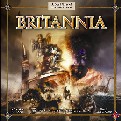
Physical description of Britannia 2, using advanced copy sent to me by FFG before they'd received their shipment (which they're going to modify).
I noticed, and my wife saw immediately, that the box doesn't close properly, in the sense that the top doesn't come all the way down over the bottom. That turns out to be a problem caused by the cardboard insert, which is too high. This is the insert that will be replaced (perhaps by one that has four compartments rather than one for storing pieces, as well--we can hope).
The box is 11 by 11 inches, and would be 2.75 inches thick if it closed all the way.
The board is six sections each 11 by 11 for a total of 22 by 33 inches. It is mounted on folding hard cardboard, the six sections together about five eighths inch thick.
There are four counter sheets each 11 by 11 (see the pattern?). The four sheets together are three eighths inch thick (thicker than the old pieces, I think). Standard pieces are seven eighths inch square with slightly rounded corners. Leaders are shield-shaped (like the shield used for heraldry), 1.25 inches long and 15/16 inches wide. Round pieces (mainly the point counters) are 13/16 inches in diameter. As with the original games, the pieces are individually cut (unused cardboard between each piece), not mass-cut as with many old-time wargames. They are printed on both sides.
There are 251 pieces, I'm told (I didn't count).
The rules are 24 pages, 11 by 11 inches.
The nation cards are 5 by 7 inches on quite thin stock, much like photographic paper. I believe these are going to be replaced with more sturdy stock.
There are five dice, five eighths inches square, made of wood, surprisingly.
Physical description of Britannia 2, using advanced copy sent to me by FFG before they'd received their shipment (which they're going to modify).
I noticed, and my wife saw immediately, that the box doesn't close properly, in the sense that the top doesn't come all the way down over the bottom. That turns out to be a problem caused by the cardboard insert, which is too high. This is the insert that will be replaced (perhaps by one that has four compartments rather than one for storing pieces, as well--we can hope).
The box is 11 by 11 inches, and would be 2.75 inches thick if it closed all the way.
The board is six sections each 11 by 11 for a total of 22 by 33 inches. It is mounted on folding hard cardboard, the six sections together about five eighths inch thick.
There are four counter sheets each 11 by 11 (see the pattern?). The four sheets together are three eighths inch thick (thicker than the old pieces, I think). Standard pieces are seven eighths inch square with slightly rounded corners. Leaders are shield-shaped (like the shield used for heraldry), 1.25 inches long and 15/16 inches wide. Round pieces (mainly the point counters) are 13/16 inches in diameter. As with the original games, the pieces are individually cut (unused cardboard between each piece), not mass-cut as with many old-time wargames. They are printed on both sides.
There are 251 pieces, I'm told (I didn't count).
The rules are 24 pages, 11 by 11 inches.
The nation cards are 5 by 7 inches on quite thin stock, much like photographic paper. I believe these are going to be replaced with more sturdy stock.
There are five dice, five eighths inches square, made of wood, surprisingly.
Wednesday, January 04, 2006
I should say something about late changes in any game, anywhere, anytime:
Experienced game designers know that *any* change in a game, whether in actual rules or in how the rules are written, can have unanticipated effects whether due to unexpected/unforeseen interaction with other rules or simple misunderstanding. Last-minute, untested, changes in rules are *poison*.
It was inevitable in the case of Brit 2 that when the rules were rewritten at the publishers in major ways (though with no intent to change the game), under a deadline, there would be glitches through misunderstanding and through sheer human error (typos and such).
This is much like making last-minute changes in a computer program. Writing rules is much like writing a computer program insofar as there will be "bugs", some of which may never actually rear their ugly heads, some that will be more often encountered. The last version you *tested* is the version that should be put into use, not one in which further changes have been made.
Yet those of you who play video games know that many are issued with so many bugs that they are not really completely playable until the first patch is issued. (Which makes for interesting problems in console games, where patches are sometimes not possible.) What happens is, companies need to get their stuff to market so that they can make money, and there is every incentive to rush a bit and get it out earlier rather than later.
In Britannia 2's case, changes were made in the rules because they were rewritten, but if they were tested in the new form, they were not tested much, and probably not in a "blind" environment (using people who had no previous experience of the new rules). An obvious example is the use of counters for scoring. I think the counters are useful insofar as they help people use "hidden" scoring, if they wish, but I'm also sure most people who use a scoresheet will then prefer it. Whatever your opinion, though, you have to recognize that little or no testing of the use of scoring counters occurred.
Now this situation, little or no testing of changes, is the norm in non-video game publishing, not the exception. And that's one reason why we have so many games with misunderstood rules or rules that simply don't work. The more complex the game, the more bugs there will be; even though Brit is usually characterized as a "light wargame", it's still fairly complex in its rules compared to many games popular today (such as "Euro" games).
To go full circle: designers know that new rules MUST be thoroughly tested; but publishers rarely test the late changes they make to a game. What designers hope for is that the new rule bugs won't mess the game up too much. In Brit 2's case I think we're in very good shape in that regard, and much better off than we were with the Avalon Hill version.
Experienced game designers know that *any* change in a game, whether in actual rules or in how the rules are written, can have unanticipated effects whether due to unexpected/unforeseen interaction with other rules or simple misunderstanding. Last-minute, untested, changes in rules are *poison*.
It was inevitable in the case of Brit 2 that when the rules were rewritten at the publishers in major ways (though with no intent to change the game), under a deadline, there would be glitches through misunderstanding and through sheer human error (typos and such).
This is much like making last-minute changes in a computer program. Writing rules is much like writing a computer program insofar as there will be "bugs", some of which may never actually rear their ugly heads, some that will be more often encountered. The last version you *tested* is the version that should be put into use, not one in which further changes have been made.
Yet those of you who play video games know that many are issued with so many bugs that they are not really completely playable until the first patch is issued. (Which makes for interesting problems in console games, where patches are sometimes not possible.) What happens is, companies need to get their stuff to market so that they can make money, and there is every incentive to rush a bit and get it out earlier rather than later.
In Britannia 2's case, changes were made in the rules because they were rewritten, but if they were tested in the new form, they were not tested much, and probably not in a "blind" environment (using people who had no previous experience of the new rules). An obvious example is the use of counters for scoring. I think the counters are useful insofar as they help people use "hidden" scoring, if they wish, but I'm also sure most people who use a scoresheet will then prefer it. Whatever your opinion, though, you have to recognize that little or no testing of the use of scoring counters occurred.
Now this situation, little or no testing of changes, is the norm in non-video game publishing, not the exception. And that's one reason why we have so many games with misunderstood rules or rules that simply don't work. The more complex the game, the more bugs there will be; even though Brit is usually characterized as a "light wargame", it's still fairly complex in its rules compared to many games popular today (such as "Euro" games).
To go full circle: designers know that new rules MUST be thoroughly tested; but publishers rarely test the late changes they make to a game. What designers hope for is that the new rule bugs won't mess the game up too much. In Brit 2's case I think we're in very good shape in that regard, and much better off than we were with the Avalon Hill version.
Tuesday, December 20, 2005
Most of the forums and listservs I check have gone very quiet beginning early December. It's remarkable how much the season and end of year affect people.
At Rick Steeves' last Friday I played "Pitch Car", an audacious French game that is "caroms on a wooden racetrack", more or less. You flick a wooden disk around a race track (the track cna be set up many ways) in competition with others. Everyone walks around the table trying to get the angle to get ahead when he shoots. There are railings on the curves (Rick doesn't use the railings for the straights) to help keep your "racecar" on the track and going around the curves. (And if you don't get the reference to "caroms", most people under 40 seem to have never heard of it.)
The set is quite expensive, as the wooden track is very substantial and well-made. I won all three races I was in, so naturally I liked it!
I watched a game of Citadels, a clever card game. It probably has a slightly stronger connection to reality than most "Euro" games, but the result is the same--you admire the cleverness of the mechanics rather than the cleverness of the depiction of reality (which is what you get in historical games).
Another game of Seas of Gold was played as well. The near-simultaneous rules worked well, the economic tweaks worked well, the game is nearly finished (but I've said that before).
At Rick Steeves' last Friday I played "Pitch Car", an audacious French game that is "caroms on a wooden racetrack", more or less. You flick a wooden disk around a race track (the track cna be set up many ways) in competition with others. Everyone walks around the table trying to get the angle to get ahead when he shoots. There are railings on the curves (Rick doesn't use the railings for the straights) to help keep your "racecar" on the track and going around the curves. (And if you don't get the reference to "caroms", most people under 40 seem to have never heard of it.)
The set is quite expensive, as the wooden track is very substantial and well-made. I won all three races I was in, so naturally I liked it!
I watched a game of Citadels, a clever card game. It probably has a slightly stronger connection to reality than most "Euro" games, but the result is the same--you admire the cleverness of the mechanics rather than the cleverness of the depiction of reality (which is what you get in historical games).
Another game of Seas of Gold was played as well. The near-simultaneous rules worked well, the economic tweaks worked well, the game is nearly finished (but I've said that before).
Tuesday, December 13, 2005
While Brit 2 is being sold in Finland and Germany, I'm told by FantasyFlight that there is a problem with the plastic trays produced for the game, and it will not be issued from FFG until this is rectified, at the end of January 2006.
I am having a good time with the "one hour wargame", which is working out pretty well as a new "system" related to Seas of Gold (TM) but still rather different from it.
My first taks next Tuesday (start of Christmas break) is to play Caledonia(TM) and try to sort it out.
I am having a good time with the "one hour wargame", which is working out pretty well as a new "system" related to Seas of Gold (TM) but still rather different from it.
My first taks next Tuesday (start of Christmas break) is to play Caledonia(TM) and try to sort it out.
Monday, December 12, 2005
I hear of one person who has bought Britannia Second Edition in . . . Finland! It is also supposed to be in stock at German retailers.
Having had time to think about it, I suppose that the reason the game is first available in Finland and Germany is that it was shipped from East Asia, past India into the Red Sea, then the Med and perhaps Black Sea, to be trucked through eastern Europe (hence France and UK should have it in a few days).
Berlin to Hong Kong as the crow flies is 5,512 miles. (Helsinki is 4934, but again that's straight, not by sea then land.) Hong Kong to Minneapolis is 7,508 miles, but there are fewer corners to turn. So how long will the extra miles take? Dunno. Then it has to go from
Minneapolis to distributors to retailers in this country, another long trip.
At least many people will be able to have it for Christmas, if they wish.
I've played the "one hour wargame" (Eurowargame) three times and am pretty pleased so far. You don't have to be warlike to do well, but it probably helps.
Having had time to think about it, I suppose that the reason the game is first available in Finland and Germany is that it was shipped from East Asia, past India into the Red Sea, then the Med and perhaps Black Sea, to be trucked through eastern Europe (hence France and UK should have it in a few days).
Berlin to Hong Kong as the crow flies is 5,512 miles. (Helsinki is 4934, but again that's straight, not by sea then land.) Hong Kong to Minneapolis is 7,508 miles, but there are fewer corners to turn. So how long will the extra miles take? Dunno. Then it has to go from
Minneapolis to distributors to retailers in this country, another long trip.
At least many people will be able to have it for Christmas, if they wish.
I've played the "one hour wargame" (Eurowargame) three times and am pretty pleased so far. You don't have to be warlike to do well, but it probably helps.
Saturday, December 10, 2005
The listservs and design boards seem to go dead at this time of year.
I have finally played the "one hour wargame", four players, worked pretty well but needs the Event Cards (which I didn't use). In some ways the game resembles a very-much-modernized version of Diplomacy, in other ways not (obviously, if it's intended to last just an hour). The diplomatic system may be too rigid, that is, once a war starts, it may tend to lock in. Scoring systme works well, but I've revised the Progress/Culture/Well-being to require supplies.
Anyway, I'm ready for another go with the revisions, but with work things hanging over my head, I don't know when that will be.
This must be the first game I've solo played in a couple months. Hellenia(TM) will be the next game to be soloed, I think. It's always an exciting time, the first play of a new game...
I have been taking some notes about "one hour" with the idea that I'd use them to illustrate the development of a game in a design book. Of course, the "one hour" idea goes back to Germania(TM) and through Seas of Gold(TM), and there are resmblances between SoG and this new one.
I have finally played the "one hour wargame", four players, worked pretty well but needs the Event Cards (which I didn't use). In some ways the game resembles a very-much-modernized version of Diplomacy, in other ways not (obviously, if it's intended to last just an hour). The diplomatic system may be too rigid, that is, once a war starts, it may tend to lock in. Scoring systme works well, but I've revised the Progress/Culture/Well-being to require supplies.
Anyway, I'm ready for another go with the revisions, but with work things hanging over my head, I don't know when that will be.
This must be the first game I've solo played in a couple months. Hellenia(TM) will be the next game to be soloed, I think. It's always an exciting time, the first play of a new game...
I have been taking some notes about "one hour" with the idea that I'd use them to illustrate the development of a game in a design book. Of course, the "one hour" idea goes back to Germania(TM) and through Seas of Gold(TM), and there are resmblances between SoG and this new one.
Sunday, December 04, 2005
After reading Warriors of the Steppe, I was inspired to complete the Central Asia map.
I seem to be sending a fair number of things to Boardgamedesign, boardgamegeek, and BGDF, connected with the possible game design book. But this kind of thing can always soak up time without much result; I need to write some proposals.
One Caledonia PBEM test has finished. Not much testing otherwise.
I seem to be sending a fair number of things to Boardgamedesign, boardgamegeek, and BGDF, connected with the possible game design book. But this kind of thing can always soak up time without much result; I need to write some proposals.
One Caledonia PBEM test has finished. Not much testing otherwise.
Friday, December 02, 2005
I am working toward the elusive "one hour wargame", and Euro/wargame crosses in general. My games tend to be longer than an hour, however (they are usually multiplayer), so I've made a list of techniques to reduce the length of a game. There is not much exposition here, but I thought you might be interested, and might think of additional methods:
Limit to two players
"Time" limit
Actual Time
Turns/hands (is a natural for some historical games)
Expenditure of something (such as a deck of cards)
Play to a certain number of points
Simultaneous action. (reduce the time it takes to do something)
Simultaneous plays (or nearly so)
Real-time (anyone acts anytime)
(The "norm" is turns)
Reduce the number of pieces the player must manipulate/keep track of/plan for
In some race games, each player has only one piece
In most card games players have few "pieces" (the cards)
Traditional games often have few pieces (12 each in checkers, max 5 in Tic-Tac-Toe)
Multiple victory conditions--if you can win more than one way, the victory may come more quickly
Avoid the need to write anything down or calculate anything
Avoid the need for any record-keeping outside of the pieces/board/cards themselves
Resolve any conflict quickly (no interminable dice rolling, for example)(no calculations required)
Limit the time spent managing resources (economy--way to acquire new pieces)--which may mean, have no economy
Information: either make much of the information available so that players won't have to wonder/ponder what's going on, or make almost no information available so the player cannot profitably use information to make an analysis
In many card games, little information is available
The same can be said for many role-playing games
How to reduce "analysis paralysis? Even games with fairly simple rules (chess) can profitably be analyzed for long periods. I'm not sure what you can do about this, nor am I certain that you need to--"analysis paralysis" is practically a personality trait that tends to show up regardless of the game, unless it is dominated by chance.
Limit to two players
"Time" limit
Actual Time
Turns/hands (is a natural for some historical games)
Expenditure of something (such as a deck of cards)
Play to a certain number of points
Simultaneous action. (reduce the time it takes to do something)
Simultaneous plays (or nearly so)
Real-time (anyone acts anytime)
(The "norm" is turns)
Reduce the number of pieces the player must manipulate/keep track of/plan for
In some race games, each player has only one piece
In most card games players have few "pieces" (the cards)
Traditional games often have few pieces (12 each in checkers, max 5 in Tic-Tac-Toe)
Multiple victory conditions--if you can win more than one way, the victory may come more quickly
Avoid the need to write anything down or calculate anything
Avoid the need for any record-keeping outside of the pieces/board/cards themselves
Resolve any conflict quickly (no interminable dice rolling, for example)(no calculations required)
Limit the time spent managing resources (economy--way to acquire new pieces)--which may mean, have no economy
Information: either make much of the information available so that players won't have to wonder/ponder what's going on, or make almost no information available so the player cannot profitably use information to make an analysis
In many card games, little information is available
The same can be said for many role-playing games
How to reduce "analysis paralysis? Even games with fairly simple rules (chess) can profitably be analyzed for long periods. I'm not sure what you can do about this, nor am I certain that you need to--"analysis paralysis" is practically a personality trait that tends to show up regardless of the game, unless it is dominated by chance.
Thursday, December 01, 2005
I've posted "one page What's important when designing a game" several places, have to put it on my Web site.
Sweep of History Gmaes Magazine issue 1 is available at:
http://www.pulsipher.net/sweepofhistory/Sweep1.htm
http://www.pulsipher.net/sweepofhistory/SweepofhistoryGames1.pdf
I put a feedback survey address in there, and have had virtually no responses, which I suppose might mean few people are reading the magazine. At this point, *shrug*.
I'm reading "Warriors of the Steppe", for Barbaria(TM), the Central Asia game, maybe others such as Europa(TM).
Sweep of History Gmaes Magazine issue 1 is available at:
http://www.pulsipher.net/sweepofhistory/Sweep1.htm
http://www.pulsipher.net/sweepofhistory/SweepofhistoryGames1.pdf
I put a feedback survey address in there, and have had virtually no responses, which I suppose might mean few people are reading the magazine. At this point, *shrug*.
I'm reading "Warriors of the Steppe", for Barbaria(TM), the Central Asia game, maybe others such as Europa(TM).
Thursday, November 24, 2005
I've spent Thanksgiving evening putting together the first issue of Sweep of History Games Magazine. The software has behaved itself (as well as can be expected), and I've got 14,000 words in 38 pages! Thanks to Torben and David it is much larger than I'd hoped. I still have to create the feedback survey and reference that, then (I hope) be done with it.
I've taped together the very long and narrow Hellenia (TM) map. But I don't know when I'll be able to play.
I've taped together the very long and narrow Hellenia (TM) map. But I don't know when I'll be able to play.
Tuesday, November 22, 2005
Lst Friday I went to Rick Steeves' monthly game night, and managed to have Seas of Gold(TM) (2 players) and Enchanted Labyrinth(TM) (3 players) tried. The "simultaneous" (mostly) method worked well in SoG, but Rick, who is the most experienced player after myself, preferred five rounds of five cards to the shorter four rounds of six. More PT required; I think I'll try reducing the island trade values by one and increase the initial value of trading to the North.
EL worked fine. The problem with that game is marketing, as the idea sounds too much like other things, even though it is in fact unusual.
Otherwise, the Hellenia (TM), Barbaria (TM), and even a Middle Eastern version of Brit have been taking what little time I have.
EL worked fine. The problem with that game is marketing, as the idea sounds too much like other things, even though it is in fact unusual.
Otherwise, the Hellenia (TM), Barbaria (TM), and even a Middle Eastern version of Brit have been taking what little time I have.
Sunday, November 13, 2005
I'm not a denizen of Consimworld (I think my games are representations rather than simulations, though some people disagree). It has been recommended to me as a place to publicize Brit 2 and so forth. I've nosed around a few times, and a few weeks ago, noticing that magazines have areas in the forum, I wrote to John Kranz about "Sweep of History" magazine. Haven't got a reply, however, not even a "you're not a real magazine". I had thought about coughing up $18 for the privilege of posting at CSW, but that put me off a bit, and so did the (non) reaction to a "news" item I submitted--one I thought might not be regarded as suficiently worthy, but OTOH I'd think it might warrant the courtesy of a response.
Somehow I'm not impressed so far.
I publicized the Brit survey on Boardgamegeek and immediately got about one third of the total respondents (now at 39) coming in, I assume from that notice. So I posted my "Fundamental Structures of Games" there, and got some useful comments.
Somehow I'm not impressed so far.
I publicized the Brit survey on Boardgamegeek and immediately got about one third of the total respondents (now at 39) coming in, I assume from that notice. So I posted my "Fundamental Structures of Games" there, and got some useful comments.
Saturday, November 12, 2005
The seven (or eight) structural subsystems of any game (video or non-video):
A game can be thought of as a system (as in "systems analysis", for the computationally inclined). What I'm trying to achieve is a list of the fundamental sub-systems that are necessarily a part of any game. This list may help novice designers, because if they think about all seven of these systems as they rough out their game, this will help them conceptualize and arrive at a playable idea.
I want a framework that will help a novice designer think about games. There are other ways to analyze the fundamentals of games, e.g. in terms of states and changing state, but I don't believe that point of view helps new designers much.
This scheme is related to games that are models of something (often, of some reality); I have not tried to include sports, such as football or basketball, in which people participate bodily. The systems should apply to a tabletop sports game, but perhaps not to the sport itself.
If one of these systems is completely missing, you might have a toy or puzzle, but not a game. For example, in Katamari Dimachy (sp?) there are no victory conditions, and you have a toy. Sometimes the system is assumed, but still a decision has been made about the category. For example, in Tic-Tac-Toe there is no acquisition of resources, but it still has an economy of "none"--it could have a way to gain resources, and there may be variations where you do.
I've tried to list these subsystems in an apparently-logical order, but every one is just as necessary as every other one.
Objective/victory conditions. In other words, what causes one player to win, (and what causes the game to end)? Role-playing games have no end, but do have objectives: usually to acquire experience points and (magic) items. The game ending can be arbitrary ("play five rounds", yet there will still be a way to determine the winner at that point.
“Data storage”. (Information Management?) Something has to record the current state of the game. This is often a board/map. In Tic-Tac-Toe, it's the nine-box layout. In card games, the layout of the cards on the table, and the cards themselves, store data. Pieces can store data, in particular the traditional cardboard pieces of wargames that contain movement, attack, and defense values. A detailed map stores LOTS of data.
Sequencing. In what order do things happen? "Simultaneously" can be the answer, but taking turns is the norm in non-video games. Even in video games that appear to be simultaneous, there is usually a hidden non-simultaneous sequence (as that is the nature of most computing).
Movement/Placement. Players generally manipulate something, most often pieces on a board or cards in their hand or on the table. Chess and checkers have movement rules, the Asiatic game Go has placement rules. Movement/placement one at a time is the norm. Even paper-rock-scissors has movement (as well as sequencing) rules.
Information availability. What information about the game available to all players? In traditional boardgames all information is available, but in card games information is largely hidden. Five-card draw poker has a lower level of information availability than Texas Hold 'Em, because in the latter you see some of the cards "held" by the other players.
Conflict resolution/interaction of player-controlled entities. What happens when an action of a player leads to a conflict? This can be as simple as in Tic-Tac-Toe (conflict is not allowed, you can't place your mark where the other player already has one), or it can be simple as in chess (when a conflict occurs, the moving player always wins). In checkers you jump a man in a conflict. In Go you surround stones to capture them.
You can argue that Tic-Tac-Toe has no conflict rules, that movement rules govern where markers can be placed; but in this view a choice has still been made, that there will be no conflict. It is possible to have a game without conflict, such as a race game or many card games. There's no conflict in Solitaire, either.
"Economy" (Resources). How are new pieces/capabilities acquired? Some games have no way to acquire these, but that is still a decision made about the game. Even games that don't appear to have an Economy have some elements, for example, in chess you can promote ("queen") a pawn, and in checkers you can make a king. Many modern games, especially many computer games, are economic/resource management games.
Originally that was the extent of my list. I may want to include an eighth:
Player Interaction rules. What governs how the players interact with one another. For example, in a multi-player game, are negotiations allowed? Physical intimidation? (The answer to that is almost always "No", but it is a decision, and I have seen games that involved physical intimidation...) Some people might include this in Conflict resolution/interaction.
This is an "ongoing" work. Any comments?
Lew Pulsipher
A game can be thought of as a system (as in "systems analysis", for the computationally inclined). What I'm trying to achieve is a list of the fundamental sub-systems that are necessarily a part of any game. This list may help novice designers, because if they think about all seven of these systems as they rough out their game, this will help them conceptualize and arrive at a playable idea.
I want a framework that will help a novice designer think about games. There are other ways to analyze the fundamentals of games, e.g. in terms of states and changing state, but I don't believe that point of view helps new designers much.
This scheme is related to games that are models of something (often, of some reality); I have not tried to include sports, such as football or basketball, in which people participate bodily. The systems should apply to a tabletop sports game, but perhaps not to the sport itself.
If one of these systems is completely missing, you might have a toy or puzzle, but not a game. For example, in Katamari Dimachy (sp?) there are no victory conditions, and you have a toy. Sometimes the system is assumed, but still a decision has been made about the category. For example, in Tic-Tac-Toe there is no acquisition of resources, but it still has an economy of "none"--it could have a way to gain resources, and there may be variations where you do.
I've tried to list these subsystems in an apparently-logical order, but every one is just as necessary as every other one.
Objective/victory conditions. In other words, what causes one player to win, (and what causes the game to end)? Role-playing games have no end, but do have objectives: usually to acquire experience points and (magic) items. The game ending can be arbitrary ("play five rounds", yet there will still be a way to determine the winner at that point.
“Data storage”. (Information Management?) Something has to record the current state of the game. This is often a board/map. In Tic-Tac-Toe, it's the nine-box layout. In card games, the layout of the cards on the table, and the cards themselves, store data. Pieces can store data, in particular the traditional cardboard pieces of wargames that contain movement, attack, and defense values. A detailed map stores LOTS of data.
Sequencing. In what order do things happen? "Simultaneously" can be the answer, but taking turns is the norm in non-video games. Even in video games that appear to be simultaneous, there is usually a hidden non-simultaneous sequence (as that is the nature of most computing).
Movement/Placement. Players generally manipulate something, most often pieces on a board or cards in their hand or on the table. Chess and checkers have movement rules, the Asiatic game Go has placement rules. Movement/placement one at a time is the norm. Even paper-rock-scissors has movement (as well as sequencing) rules.
Information availability. What information about the game available to all players? In traditional boardgames all information is available, but in card games information is largely hidden. Five-card draw poker has a lower level of information availability than Texas Hold 'Em, because in the latter you see some of the cards "held" by the other players.
Conflict resolution/interaction of player-controlled entities. What happens when an action of a player leads to a conflict? This can be as simple as in Tic-Tac-Toe (conflict is not allowed, you can't place your mark where the other player already has one), or it can be simple as in chess (when a conflict occurs, the moving player always wins). In checkers you jump a man in a conflict. In Go you surround stones to capture them.
You can argue that Tic-Tac-Toe has no conflict rules, that movement rules govern where markers can be placed; but in this view a choice has still been made, that there will be no conflict. It is possible to have a game without conflict, such as a race game or many card games. There's no conflict in Solitaire, either.
"Economy" (Resources). How are new pieces/capabilities acquired? Some games have no way to acquire these, but that is still a decision made about the game. Even games that don't appear to have an Economy have some elements, for example, in chess you can promote ("queen") a pawn, and in checkers you can make a king. Many modern games, especially many computer games, are economic/resource management games.
Originally that was the extent of my list. I may want to include an eighth:
Player Interaction rules. What governs how the players interact with one another. For example, in a multi-player game, are negotiations allowed? Physical intimidation? (The answer to that is almost always "No", but it is a decision, and I have seen games that involved physical intimidation...) Some people might include this in Conflict resolution/interaction.
This is an "ongoing" work. Any comments?
Lew Pulsipher
Friday, November 04, 2005
Owing to the results thus far of my poll about Brit subjects, I've started a Roman-Empire game, and I've resurrected my notes about "Diadochi" and turned it more toward Brit.
No playtesting going on locally lately, unfortunately. I've been tied up with domstic things, too. I am not finding time to play any of the new games.
No playtesting going on locally lately, unfortunately. I've been tied up with domstic things, too. I am not finding time to play any of the new games.
Subscribe to:
Posts (Atom)