





 Posts


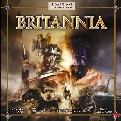
In describing Britannia to potential players, I often say it has a chess-like quality. You have to pay attention throughout the game, as losing out on a few points in the first few turns can mean the difference between winning and losing many turns later. It is a game that rewards some planning, though owing to the variability of combat, you also have to react to surprises from the dice as well as from the players.
In chess you can survive going down a pawn early in the game, but if you really screw up and go down a rook or queen, you've had it. Similarly in Britannia, if you make a big error--say, as the Welsh, fighting the Romans to the death instead of submitting--then you can't win the game, and face hours having to deal with that.
While some people play games to enjoy the process, the journey, some play to win, and don't care to play when they feel they cannot win. In chess you can resign (surrender) and play another game, not easy to do gracefully when there are three other players instead of one.
This chess-like quality is quite in contrast to many Euro-style games, where you can more or less foul up throughout the first half or more of the game and still have some chance to win in the end. Insofar as many Euro games are "family games on steroids", this characteristic is to be expected.
The presence of chance, variability, in the combat, takes Britannia away from the chess analogy, thank heaven. (For me, chess is "too much like work".) Whether there's "too much luck" is a matter for disagreement. In my online survey, about 75% of players think the amount of luck is OK, and most of the rest think there should be less. In my prototypes I generally have adopted methods with less chance, some of them diceless though not deterministic. I hardly ever consider using the original combat method in new games. (Then again, I was known to say 30-some years ago "I hate dice games", but then I came onto D&D and designed Britannia and other games that use dice...)
I think expert Brit players would say that bad luck can be managed, as long as there isn't a really long run of bad luck. Less expert players often think the game can revolve around a few rolls. To my mind, most rolls in Britannia are not important out of proportion, unless someone is desperately trying to kill a rival king in the endgame. Dice can be managed in Brit just as they can be managed in D&D. "What?" Yes, in (first edition) D&D you can try to minimize the number of times you MUST get lucky. This is the same as how you ought to manage life, trying to avoid times when you MUST get lucky. So smart people wear seatbelts, some people don't. Smart people exercise, some people don't. Smart people don't smoke, some people do. And so forth.
I have changed the combat methods in prototypes in part because I want to reduce chance, but also because I tend to aim at shorter games with fewer pieces. This means less fighting, and each fight is magnified in importance, so I want to reduce the effects of chance on each fight. I've devised a number of 4-8 turn Britannia scenarios, and it's noticeable how much more important the dice rolls are in these much-shorter games, simply because there are fewer rolls over the course of the game. (I've never quite actually counted, but IIRC there's something like 800 dice rolls in a Brit game.)
Example: players who do lots of one-on-ones with the Romans are taking unnecessary risks, I think--living on borrowed time. I try to avoid it. I think a conservative Roman can still score his 80 by round 3, and have more Roman armies left to defend his holdings. Yeah, "fortune favors the bold", but sometimes you don't have to be bold and can still get the job done.
There are three prominent alternative methods: one uses battle cards to add to the strength of combatants, and each player has an identical deck of 25 cards (five in hand). Over the course of a game, then, the "luck" each player has will be about the same, because they have identical decks. A second method uses "picture dice" (which are really just marked with the equivalent of 4, 5, and 6 when you come down to it), each army rolls two dice, and two hits are required to kill an army. The third method uses a table. One table "evens out" luck quite strongly, another not as much. The first cross-references the number of armies and a die roll, the second uses odds (but all possible odds are listed on the table, so that players don't have to figure out odds--people aren't used to doing division in their heads any more). People like picture dice and cards. Wargamers are more used to tables. All of these methods have been extensively playtested, and all of them work, but accomplish somewhat different objectives and have different expenses (200 cards, for example).
Tuesday, June 17, 2008


Monday, June 16, 2008
Three player difficulties
I am working on the "Gateway" version of Normannia--have played twice, seems to work despite being on a larger board (33 areas) to accommodate the bigger diceless version. Now I'm looking at a three player version, but whenever I do this I seem to run into problems with nation interaction. It's very difficult to avoid strange interactions with three players. It reminded me of the "four color map" problem.
"The four color theorem (also known as the four color map theorem) states that given any plane separated into regions, such as a political map of the states of a country, the regions may be colored using no more than four colors in such a way that no two adjacent regions receive the same color. Two regions are called adjacent only if they share a border segment, not just a point. Each region must be contiguous (http://en.wikipedia.org/wiki/Contiguity): that is, it may not have exclaves (http://en.wikipedia.org/wiki/Exclave) like some real countries such as Angola (http://en.wikipedia.org/wiki/Angola), Azerbaijan (http://en.wikipedia.org/wiki/Azerbaijan), Italy (http://en.wikipedia.org/wiki/Italy), the United States (http://en.wikipedia.org/wiki/United_States), or Russia (http://en.wikipedia.org/wiki/Russia)."
http://en.wikipedia.org/wiki/Four_color_theorem
I'm trying to do the same to accommodate just three players, and it's very difficult to do. Even without the "petty diplomacy problem"--that one player, if he decides he cannot win, can determine which of the other two can win--it makes three player strategic map-based games difficult in general.
There are ways to overcome the petty diplomacy problem, and if you have just three nations you can have three players, but when you start trying to use many nations, it becomes really difficult to do well.
Tuesday, May 27, 2008
Ruminations
I've just realized a difference between electronic games and non-electronic games: if you design a really good non-electronic game, there's a good chance it will still be played 20 years from now, might even still sell 20 years from now. In the video game world, games become obsolete because of advances in the computational platforms. A game might be played 20 years after it was released, but it almost certainly won't sell 20 years after.
Here is an expression of why I prefer in-person gaming: "There is nothing on the planet more entertaining than other people." Jordan Weisman
That element of "other people" is partly or entirely lost in electronic games, even MMOs.
Friday, May 09, 2008
Avoiding piracy and effects of technology
I've been reading about the conventional reason given for publishers' lack of interest in PC video games. They believe that piracy is so rampant that they can't sell many games, compared with console sales where piracy is much harder (and I'd add, many users are much less technically adept). However, some people think the real problem is that many PC games require such high-end hardware that the actual pool of potential buyers is small, and there has to be some truth in that. And the people with the high-end systems are usually the ones most capable of pirating the software.
Boardgames have faced the problem of piracy--I've heard of hand-made and photocopies of stuff I've published, and Diplomacy was pirated in Brazil wholesale at one time (they added a supply center in Tunisia, otherwise the same game). In the modern era of scanning and digital cameras it becomes relatively easy to make copies of boards and rules. So how have boardgames changed to make this less of a threat? First, the games provide lots of "bits" (pieces) of thick cardboard, but often 3 dimensional wood or plastic, sometimes even plastic figures. In Euro-style games the boards are often mounted. There are even gimmicks such as spinners and dice towers that cannot practically be pirated. Finally, flashy color art is less easy to pirate than old-style black and white.
In wargames there are fewer protections, but the pool of wargame buyers is so small that the typical hex historical game sells about two thousand copies, and piracy is uncommon. "Block games" have become popular, and they have the 3 dimensional block pieces and the stickers for the blocks, all being more difficult to pirate than ordinary cardboard counters.
At the same time, most game companies post game rules online. The rules become an advertisement for the game, not a piracy threat. Usually the cards, which are common, are not posted online by the publisher, though there are exceptions. The Britannia nation cards are not on FFG's Web site, but photos might be found at places like Boardgamegeek (copyright violations overlooked by the publisher)
I'm going to bring in another comparison at some length, books and textbooks. It is only a matter of time to scan a book to an electronic copy. Scott Adams (author of Dilbert comics) complained that one of his books was available in pirated electronic version the day after it came out, and so he never pursued sales of an electronic version. As students more habitually carry laptops or "e-readers", the electronic version of a book can be used in class as well as outside of class.
However, as a college teacher I see students either not reading the textbook, or not even bothering to buy it. To folks of my generation a book was a treasure trove of information about a topic. Now we have the Internet, and hundreds of channels on cable and satellite. (I was lucky, I had three TV channels instead of two, and learned a lot from "20th Century" and "Mr. Wizard".) These provide information for "free". Want history? There's the History Channel and its competitors. Want science? Discovery Channel and many others. A lot of the information is pretty shaky these days owing to sensationalism and a lackadaisical attitude that turns fiction into truth, but there IS information. So why bother with a book, younger people ask.
Textbook publishers generally have depended on the structure of the business, that is, the teacher chooses a textbook, and the students are required to purchase the textbook, and then the teacher tests the students on the content of the textbook.
But we've reached different days. Even when typical students KNOW that by reading a textbook they can do much better on a test, THEY DON'T BOTHER by and large. Heavens, even when a practice test is available that will almost assure them of getting an "A", they don't bother to take it! And in the past year I've seen students not bother to buy a textbook, not because they have a pirated edition, but because they don't feel it's worth the money. (Students at elite schools like Duke still read books most of the time, but they are very much the exception.)
If I were a textbook company I'd be worried, even though, thanks to essentially monopoly pricing, a company can charge well over $100 for a widely-used (and consequently high print run) book. As I often say, if you put a textbook in a bookstore hardly anyone would buy it; which is why I try to use class books that DO sell well in bookstores, they are not only cheaper, they are usually more interesting.
Of course, what the bookstore books are missing is the paraphernalia of teaching, the questions and reviews and case studies and other pedagogical material that often isn't worth much anyway, in my view. But textbook companies are smart, they market to the teacher, not to the students, because the teacher selects the book (and can get a free copy of the textbook, but not of books sold in ordinary bookstores, mind you). In the end, teachers want books that will teach the class for them. (Not surprisingly, I am very much NOT that sort of teacher.) This is especially important for online/distance ed classes, which consist largely of learning from a book, not from a teacher. (And which I do not teach.)
Despite this, and despite the bizarre but increasingly common notion that people must take classes to learn things instead of reading books--usually not textbooks--I think the textbook companies are in trouble. But they may not quite know it.
Some people in the industry are experimenting with ways to make piracy a virtue rather than a problem. One company (freeloadpress) is putting advertisements in textbooks and distributing electronic versions for free. These are full-page full-color ads, usually in unobtrusive locations. The books can be purchased at reasonable prices in paper, I presume via publishing-on-demand technology. For example, the 140 page book I downloaded was less than $10 in paper. These folks are already in business and have some impressive title in their catalog.
Another company plans to sell the homework assignments, and hopes instructors will enforce the idea that if the student hasn't bought the homework assignments, the student cannot get credit for homework. I don't think they have a prayer, teachers aren't going to care about this.
Another company expects to sell ancillary products that support the books, such as study guides. Again, I don't see how this can work, and surely the ancillary products, if written, will be pirated.
This brings us back to video games. You may know that some games already have in-game advertising. If this becomes the primary support of a game, then the more copies made of a game, the better for the publisher. Also, some online games have gone to a modified free model. It's free to play the game, but there are ancillary, in-game benefits (such as cooler costumes for avatars) that cost small sums, and those small sums add up to large ones. There's no analog of "sell the homework", or I'd expect PC games to have experiments there.
Consoles in the long run may be susceptible to piracy, too, especially the computer wannabes (XBox 360 and PS 3). Once you have a DVD drive, you have the possibility that someone will figure out how to copy console games either on a modified console or on a PC.
Computer technology and the Internet have changed many business models. Some businesses have contracted mightily (travel agents, e.g.), some have appeared from nowhere. The boardgame business has changed in another way, because the competition from online game retailers makes it tough for many local game shops to continue, yet publishers don't sell enough online, by and large, to wish to see retail distribution from brick-and-mortar stores disappear (as it is slowly doing).
Chris Anderson argues that "the long tail" (the name of his book) means marginal/niche products will be more successful, yet others believe the "short-term mega-hit" phenomenon means those same products are less viable, not more. I understand that retailing of games changed with the collectible card games, because stores got used to products (CCGs and expansions) that sold very well for 90 days and then sold very little. Boardgames, especially wargames, sell via a different model, but stores aren't interested in keeping inventory of less-than-brand-new games in stock because of the CCG phenomenon. I think this is one reason why we see so many new boardgames, but most don't sell a lot or make much money (though a few mega-hits do). Something about the new edition of Britannia that really pleased me was the continued good level of sales (until it was sold out): one way or another it seemed to avoid the 90-day-wonder phenomenon.
Friday, April 25, 2008
Memorization
Young people seem to think it funny when they ask about a rule in one of my prototypes and I say "I don't remember". "But it's your game!" they say. Yes, but I have dozens of prototypes going, and I see no reason to remember all the rules--that's why I write them down. Further, if I rely on what's written, then I'll know that the way we're playing matches the way other people will ultimately be playing.
I have to remember as much as I can about the games that only have notes, not full rules--I don't write full rules until the game has been played several times. And at my age I have a lot more to remember than 20-somethings do. So I save my memory for what's important!
I am always a little fascinated by "designers" who say they're working on just one game. That certainly allows for full focus and full memorization of the rules, but given that the majority of games don't work out well, the more you work on, the more you're likely to have some that will "rise to the top". I try to approach it in a businesslike manner, the folks who design only one at a time certainly appear to be hobbyists only.
Tuesday, April 01, 2008
Favorite games--generational differences
I often attend the NC State Tabletop Gamers meetings, where everyone else is age 25 and under, making me incredibly old. Recently I asked the players what their favorite game is. With one exception (who heard my question and asked me to ask him), not a single one could name their favorite game. I've found this is often the case with game development students, too. As new games come out, they get interested in the new ones and lose much of their interest in the old ones. So they don't really have favorites. It's unusual for the same game to be played twice at the meetings (partly a matter of time), unusual for a person to play a particular game a second time in an evening. And most of the players are willing to "have a go" at games they have never heard of, let alone learned to play before the meeting.
This only shows once again that there is a big difference between generations. I can name all my favorite games from the time I started playing strategy games: Conflict briefly, then Broadsides, and at age 12 Stalingrad (and others from AH, though SG was "the" favorite). Age 18 introduced me to Diplomacy. Age 24, D&D. I played D&D for 29 years, then took three years off, and got back into designing games. I'd have to say my favorite now is Britannia, though I've never played a published version, always preliminary versions or variants.
My second favorites tended at one time to be video games, Empire Deluxe, Total Annihilation (played at SLOW speed!), Civilization 2, and Heroes of Might and Magic 2. Lately I haven't had much time to play video games. My second favorite now would be D&D (after Brit).
And like many people my age, I want to study the rules and the game before I play; I dislike being taught by another person how to play a game, because it's so likely that confusion will result.
I suspect the "cult of the new" has something to do with these differences between me and the NC State gamers. Nowadays people, especially young people, assume that whatever is newest is usually best. Older generations (and perhaps anyone with a lot of experience) realizes that "new" is not necessarily a recommendation.
Here's a question: if I have always had these favorite games, why do I design new ones? Some designers may design games so that they can enjoy playing them, but that's not my motivation. I design them first so that other people can enjoy playing them, and second as interesting intellectual exercises. I came back into designing games after a 20 year hiatus because I realized that of all the things I had done, the one that provided the most pleasure and stimulus to the most people is Britannia. And I wanted to do more. But as I design a ridiculous number of games, I find I'm doing it to "solve a problem", sometimes a problem related to history, sometimes a problem I manufacture, that is, to meet self-imposed constraints. For example, Law & Chaos is likely to be a very popular game once published, probably more popular than Britannia ever was, yet it began as a simple desire to make a game that uses glass beads for its only pieces.
I don't actually play the games, once published, so I clearly don't make them in order to play them myself. I don't even play them in playtest sessions, if there are enough other players, because I don't want to skew the results. Nonetheless, it's music to my ears to hear someone say "I love this game" or that they've played Britannia five hundred times (I sure haven't), or that Swords & Wizardry is their favorite boardgame.
Having said that, there's rarely anything so fascinating as playing a game I've designed for the first time. How will it work out, what will I need to change, will there "be anything in it"?
I have to confess that there are a few I've designed that I don't particularly enjoy playing, but other people do. That's partly a consequence of experience, partly of designing by constraints to see what I can work out. Game design is a vocation for me rather than a living, so I can do what I want, how I want it.
Gamasutra has an article discussing how much video games cater to "cult of the new" (not their words) rather than favorites to be played again and again:
http://www.gamasutra.com/php-bin/news_index.php?story=18301
Monday, March 24, 2008
Playing vs. Watching
I am known to some as a person who doesn't actually play boardgames, other than his own--but I do play the role-playing game Dungeons & Dragons. I don't even play my games once they're published, though I'll play variations. Except for D&D, I'm always interested in the design aspect of playing a game, that is, improving the designs I'm working on.
Moreover, playing a game that is less than top standard is too much like work. And some games (like chess) are too much like work in any case. I am much happier watching or reading the rules than suffering through playing.
When I used to play boardgames, I played "for blood", to win. But about age 25 I got to where I disliked the competitiveness, what it did to me, so I stopped playing competitive games. D&D is a cooperative game, at least the way I play it.
D&D is an aberration in other ways, too. The games I design tend to be grand strategic, often covering long periods, or they are abstract. In either case, there is no "role assumption", the player does not think of himself as a single individual. And I don't feel a need for role-assumption. Yet D&D is often highly tactical, and players represent single individuals. I hardly ever design a game like that. (It has to be said, when I got back into designing games I stopped playing D&D, and only recently started again--but that may have been a matter of availability of players rather than distraction of boardgames.)
At Rick Steeves' Game Night recently, I played my new dice game that uses Law & Chaos principles, to make up the numbers; I didn't play Warhamster Rally but learned a lot from watching and reading the rules, yet I didn't have to concentrate on it. (I'm designing a "Rocket Rally" game, sort of broad market using RoboRally principles, so I was quite interested in WHR.) I also watched part of a Forumula De game, very clever yet not offering something I can use in any game I'm working on--not yet, anyway. I also had a look at TransAmerica. I'm always looking for methods and ideas that might help me, yet most of the games played at Rick's are Euro types rather than wargames, and most of the games I design are at least in part wargames, certainly conflict games.
Sunday, March 23, 2008
Where variability comes from in a wargame
I've been thinking about where variability comes from in games, especially wargames.
Obviously, much of it comes from people, that is, from the opposition. And when there is more than one opponent, the variability becomes much less predictable. Some computer games try to reproduce some of this kind of variability, for example Civilization. In Civ IV the different "personalities" of the opponents are supposed to influence how they play.
It often appears to me that expert "Euro" game players are playing the players more than the system, though some of the more intricate mechanics mean the main point of effort is understanding and "controlling" the mechanic rather than understanding and "controlling" the people.
At any rate, here are some wargames and sources of variability:
Britannia--the combat system, that is, the dice rolls. In many of my Brit-like prototypes I'm trying to cut down on the randomness of the combat. Though 75% of the players think the amount of luck is OK, most others would like less luck. I laugh at people who say Brit is "too scripted", there seems to be great variation in what happens owing to both differing strategies and dice rolls. Freeform would make no sense in an historical game (note that Vinci and Risk, below, both freeform games, have NO element of history in them, absolutely none).
Vinci--the chit draws for the civilizations provide a random element. It is also very freeform. But mostly it is the people.
Risk--the combat system is the obvious variable, but even more, the territory cards and increasing reward for turning in sets; also there's the extremely freeform structure (you can go anywhere).
Diplomacy--there is occasional guessing in the tactics, but this game is almost entirely about people. Someday I may do a version of Dip stripped to its essentials, where there would be little or no tactical element, or perhaps a kind of a "Euro" version of Diplomacy (this might end up being two different games).
In most wargames, the dice rolling in combat is the main variable other than the people themselves. And that makes sense, combat is a very chancy business no matter how well-prepared you may be.
In many other games, especially those with little or no luck in the combat system, the Event Cards provide the variability. (E.g. Germania, Seas of Gold, Law & Chaos (yeah, that's not a wargame), etc.
Some games become "predictable" for lack of a random element other than the players--chess, checkers, Puerto Rico, etc. Yet when they are complex enough, there's still a lot of unpredictability. Checkers has been brute-force solved by computer, but that doesn't prevent people from playing.
I'm not sure where that gets us, but there it is.
Thursday, March 06, 2008
Keep it simple
While at PrezCon I saw many games, even many "Euro" games, with hundreds of bits, lots of different kinds of bits, and wondered why anyone wanted to try to make sense of all the cardboard chits and cards and money and... My friend Rick played an eight hour Axis & Allies game, with vast numbers and types of pieces. (I played A&A a lot solo at one time, the computer version, where I didn't have to mess so much with vast numbers of pieces.)
I realized then that I never have been much interested in games with hundreds of pieces. My early favorites were Milton Bradley games like Broadside, then I discovered Avalon Hill games but preferred such as Stalingrad (100 pieces) and Arfika Korps (likely not many more). Then I went on to Diplomacy (34 pieces), and finally D&D (a dozen pieces). Britannia and the other games I had published in the early 80s and earlier had fewer than 200 pieces, often less than 100. And even those games don't have more than an average of 55 or so pieces on the board at one time (Britannia).
Of course, I like "grand strategic" games, not tactical games (D&D is the aberration there), and at that level a lot of different categories of pieces doesn't make much sense. Maybe a game with hundreds of pieces but few categories would be all right, but I'd then say, what can we do with hundreds of pieces that we cannot similarly do with dozens? The A&A game reminded me of my stillborn WW II strategic game intended to provide the strategy of A&A without the length and number of pieces. So I may go back to that.
I have already played the "broad market" Brit (which is really a gateway Brit, not broad market, that needs to be a game with cards). And miraculously, I've already written a full set of rules. Followed by a full set for Frankia. Maybe I'm finally "off the snide".
Gary Gygax R.I.P.
Gary Gygax, one of the inventors of D&D, died recently.
I'd call Gary the developer of the game for sure, I know Dave Arneson originated the idea of having individuals interact with fantasy miniatures battles (which became Chainmail), as Dave wrote me a letter about it when I was editor of my Supernova fanzine. I don't know how it got from that to strictly individuals as we see in D&D.
I first corresponded with Gary in 1966. He was a leading light in the International Federation of Wargamers club, and about all I recall of that exchange is him saying he was too young to be called "Sir". And he was, then.
I only met him once or twice, at conventions, and had had no contact with him for many many years, but something like this is much like the feeling when sports heroes of your youth die (Micky Mantle!). You feel old.
Someone whose brain temporarily ceased to function at Boardgamenews wrote the following disrespectful if not plain stupid headline:
"Where’s a Cleric When You Need One? – Gygax Dies at Age 69"
They need to find a new headline writer.
D&D, the older, simpler version, is still my favorite game, and I recently started playing--well, reffing--again after a three year hiatus.
Sunday, March 02, 2008
Why I'm not an electronic game designer
Why would I want to design electronic games? I'm better off as is.
- The "AAA list" electronic games are really designed by committee. When I design a game, it is almost all MINE. (The rest is playtesters and publisher.)
- For most of the age of video games, you had to work full time in the industry, yet the pay was and is poor. I'd rather help young people as a teacher, get paid at least as well, and have lots of time to design games.
- The working hours are bad. "Crunch time" (unpaid overtime) is common, though designers are not involved in that quite as much as programmers and artists.
- Fighting with the electronics obscures the purity of design. You worry about what the computer can do instead of what the players can do.
Wednesday, February 27, 2008
PrezCon 2008
I attended the 15th annual PrezCon in Charlottesville, VA 21-24 February. Rick Steeves and I arrived later Thursday evening, PrezCon is a miniature WBC (World Boardgaming Championships), with the focus almost entirely on board (and card) game tournaments. Registered attendance was over 550. Justin Thompson, who runs the con, says it has grown larger every year.
PrezCon is purely boardgames and non-collectible card games--no role playing, no Magic or Yu-Gi-Oh, no "pure" miniatures (there was a Star Wars Minis tournament), no electronic games.
I don't go to conventions to play games, and I don't have much luck getting people to playtest because they're so busy with the official tournaments. Players pay a single fee and play as many tournaments as they can fit in, with wooden plaques for the winners. Most tournaments have two or three heats or rounds, then the most successful players play in a final.
GMT, Mayfair, Z-man, Cafe, and other game companies were there, but the vendors are a minor part of the convention compared with Origins. It really is a miniature WBC.
I've been at PrezCon every other year since 2004. I noticed this year that there seemed to be more kids (under18), and more folks in their 20s and 30s, and more females, though the most common demographic was still a gray-haired male. Some of those kids are offspring of the older folks, but the increase was certainly noticeable.
Early Friday I talked with Jason Hawkins (co-designer of Parthenon) at length about his elaborate but quite clever prototype game of Alexander's successors. I'm afraid Jason thought I was a curmudgeon with my questions about the complexity of it--I seem to be more and more into simple games these days rather than ones with a lot of detail. I also watched a bit of Richard Berg's prototype Dynasty (China) game being played, and skimmed the rules. Berg was also playing a cowboy game that he called a "growth game"--someone asked what had happened to him, as he's very well known for nuts-and-bolts wargames--but there was some gunslinging in it. Dynasty also appeared to be more about about growth than about war. Evidently Richard likes to write a full set of rules fairly early on, rather different from my typical practice (though I write the first-draft rules for quite simple games pretty early in the process).
The most useful thing I did was talk with Ron Magin of Cafe Games about my prototype Law & Chaos. He, Rick, and I played, and he then recommended to Pete, CEO of Mayfair Games, that he should try it. Pete talked at some length about where he has games printed (US, Germany, occasionally China, depending on what needs to be printed). The US has become cheaper than Germany owing to the high value of the Euro (or low value of the dollar, depends on how you look at it). Mayfair is one of the larger US publishers, in particular having the US franchise for Settlers of Catan, which sells in enormous numbers (six figures).
There was a small Britannia tournament, two rounds and then a final board, won again this year by Mark Smith in a tight game. About a third as many people participated as at WBC, which fits the attendance numbers (WBC is 1,500+ attendees).
Though I don't play at conventions, I look at lots of games in progress and talk with various people, and get a lot of good game ideas at a con. One in particular (using techniques from Law & Chaos) is likely to turn out well. Another is a space-themed, broader market, analog to Robo-Rally, my friend Rick's favorite game. Rick also played an eight hour Axis & Allies game, which reminded me of an old project I had to try to make a two hour WW II game that concentrated on the virtues of A&A (strategy) rather than its "unvirtues" (lots of dice, economy-driven, LONG). Many notes and much discussion took place, but I don't know if I'll get any further this time than last.
At the con I heard about a "broad market" (as opposed to mass market) version of a famous gateway game. That gateway game is quite simple, but this version is MUCH simpler, to appeal to a broader market--people who don't normally play boardgames at all except for Monopoly and such (I think), and who might buy them in places like Target or Macy's.
Just for the heck of it, I'm trying to develop a "broad market" version of Brit (the kind of thing that would sell with Risk and similar games). History may be too serious for a broad market, especially medieval British history, but it's an interesting exercise. I already have a "Brit Lite" version, and that can be played by casual gamers and video gamers, but I'm aiming at the sort of folks who might play Risk and Monopoly and checkers or chess, but not much else. I'm doing this for my own amusement, not with the idea of ever having it published.
Monday, February 25, 2008
"Broad market" Brit
At PrezCon this weekend I heard about a "broad market" version of a famous gateway game. That gateway game is quite simple, but this version is MUCH simpler, to appeal to a broader market--people who don't normally play boardgames at all (I think), and who might buy them in places like Target of Macy's.
Just for the heck of it, I'm trying to develop a "broad market" version of Brit (the kind of thing that would sell with Risk and similar games). History may be too serious for a broad market, especially medieval British history, but it's an interesting exercise. I already have "Brit Lite" version, and that can be played by casual gamers and video gamers, but I'm aiming at the sort of folks who might play Risk and Monopoly and checkers or chess, but not much else.
The game would have to have many fewer units than Brit, and many fewer areas (my first cut has 14 instead of 37 land areas). Six turns perhaps, 8 nations. I'm afraid that with the limits required, the Roman conquest must be left out. Non-gamers might not care for the one-sidedness of it, but more important, it will tend to go the same every time, so let's not bother.
Obviously, there should be plastic figures for pieces.
Leader pieces? No, I think the way to introduce historical flavor (and some variation) is with cards. Those cards can include leader cards that the player will always get on certain turns.
Possible timeline:
400-525 A-Saxons, Scots come w/Fergus
525-650 Badon etc. stops A-S, then win by A-S (577 especially)
650-800 A-S clean up, Heptarchy
800-925 Vikings. Kenneth McAlpin
925-1025 Viking renewal, Cnut
1025-1100 Four Kings
My first cut with nations was 12:
R-B
Angles
Saxons
Scots
Picts
Brigs
Welsh
Irish
Norwegians
Normans
Danes
Norse-Dubliners
But that's too many, so I tried for 8
Britons less Welsh (R-Bs and "Brigs")
Welsh
Angles
Saxons
Danes
Norse including Dubs & Norwegians
Scots & Picts & Irish
Normans
Four players:
Angles--Normans
Saxons--Scots Irish Picts
Welsh--Danes
Britons--Norse Dubs Norweg etc.
So the British get Vikings to play with. Angles (who get stomped) get the eventual historical winners (Normans)
I have a system for possible double occupancy of areas that works very well in Frankia (and Brit Lite), but it's a little complex. So I'm waffling between having more areas than the 14 I came up with, or 14 and double occupancy, or more areas--but that might mean empty areas, and might require more pieces. Dunno until I try something.
Or maybe more areas to avoid double occupancy? But then areas might be empty, that's the problem.
The Brit combat system has far too much variation to be used at this scale. But dice rolling is fine for this market. Right now I'm thinking roll one die for each army, higher total kills one army of other side and pushes them back. Cards might modify this (e.g. leaders add one to each die roll). (Variation: one die plus one per army, helps the defense a lot.)
That's all for now. I have many other things to work on as a result of PrezCon contacts, I'm glad to say.
Tuesday, February 05, 2008
Analysis of Some Traditional Games
This is written with my students of electronic game design in mind, but should be of interest to boardgamers. The best way for students of digital game design to learn game design is with non-electronic boardgames and card games. This kind of game can be brought to playtest stage far more quickly than electronic games, and by their relatively simple nature they reveal the essence of gameplay much more quickly and clearly than electronic games. However, my students are rarely familiar with non-traditional boardgames such as Eurogames, and the traditional ones offer many “false lessons”, that is, what has worked in traditional games is often not good game design.
Put another way, game design students often adopt characteristics of traditionally popular games in their designs. Part of the reason for discussing traditional games is to point out that they are not necessarily designs worth emulating.
So I’ve tried to write a brief analysis of what is wrong with (and right with) some of these games. Sometimes I’ll use the following questions as a framework, after a general discussion of the game.
1. What are the challenges the player(s) face?
2. What actions can they take to overcome those challenges?
3. What can players do to affect each other?
4. Is the game replayable many times without becoming "just the same" over and over?
5. Is the game fair?
6. Is there an appropriate mixture for the audience and game type (consider "take that")?
7. What is the "essence" of the game?
General comments about “traditional” games
There are two types of “traditional” games, the public domain ones that have come down to us over centuries such as chess and pachesi, and those that are commercially-produced games that have become habits with the buying and playing public. The former tend to be for two players only, while the latter are often for two or more players.
I must say I am NOT a person who thinks that recently-designed games are necessarily better designs than “old” games. I am definitely not into “the cult of the new”. But I do believe that the really old traditional games often benefit greatly from the lack of competition when they were first devised/published. Most “traditional” games are played because “everyone knows how to play”. They are bought because “everyone is familiar with it”. They are not traditional because they are particularly good game designs, in many cases. They have attained a place in contemporary culture, have become “a habit”. When you ask boardgame fanatics how well such games would fare if published today, the response is often something between “a dog” and “just another game”.
I have one general comment about the “roll dice and move accordingly” mechanic used in many commercial traditional games. This mechanic gives a player little to no control over what happens. It is almost universally despised by experienced boardgamers. I pose it to video gamers this way: “if you were playing a video game, and your avatar suddenly slowed down for a while, and then sped up for a while, and periodically changed maximum speed at random, wouldn’t that annoy the heck out of you? And what if other player’s avatars were moving at different speeds than yours? You’d hate it. So why would you want to do that in a boardgame?” Yes, it’s easy randomization, but there are better ways to randomize, and in any case don’t we usually want to make games of skill, not games of chance?
I may as well dispose of a class of traditional games here: Bingo, Candyland, and Chutes and Ladders are all entirely random games. This is OK for little kids, who don’t recognize the randomness, and who aren’t up to “strategizing” to beat older players. It’s OK for gambling, too. But it’s worth nothing to people who like games involving skill, who want to take actions to overcome meaningful challenges.
Another point worth discussing is player elimination. Insofar as multiplayer (more than two) traditional games tend to be family games, the possibility that players can be eliminated is undesirable. The argument runs, when a player is eliminated, he’s no longer part of the fun. The counter-argument is, why stay in the game when you don’t have a chance to win? My response is that in family games the purpose is not to win but to enjoy socializing with your family, and there is more interaction if you’re still in the game even if there seems to be little chance that you can win. Some games, such as Careers (one of the best traditional games, but evidently out of print), do not include player elimination, but some do, including our first subject.
Monopoly
As this is the game people often think of first, I’ll discuss it first. Monopoly is a “family game” with a leaning toward adults. It is an average game at best, though quite despised by many boardgame experts. The “roll and move” mechanic is the first point of complaint, but there are others.
There is a dominant strategy--buy everything you land on, if you possibly can, early in the game. This leads to the strong possibility of stalemate, as players may choose not to trade properties to make the sets that allow house building. Consequently, there is a strong possibility that the game can go on for many hours with experienced cutthroat players. In any case, it is a long game–-my students often say they’ve never actually finished a game.
Further, the game works poorly with fewer than four players.
Let’s examine the questions:
1. What are the challenges the player(s) face? The player must get sets of properties, construct buildings to raise the rent, and avoid big payouts.
2. What actions can they take to overcome those challenges? Not much. Movement is random, and decisions are fairly simple. Trading is a major action, as is management of funds (how much to spend on buildings, how much to hold against the possibility of paying large rents).
3. What can players do to affect each other? Trade properties. Otherwise, next to nothing.
4. Is the game replayable many times without becoming "just the same" over and over? Replayability is low, I think. The game quickly becomes repetitive. Few people actually play Monopoly a lot in a short stretch (say a year), but they may play a lot over a very long period, where they will forget how repetitive it actually is.
5. Is the game fair? It’s symmetric, and the advantage of moving first doesn’t seem to make much difference in the long run. There are no “take that” cards to drastically change the game, though a bad roll or two can be deadly.
6. Is there an appropriate mixture for the audience and game? It’s a family game, and there can be big changes in fortune depending on the dice rolls, but it seems appropriate to a “game for all ages”.
7. What is the "essence" of the game? Theoretically it’s a real estate trading and development game, but the emphasis is on the chance of movement rather than on the trading, unfortunately.
There are many variations of Monopoly, in fact most people don’t play according to the rules. I’ve never thought about how to “fix” the game, but one notion that comes to mind is this: instead of playing through rolling around the board a few times, why not allow players to choose some properties to start with? This could be arranged to remove the advantage of playing first, as well. So players might write down a list of five properties (no two from a particular group such as the red properties or the railroads). All are revealed, everyone pays for their first choice (or next, if there’s a tie), etc. until all have three (not five). Then play proceeds.
An interesting variation from Boardgamegeek is, every unowned property landed on is auctioned! The “lander” does not get an opportunity to buy before the auction.
As with most traditional games, Monopoly has a very poor score on Boardgamegeek: http://boardgamegeek.com/game/1406.
Tic-Tac-Toe
Here is a traditional simple game popular with kids. It is so simple that it has been “solved” by many, and it’s easy to write a set of instructions to follow that will result in a draw every time, or a win when it’s available (I have done so). The problem is that there’s a dominant strategy, which amounts to “occupy the central square whenever you can”.
A major advantage of the game is that there is no chance, other than the big difference-maker of who plays first. The major value of the game is to teach kids that they can play a game and not understand its strategy, but as they get older they can learn to be a perfect player in its context.
A much more interesting variation on this game is a four by four grid. You win with four in a row or four in a square.
I am not going to ask the seven questions, which would be overkill here. BGG: http://boardgamegeek.com/game/11901.
Pachisi/Parcheesi
I have not played this game in 40-50 years, but it is simple enough for limited comments. It is a race game dominated by chance (roll-and-move again). It does have the virtue that more than two can play. There is some strategy in the use of blockade, either to stop opponents or to clean up behind the blockade by “hitting” stopped opponent pieces. The frustration factor can be high when you’re the one who’s blockaded.
The seven questions would again be overkill. BGG: http://boardgamegeek.com/game/2136
Chess
Next I’ll turn to the ultimate Western traditional strategy game, Chess. Chess rules are fairly complex for a traditional game, though it’s really quite simple to learn and play. The play is very complex and highly strategic, of course. Theoretically the game may represent Indian (subcontinent) warfare, but practically speaking it is abstract.
Also unlike most traditional commercial games, there is no chance element other than who moves first. As with Tic-Tac-Toe, a perfectly played game will always have the same result, but because no one has specifically “solved” Chess, we don’t know which result it would be, white win, draw, or black win. In practice, as played by experts white has a significant advantage, and draws are common (55% of top-class human games, 36% of top computer-program games (Wikipedia)).
One of the flaws of the game is that a big advantage accrues to those who know “the analysis” of certain situations, such as the openings. Chess has a vast literature, and the solution(s) to certain situations are known, but only to those who learn the literature. In effect, other people have done the thinking for you. Yes, this is a possibility in any game, but other games have not been intensely studied for centuries.
For most people, there are too many possibilities to calculate once the game gets going. This can lead to what is called “analysis paralysis”: people cannot decide what to do and take a long time. Even when played by experts, chess can be a very long game, hence the artificial limitation of two hours for 40 moves imposed via chess clocks.
Finally, many people would say there are too many draws. In a game designed today, the designer would try to find a way to avoid draws; though given the advantage of moving first, perhaps it’s best that draws are possible.
I’ve read that former champion and famous recluse Bobby Fischer advocates a variation of chess that would remove the “prior analysis” advantage, at least for a while (Fischer was one of the best at knowing prior analyses when playing). IIRC, he suggests scrambling the order of pieces in the back row, imposing that order on both players. So from one side of the board you might have bishop, queen, knight, rook, rook, etc.
Despite all of the above, chess is obviously an excellent game. But would it stand out among other games if published today? In an era that values short games, simplicity, and “that was easy”, perhaps not. Let’s consider the questions:
1. What are the challenges the player(s) face? Deploy pieces in a superior arrangement in order to take more of an opponent’s strength than one gives, and finally to capture the king.
2. What actions can they take to overcome those challenges? With perfect information, it’s all about looking ahead, anticipating your opponent, finding ways to make your opponent feel that he is defeated even if, in reality, he is not. Everything revolves around the moves of the pieces.
3. What can players do to affect each other? Player interaction is very high in a two-player, eliminate-enemy-pieces game.
4. Is the game replayable many times without becoming "just the same" over and over? History shows that it is, despite its fundamental simplicity.
5. Is the game fair? Symmetric, but significant advantage to first mover in expert play.
6. Is there an appropriate mixture for the audience and game type? Yes.
7. What is the "essence" of the game? Movement and position.
BGG: http://boardgamegeek.com/game/171
Battleship
This is a traditional game popularized by Milton Bradley’s boxed plastic version. It is largely a guessing game, though some would call it a “deduction” game. As with any game, you can “play the player”, predicting what your opponent will do. For example, a colleague of mine has noticed that his sons will not place their ships in the outer rim of squares. Consequently, instead of 100 squares to shoot at, he has 64. Chance should tend to award him the game most times.
Beyond simplicity, there isn’t much to recommend this game.
BGG: http://boardgamegeek.com/game/2425
Scrabble
An excellent word game. I would eliminate two-letter words from the game, or at least many of the 101 “official” two-letter words.
1. What are the challenges the player(s) face? Make words from random letters, and find places on the board where those words can be placed and score well
2. What actions can they take to overcome those challenges? Very much a thinking game.
3. What can players do to affect each other? It may be possible to block occasionally, but in general, not much.
4. Is the game replayable many times without becoming "just the same" over and over? Given the complexity of language, yes.
5. Is the game fair? There may be a very slight advantage to playing first.
6. Is there an appropriate mixture for the audience and game type? Evidently.
7. What is the "essence" of the game? Creation of words preferably using uncommon letters.
BGG: http://boardgamegeek.com/game/320
Checkers (Draughts)
This is a simpler-than-chess strategy game. The game is sufficiently simple that it has been “solved” by computer using brute-force (trial and error) methods (http://news.bbc.co.uk/2/hi/science/nature/6907018.stm).
As with most of the public domain traditional games, this one is only for two players.
BGG: http://boardgamegeek.com/game/2083
Risk
Game design students who have played hardly any commercial games, have usually played Monopoly and have often played Risk. Risk is very simple to learn and to play, with so little real strategy that there is rarely “analysis paralysis”. Although the theme is world conquest, it has abstracted the world so heavily that few players will feel like there’s a real war going on.
However, Risk is a weak strategy game, and a “dicefest”. There’s a heavy dose of luck in combat and in the cards. It is a long game with player elimination, a poor combination in today’s terms.
The turn-in-cards-for-armies mechanic is necessary to end the game in a few hours, but fairly random.
The “Mission cards” victory condition introduced “recently” mitigates some problems, but unfortunately the missions aren’t tailored to the number of players in the game.
As with Monopoly, most experienced boardgamers dislike, if not despise, Risk.
1. What are the challenges the player(s) face? Management of resources to end up with more armies than the opposition; there’s a little strategy involved in acquiring armies; and choosing the right time to try to wipe out an opponent and obtain his territory cards.
2. What actions can they take to overcome those challenges? Choosing where to attack, with how many armies. Choosing where to defend with more than one army.
3. What can players do to affect each other? When it is not a player’s turn, he is usually inactive except when attacked. However, every move affects at least two players.
4. Is the game replayable many times without becoming "just the same" over and over? Strategies are limited, but there’s a fair bit of variety.
5. Is the game fair? Symmetric, but there may be a slight advantage to moving first.
6. Is there an appropriate mixture for the audience and game type? Well, lots of people fondly remember playing it as kids, so there must be something to it.
7. What is the "essence" of the game? Some would say “interminable dice rolling”. Choosing where to attack is probably the essence.
http://boardgamegeek.com/game/181.
Game of Life
This game appeals to younger people, and actually has more choices than Monopoly. However, it is strictly a family game, and players have little control over what happens. It does have the appeal of a partly three dimensional board, and a spinner instead of dice. There’s a story involved (the story of life), and that is nearly unique to traditional games.
I remember it as one of the worst games ever, but this may be too harsh. It is very positive–nothing really bad happens, everyone succeeds in life–but it may teach the wrong habits for the 21st century.
http://boardgamegeek.com/game/2921
Go
The Chinese/Japanese game of Go, the analog of chess in East Asia, is an outstanding abstract strategy game. It is played on a 19 by 19 line grid, with black and white stones places on the intersections of the lines rather than in the squares. The rules are very simple, though I find them slightly difficult to grasp. The strategy of controlling areas is very deep, even compared with a game like chess. From a game design perspective, the game is so unusual that there may not be many lessons to learn.
http://boardgamegeek.com/game/188
Thursday, December 20, 2007
An "unbalanced" symmetric game
I've observed in various forums that symmetric games are usually perfectly balanced, except that there may be an advantage in order of movement. This is why, in many of my symmetric boardgames and card games, I've tried to eliminate order of movement or at least associate it with some factor that players have a chance to control.
Chess, for example, is a symmetric game with a big advantage to first-mover (white). Other games may have an advantage for last-mover. When I playtest a symmetric game with a set turn order, I try to record the score by move order so that I can look for patterns of advantage.
Recently playing a four player Wii game involving Olympic events (I don't recall the name of the game), I saw a symmetric game that gave a big advantage to later movers. This is not so much inherent in the game as inherent in the situation, where none of the players had played before, and some had not played the Wii before. So as we played we had to figure out the different controls for each event, and how we could succeed. Those who played early in turn order were disadvantaged because they had not seen as many attempts by all the players as those who played later.
The solution would be to randomize turn order. So the player who goes first in the first round of an event, might go third in the next round, then second, and so forth. I'd suspect, though, that Nintendo would respond that this would confuse the players, so just go with the disadvantage.
Once the players are familiar with the event's controls, the advantage is still with those who go later, as they have some idea of how much they have to do to win the event, which tells them how much risk to take. Here I might decide that in each round after the first, the players play in order of the standings, so at least the last-mover would be the player in last place.
Tuesday, November 27, 2007
Victory conditions summary for boardgames/cardgames
For the benefit of my digital game students, I'm trying to summarize/categorize the many victory conditions available in games (especially board and card games).
Achieve a Position
Occupy a location--e.g. Stalingrad, Axis & Allies require occupation of certain cities
Occupy a lot of territory--go, Carcassone, Blokus, many others
Make a pattern of pieces--Tic-Tac-Toe, my Law & Chaos
Move off the other side of board (or the end of the track, as in race games)
There are many other variations...
Wipe out/destroy something
Wipe out everyone--checkers/draughts, Risk [this could be called "last survivor", too]
Take a piece (chess, the King)
Accumulate something or get rid of something (possibly all your assets)
$$$$ (Monopoly)
sets of cards (many card games)
use up all your cards (many card games)
Deduce/find answer
Clue/cluedo
if no deduction is required, this is a form of accumulate (as, sets)
Use up all your assets (be eliminated) either last, or first--can be seen as a form of accumulate something or get rid of something.
Scoring the most points at the end of a set time, or a set number of points, is very common (Settlers of Catan, Brittania), but this is an intermediate step to the achievement of some other goals--money, territory, whatever. Points are used when multiple victory conditions are wanted. For example, Britannia points include holding territory, temporarily occupying territory, killing enemy units, capturing certain locations, and more.
I am going to include "choose own objectives" separately. In the classic game Careers, players secretly allocate 60 points amongst Fame, Happiness, and Money. The first to achieve his objectives wins the game. While it is an "accumulate something" condition, the strategic variability provided by choice is exceptional and notable.
Finally, some games have "Missions" (newer editions of Risk). This is another form of points, that is, each mission is one of the other kinds of victory condition.
I don't consider sports to be a form of boardgame/cardgame, but even sports can be considered in these terms. For example, in baseball, you get points by achieving a position (getting around the diamond to home plate).
Lew Pulsipher
Friday, November 23, 2007
Some additional notes about multiplayer games
In a multiplayer boardgame or card game, the focus is on who (which player) you're going against, not on how you're getting there (maneuver). In a two player game, the focus is on how you're getting there, not on who you're going against, because there is no choice of the latter (you have only one).
In general, in non-electronic games, in multiplayer games you're playing the player much more than the "system". In electronic games, even multiplayer, you're playing the system first, then the other players. You can't "look them in the eye", you can't see body language. Yes, you can use Skype or some built-in system to talk to your opponents, but you may not KNOW them, and you won't see them. It makes a difference.
Do people who play as opponents in online multiplayer electronic games become friends? I'm not talking about co-operative games like Everquest, where they're in the same party/guild. I think the answer is no. Do players of multiplayer non-digital games face to face become friends? Often, if they aren't friends already.
Thursday, November 22, 2007
Design Problems to Watch for in Multi-player Games
Digital game development students aren't used to thinking about the consequences of games involving more than two opposing interests, because most electronic games include only two sides, one often a machine opponent. Several problems named by boardgamers can occur when there are three or more sides in a game. Many of these are much more likely to occur when the victory condition amounts to "wipe out the opposition":
• Turtling
• Leader bashing
• Sandbagging
• Kingmaking (petty diplomacy problem)
Turtling occurs when a player sits back and builds up strength while others expend theirs. This can often be seen in multi-player online RTS games. When there are more than two sides, a player can hang back, building up bases and technology, while he lets other players slaughter one another's forces. Then he comes out and cleans up the remainder.
A general solution is to use a different victory condition. E.g., capture of certain locations as the means of victory forces players to come out of their shells. Giving points for destoying the opposition also encourages aggression rather than turtling.
Another solution is to provide economic incentives to be aggressive. This often involves capturing economically valuable areas, so that a successful aggressive player can build up forces faster than the turtle.
Leader bashing tends to happen in games without much hidden information, that is, it must be clear who the leader is. Then the other players gang up on the leader. ("Of course", many would say, why wouldn't one try to weaken the leader?) If it isn't clear who the leader is, this is less likely to occur. If it is hard for some players, at least, to affect the leader in any given situation, then there will be less leader bashing, as those players will distract the ones who can affect the leader.
Sandbagging is often a consequence of leader bashing. A player will try to get himself in second or third place, rather than first, so that when the first place player is bashed, the sandbagger can swoop in for the win. Timing, obviously, is quite important here.
The solution to sandbagging is to reduce leader-bashing to a reasonable level.
Kingmaking is a consequence of what R. Wayne Schmittberger calls the "petty diplomacy problem". Where there are three interests, and one recognizes that they/he cannot win the game, that loser may be able to determine which of the other two wins. Even if the game is being played by more than three, it will often come down to three major interests. More generally, if a losing player can determine who wins, you have kingmaking in play.
One way to avoid this is to structure the game so that a player cannot be sure he is going to lose until it's too late for him to become a kingmaker. Of course, some players believe kingmaking is the "wrong way to play", that every player should try to win no matter what. But designers cannot rely on players to be self-governing in this way.
Another way to avoid kingmaking is to make it too hard for a player to use all his capability against another to prevent that other from winning. As a simple example, in a race it's usually hard for a losing player to have much effect on the leading players.
Now here are some alternatives to a victory condition of "kill everyone else". These help mitigate some of the problems we've been discussing. These are:
• economies (especially zero-sum)
• points
• missions
Economies. Players receive more assets as the game progresses, in accordance with some rules relating to locations or resources, not merely to a table of additional appearances. If a player plays well, he will earn more new assets than if he plays badly.
In a zero-sum game, each player's gain is another player's loss. The classic game Diplomacy is the best example of this. There are 34 "supply center" locations on the board. A player gets one unit (army or fleet) per center. If a player takes another's center, the first is going to increase his forces, while the second will lose forces, at the next building period.
Points. Players earn points for certain events or achievements. This could be capture of certain locations, destruction of enemy assets, holding certain places at given times, and so forth. In a wargame, a player could be wiped out, yet if he's done enough beforehand he can still have the most points to win the game. In general, where points are concerned the game does not continue until all but one player is wiped out. Either there will be a time limit or a point limit.
E.g., in my "light wargame" Britannia, players receive points for holding areas, occupying areas during a certain period, for dominating regions (king of England), for forcing nations to submit, and even for killing enemy units. A nation may be wiped out in the course of the game, but each player controls several, and the points that defunct nation earned still count. Points are based on historical performance, and are accumulated at different paces, so the current score is not a good gauge of who is actually winning the game.
Missions. This is a form of points because the mission involves completion of particular goals, but when a mission is completed the game is over, so no point record is needed. A mission can be as simple as capturing certain cities, or much more complex. Occasionally the missions are hidden, that is, you don't know which mission your opponent is trying to fulfill.
Now let's take Risk as an example. Risk is not a particularly good game, but a great many people have played it, and it exhibits most of our design flaws.
In Risk the object is to completely wipe out all competition. It uses economy to try to avoid the four problems. You get extra armies at the start of your turn if you hold an entire continent, to provide an economic incentive to attack. There is also card acquisition: you must take a territory in a turn in order to get a card, and matched sets of three cards gain you large numbers of armies. You also get armies according to the number of territories you hold. If you turtle or sandbag you get fewer new armies than your competitors. In fact, it's typical for players to attack as much as they can until they're out of spare armies, in order to limit how many territories their opponents control (and consequently how many new armies the opponents get).
There is certainly leader-bashing, but some players may not have forces near enough to the leader to do any damage. You are often better off wiping out a weak power rather than attacking the strongest, because when you wipe out an opponent, you get his cards, and if you can make another set you get more armies (in increasing numbers) with which to immediately continue attacking.
Kingmaking is also quite limited, as by the time a player realizes he's a goner, he doesn't have enough force to do much damage to one of the leaders.
Despite all this, a couple decades after the original English edition of Risk was published, "Mission Cards" were added to the mix. Each player receives one with a mission unknown to his opponents. A mission might be something like "Control Asia" (the largest continent). Hence a player can win the game, by completing his mission, long before he wipes out all opposition. Unfortunately, the mission cards aren't modified by the number of players, so some may be much easier to achieve than others in certain situations.
(Another well-known board wargame, Axis&Allies, is two sides even when there are five players (Germany and Japan on one side, Britain, US, and Russia on the other), hence not subject to these problems.)
How to improve replayability in a game
While the "cult of the new" tends to mean that games aren't played many times before players move on to the next game, replayability is still a desirable feature of any game.
Most of the following amounts to "vary the experience", which of course is what provides replayabilty--varied experience:
• "Multiple paths to victory"
• Variable rather than set starting positions
• More than two players
• Asymmetric game
• Use of event cards
• Scenarios
• Optional rules
• Different sets of rules
• Hidden information
• Special abilities
"Multiple paths to victory" will result in much-improved replayability. Drawback: makes it much harder to balance the game
Variable rather than set starting positions (players choose their starting positions). A few games offer both options. Risk offers a random setup and a setup that lets players choose locations. The drawback: this lengthens the game.
More than two players (each player provides variability of himself). The drawback: lengthens the game.
Asymmetric game (standard starting position is not the same for all players). The drawback: makes it much harder to balance the game (i.e., give each player an equal chance of winning).
Use of event cards (especially in symmetric games or games without other chance factors). The drawback: can be seen to increase the influence of chance. But event cards often adds enjoyable color to the game as well.
Scenarios (which amount to differences in positions or victory conditions (or both)). Used primarily in historical games. The drawback: more time-consuming to design.
Optional rules. Again this seems most common in historical games. These are alternative ways to play the game. At some point, many rule choices in a game design are largely arbitrary, that is, one choice leads to just as interesting a game as the other choice, but the designer must choose one. The other can become an optional rule.
The drawback: virtually none, if the optional was tried sufficiently in playtesting.
Different sets of rules (for example Basic, Standard, and Advanced). The drawback: longer rules, and perhaps a feeling from some contemporary players that there's something wrong with the game because there's not "one way to play".
Hidden information. The game can diverge along many different paths when some information is hidden. Event Cards are an example of the use of hidden information, and electronic games typically enjoy the benefit, as the computer tracks the information much more easily than non-computer methods can. The drawback: something/someone has to track the hidden information, and in some cases, cheating may be possible.
Special Abilities. Cosmic Encounter thrives on the variety of special abilities for each side. Role-playing games typically include a vast number of skills, feats, spells, and classes, not all of which can be included in any single game or series of games. The drawback: play balance can suffer; and there's a lot of information to be devised and incorporated into the game.
Finally, people have suggested that, in general, the more chaos in a game, the more replayability it is likely to have. Even Go, which has none of the overt variation I've listed above, is highly replayable because a single move can change circumstances fairly strongly.
Another point of view is that when the number of reasonable choices is maximized, replayability is enhanced. But too many choices can also lead to "analysis paralysis".
Saturday, November 10, 2007
The virtues of cards in "boardgames"
I am going to try to summarize the virtues of using cards in boardgames--or perhaps in boardgame-card hybrids. I'm doing this primarily for the benefit of my students, but I thought it might be worth contributing to others as well.
(This has also been posted on teachgamedesign.blogspot.com.)
Summary:
• Cards reduce the need to read rules before playing ("put the rules on the cards")
• Cards are a simple way to add color and visual interest to a game (as opposed to expensive 3D sculptured pieces)
• Cards provide a simple and clean way to add "chrome" to a game (chrome usually involves rule exceptions)
• Cards provide a convenient way to "inventory" game information
• Cards are an easy way to increase variety in a game (which usually increases replayability as well)
• Cards can be used as a substitute "board"
• Cards are a more acceptable means of introducing variation through chance, as many people now dislike dice rolling
Cards reduce the need to read rules before playing
"Put the rules on the cards". This is the easiest way to simplify the difficulties of learning a game, especially for those teaching it to others. A player only needs to consider/understand the card-rules when they hold or draw the card. Well-known collectible card game designers introduced me to the "seven line rule": players won't read more than seven lines of rules on a card, so don't put more on them. For millennials the rule is certainly "the less text the better".
This is also a good way to reduce the size of the rulebook. Big rulebooks are daunting even if the game itself is fairly simple.
Cards are a simple way to add color and visual interest to a game
Cards often host attractive color graphics, much larger than you can put on tiles or counters. They are cheaper than sculptured three dimensional figures. 3D figures are seldom multi-colored, too.
Cards provide a simple and clean way to add "chrome" to a game
"Chrome" is the term for special rules that often reflect special historical or personal circumstances. Hence chrome usually involves rule exceptions. And where "chrome" includes a visual, a card is the best way to illustrate/introduce it. This relates also to the first point, putting rules on the cards rather than in the rulebook.
If I designed Britannia today I might include cards to add "chrome" to the game. A variant using "Nation Specialty Cards" already exists (my design, not released).
Cards provide a convenient way to "inventory" information
When players need to keep track of what items or spells or capabilities they possess, cards are an excellent choice. They're familiar, easy to organize, and have both text and graphics. For example, spells are tracked in EL:the Card Game (see below) via cards.
Cards are an easy way to increase variety in a game
"Event cards" are quite common in games these days. Lots of different scnearios/situations can be introduced in a small deck of cards.
The variety of the cards usually increases replayability as well. More possibilities equals more paths that the game can follow. Players can play many times and still be able to say "I never saw that happen before".
Cards can be used as a substitute "board"
I've devised several prototype games that use cards in place of a board. From a commercial point of view, this results in a much less expensive package that is easier to ship and to find shelfspace for.
In Battle of Hastings some of the cards represent Saxon and Norman units; the play area is so crowded until late in the game that the cards can be arranged in a 7 by 6 array of "spaces", though I also have two strips, one to either side, to help orient the rows.
In Enchanted Labyrinth: the Card Game (derived from EL the boardgame) some of the cards represent the "dungeon" being explored by wizards and their minions. As creatures move into new areas, the cards are turned face up to reveal the contents of the area.
In Zombie Escape, face-down cards represent the building (a reform school) that the players try to escape from in the face of zombie infestation. Once again, discovery occurs when players move onto the card areas.
Cards are a more acceptable means of introducing variation through chance
Many people now dislike dice rolling, if only as a reaction against the random "roll and move" mechanic so infamous in older American family games. People believe (and sometimes it's true) that they can manage cards in a way they cannot manage dice rolls.
Subscribe to:
Posts (Atom)